

 Français (France)
  Nederlands (nl-NL)
 Registan Square in Samarkand, Uzbekistan, is a celebrated architectural complex from the Timurid period, famous for its three grand madrasas: Ulugh Beg Madrasa, Sher-Dor Madrasa, and Tilla-Kari Madrasa. Historically, it was an important center for culture, education, and trade on the Silk Road, drawing merchants and scholars from various regions. Today, the Registan is renowned for its stunning mosaic-covered facades and impressive arches, making it one of Central Asia’s architectural treasures.

Samarkand • Registan square
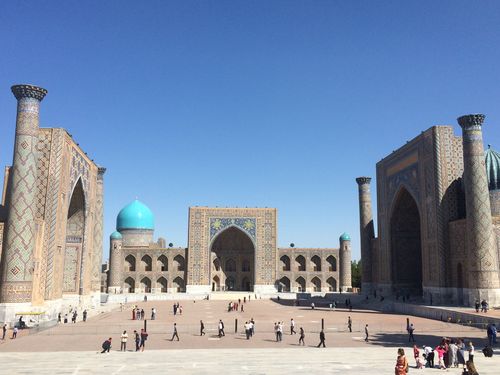
Samarkand • Registan square
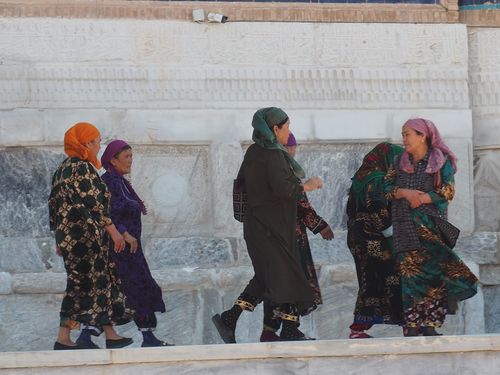
Samarkand • Registan square
Monument profile
Registan square
Monument category: Iconic square
Monument family: Civil engineering structures (bridges, wells, etc.) and factories
Monument genre: Economic
Cultural heritage: Islamic
Geographic location: Samarkand • Uzbekistan
Construction period: 14th century AD
This monument in Samarkand is inscribed on the UNESCO World Heritage List since 2001 and is part of the serial property "Samarkand – Crossroad of Cultures".See the UNESCO monuments featured on this site
• Links to •
• List of videos about Samarkand on this site •
Samarkand, the city of Amir Timur • Uzbekistan
• References •
Wikipedia FR: Samarcande
Encyclopaedia Iranica: SAMARQAND . HISTORY AND ARCHEOLOGY
UNESCO: Samarkand – Crossroad of Cultures
Registan Square in Samarkand: Political and Social Motivations, Historical Transformations, and Preservation Challenges
Registan Square in Samarkand, Uzbekistan, is one of Central Asia’s most iconic architectural complexes, symbolizing the region’s political, social, and cultural development. Initially built in the 15th century under the rule of Ulugh Beg, grandson of Tamerlane, Registan served as a central hub for culture, education, and commerce on the Silk Road. This grand square, with its trio of magnificent madrasas, reflects the ambitions of the Timurid Empire to position Samarkand as an intellectual and spiritual center. The monument’s history and transformations over centuries offer insight into the shifting political powers and cultural exchanges that have shaped this historic site.
Political and Social Motivations Behind Registan Square’s Construction
The construction of Registan Square was driven by both political and social motivations. As a political center, Samarkand lay at the heart of the Timurid Empire, and Registan was intended to project the empire’s power, stability, and prosperity. Ulugh Beg, known for his commitment to education and science, built the first madrasa on the square in 1417, establishing it as a center of knowledge and intellectual growth. By hosting students, scholars, and teachers from various regions, Ulugh Beg’s madrasa encouraged the exchange of ideas and solidified Samarkand’s reputation as a cultural and intellectual capital of Central Asia.
Key Historical Events and Their Impact on Regional Development
Registan Square experienced several cycles of prosperity and decline, depending on the dynasties and invasions that marked the region. After Ulugh Beg’s reign, Samarkand saw significant transformations under Safavid and Shaybanid rule. The addition of the Sher-Dor and Tilla-Kari madrasas in the 17th century expanded Registan Square’s scope, enhancing its educational and spiritual significance.
During the Soviet period, Registan underwent substantial restoration to restore the grandeur of the buildings, which had suffered from centuries of wear. Today, Registan remains a symbol of Samarkand’s rich history and attracts visitors from around the world, highlighting the square’s lasting impact on the cultural and social development of the region.
Global Context and Comparison with Other Regions
During the 15th to 17th centuries, many other parts of the world also undertook monumental architectural projects to affirm the power and culture of their empires. In Europe, the Renaissance spurred the construction of grand palaces and cathedrals, reflecting the flourishing of arts and sciences. Similarly, in the Ottoman Empire, Istanbul saw an expansion of mosques and educational centers that reinforced the empire’s influence and cultural heritage. Registan Square fits within this global trend of centralizing knowledge and asserting power through architecture, illustrating the importance of Samarkand as a crossroads of cultural exchange on the Silk Road.
Architectural Transformations and Influence of Foreign Cultures
The successive transformations of Registan Square reflect the social and cultural dynamics of the region. The architectural additions, notably the Sher-Dor madrasa with its animal motifs, show Persian influence in Timurid art, introducing new symbolic elements into an Islamic context. The Tilla-Kari madrasa, with its richly decorated interiors and gilded dome, showcases opulence and Persian influence, demonstrating Samarkand’s emphasis on cultural richness.
Each madrasa is positioned to form an open square, creating a visual balance and sense of grandeur. Ulugh Beg’s madrasa, the oldest (constructed between 1417 and 1420), is also renowned for its astronomical precision, paying homage to Ulugh Beg’s scientific pursuits. This focus on science within a religious education complex underscores the intellectual openness of the Timurid era.
Current State of Conservation and International Recognition
Today, Registan Square is well-preserved and stands as one of Uzbekistan’s most visited heritage sites. Recognized as part of a UNESCO World Heritage site, Registan benefits from international protection, which has bolstered conservation efforts and raised global awareness of the monument’s cultural value. This international recognition has provided funding and technical support for preservation.
However, preservation challenges remain. Climatic conditions, especially extreme temperature variations between summer and winter, and heavy tourist traffic put strain on the historic structures. Ongoing restoration work aims to protect the intricate mosaics, tiles, and delicate frescoes that decorate the madrasa facades. Modern conservation techniques are carefully applied to maintain the authenticity of original materials and respect the architectural integrity of the site. These efforts are crucial to preserving Registan’s historical integrity in the face of modern threats.
Conclusion
Registan Square in Samarkand represents more than an architectural complex; it is a reflection of a period when knowledge, commerce, and power converged at a cultural crossroads. Through its majestic buildings and intricate designs, Registan testifies to the grandeur of the Timurid Empire and Samarkand’s significance on the Silk Road. Thanks to ongoing conservation efforts and UNESCO recognition, Registan Square continues to inspire and fascinate visitors worldwide, preserving the legacy of this remarkable era in Uzbekistan’s and Central Asia’s history.
Registan Square in Samarkand: Technological Advancements, Artistic Fusion, and Global Heritage Recognition
Registan Square, located in Samarkand, Uzbekistan, is a remarkable example of architectural and technological innovation from the Timurid era. Built as an educational and cultural hub, it reflects the ingenuity and artistic vision of its time. The square, with its three impressive madrasas—Ulugh Beg, Sher-Dor, and Tilla-Kari—showcases advanced construction techniques and a fusion of local and foreign artistic influences. This article explores the technological innovations behind Registan’s construction, the materials and techniques used, and the design elements that make it one of Central Asia’s architectural gems.
Technological Innovation and Construction Techniques
The construction of Registan Square highlights the technological advancements of Timurid-era architecture. The buildings are primarily made of fired brick, a material chosen for its resilience in Samarkand’s arid climate. The madrasas’ surfaces are adorned with intricate tilework and mosaics, which required advanced glazing and firing techniques to create vibrant, long-lasting colors. Artisans employed tile-mosaic methods, assembling small, colored tiles to form intricate geometric and floral patterns, resulting in facades that have withstood centuries of weathering.
One of the technological marvels of Registan’s construction is the precision and balance in the placement of each madrasa around the square, creating a sense of symmetry and grandeur. The use of high-quality brickwork and layered masonry techniques provided these structures with the necessary strength to withstand earthquakes and other natural forces, a testament to the advanced understanding of engineering principles at the time.
Unique Architectural Features and Fusion of Artistic Traditions
Registan’s architecture is celebrated for blending regional artistic styles with influences from Persia and further afield, reflecting Samarkand’s role as a key Silk Road city. Each madrasa features a spacious courtyard surrounded by lecture halls and prayer rooms, creating a harmonious design where education and spirituality intersect.
The decorative elements on the facades and interiors of the madrasas are particularly notable. Sher-Dor Madrasa, built in the 17th century, includes animal motifs—stylized depictions of lions, which are unique for an Islamic structure—demonstrating the influence of Central Asian symbolism. Tilla-Kari Madrasa, with its gilded dome and elaborate ornamentation, exemplifies Persian influence in its use of blue and gold colors, symbolizing wealth and prestige. These decorative choices are significant, as they represent both the artistic creativity and the openness to foreign styles that characterized the Timurid period.
The symmetrical layout of the square, along with the grand iwan entrances and minarets of each madrasa, creates a sense of monumental scale, enhancing Registan’s impact as a site for cultural exchange and learning. The arrangement of these architectural features reflects the Timurid Empire’s ambition to create a space that mirrored its grandeur and cultural sophistication.
Notable Statistics and Anecdotes from Registan’s Construction
One of the most notable elements of Registan Square is the Ulugh Beg Madrasa, completed in 1420, which served as one of the most esteemed educational institutions of its time. Ulugh Beg, a ruler known for his contributions to science and astronomy, used the madrasa to house scholars and foster intellectual discourse. The madrasa’s minarets are said to have been precisely aligned with astronomical calculations, a nod to Ulugh Beg’s scientific pursuits.
The Tilla-Kari Madrasa, added in the mid-17th century, features a gilded dome that earned it the name “Tilla-Kari,” or “Gold-Covered.” This golden interior is an anecdote in itself, symbolizing the prosperity and opulence that Samarkand enjoyed during its peak as a cultural and intellectual hub.
International Recognition and Conservation Efforts
Registan Square’s unique architectural and historical significance has earned it a place on the UNESCO World Heritage list, bringing international recognition and support for its conservation. This status has heightened global appreciation for the square’s beauty and cultural importance, drawing thousands of visitors each year.
However, the site faces preservation challenges due to climate conditions, such as extreme temperature fluctuations, and the impact of heavy tourism. Conservation efforts are focused on protecting the intricate tile work and reinforcing the structural integrity of the buildings. Restoration projects are carefully designed to respect the authenticity of Registan’s original materials, ensuring the site’s legacy is preserved for future generations.
Conclusion
Registan Square stands as an enduring symbol of architectural ingenuity, cultural fusion, and the intellectual vitality of the Timurid Empire. Its intricate design, blending local craftsmanship with influences from across the Silk Road, reflects Samarkand’s position as a historic center of trade and learning. Today, through conservation efforts and global recognition, Registan Square continues to captivate and inspire, preserving the legacy of this remarkable period in Uzbekistan’s history for visitors from around the world.