

 Français (France)
  Nederlands (nl-NL)
 The Pakhlavan Makhmoud Mausoleum, located in Khiva, Uzbekistan, is one of the most iconic landmarks of this historic city. Honoring Pakhlavan Makhmoud, a celebrated poet, philosopher, and wrestler, the mausoleum holds significant spiritual and cultural value. Visitors are drawn to this site for its historical relevance and its role in preserving the heritage of Khiva, a UNESCO World Heritage site.
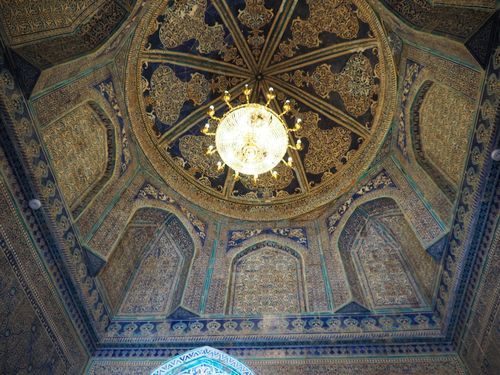
Khiva • Pakhlavan Makhmoud Mausoleum
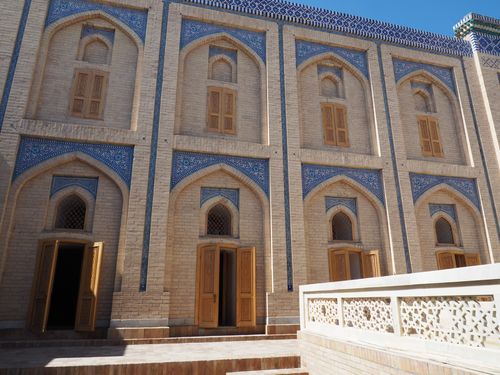
Khiva • Pakhlavan Makhmoud Mausoleum
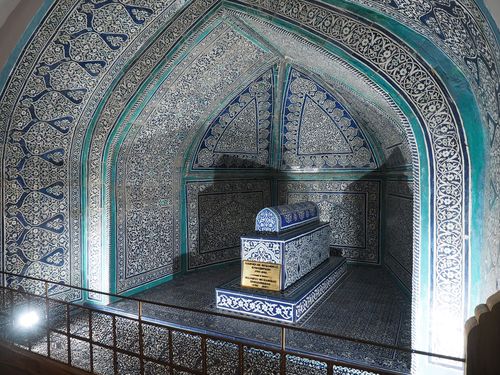
Khiva • Pakhlavan Makhmoud Mausoleum
Monument profile
Pakhlavan Makhmoud Mausoleum
Monument categories: Pilgrimage site, Mausoleum
Monument families: Pilgrimage site or memorial • Tomb, Necropolis, Mausoleum or Cenotaph
Monument genres: Religious, Funerary
Cultural heritage: Islamic
Geographic location: Khiva • Uzbekistan
Construction period: 14th century AD
This monument in Khiva is inscribed on the UNESCO World Heritage List since 1990 and is part of the serial property "Itchan Kala".See the UNESCO monuments featured on this site
• Links to •
• This monument illustrates the following theme •
Architecture • Mausoleums : Muslim Mausoleums
• List of videos about Khiva on this site •
Khiva, open-air museum • Uzbekistan (EN)
• References •
UNESCO: Itchan Kala
Pakhlavan Makhmoud Mausoleum: A Symbol of Power, Culture, and Historical Resilience
The Pakhlavan Makhmoud Mausoleum, located in Khiva, Uzbekistan, is a masterpiece of Islamic architecture and an enduring cultural landmark. Its construction and evolution over centuries reflect the socio-political motivations of the Khiva Khanate and the region's historical developments. This article explores its origins, historical significance, global context, transformations, and challenges related to its preservation.
Political and Social Motivations Behind Its Construction
The Pakhlavan Makhmoud Mausoleum was originally constructed in the 14th century as a tribute to Pakhlavan Makhmoud, a revered poet, philosopher, and wrestler. Known as a spiritual leader and local hero, his tomb became a place of pilgrimage and reverence. The mausoleum’s development was driven by two key motivations:
- Legitimization of Power: The Khiva khans sought to associate themselves with the spiritual prestige of Pakhlavan Makhmoud. By expanding and embellishing his mausoleum, they reinforced their legitimacy and solidified their connection to local religious and cultural traditions.
- Social Cohesion: The mausoleum served as a focal point for communal gatherings, religious ceremonies, and cultural identity. It united diverse groups within the khanate, fostering social harmony and reinforcing the khanate's cultural values.
Historical Events and Regional Influence
The Pakhlavan Makhmoud Mausoleum has witnessed significant historical events that shaped its role in the region:
14th Century: Built initially as a modest tomb, the site gained prominence as Pakhlavan Makhmoud's spiritual reputation grew.
17th and 19th Centuries: Under the Khiva khans, particularly Muhammad Rahim Khan II, the mausoleum was expanded and transformed into a grand structure. These renovations reflected the growing power and wealth of the khanate and the region’s cultural exchanges with Persia and Central Asia.
Soviet Era: During the 20th century, the mausoleum's religious significance was downplayed, and its role as a cultural and historical monument gained prominence.
These historical shifts illustrate the mausoleum’s adaptability to changing socio-political dynamics while maintaining its cultural essence.
Global Context and Comparisons
During the periods of the mausoleum’s construction and subsequent renovations, the world witnessed significant transformations:
In Europe, the Renaissance (14th–17th centuries) emphasized art, architecture, and humanism.
In China, the Ming Dynasty fortified its influence through projects like the Forbidden City.
In the Islamic world, monumental architecture like the Timurid structures in Samarkand reflected power and cultural ambition.
The Pakhlavan Makhmoud Mausoleum stands as a regional counterpart to these global achievements, illustrating how architecture was universally used to assert power, foster identity, and inspire awe.
Architectural Transformations and Cultural Influences
Over centuries, the mausoleum underwent notable architectural transformations:
Original Design: A simple tomb honoring Pakhlavan Makhmoud’s legacy.
17th–19th Century Additions: Inclusion of a grand turquoise dome, intricate tilework, and inscriptions that combined Persian, Timurid, and Central Asian styles. The muqarnas adorning the entrance demonstrate the fusion of local craftsmanship with external influences.
19th Century Renovations: Under Muhammad Rahim Khan II, the mausoleum’s design was enhanced to serve as a symbol of the khanate’s wealth and influence.
These transformations highlight the cultural syncretism of Khiva, where local traditions blended with broader Islamic and Persian architectural elements.
Cultural Importance and Current State
Today, the Pakhlavan Makhmoud Mausoleum is a UNESCO World Heritage Site, recognized for its architectural and historical significance. Its inclusion in the UNESCO list has:
Raised international awareness of Khiva’s cultural heritage.
Facilitated restoration efforts to preserve its intricate tilework and structural integrity.
The mausoleum remains a symbol of Khiva’s spiritual and cultural identity, drawing visitors from around the world.
Challenges in Preservation
Despite its well-maintained state, the mausoleum faces several modern threats:
- Climate Effects: Extreme temperatures and arid conditions accelerate the wear on its materials.
- Tourism Pressure: Increased foot traffic risks damaging the delicate tilework and foundational stability.
- Urbanization: Encroaching modern developments threaten the historical ambiance of Khiva’s old town.
Efforts to mitigate these challenges include controlled access, ongoing restoration projects, and international collaboration to ensure sustainable preservation.
Conclusion
The Pakhlavan Makhmoud Mausoleum exemplifies how architecture can embody spiritual, cultural, and political values over centuries. Its rich history, architectural splendor, and enduring significance make it a beacon of Khiva’s heritage. However, safeguarding its legacy requires continued attention to conservation and a commitment to balancing historical preservation with modern demands.
Architectural Innovation and Cultural Fusion: The Pakhlavan Makhmoud Mausoleum in Khiva
The Pakhlavan Makhmoud Mausoleum in Khiva, Uzbekistan, stands as a striking example of architectural ingenuity and artistic fusion in Central Asia. Built in the 14th century and expanded significantly in the 19th century, it reflects advancements in construction techniques, the use of sophisticated materials, and a blend of regional and foreign artistic traditions. This article explores how the monument embodies technological innovation, cultural syncretism, and its role in preserving Khiva's heritage.
Technological and Material Innovations
The architecture of the Pakhlavan Makhmoud Mausoleum showcases technological advancements of its time:
Materials:
- Baked bricks: The primary construction material, these bricks were expertly laid to create a durable and symmetrical structure.
- Ceramic tiles: Vibrant, glazed tiles in shades of turquoise, blue, and white were used for decoration, showcasing mastery in kiln technology.
- Gypsum and lime mortar: These materials were employed to create smooth finishes and secure the bricks.
Construction Techniques:
- Dome engineering: The mausoleum's iconic turquoise dome is an example of advanced engineering, with a double-layered structure that provides stability and insulation.
- Muqarnas work: Intricate stalactite-like decorations on the entrance demonstrate expertise in geometric calculations and artistic craftsmanship.
These innovations were not only functional but also symbolic, reflecting the grandeur and cultural aspirations of Khiva during the time of its expansion.
Architectural Features and Cultural Fusion
The mausoleum integrates regional and foreign influences, creating a unique artistic language:
Regional Traditions:
Geometric patterns: Common in Islamic architecture, these designs on the tiles and walls symbolize unity and the infinite nature of creation.
Calligraphy: Quranic inscriptions in Arabic adorn the walls, emphasizing the spiritual significance of the site.
Foreign Influences:
Persian elements: The use of muqarnas and floral motifs points to strong artistic connections with Persian architectural styles.
Timurid inspiration: The grand dome and the symmetrical layout are reminiscent of Timurid architecture in nearby Samarkand.
This blend of styles highlights Khiva’s role as a cultural crossroads in Central Asia, absorbing influences from its neighbors while maintaining a distinct identity.
Notable Structure and Layout
The mausoleum follows a distinctive plan, designed to fulfill both spiritual and communal purposes:
- Central Dome Chamber: The heart of the mausoleum, this chamber houses the tomb of Pakhlavan Makhmoud. The dome above symbolizes the heavens, connecting the earthly realm to the divine.
- Auxiliary Rooms: Surrounding spaces were used for prayer, meditation, and accommodating pilgrims.
- Courtyard and Portal: The courtyard serves as a transitional space, while the portal, adorned with muqarnas, acts as a grand entryway.
Anecdote: During the 19th century, Muhammad Rahim Khan II commissioned artisans to refurbish the mausoleum. The craftsmanship displayed in the mosaic tiles from this period is considered among the finest in the region.
Recognition and UNESCO Impact
The mausoleum's inscription as part of the Historic Centre of Khiva on the UNESCO World Heritage list in 1990 has enhanced its global recognition. This designation has:
- Facilitated Conservation Efforts: Restoration projects have focused on preserving the delicate tilework and stabilizing the dome.
- Boosted Global Interest: The mausoleum has become a key attraction for international tourists, elevating Khiva’s status as a cultural and historical hub.
However, the site’s popularity also presents challenges, including the need for sustainable tourism practices to prevent damage.
Challenges and Preservation
Modern threats to the mausoleum’s integrity include:
- Environmental Factors: Harsh weather and temperature fluctuations erode the tiles and weaken the structure.
- Tourism Impact: Increased foot traffic risks physical damage to the site.
- Urban Encroachment: Modern development around Khiva’s old town affects the historic atmosphere of the mausoleum.
Efforts to counter these issues include controlled access, regular maintenance, and collaboration between local authorities and international organizations.
Conclusion
The Pakhlavan Makhmoud Mausoleum exemplifies the artistic brilliance and cultural depth of Khiva. Its innovative construction techniques, artistic fusion, and historical significance make it a vital symbol of Central Asian heritage. As a globally recognized monument, it continues to inspire and attract attention, while conservation efforts aim to preserve its legacy for future generations.