

 Français (France)
  Nederlands (nl-NL)
 The Sacred Manikhot Tree Temple, located in the Khone Phapheng area of southern Laos, is a religious site associated with local devotional practices and regional Buddhist traditions. The site is visited by worshippers who come to perform acts of devotion, present offerings, and take part in religious ceremonies. The temple also plays a role in the spiritual life of nearby communities and contributes to the continuity of local ritual practices. Today the Sacred Manikhot Tree Temple functions both as a place of prayer and as a destination for visitors interested in the religious traditions of southern Laos.
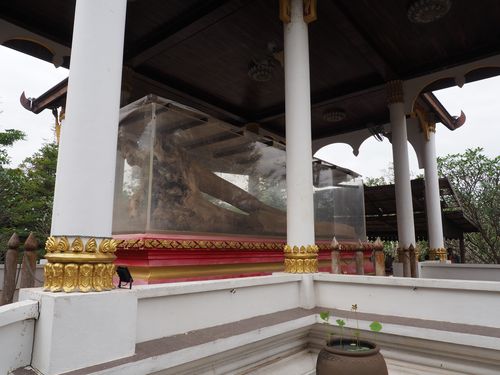
Khone Phapheng • Manikhot Sacred Tree temple
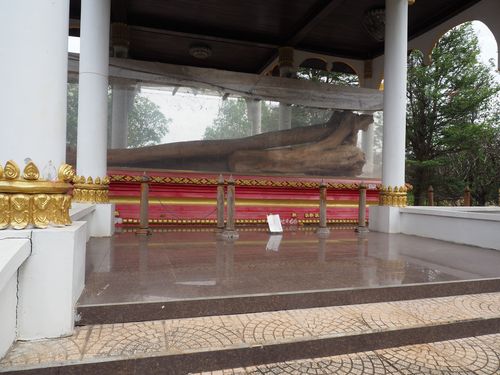
Khone Phapheng • Manikhot Sacred Tree temple
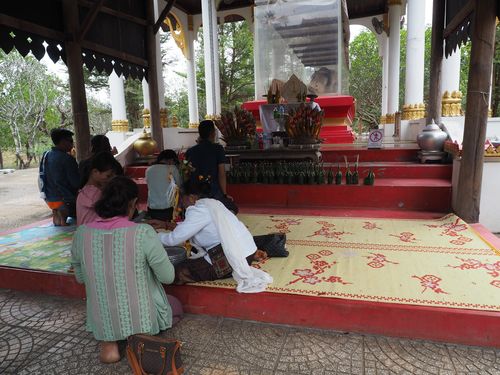
Khone Phapheng • Manikhot Sacred Tree temple
Monument profile
Manikhot Sacred Tree temple
Monument category: Buddhist temple
Monument family: Temple
Monument genre: Religious
Cultural heritage: Buddhist
Geographic location: Khone Phapheng • Laos
Construction period: 21th century AD
• Links to •
• List of videos about Mekong near Muang Champassak, Mekong near Luang Prabang, Mekong from Nakasong to Li Phi Somphamit on this site •
The Mekong: A Serene River? • Laos
History of the Sacred Manikhot Tree Temple in Khone Phapheng, Laos
Emergence of the Sacred Site
The Sacred Manikhot Tree Temple is located in the Khone Phapheng area of Champassak Province in southern Laos, close to the Mekong River and the waterfalls that give the region its geographical identity. The origin of the sanctuary is directly associated with a tree that local communities regard as sacred. According to local traditions, the tree known as Manikhot became an object of veneration because it was believed to be inhabited or protected by spiritual entities connected to the surrounding landscape.
Before the construction of a formal temple structure, the site functioned as a place where inhabitants of nearby villages performed acts of devotion linked to these beliefs. Offerings such as flowers, incense, cloth, and small ritual objects were placed at the base of the tree. These practices gradually transformed the location into a recognized religious site.
The establishment of a built sanctuary occurred as the importance of the tree within local ritual life increased. The construction of a small temple structure near the tree provided a defined space for prayer and ceremonial activities. The temple therefore emerged as an architectural expression of an earlier sacred landscape centered on the revered tree.
Institutionalization of Worship and Local Religious Role
The presence of the temple gradually formalized religious practices that had previously been conducted directly around the tree. The sanctuary became a focal point for local devotional activities and for rituals associated with protection, prosperity, and spiritual assistance.
Villagers from surrounding communities regularly visited the site to present offerings and to participate in ceremonies conducted near the sacred tree. Ritual acts performed at the temple often involve symbolic gestures directed toward the tree itself, reflecting its continued central role in the spiritual identity of the sanctuary.
The site also became integrated into the broader religious environment of the region. Buddhist monks occasionally participate in ceremonies held at the temple, linking the practices associated with the sacred tree to the Theravāda Buddhist traditions that dominate religious life in Laos. This interaction between local spirit beliefs and Buddhist ritual practice shaped the religious character of the temple.
The temple therefore developed as both a community sanctuary and a location where different layers of religious practice coexist. Its role extends beyond individual devotion and includes gatherings associated with local religious festivals and community ceremonies.
Twentieth-Century Developments and Continuity
During the twentieth century the Sacred Manikhot Tree Temple underwent several phases of maintenance and modest architectural modification. These interventions primarily aimed to preserve the structures built around the sacred tree and to accommodate an increasing number of visitors.
Repairs to buildings, improvements to the spaces used for ritual activities, and the reinforcement of structural elements were carried out at different moments. These works were typically undertaken by local communities or temple caretakers rather than through large-scale institutional projects.
Despite political and administrative changes that affected Laos throughout the twentieth century, the temple maintained its religious function. The site continued to be used for devotional activities and ritual practices associated with the sacred tree. Local inhabitants preserved the traditions connected to the sanctuary and ensured that the temple remained active within the regional religious landscape.
The continuity of worship at the temple illustrates the persistence of local spiritual traditions even during periods of social and political transformation.
Present Religious Role and Preservation
The Sacred Manikhot Tree Temple continues to function as an active place of worship in the Khone Phapheng area. Devotees visit the sanctuary to make offerings and to perform rituals connected with the protective spirit believed to inhabit the sacred tree.
The tree itself remains the central symbolic element of the temple. Ritual practices frequently focus on this element, with offerings placed at its base and symbolic objects attached to its trunk or branches. The presence of the tree continues to define the identity and purpose of the sanctuary.
Visitors traveling to the Khone Phapheng waterfalls also encounter the temple as part of the local cultural landscape. While the site receives occasional visitors interested in regional traditions, its primary role remains religious rather than touristic.
Maintenance of the temple structures and protection of the sacred tree are carried out by local communities and temple caretakers. These efforts aim to preserve both the physical structures of the sanctuary and the symbolic significance associated with the tree.
Global Historical Context
The consolidation of the Sacred Manikhot Tree Temple took place during a period when Laos formed part of French Indochina in the early twentieth century. At the same time, Europe experienced the major disruptions of the First and Second World Wars. Across Asia, political transformations gradually altered colonial administrations and regional power structures. Within this global context, the communities of southern Laos continued to maintain religious practices centered on the sacred tree at Khone Phapheng.
Architecture and Style
General Features and Layout
The current Temple of the Sacred Manikhot Tree is a recent construction, built in the years following the fall of the original tree in 2012. The design is modest in scale and follows vernacular Buddhist temple architecture, particularly in the southern Lao tradition. The central structure is typically a small open pavilion, either square or rectangular, with a multi-tiered tiled roof in red or orange tones.
The pavilion is built on a raised concrete platform and often remains open on all sides to allow free movement and visibility for worshippers. The sacred relic — the remaining trunk or fragments of the original Manikhot tree — is enshrined at the center of the pavilion or placed in a glass case. Surrounding it are small Buddha statues, ritual offerings, flowers, cloths, and votive items arranged in a manner reflecting local devotional practices.
Materials and Decorative Elements
The structure combines traditional and modern materials: reinforced concrete for the base and support elements, wood for ornamental features, and glazed ceramic tiles for the roof. Painted stucco, floral or geometric motifs, and hand-applied decorative borders are often present. Common Buddhist symbols such as nagas (mythical serpents), lotus patterns, and bell-shaped finials are used in limited but meaningful ways.
In addition to the central pavilion, the temple grounds may include simple boundary markers, prayer flags, and small altars for individual offerings. The area is typically well maintained, especially in anticipation of religious festivals, when the site is decorated with candles, incense sticks, and seasonal ornamentation.
Aesthetic Influences and Cultural Integration
The architectural style reflects regional Buddhist aesthetics, with a strong emphasis on symbolism rather than monumentality. The visual identity of the site is defined more by its ritual function than by scale or complexity. While inspired by temple forms found throughout Laos, the Manikhot sanctuary remains specific in its purpose: to preserve a spiritual connection with a now-absent natural object.
No major renovations have been documented since its construction, though small adjustments and maintenance are carried out by the local community. New decorative elements may be added for specific ceremonies. The sanctuary thus evolves slowly over time, shaped by both religious rhythms and local craftsmanship.
The Temple of the Sacred Manikhot Tree exemplifies a form of living heritage architecture — humble in appearance, yet deeply embedded in spiritual, cultural, and emotional life.