

 Français (France)
  Nederlands (nl-NL)
 Parc Güell, located in Barcelona, is one of the most iconic works by architect Antoni Gaudí. Designed between 1900 and 1914, this public park reflects the modernist aesthetic of the time, featuring organic shapes and vibrant colors. Initially commissioned by industrialist Eusebi Güell as a garden city, the project became a municipal park in 1926. It attracts millions of visitors annually, drawn by its harmonious blend with nature and its famous mosaics. In 1984, it was declared a UNESCO World Heritage Site.

Barcelona • Parc Guëll
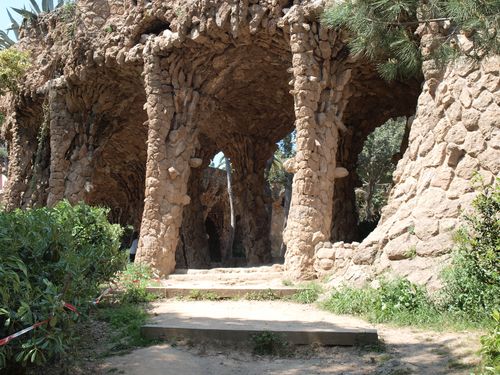
Barcelona • Parc Guëll
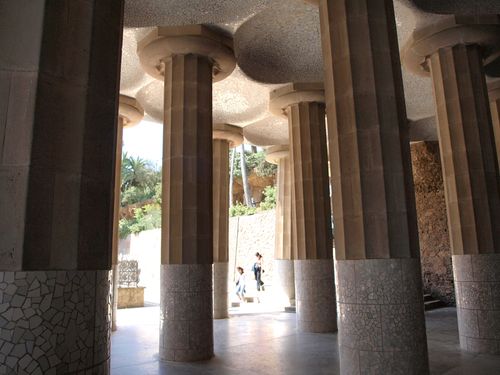
Barcelona • Parc Guëll
Monument profile
Parc Guëll
Monument category: Architectural modernism
Monument family: Modern architecture
Monument genre: Cultural or scientific
Geographic location: Barcelona • Spain
Construction period: 20th century AD
This monument in Barcelona is inscribed on the UNESCO World Heritage List since 1984 and is part of the serial property "Works of Antoni Gaudi".See the UNESCO monuments featured on this site
• Links to •
• List of videos about Barcelona on this site •
Barcelona, the city of Gaudi • Spain
• References •
Wikipedia FR: Parc Güell
UNESCO: Œuvres d’Antoni Gaudí
Britannica: Antoni Gaudí
Political and Social Motivations Behind the Construction of Parc Güell and Its Historical Evolution
Political and Social Motivations and the Beginning of Construction
The construction of Parc Güell in Barcelona, which began in 1900, was driven by a combination of political, social, and economic factors. Industrialist Eusebi Güell, a prominent Catalan nationalist and a key figure in Barcelona's modernist movement, envisioned the project as a luxurious residential community based on the garden city concept. His collaboration with Antoni Gaudí was part of a broader movement aimed at promoting Catalan identity and artistic innovation during a time of political tension between Catalonia and the Spanish central government.
Güell’s goal was to create a space where nature, art, and architecture coexisted in harmony, reflecting the ideals of modernism and offering a symbol of Catalonia’s cultural resurgence. The construction continued until 1914, but due to a lack of buyers and the economic difficulties brought on by World War I, the project was never completed. Instead, Parc Güell was transformed into a public park in 1926, the year of Gaudí’s death.
Historical Events and Their Impact on the Region
Throughout its history, Parc Güell has been influenced by key events that shaped Barcelona and Catalonia. In the early 20th century, Catalonia was experiencing a cultural and political awakening, with movements advocating for regional autonomy and promoting modernist art and architecture as symbols of Catalan identity. The park became a testament to this movement, embodying the values of innovation, nature, and regional pride.
The Spanish Civil War (1936–1939) deeply impacted Barcelona, though Parc Güell itself was not directly damaged. However, the war left a profound mark on the region’s social and political landscape. Under Franco’s dictatorship (1939–1975), Catalan culture was suppressed, and modernist landmarks, including Parc Güell, were sidelined. After Franco's death and Spain’s transition to democracy, Catalonia regained a sense of autonomy, and Parc Güell was re-embraced as a cultural symbol of the region.
Context in the Global Sphere and Comparison with Other Regions
The early 20th century, when Parc Güell was constructed, was a period of rapid industrialization and urbanization worldwide. In Europe, major cities like Paris and London were undergoing transformations with new urban planning concepts that integrated green spaces into cityscapes. Eusebi Güell’s vision for Parc Güell was inspired by the garden city movement in England, a concept pioneered by urban planner Ebenezer Howard. This idea sought to combine the benefits of urban life with the tranquility of nature, an ideal that Güell aimed to bring to Barcelona’s elite.
Globally, this period also saw the rise of nationalist movements across Europe, as regions sought to assert their cultural identities within larger states. Parc Güell, as a reflection of Catalonia’s nationalist ambitions, was part of this broader trend. Meanwhile, in places like the United States, cities were expanding with new architectural innovations, though without the same emphasis on regional identity as seen in Catalonia.
Major Transformations and External Influences
Over the decades, Parc Güell has undergone significant transformations. Initially intended to be a residential development, it was instead opened as a public park in 1926. This shift from private to public use reflects the evolving priorities of Barcelona, where urban expansion and the democratization of public spaces became more prominent.
The park’s architecture, blending natural forms with vibrant mosaics and organic shapes, reflects not only Gaudí’s modernist style but also external influences, such as oriental and Islamic art. The use of "trencadís" mosaics, made from broken ceramic pieces, combined with the park’s undulating lines and integration with the landscape, demonstrates a fusion of local craftsmanship and global artistic trends.
The UNESCO World Heritage designation in 1984 further transformed Parc Güell into a symbol of international cultural heritage. This recognition enhanced its status as one of Gaudí’s masterpieces, drawing millions of visitors from around the world.
Cultural Importance and Current State of Conservation
Today, Parc Güell is one of Barcelona’s most iconic landmarks, symbolizing both the artistic genius of Antoni Gaudí and the cultural identity of Catalonia. Its global significance was cemented with its inclusion in the UNESCO World Heritage list, highlighting the park’s architectural innovation and cultural relevance.
However, the park faces ongoing challenges related to its preservation. The constant flow of tourists, which exceeds several million visitors annually, has placed strain on its infrastructure and delicate mosaics. Restoration efforts have been necessary to maintain the park’s original aesthetic while also accommodating modern safety and accessibility standards.
Challenges to Historical Preservation in the Modern Era
One of the primary challenges facing Parc Güell is balancing the need for preservation with the pressures of mass tourism. The park’s mosaics, structures, and walkways are subjected to wear and tear from the constant flow of visitors. In response, the city of Barcelona has introduced measures such as limiting access to certain parts of the park to preserve its integrity.
Environmental factors, including changes in climate and weather patterns, also pose risks to the long-term preservation of the park’s materials. The “trencadís” mosaics, in particular, are vulnerable to temperature fluctuations and humidity, necessitating ongoing restoration work.
Conclusion
Parc Güell stands as a symbol of Catalan identity, architectural innovation, and the cultural aspirations of early 20th-century Barcelona. Its transformation from a private residential project into a public park reflects broader social and political shifts in the region, while its unique design continues to draw international acclaim. The park’s inclusion in the UNESCO World Heritage list has helped protect its legacy, though the challenges of preserving its delicate beauty in the face of modern threats remain a pressing concern.
Parc Güell: A Testament to Technological Innovation and Artistic Fusion
Technological Advancements and Materials Used
Parc Güell, designed by Antoni Gaudí between 1900 and 1914, stands as a remarkable example of technological innovation and artistic creativity of its time. Gaudí, known for pushing the boundaries of architecture, employed several advanced techniques and materials to create this unique park. One of the most notable innovations was the use of trencadís, a form of mosaic made from broken ceramic tiles, glass, and pottery. This technique allowed for the creation of vibrant, colorful surfaces while also recycling materials, a forward-thinking practice in early 20th-century construction.
The structural elements of the park also highlight Gaudí’s engineering genius. He utilized natural forms and organic curves, designing structures that seemed to grow out of the landscape. The sloped terrain of the park was stabilized using a series of viaducts and retaining walls, all constructed with local stone, blending the man-made elements seamlessly into the natural environment. These techniques reflected not only the aesthetic values of the era but also a practical, sustainable approach to architecture that was well ahead of its time.
A Blend of Regional Traditions and Foreign Influences
The architectural style of Parc Güell represents a harmonious fusion of Catalan traditions and foreign artistic influences. Rooted in the modernisme movement, which celebrated Catalan identity and natural forms, the park’s design reflects the region’s cultural pride. Gaudí’s inspiration from the natural world is evident in the organic shapes of the park’s structures, such as the serpentine benches and columns designed to resemble trees.
However, Parc Güell is also a testament to Gaudí’s exposure to and integration of diverse architectural styles. The influence of Moorish design, particularly in the use of intricate tile work and geometric patterns, is visible throughout the park. Additionally, the vibrant colors and playful forms suggest an openness to global artistic trends, such as Art Nouveau and Orientalism. This blend of regional craftsmanship with international aesthetics makes Parc Güell a unique and timeless monument.
Notable Structure and Layout
The layout of Parc Güell was initially conceived as a residential garden city, with Eusebi Güell envisioning a utopian community for Barcelona’s elite. The park is centered around a grand esplanade, known as the Greek Theater or Nature Square, which was designed as a communal gathering space. This large open area is surrounded by a series of curved benches covered in trencadís mosaics, providing both functional seating and aesthetic delight.
One of the most iconic features of the park is the Hall of 100 Columns, though it actually consists of 86 Doric-style columns. Originally intended as a marketplace, this structure supports the large plaza above it and is an example of Gaudí’s innovative use of space and light. The columns themselves are slightly tilted, creating a dynamic and fluid appearance, and the ceiling is adorned with mosaic medallions, further enhancing the beauty of the structure.
Statistics and Anecdotes of Construction
While Parc Güell was intended to host 60 residential homes, only two houses were ever completed, as the project was not commercially successful. Today, one of these homes, where Gaudí himself lived for nearly two decades, serves as a museum dedicated to his life and work.
An interesting anecdote about the park is that Gaudí, a devout Catholic, believed in working in harmony with nature and would often avoid strict architectural plans, opting instead to make on-site decisions based on the land’s natural features. This fluid approach to design is one of the reasons Parc Güell feels so organic, as if it is a natural extension of the landscape.
International Recognition and UNESCO Impact
Parc Güell’s unique architectural features and cultural significance have earned it international acclaim. In 1984, the park was designated a UNESCO World Heritage Site, as part of a broader recognition of Gaudí’s architectural contributions. This status has significantly contributed to its global recognition, making it one of Barcelona’s most visited landmarks, attracting millions of tourists each year.
The UNESCO designation has also played a vital role in ensuring the park’s preservation. With increased tourism comes greater wear and tear, and the park's fragile mosaics and stone structures require constant maintenance. The recognition has provided both funding and international oversight to ensure that the park’s historical integrity is maintained for future generations.
Challenges in Preserving Historical Integrity
One of the most significant challenges in preserving Parc Güell is managing the impact of mass tourism. The delicate trencadís mosaics, while visually stunning, are susceptible to damage from environmental exposure and heavy foot traffic. To address this, portions of the park have been restricted, and visitor limits have been imposed to protect the most vulnerable areas.
Environmental factors, such as Barcelona’s Mediterranean climate, also present long-term preservation challenges. The park’s exposed position on the hill makes it susceptible to erosion and weathering, requiring regular restoration efforts to maintain the integrity of its structures.
Conclusion
Parc Güell remains a testament to Antoni Gaudí’s visionary approach to architecture, blending technological innovation with artistic expression and cultural pride. Its distinctive use of materials like trencadís, coupled with its unique blend of regional and global influences, has solidified its place as a masterpiece of modernism. The park’s UNESCO status has ensured its continued preservation, though the challenges of maintaining such a heavily visited and historically significant site continue to demand attention and care. Today, Parc Güell stands not only as an icon of Barcelona but also as a symbol of how architecture can transcend time and cultural boundaries.