

 Français (France)
  Nederlands (nl-NL)
 Lohanchowk is a residential courtyard integrated into the historic palatial complex of Kathmandu, Nepal. Designed as a structuring space of court life, it contributes to the functional and symbolic organization of the palace complex as a whole. Lohanchowk forms part of an urban landscape shaped by the coexistence of political, religious, and residential functions, which are characteristic of the Kathmandu Valley. Today, the site is recognized for its heritage value and its role in understanding the urban and institutional evolution of the Nepalese capital. It is part of the monumental ensemble of the Kathmandu Valley inscribed on the UNESCO World Heritage List.
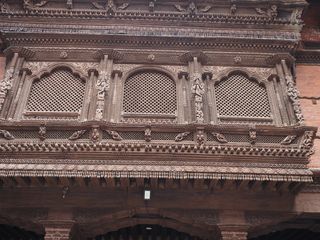
Kathmandu • Lohanchowk
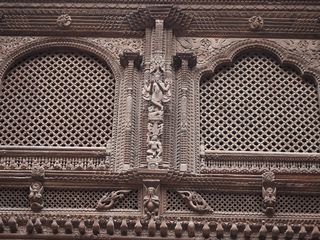
Kathmandu • Lohanchowk
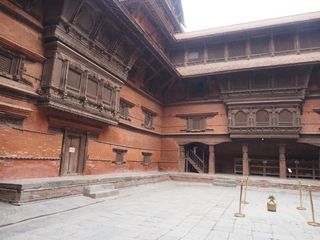
Kathmandu • Lohanchowk
Monument profile
Lohanchowk
Monument category: Palace coutyard
Monument family: Palace and Annexes
Monument genre: Residential
Cultural heritage: Hindu
Geographic location: Kathmandu • Nepal
Construction period: 17th century AD
This monument in Kathmandu is inscribed on the UNESCO World Heritage List since 1979 and is part of the serial property "Kathmandu Valley".See the UNESCO monuments featured on this site
• Links to •
• Dynasties that contributed to the construction of the monument •

• List of videos about Kathmandu on this site •
Kathmandu • Great Buddhist stupas and sacred landscape
Kathmandu • Durbar Square, historic royal and religious centre
Kathmandu • Urban life, local temples and everyday spaces
Kathmandu • Pashupatinath, Hindu sanctuary on the Bagmati River
History of the Lohanchowk in Kathmandu, Nepal
Political and Social Context of the Construction
Lohanchowk is a palace courtyard integrated into the royal complex of Kathmandu Durbar Square, whose spatial organization took shape primarily during the sixteenth and seventeenth centuries under the Malla dynasty. At that time, the Kathmandu Valley was politically fragmented into several competing city-states—Kathmandu, Patan, and Bhaktapur—each ruled by branches of the same royal lineage. This rivalry fostered intense architectural patronage, as rulers sought to assert legitimacy, authority, and religious merit through monumental urban development.
The creation and structuring of Lohanchowk must be understood within this context. Palace courtyards were not merely functional spaces but instruments of governance, designed to regulate access to the ruler and to stage political hierarchy. Lohanchowk served as a residential and ceremonial courtyard, forming part of the internal circulation system of the palace. Its construction reflects the ambition of Malla rulers to consolidate power through spatial order, embedding political authority within an architecture closely tied to ritual and court life.
Socially, Lohanchowk functioned as an intermediate zone between the most private royal quarters and the more public ceremonial spaces of Durbar Square. Access was restricted according to rank and function, reinforcing the stratified nature of Newar society. The courtyard thus embodied both social hierarchy and the controlled visibility of royal power within the urban fabric.
Major Historical Events Affecting the Site
The history of Lohanchowk is closely linked to the political transformations of the Kathmandu Valley. The conquest of Kathmandu by Prithvi Narayan Shah in 1768 marked the end of Malla rule and the incorporation of the valley into a unified Nepali state under the Shah dynasty. This dynastic change profoundly altered the political framework but did not lead to the abandonment of the palace complex. Instead, existing structures, including Lohanchowk, were adapted to the administrative and symbolic needs of the new monarchy.
During the Shah period, certain residential functions declined, while ceremonial and institutional uses persisted. The courtyard remained embedded within the royal compound, retaining its symbolic association with authority even as political power was redefined. Periodic maintenance and modifications accompanied these changes, though the fundamental spatial configuration was preserved.
Natural disasters constituted another major factor shaping the site’s history. Earthquakes, particularly those of 1833, 1934, and 2015, caused significant damage throughout Durbar Square. Lohanchowk suffered structural impacts of varying severity, prompting restoration campaigns that sometimes involved partial reconstruction. These interventions, conducted at different times, reflect evolving approaches to heritage preservation, balancing repair with continuity of use.
Lohanchowk in the Global Context of Its Construction
The period during which Lohanchowk was developed coincided with broader global trends in the monumentalization of power. In Europe, early modern monarchies reinforced authority through palace complexes organized around courtyards that structured court life and ceremonial access. In South Asia, Mughal and regional courts similarly employed spatial hierarchy and architectural symbolism to express sovereignty.
Within this global framework, Lohanchowk represents a localized expression of comparable principles. Unlike the expansive open courtyards of Mughal palaces, Lohanchowk reflects adaptation to a dense urban environment, emphasizing compactness and integration rather than scale. This distinction underscores a conception of power rooted in continuity, ritual proximity, and controlled circulation rather than overt monumentality.
The courtyard thus fits into a global pattern of palace architecture as a political tool while maintaining distinctive regional characteristics shaped by Newar urban traditions and socio-religious practices.
Transformations and Functional Evolution
Over the centuries, Lohanchowk underwent gradual transformations driven by political change, environmental factors, and shifting urban conditions. While its original residential role diminished, the courtyard remained structurally and symbolically embedded within the palace complex. Adaptations tended to be incremental, reflecting pragmatic responses to damage or new administrative requirements rather than radical redesign.
The surrounding urban context evolved more dramatically. During the Malla period, palace courtyards formed part of a relatively enclosed royal domain. As Kathmandu expanded and Durbar Square became a civic and commercial center, Lohanchowk transitioned from a semi-private court space to a component of a publicly perceived heritage landscape. This shift altered patterns of access and perception without erasing the courtyard’s historical identity.
Contemporary Role and Cultural Significance
Today, Lohanchowk is primarily valued as a historical and cultural element of Kathmandu Durbar Square. It contributes to scholarly understanding of palace organization, courtly life, and governance in the pre-modern Kathmandu Valley. Although it no longer serves a residential function, the courtyard remains an essential reference point for interpreting the spatial logic of royal authority.
In a broader cultural sense, Lohanchowk participates in the construction of national heritage narratives. It symbolizes Kathmandu’s historical role as a political and cultural center and reflects the endurance of Newar urban traditions. While specific rituals associated with the courtyard have diminished or disappeared, its presence continues to shape collective memory and identity linked to the royal past.
Conservation Status and Modern Challenges
Lohanchowk forms part of the Kathmandu Durbar Square ensemble, inscribed on the UNESCO World Heritage List since 1979. This designation recognizes the site’s outstanding universal value but also imposes strict conservation responsibilities. Preservation efforts must address persistent seismic risk, environmental degradation, and the pressures of tourism in a densely populated urban area.
Traditional construction materials, while resilient, require ongoing maintenance and specialized expertise. Pollution, vibration, and foot traffic accelerate deterioration, complicating conservation strategies. Restoration policies aim to respect traditional techniques while incorporating modern safety measures, a balance that remains difficult to achieve.
The challenge of conserving Lohanchowk lies not only in stabilizing its structures but also in managing its role within a living city. As part of an active urban center, the courtyard exemplifies the complexities of preserving historical spaces that remain embedded in contemporary social and economic life.
Architecture of the Lohanchowk in Kathmandu, Nepal
Architectural Context and Technological Innovations
Lohanchowk represents a mature expression of palace courtyard architecture developed in the Kathmandu Valley during the late Malla period. Its design reflects a highly adapted architectural response to dense urban conditions, seismic risk, and the functional requirements of a royal residential environment. Rather than emphasizing monumentality, Lohanchowk illustrates an architecture of controlled proportions, spatial hierarchy, and technical efficiency.
One of the defining innovations lies in the use of the courtyard as a regulating architectural device. The enclosed open space moderates light, airflow, and temperature while organizing circulation around a central void. This configuration improves environmental comfort and structural balance, reducing excessive loads on peripheral walls and distributing stresses more evenly throughout the built fabric. The relatively limited height of surrounding structures further enhances stability, a critical consideration in a region prone to earthquakes.
Structural flexibility was a deliberate design objective. Builders combined rigid masonry with elastic timber frameworks, creating a system capable of absorbing seismic energy. This hybrid construction method reflects an advanced empirical understanding of structural behavior long before modern engineering theory.
Materials and Construction Techniques
The primary construction material of Lohanchowk is fired brick, produced locally and laid in regular courses. Brick was favored for its compressive strength, availability, and durability in the valley’s climate. Lime-based mortars were used instead of harder binders, allowing minor movements within the masonry without catastrophic cracking. This choice enhanced the building’s long-term resilience and facilitated repair after seismic events.
Timber is equally essential to the structure. Wooden posts, beams, floors, and galleries form an internal skeleton that works in tandem with the brick walls. Hardwood species native to the region were selected for their strength and resistance to decay. Timber components were assembled using mortise-and-tenon joints and other interlocking techniques, avoiding metal fasteners that could corrode or fail under stress.
Roof structures consist of layered timber frames supporting traditional tiled coverings. Roof slopes and overhangs were carefully calculated to manage heavy monsoon rainfall while protecting façades from erosion. The integration of masonry, wood, and tile results in a construction system that balances permanence with adaptability.
Architectural and Artistic Influences
Lohanchowk is firmly rooted in Newar architectural traditions, yet it reflects selective influences from broader South Asian court architecture. Unlike Mughal palaces, which often emphasize axial symmetry and expansive courtyards, Lohanchowk adopts a compact and inward-focused arrangement. This reflects both spatial constraints and a cultural preference for enclosure and controlled access.
Decorative elements reveal a refined artistic vocabulary specific to the Kathmandu Valley. Wooden windows, brackets, and balustrades are carved with geometric, vegetal, and symbolic motifs derived from Hindu iconography. Ornamentation is applied selectively, reinforcing the hierarchy of spaces rather than overwhelming the architectural composition.
The absence of domes, minarets, or large arches distinguishes Lohanchowk from contemporaneous architectural traditions elsewhere in South Asia. Instead, visual interest is created through horizontal articulation, rhythmic repetition of openings, and the contrast between brick surfaces and dark timber elements.
Spatial Organization and Structural Layout
The spatial organization of Lohanchowk follows an introverted model centered on the courtyard. External façades present a restrained appearance, while interior elevations open onto the central space through galleries and windows. This arrangement ensures privacy and security while facilitating internal circulation.
Lower levels typically accommodate transitional and service-related functions, while upper floors contain residential and representational spaces. Vertical hierarchy corresponds to social and functional hierarchy, with more elaborately finished areas located at higher levels. Circulation is primarily horizontal, organized around wooden galleries that provide shaded walkways and visual continuity.
The courtyard itself serves as a multifunctional space, accommodating daily activities, controlled ceremonial functions, and environmental regulation. Its proportions are carefully calibrated to maintain enclosure without creating excessive shadow or stagnation of air.
Notable Architectural Elements
Among the most distinctive features of Lohanchowk are its finely carved wooden windows. These openings are relatively small, limiting direct exposure while allowing controlled daylight penetration. Carved latticework enhances privacy and contributes to thermal regulation.
Projecting balconies supported by carved wooden brackets add depth to the façades and increase usable interior space. These elements are both structural and decorative, demonstrating the integration of craftsmanship and engineering. Timber galleries overlooking the courtyard create transitional zones that mediate between interior rooms and open space.
The roofline is articulated through layered eaves rather than vertical emphasis. Extended overhangs protect walls from rain and sunlight, reinforcing the building’s longevity. The overall composition favors balance and cohesion over visual dominance.
Structural Characteristics and Regional Comparison
Within the broader context of Kathmandu Durbar Square, Lohanchowk stands out for its structural clarity and coherence. While other courtyards exhibit evidence of successive additions and alterations, Lohanchowk retains a relatively unified architectural logic. This suggests a coordinated design approach rather than purely incremental growth.
The building’s survival through multiple major earthquakes attests to the effectiveness of its construction system. Repairs and reinforcements undertaken over time generally respected original techniques, avoiding incompatible materials that could compromise structural integrity.
Compared to religious structures of the same period, Lohanchowk exhibits a more restrained decorative program and a stronger emphasis on functional organization. This distinction reinforces its residential and administrative character.
Dimensions, Data, and Architectural Anecdotes
Exact measurements of Lohanchowk vary due to historical modifications, but the courtyard occupies a compact footprint appropriate to its palace setting. Surrounding structures typically rise two to three stories, consistent with elite residential typologies of the Malla period.
A notable aspect of the courtyard is its adaptability. Designed to accommodate both everyday court life and formal occasions, it reflects an architectural emphasis on versatility. Oral traditions suggest that ritual prescriptions influenced orientation and spatial sequencing, underscoring the integration of symbolic considerations into architectural planning.
International Recognition and Conservation Challenges
The architectural value of Lohanchowk contributes to the global significance of Kathmandu Durbar Square as a World Heritage Site. Its preservation is essential to maintaining the integrity of traditional Newar urban architecture.
Conservation challenges stem from the vulnerability of traditional materials to moisture, pollution, and biological decay. Urban density and tourism increase physical stress on the structure, while seismic risk remains a constant concern. Restoration efforts must balance structural reinforcement with respect for original construction techniques.
The continued presence of Lohanchowk within an active urban environment complicates preservation strategies. Architecture here cannot be isolated from its social and spatial context, making Lohanchowk a representative case of the challenges involved in conserving living heritage.