

 Français (France)
  Nederlands (nl-NL)
 The excavated temples of Pho Win Taung in Pho Win Taung, Myanmar, are an impressive collection of Buddhist sanctuaries carved into sandstone cliffs. These temples, dating primarily from the 15th to the 18th century, house hundreds of Buddha statues and mural paintings that depict various aspects of Burmese religious and cultural life. The hand-carved caves serve as places of worship and meditation for monks and pilgrims. The site is recognized for its spiritual and artistic value, attracting many visitors who come to explore the rich Buddhist heritage of the region.
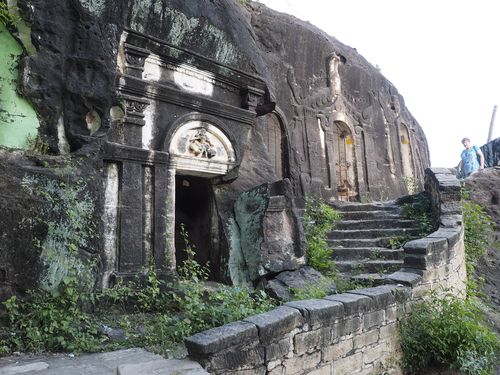
Pho Win Taung • Pho Win Taung Excavated Temples

Pho Win Taung • Pho Win Taung Excavated Temples

Pho Win Taung • Pho Win Taung Excavated Temples
Monument profile
Pho Win Taung Excavated Temples
Monument categories: Rock Sanctuary, Buddhist temple
Monument families: Temple • Rock Sanctuary and Monumental Bas-reliefs
Monument genres: Religious
Cultural heritage: Buddhist
Geographic location: Pho Win Taung • Myanmar
Construction period: 14th century AD
• Links to •
• List of videos about Pho Win Taung on this site •
Shwe Ba Taung, excavated temples • Myanmar
Pho Win Taung, cave Buddhist sanctuary • Myanmar
Political and Social Motivations Behind the Construction of the Pho Win Taung Temples in Myanmar
The Pho Win Taung temples, located in the Pho Win Taung region of Myanmar, are a significant cultural and religious site with deep historical roots. Constructed primarily between the 15th and 18th centuries, these rock-cut temples reflect the complex interplay of political, social, and religious forces that shaped the region during this period. This article explores the underlying motivations for their construction, the key historical events that influenced their development, and the challenges facing their preservation today.
Political and Social Motivations
The construction of the Pho Win Taung temples was driven by both political and social motivations that were deeply intertwined with the religious landscape of Myanmar. During the period of their construction, Myanmar was undergoing significant political consolidation under various dynasties, such as the Taungoo and Konbaung. These rulers used religion, particularly Buddhism, as a means to legitimize their power and unite the diverse populations under their control.
By sponsoring the construction of these temples, the kings and nobles demonstrated their piety and commitment to the spread of Buddhism. This not only helped to solidify their authority but also served as a means of reinforcing social cohesion among the populace. The temples became centers of religious activity, pilgrimage, and education, thereby integrating religious practice with daily life and strengthening the cultural identity of the region.
Socially, the temples provided a space for communities to engage in collective worship and meditation, fostering a sense of unity and shared purpose. The local population, involved in the construction and maintenance of the temples, saw these activities as a way to earn spiritual merit, a key concept in Buddhist practice. This community involvement also helped to reinforce the social structure, with the temples serving as both religious and social hubs.
Key Historical Events and Their Impact
The Pho Win Taung temples were significantly influenced by the historical context in which they were built. The 15th to 18th centuries in Myanmar were characterized by both periods of stability and conflict, as various dynasties vied for control over the region. During times of peace and prosperity, such as under the reigns of King Bayinnaung and King Alaungpaya, the construction and embellishment of the temples flourished, reflecting the political stability and economic growth of the time.
Conversely, periods of war and internal strife often led to the neglect or abandonment of temple construction projects. Despite these challenges, the religious significance of Pho Win Taung ensured that the site remained active, even during times of political instability. The temples served as places of refuge and continuity, preserving the spiritual and cultural practices of the region.
When placed in a global context, the period of Pho Win Taung’s development coincided with significant events such as the Renaissance in Europe, the Mughal Empire’s flourishing in India, and the Ming Dynasty’s rule in China. While Europe was experiencing a cultural revival that emphasized humanism and the arts, Myanmar was focusing on reinforcing its religious and cultural identity through the construction of Buddhist monuments. The Pho Win Taung temples can thus be seen as Myanmar’s parallel to the great architectural and artistic achievements occurring elsewhere in the world during the same period.
Major Transformations and Cultural Significance
Over the centuries, the Pho Win Taung temples have undergone several transformations, reflecting the changing political and cultural landscape of Myanmar. Additions and renovations to the temples often mirrored the prevailing artistic styles and religious practices of the time. The introduction of more elaborate carvings, frescoes, and statues during the 17th and 18th centuries, for example, demonstrates the influence of both local traditions and foreign artistic trends.
These transformations also illustrate the region’s interactions with neighboring cultures, particularly through trade and religious exchanges with India and China. The architectural styles and motifs found in the temples reveal a blend of indigenous Burmese elements with external influences, creating a unique cultural synthesis that is characteristic of the region.
The cultural significance of the Pho Win Taung temples has only grown over time. They are now recognized as important symbols of Myanmar’s religious heritage and artistic achievement. The temples continue to attract pilgrims and tourists alike, serving as a testament to the enduring legacy of Buddhism in the region.
Current State of Conservation and Preservation Challenges
Today, the Pho Win Taung temples face several challenges related to their preservation. The sandstone from which the temples are carved is susceptible to erosion, and the increasing number of visitors poses additional risks to the delicate carvings and frescoes. Furthermore, environmental factors such as humidity and temperature fluctuations contribute to the gradual deterioration of the site.
Efforts to preserve the temples have been limited by a lack of resources and expertise in heritage conservation. To ensure the long-term survival of this cultural treasure, it is essential to develop and implement a comprehensive conservation strategy that addresses both the physical preservation of the site and the management of tourism.
Conclusion
The Pho Win Taung temples are not only a remarkable example of Myanmar’s architectural and artistic heritage but also a symbol of the complex political and social dynamics that shaped the region. Their construction was motivated by the need to reinforce religious and cultural identity, while their survival over the centuries reflects the resilience of these traditions in the face of change. Preserving the Pho Win Taung temples for future generations will require concerted efforts to protect their integrity and maintain their status as a key cultural and religious site in Myanmar.
The Technological Innovation and Cultural Synthesis of the Pho Win Taung Temples in Myanmar
The Pho Win Taung temples, carved into the sandstone cliffs of central Myanmar, are a testament to the technological innovation and artistic mastery of the period in which they were constructed, primarily between the 15th and 18th centuries. These rock-cut temples not only demonstrate advanced construction techniques but also reflect a unique blend of regional and foreign artistic influences, making them a significant cultural and architectural landmark.
Technological Innovation and Construction Techniques
The architecture of the Pho Win Taung temples illustrates remarkable technological advancements for the era. The temples were meticulously carved out of sandstone, a material chosen for its workability and durability. Despite its relative softness compared to other stones, sandstone requires skilled craftsmanship to be shaped into complex structures without compromising stability. The artisans who worked on these temples demonstrated exceptional expertise in their ability to hollow out large, intricately designed spaces within the cliffs, creating expansive halls, stupas, and shrines.
The construction process involved precise planning to ensure that the caves were structurally sound and that they aligned with religious and aesthetic principles. Techniques such as the strategic placement of openings for natural light and ventilation reveal a sophisticated understanding of environmental integration. This approach allowed the temples to maintain a serene, well-lit atmosphere conducive to worship and meditation.
Architectural Characteristics and Cultural Synthesis
The architectural features of the Pho Win Taung temples are a striking example of cultural synthesis, combining indigenous Burmese traditions with influences from neighboring regions. The decorative motifs found within the temples, including murals and reliefs, depict various aspects of Buddhist teachings and mythology, presented through a distinctly Burmese lens. These decorations, however, also show stylistic elements borrowed from Indian and Chinese art, particularly in the depiction of religious figures and narrative scenes.
The use of specific architectural elements, such as the horse-shoe arches and elaborately carved doorways, reflects the influence of Indian temple design, while the detailed frescoes and intricate floral patterns bear similarities to Chinese artistic traditions. This fusion of styles creates a unique architectural language that is both distinctly Burmese and broadly representative of the cultural exchanges occurring in the region during that time.
The layout of the Pho Win Taung complex is another notable aspect of its architecture. The site features over 900 interconnected caves, each varying in size and function. This labyrinthine arrangement was likely designed to accommodate different religious activities, from solitary meditation to communal worship. The integration of natural rock formations into the design of the temples adds to the overall aesthetic, blurring the lines between the natural and the man-made.
Notable Structures and Anecdotes
One of the most remarkable features of the Pho Win Taung temples is their sheer number and the diversity of their interior spaces. Among the most significant structures are the large communal halls used for prayer and the smaller niches housing intricately carved Buddha statues. An anecdote often cited by locals is that certain sections of the temples were completed in record time, showcasing the dedication and skill of the artisans who worked under the direction of religious leaders.
While precise statistics on the number of carvings and the total area of the temple complex are difficult to ascertain, it is estimated that Pho Win Taung contains thousands of Buddha images and hundreds of square meters of murals, making it one of the largest rock-cut temple complexes in Southeast Asia.
International Recognition and UNESCO World Heritage Status
The unique architecture and cultural significance of the Pho Win Taung temples have the potential to earn international recognition, particularly through their nomination as a UNESCO World Heritage site. Such recognition would not only highlight the historical and artistic value of the temples but also provide much-needed support for their preservation.
UNESCO World Heritage status would bring global attention to the Pho Win Taung temples, helping to secure funding and expertise for conservation efforts. This recognition would also encourage sustainable tourism practices, ensuring that the site remains accessible while protecting it from the potentially damaging effects of increased visitation.
In conclusion, the Pho Win Taung temples stand as a powerful symbol of Myanmar's architectural innovation and cultural synthesis. Their preservation is crucial to maintaining a tangible connection to the region's rich historical and artistic heritage. With continued efforts and international support, the Pho Win Taung temples can be safeguarded for future generations, allowing them to continue to inspire awe and reverence.