

 Français (France)
  Nederlands (nl-NL)
 Popa Taungkalat Monastery, located on Mount Popa in Myanmar, is one of the best-known religious sites in the central part of the country. The sanctuary forms part of a wider network of pilgrimage places associated with Buddhist devotion and local spiritual traditions. Pilgrims and visitors regularly travel to the site to perform acts of worship, make offerings, and participate in religious practices. The monastery holds an important place in the spiritual life of the region and attracts travellers interested in Myanmar’s cultural and religious heritage. Today it remains a widely recognized landmark representing the country’s enduring religious traditions.
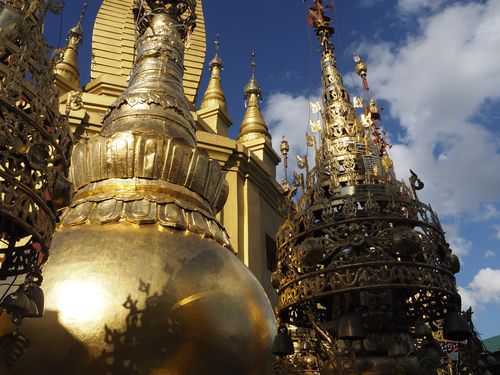
Mount Popa • Popa Taungkalat Monastery
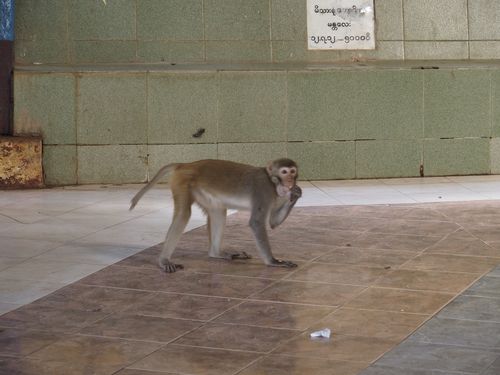
Mount Popa • Popa Taungkalat Monastery
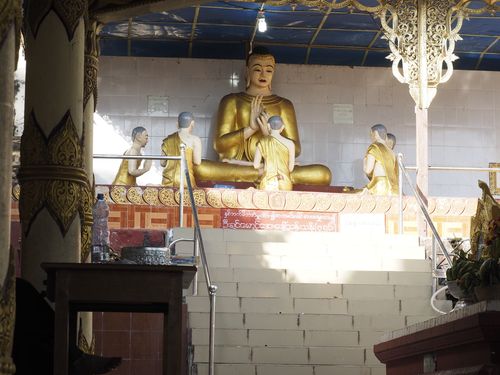
Mount Popa • Popa Taungkalat Monastery
Monument profile
Popa Taungkalat Monastery
Monument categories: Monastery, Pilgrimage site
Monument families: Monastery • Pilgrimage site or memorial
Monument genres: Religious
Cultural heritage: Buddhist
Geographic location: Mount Popa • Myanmar
Construction period: 11th century AD
• Links to •
• List of videos about Mount Popa on this site •
Mount Popa, the pagoda on the volcano • Myanmar (EN)
• Sources •
Sources
Books and Publications
- Ghosh, A. (2006). Architecture of the Burmese Monasteries. Oxford University Press.
- Fraser-Lu, S. (2001). Burmese Crafts: Past and Present. Oxford University Press.
History of Popa Taungkalat Monastery at Mount Popa
Popa Taungkalat Monastery, located on a volcanic plug at the base of Mount Popa in central Myanmar, is one of the most significant religious landmarks in the country. Rising dramatically above the surrounding plains, the sanctuary occupies a prominent geological formation that has long been associated with spiritual beliefs and sacred traditions. The monastery’s history reflects the interaction between Buddhist religious practice and older animist traditions, as well as the broader political and cultural developments that shaped Myanmar over many centuries. Today the site functions both as an important pilgrimage destination and as a symbol of the country’s religious heritage.
Political and social context of the foundation
The religious importance of the Mount Popa region predates the construction of the monastery itself. Long before Buddhist institutions were established in the area, the mountain and its surrounding landscape were associated with the worship of nats, powerful spirits believed to inhabit specific natural locations. These beliefs formed an essential component of traditional Burmese spiritual life.
During the rise of the Pagan Kingdom between the eleventh and thirteenth centuries, Burmese rulers attempted to integrate these local spiritual traditions into the broader framework of Theravāda Buddhism. This process formed part of a broader political strategy aimed at consolidating authority over diverse populations and belief systems.
King Anawrahta, who ruled Pagan during the eleventh century, played a central role in promoting Theravāda Buddhism throughout the region. While encouraging the construction of Buddhist temples and monasteries, the royal court also recognized the continuing importance of nat worship among the population. Rather than eliminating these traditions, the monarchy sought to incorporate them into a unified religious structure.
The establishment of religious structures at Mount Popa formed part of this policy. By building monasteries and sanctuaries in locations already regarded as sacred, the royal authorities reinforced their legitimacy while bringing local beliefs under the symbolic authority of Buddhism. Popa Taungkalat therefore emerged within a broader political effort to harmonize different religious traditions within the kingdom.
Major historical events affecting the site
Throughout its history the Mount Popa region experienced a series of political changes that influenced the development of Popa Taungkalat Monastery. During the Pagan period, the surrounding plains became one of the most densely built religious landscapes in Southeast Asia, with thousands of temples constructed across the region.
Following the decline of the Pagan Kingdom in the late thirteenth century, central Myanmar entered a period of political fragmentation. Despite the collapse of royal authority, pilgrimage sites connected to spiritual traditions continued to attract worshippers. Mount Popa remained an important center for nat worship and religious devotion.
Later dynasties, including the Ava and Toungoo kingdoms, maintained varying degrees of support for religious institutions associated with Mount Popa. While large-scale temple construction was less frequent than during the Pagan era, the continued presence of pilgrims ensured that the site retained its spiritual importance.
During the Konbaung dynasty, which ruled Burma from the eighteenth to the nineteenth century, Mount Popa continued to function as a significant religious center. Royal patronage and donations from wealthy devotees helped maintain monastic structures and support religious festivals connected with the cult of the nats.
The British colonial conquest of Burma in the nineteenth century introduced new political realities. Although the monarchy was abolished and the administrative structure of the country changed dramatically, many religious institutions retained their social influence. Sites such as Popa Taungkalat remained active pilgrimage destinations, largely unaffected by colonial administrative policies.
Global context during the development of the monument
The historical development of Popa Taungkalat Monastery took place within broader global patterns of religious architecture and sacred landscapes. Across Asia during the medieval period, rulers constructed monumental religious complexes to reinforce their authority and demonstrate spiritual legitimacy.
In mainland Southeast Asia, the Khmer Empire built vast temple complexes such as Angkor to symbolize cosmic order and royal power. In the Indian subcontinent, both Hindu and Buddhist temples formed key elements of political and cultural identity. Similar traditions were visible in East Asia, where mountain monasteries played an important role in Buddhist practice.
Mount Popa belongs to this wider tradition of sacred mountains associated with religious pilgrimage. Throughout Asia, elevated landscapes have frequently been regarded as places where the spiritual and natural worlds intersect. Monasteries built in such locations often served both as centers of religious practice and as symbolic expressions of sacred geography.
Transformations of the site over time
Over the centuries Popa Taungkalat Monastery underwent numerous modifications. Early structures were likely modest and adapted to the difficult terrain of the volcanic plug. As pilgrimage activity increased, new buildings were gradually added to accommodate the growing number of visitors.
Access routes were progressively improved. Stairways and paths were constructed to facilitate the ascent to the summit of the rocky outcrop. These routes became an essential part of the pilgrimage experience, guiding visitors through a symbolic journey toward the sanctuary.
During the twentieth century additional structures were introduced around the monastery to support the needs of pilgrims and visitors. These included small shrines dedicated to various nats, resting areas, and spaces for religious offerings.
Urban and infrastructural development in central Myanmar also influenced the accessibility of Mount Popa. Improvements in transportation made the site easier to reach, contributing to an increase in pilgrimage and tourism.
Contemporary role and cultural significance
Today Popa Taungkalat Monastery remains one of the most important religious destinations in Myanmar. Pilgrims travel from across the country to pay homage to both Buddhist figures and the nats traditionally associated with the mountain.
The site is particularly linked with the worship of the Thirty-Seven Nats, a group of spirits recognized in Burmese spiritual tradition. Shrines dedicated to these figures are located throughout the complex, and offerings are commonly made in their honor.
Religious festivals connected to nat worship take place regularly at Mount Popa. These gatherings attract large numbers of participants and include rituals, music, and ceremonial offerings. Such events illustrate the continuing vitality of spiritual traditions that combine elements of Buddhism with older beliefs.
Beyond its religious importance, Popa Taungkalat has become a widely recognized symbol of Myanmar’s cultural heritage. The striking visual appearance of the monastery rising above the volcanic plug contributes to its iconic status within the country’s historical landscape.
Conservation and modern challenges
The preservation of Popa Taungkalat Monastery presents several challenges related to both environmental conditions and human activity. The tropical climate of central Myanmar exposes buildings to heavy rainfall, humidity, and temperature fluctuations that can affect construction materials.
The geological nature of the volcanic plug also requires careful management. Natural erosion and weathering can influence the stability of structures built on steep slopes and narrow terraces.
Increased tourism has introduced additional pressures on the site. Large numbers of visitors require infrastructure maintenance, waste management, and protection of fragile areas.
Restoration projects and maintenance efforts are regularly undertaken with the support of religious authorities and local communities. These initiatives aim to preserve the traditional character of the monastery while ensuring the safety of visitors.
Although Mount Popa and Popa Taungkalat Monastery are not currently listed as UNESCO World Heritage sites, they are widely regarded as important components of Myanmar’s cultural and spiritual landscape. The monastery continues to represent the enduring relationship between sacred geography, religious devotion, and historical identity in the country.
Architecture of Popa Taungkalat Monastery at Mount Popa
Popa Taungkalat Monastery stands on a volcanic plug rising from the plains at the base of Mount Popa in central Myanmar. Its architectural significance lies not only in its religious function but also in the technical solutions developed to construct a complex of shrines, terraces, and monastic buildings on a narrow and steep geological formation. The site illustrates how Burmese religious architecture adapted to dramatic natural topography while maintaining symbolic and aesthetic conventions associated with Theravāda Buddhist sacred spaces. The design of the monastery integrates structural ingenuity, traditional construction techniques, and a spatial organization shaped by pilgrimage practices and ritual circulation.
Architectural and technological innovations
The most striking architectural feature of Popa Taungkalat is its adaptation to an extremely constrained site. The volcanic plug on which the monastery stands rises abruptly above the surrounding terrain and offers only limited horizontal space. Builders therefore developed a layered architectural arrangement based on terraces carved or constructed along the contours of the rock.
This terraced organization distributes structural loads and creates stable platforms for buildings and shrines. Each terrace functions as both a structural foundation and a ritual space where pilgrims can pause, make offerings, or observe surrounding landscapes. The progressive ascent through these levels produces a vertical sequence that mirrors symbolic spiritual elevation.
Access to the summit is provided by a long stairway composed of several hundred steps. This stairway represents one of the most significant architectural elements of the complex. Rather than functioning solely as an access route, it establishes a ceremonial axis guiding visitors through the sacred landscape. Covered walkways and protective roofing along portions of the staircase provide shade and protection from seasonal rains.
Structural stability posed a major challenge for the builders. The narrow summit required careful distribution of weight and compact building volumes. Many structures are relatively small and closely arranged, minimizing the risk associated with heavy loads. Foundations are anchored directly to the volcanic rock, ensuring that the buildings remain stable despite wind exposure and climatic variations.
Ventilation and thermal comfort also influenced the architectural design. Many structures incorporate open galleries, verandas, and lightweight partitions that allow air to circulate freely. This design reduces heat accumulation and improves comfort in a tropical environment where temperatures can rise significantly during the day.
Materials and construction methods
The construction materials used at Popa Taungkalat reflect both practical considerations and regional building traditions. The foundation of the entire complex rests on solid volcanic basalt, which provides a stable structural base. Builders took advantage of this geological foundation by anchoring masonry walls and platforms directly into the rock surface.
Brick masonry constitutes one of the primary building materials used for walls and structural elements. Bricks were commonly employed throughout Burmese architecture due to their durability and adaptability. At Popa Taungkalat, brick structures are typically covered with layers of plaster or stucco, producing smooth surfaces that can be painted or gilded.
Stucco also allows craftsmen to shape decorative reliefs and ornamental details. Floral patterns, geometric motifs, and symbolic imagery are often integrated into these surfaces, demonstrating the close relationship between structural construction and artistic expression.
Wood plays an important role in secondary structural components. Roof frameworks, beams, balustrades, and decorative panels frequently rely on timber construction. Burmese carpentry traditions emphasize intricate joinery techniques that allow wooden elements to be assembled without excessive reliance on metal fasteners.
Roofing materials vary across the complex. Lightweight metal sheets and traditional tiles are commonly used to reduce structural weight. This choice is particularly important on the summit terraces, where excessive loads could compromise structural stability.
In many parts of the complex, gilded surfaces and decorative metal elements contribute to the visual identity of the monastery. Golden stupas, ornamental spires, and ritual umbrellas placed above shrines reflect long-standing Burmese traditions in which gilding symbolizes spiritual merit and sacred prestige.
Architectural and artistic influences
The architecture of Popa Taungkalat reflects the convergence of several cultural and religious traditions. While the monastery belongs primarily to the Theravāda Buddhist architectural tradition, it also incorporates elements associated with the cult of the nats, the powerful spirits venerated in Burmese folk religion.
This dual religious context is visible in the spatial organization of the complex. Buddhist shrines coexist with altars dedicated to nat spirits, illustrating the integration of pre-Buddhist beliefs into the religious landscape of Myanmar. Many structures house statues or symbolic representations associated with these spirits.
Architecturally, the complex follows patterns established in earlier Burmese religious centers such as Bagan and Mandalay. Multi-tiered roof forms, ornamental finials, and gilded stupas represent characteristic features of Burmese sacred architecture.
Decorative programs emphasize symbolic imagery connected to Buddhist cosmology as well as local mythological traditions. Carved motifs often include lotus flowers, mythical creatures, and protective figures. These decorative elements reinforce the sacred character of the site while linking it visually to other religious monuments across Myanmar.
Color also plays a significant role in the visual composition of the complex. Gold surfaces contrast with bright painted structures, producing a striking visual presence against the dark volcanic rock of the mountain.
Spatial organization and structural layout
The spatial arrangement of Popa Taungkalat is determined largely by the topography of the volcanic plug. The complex develops vertically rather than horizontally, with successive architectural layers rising toward the summit.
At the base of the formation begins the primary ascent route, which guides visitors upward through a sequence of staircases and terraces. Along this route, small shrines and pavilions appear at intervals, allowing pilgrims to pause for ritual acts or contemplation.
Intermediate terraces serve both structural and ceremonial purposes. These platforms accommodate statues, offering areas, and resting spaces while reinforcing the stability of the overall structure.
The summit terrace forms the central religious core of the complex. Here several stupas, prayer halls, and small monastic buildings cluster closely together. The limited space has encouraged compact architectural forms and careful spatial organization.
Balustrades and retaining walls play a crucial role in maintaining safety and structural integrity. These elements prevent erosion of the terraces and protect visitors from the steep cliffs surrounding the summit.
The visual composition of the complex emphasizes verticality. Spires, stupas, and rooflines draw the eye upward, reinforcing the symbolic ascent associated with the pilgrimage experience.
Dimensions and notable features
The volcanic plug supporting Popa Taungkalat rises approximately 737 meters above sea level and stands several hundred meters above the surrounding plains. The monastery itself occupies the upper portion of this formation.
The ascent to the summit typically involves climbing between 700 and 800 steps, depending on the route taken. This physical effort forms an integral part of the pilgrimage experience and contributes to the dramatic perception of the monument.
One notable characteristic of the site is the presence of numerous statues representing the Thirty-Seven Nats of Burmese tradition. These figures are displayed in various shrines throughout the complex and play an important role in local religious practices.
Another distinctive feature is the contrast between the dark volcanic rock and the brightly colored religious structures built upon it. This visual contrast enhances the monument’s dramatic appearance when viewed from the surrounding plains.
Legends associated with Mount Popa also contribute to the architectural identity of the monastery. Many narratives describe the mountain as the dwelling place of powerful spirits, reinforcing the symbolic importance of constructing religious buildings on this elevated site.
International recognition and conservation challenges
The architectural character of Popa Taungkalat contributes significantly to its international reputation. Few religious sites combine such a striking geological formation with a dense concentration of shrines and monastic buildings.
However, the preservation of the monument presents several challenges. The exposed location subjects buildings to strong winds, intense sunlight, and seasonal rainfall. These environmental conditions gradually affect both masonry and wooden elements.
The volcanic rock itself undergoes natural erosion over time. Maintaining stable terraces and retaining walls requires continuous monitoring and periodic restoration work.
Tourism and pilgrimage also create pressures on the site. Large numbers of visitors increase wear on stairways, terraces, and structural components. Waste management and infrastructure maintenance have become important aspects of site preservation.
Local religious communities and authorities regularly undertake maintenance and restoration projects to preserve the monastery’s architectural integrity. These interventions aim to balance conservation with continued religious use.
Although Mount Popa and Popa Taungkalat are not currently included on the UNESCO World Heritage List, they are widely recognized as one of the most distinctive sacred landscapes in Myanmar. The monastery’s architecture represents a unique synthesis of natural topography, religious symbolism, and traditional Burmese construction techniques, making it one of the most visually and culturally significant religious sites in the region.