

 Français (France)
  Nederlands (nl-NL)
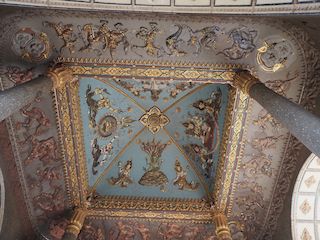
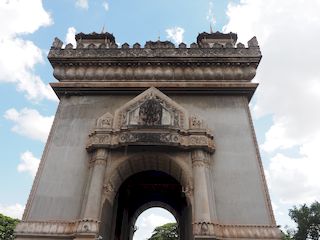
 The Patuxay Monument, located in Vientiane, is one of Laos' iconic landmarks. Built between 1957 and 1968, this monument commemorates the Laotian fighters who participated in the independence conflicts against France. Its architectural design is inspired by the Arc de Triomphe in Paris, while incorporating distinct Laotian motifs, such as images of deities and mythological creatures. Overlooking Lane Xang Avenue, the monument provides a panoramic view of the city from its top, attracting numerous local and international visitors each year.

Vientiane • Patuxay monument
Vientiane • Patuxay monument
Vientiane • Patuxay monument
Monument profile
Patuxay monument
Monument categories: Triumphal Arch, Memorial monument
Monument family: Monument for cultural purposes
Monument genre: Cultural or scientific
Geographic location: Vientiane • Laos
Construction period: 20th century AD
• Links to •
• List of videos about Vientiane on this site •
Vientiane, Sacred Architectures • Laos
Laos • Fabric Arts
Vientiane, the Triumphal Arch Patuxay • Laos
• Sources •
Online sources
Books and Publications
- "Laos: A Country Study" by Andrea Matles Savada, Federal Research Division
- "The Politics of History in Laos: Reversing the Symbolic Order" by Grant Evans
The Patuxay Monument in Vientiane: Political Motivations, Historical Context, and Preservation Challenges
The Patuxay Monument, located in Vientiane, Laos, stands as a prominent symbol of national pride and historical significance. Constructed between 1957 and 1968, this monumental arch was built to commemorate Laotian fighters who sacrificed their lives during the country’s struggle for independence from French colonial rule. The motivations behind its construction, the historical events that have shaped its legacy, and the ongoing challenges in preserving its integrity provide a fascinating insight into the socio-political fabric of Laos.
Political and Social Motivations
The construction of the Patuxay Monument was driven by a strong desire to honor the Laotian soldiers who fought for the country's independence. Following the end of French colonial rule in 1954, Laos sought to assert its national identity and unity. The monument served not only as a war memorial but also as a symbol of the country's aspirations for sovereignty and progress. It was a statement of resilience and a declaration of a new era of self-governance and national pride.
Historical Context and Major Events
The period during which Patuxay was constructed was marked by significant political turbulence. The Cold War era influenced Southeast Asia heavily, with Laos caught between the competing interests of the United States and the Soviet Union. The internal struggle between royalist forces and the communist Pathet Lao added to the complexity of the nation's political landscape. These events had a profound impact on the socio-political development of Laos, shaping its modern history.
Global Context and Comparisons
Globally, the construction of Patuxay can be seen as part of a broader trend of post-colonial nations building monumental structures to assert their newly found independence. Similar to India’s India Gate or Ghana’s Independence Arch, Patuxay represents a nationalistic expression common in many countries that emerged from colonial rule in the mid-20th century. These structures served to solidify national identity and inspire unity among the populace.
Transformations and Cultural Influences
Over the decades, Patuxay has undergone several transformations, reflecting shifts in political power and cultural influences. Originally intended to be adorned with more elaborate decorations, budget constraints left some aspects incomplete. Nevertheless, the monument incorporates traditional Laotian motifs, such as depictions of mythical creatures and deities, blended with an architectural style reminiscent of the Arc de Triomphe in Paris.
These transformations illustrate how external influences and internal cultural heritage coexist within the monument. Changes in government and ideology have occasionally altered the narrative surrounding Patuxay, but its role as a cultural and historical landmark remains steadfast.
Cultural Importance and Current Condition
Today, Patuxay is not only a major tourist attraction but also a cultural icon for the Laotian people. It is a place of national ceremonies and a symbol of peace and resilience. Despite its historical and cultural significance, the monument faces challenges related to preservation. The tropical climate, with its heavy rains and humidity, poses a constant threat to the structural integrity of the monument. Pollution and urban development also contribute to the wear and tear of this historical site.
Preservation Challenges
Maintaining Patuxay’s historical integrity amidst modern threats requires ongoing efforts. Conservation initiatives must address both environmental factors and the pressures of increasing tourism. Regular maintenance, restoration projects, and protective measures are crucial to safeguard the monument. Public awareness and international cooperation can play vital roles in ensuring the monument's preservation for future generations.
In conclusion, the Patuxay Monument stands as a testament to Laos's journey towards independence and its enduring cultural heritage. The political and social motivations behind its construction, the historical events that have shaped its existence, and the continuous efforts required to preserve its integrity highlight its significance. Patuxay remains a powerful symbol of national pride and a reminder of the resilience and unity of the Laotian people.
Architectural Significance of the Patuxay Monument: Technological Advances, Cultural Synthesis, and Preservation
The Patuxay Monument in Vientiane, Laos, is a striking example of how architecture can embody technological advancement, cultural synthesis, and national pride. Constructed between 1957 and 1968, the monument reflects the era's technological innovations and the unique blending of regional artistic traditions with foreign influences. This article explores the materials and construction techniques used, the architectural features that distinguish the monument, and the broader impact on its recognition and preservation.
Technological Advances and Construction Techniques
The construction of the Patuxay Monument during the late 1950s and 1960s showcased several technological advancements of the time. The primary material used was reinforced concrete, which was chosen for its durability and strength. This material allowed for the creation of large, imposing structures capable of withstanding the tropical climate of Vientiane. The use of concrete also facilitated the inclusion of intricate decorative elements, which were sculpted directly onto the structure.
The construction techniques employed included modern engineering practices that were advanced for Laos at the time. The ability to mold concrete into various shapes and forms enabled the integration of both traditional Laotian motifs and architectural elements inspired by the Arc de Triomphe in Paris. The combination of these techniques resulted in a monument that was both structurally sound and artistically elaborate.
Architectural Features and Cultural Synthesis
The architectural design of the Patuxay Monument is a testament to the blending of Laotian traditions with foreign influences. The overall structure is reminiscent of the Arc de Triomphe, symbolizing victory and resilience. However, the monument is distinctly Laotian in its decorative details. The use of "Kinnari" figures – mythical creatures part bird and part human – along with floral and geometric motifs, showcases traditional Laotian artistry.
The monument's four arches and central tower are adorned with intricate carvings and bas-reliefs that depict scenes from Laotian mythology and history. This fusion of styles highlights the cultural synthesis that characterizes the monument. The design serves as a bridge between Laotian heritage and the broader architectural trends of the time.
Notable Structure and Layout
The Patuxay Monument features a symmetrical layout with four entrances, each leading to an interior space that houses exhibition halls and offices. The central tower rises to a height of 49 meters, providing a panoramic view of Vientiane from the observation deck. The monument's base measures 24 meters on each side, creating a solid foundation for the towering structure.
One notable anecdote about the monument's construction is that it was partially funded by money originally intended for a new airport. This redirection of funds earned the monument the nickname "the vertical runway." Despite budget constraints, the monument was completed with significant contributions from local artisans and craftsmen, who imbued it with traditional Laotian artistic elements.
International Recognition and Preservation
The architectural significance of the Patuxay Monument has contributed to its recognition on the international stage. While it is not listed as a UNESCO World Heritage Site, its status as a cultural and historical landmark draws visitors from around the world. The monument's design, combining local and foreign elements, makes it a unique symbol of Laotian identity and heritage.
The preservation of the Patuxay Monument faces several challenges. The tropical climate, with its high humidity and frequent rains, accelerates the deterioration of the concrete and decorative elements. Urban development and pollution also pose threats to the monument's structural integrity. Regular maintenance and restoration efforts are essential to preserving its historical and cultural value.
In conclusion, the Patuxay Monument stands as a powerful example of technological advancement, cultural synthesis, and national pride. Its construction techniques and materials reflect the technological capabilities of the time, while its architectural features embody a unique blend of Laotian traditions and foreign influences. Despite the challenges in preserving its integrity, the monument remains a symbol of resilience and a testament to the rich cultural heritage of Laos.