

 Français (France)
  Nederlands (nl-NL)
 TWat Khilly is a Buddhist monastery located in the historic city of Luang Prabang in Laos. It forms part of the extensive network of religious institutions that define the former royal capital, a city known for its large concentration of temples and monastic complexes. Like many monasteries in Luang Prabang, Wat Khilly reflects the central role of Theravada Buddhism in the religious and social life of the region. The site contributes to the cultural landscape of the city, where temples and monasteries shape both daily life and historical identity. Wat Khilly continues to function as an active place of worship and monastic activity within the urban environment.

Luang Prabang • Wat Khilly
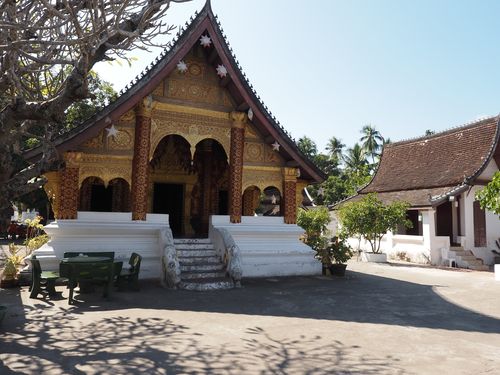
Luang Prabang • Wat Khilly

Luang Prabang • Wat Khilly
Monument profile
Wat Khilly
Monument categories: Monastery, Buddhist temple
Monument families: Temple • Monastery
Monument genres: Religious
Cultural heritage: Buddhist
Geographic location: Luang Prabang • Laos
Construction period: 18th century AD
This monument in Luang Prabang is inscribed on the UNESCO World Heritage List since 1995 and is part of the serial property "Town of Luang Prabang".See the UNESCO monuments featured on this site
• Links to •
• List of videos about Luang Prabang on this site •
Luang Prabang, Royal Palace • Laos
Luang Prabang, the markets • Laos
Luang Prabang, Wat Sensoukharam temple • Laos
Luang Prabang, Sunset on Mount Phou Si • Laos
Luang Prabang, Wat Xieng Thong temple • Laos
Luang Prabang, paper making workshop • Laos
Laos • Fabric Arts
Luang Prabang, a City in the Countryside • Laos
Luang Prabang, some temples • Laos
• References •
UNESCO: Town of Luang Prabang
History of Wat Khilly in Luang Prabang
Wat Khilly is one of the numerous Buddhist monasteries located on the historic peninsula of Luang Prabang in northern Laos. As part of a dense religious landscape shaped by centuries of Buddhist patronage, the monastery reflects the broader historical development of Luang Prabang as a political capital, a religious center, and a cultural crossroads within mainland Southeast Asia. Although not among the largest temples of the city, Wat Khilly forms an integral component of the monastic network that structured the urban and spiritual life of the former royal capital.
Political and social context of the foundation
The establishment of Wat Khilly must be understood within the context of the traditional relationship between political authority and Buddhist institutions in the Lao kingdoms. Since the formation of the Kingdom of Lan Xang in the fourteenth century, rulers and local elites regularly sponsored the construction of monasteries as a means of reinforcing their legitimacy and demonstrating their commitment to the protection of Buddhism.
In the political ideology of the region, the monarch was expected to act as a defender of the sangha, the monastic community. The patronage of temples allowed rulers to accumulate religious merit while strengthening the moral foundations of their authority. Monasteries therefore served both spiritual and political functions, contributing to the consolidation of royal power and social cohesion.
Within this framework, the construction of monasteries such as Wat Khilly also responded to urban needs. As Luang Prabang expanded, neighborhoods often became associated with specific monastic institutions that served as centers of worship, education, and community gatherings. The presence of a monastery helped structure the daily life of residents and provided a space where religious teachings, rituals, and social activities could be organized.
Local aristocratic families and influential figures frequently played an important role in the creation or maintenance of temples. Supporting a monastery allowed them to demonstrate their devotion, enhance their prestige, and strengthen their influence within the urban community. In this sense, the foundation of Wat Khilly likely reflected both religious motivations and the broader dynamics of social competition among elite groups.
Major historical events affecting the site
Throughout its history, Wat Khilly has been influenced by the political transformations that shaped Luang Prabang and the Lao region. The fragmentation of the Kingdom of Lan Xang in the eighteenth century led to the emergence of several smaller Lao kingdoms, including the Kingdom of Luang Prabang. During this period, regional rivalries and shifting alliances created a complex political environment.
The city remained a significant religious center despite these political changes. Monasteries continued to function as important institutions, providing stability during periods of uncertainty. While some temples in the region experienced damage or decline during times of conflict, many monasteries in Luang Prabang were maintained through the support of local rulers and communities.
In the nineteenth century, the geopolitical landscape of mainland Southeast Asia changed dramatically with the expansion of European colonial powers. Laos gradually came under French influence and was eventually incorporated into French Indochina. Luang Prabang retained a local monarchy under French protection, which allowed certain traditional institutions, including the Buddhist monastic system, to continue operating with relative continuity.
During the colonial period, many temples benefited from a degree of protection as elements of the cultural heritage of the region. Although the colonial administration introduced new administrative and urban structures, it generally recognized the religious significance of the monastic landscape.
The twentieth century brought further changes with the political upheavals that accompanied the end of colonial rule and the emergence of modern nation-states in Southeast Asia. Despite these transformations, the monastic institutions of Luang Prabang remained active, preserving many aspects of their traditional role within society.
Global context during the period of construction
The development of monasteries such as Wat Khilly occurred during a time when many societies in Southeast Asia were reaffirming their cultural identity through religious architecture. Temples and monasteries were essential components of urban and political organization, serving as visible symbols of religious devotion and cultural continuity.
At the global level, the eighteenth and nineteenth centuries were characterized by significant transformations. European countries were undergoing industrialization and expanding their colonial networks, while Asian kingdoms faced growing pressure from foreign powers.
In many parts of Asia, religious monuments played an important role in maintaining social cohesion during these periods of change. The construction or renovation of temples often represented an effort to reinforce cultural traditions and reaffirm religious values in the face of shifting political circumstances.
Within this broader context, the continued development of monastic institutions in Luang Prabang reflects the resilience of local religious traditions and their capacity to adapt to evolving political realities.
Transformations and evolution of the site
Like many Buddhist monasteries in Southeast Asia, Wat Khilly has undergone various phases of restoration and modification throughout its existence. These transformations were often necessary to repair structures affected by climate, age, or occasional damage.
Renovation works typically involved the reconstruction of roofs, the repair of wooden structural elements, and the restoration of decorative surfaces. Such interventions were usually financed through donations from the faithful or through support from local patrons.
The urban environment surrounding the monastery has also evolved over time. Luang Prabang gradually developed into a city where traditional Lao architecture coexists with influences introduced during the colonial period. Despite these changes, the historic peninsula has retained a remarkably high concentration of monasteries.
This continuity has allowed Wat Khilly to remain part of a coherent religious landscape in which numerous temples contribute to the spiritual identity of the city.
Contemporary role and cultural significance
Today, Wat Khilly continues to function as an active Buddhist monastery within the religious life of Luang Prabang. Monks and novices residing at the monastery participate in daily rituals, meditation practices, and religious education.
The monastery also plays a role in the cultural traditions of the local community. Religious ceremonies and merit-making activities bring residents together and reinforce social bonds between the monastic community and the lay population.
Luang Prabang has become an important destination for visitors interested in the cultural and religious heritage of Southeast Asia. Monasteries such as Wat Khilly contribute to the city’s reputation as a place where Buddhist traditions remain deeply embedded in everyday life.
Visitors often encounter monks engaged in their daily routines, offering a visible reminder of the continuity of monastic practices that have shaped the city for centuries.
Conservation and modern challenges
The preservation of Wat Khilly is closely linked to the broader protection of Luang Prabang’s historic urban landscape. The city is widely recognized for its exceptional cultural heritage, particularly its remarkable concentration of Buddhist temples.
However, several challenges affect the conservation of these monuments. The tropical climate, characterized by high humidity and heavy rainfall, can accelerate the deterioration of wooden structures and decorative surfaces. Regular maintenance is therefore essential to preserve the integrity of the buildings.
Urban development and tourism also present new challenges. As visitor numbers increase, managing the balance between heritage conservation and tourism activities becomes increasingly important.
Local authorities, religious institutions, and conservation organizations have implemented various measures to maintain the architectural and cultural integrity of the city’s monasteries. Restoration projects often emphasize the use of traditional techniques and materials in order to preserve the authenticity of the structures.
Through these efforts, Wat Khilly remains an important element of the historical and religious landscape of Luang Prabang. Its continued presence illustrates the enduring role of Buddhist monasteries in shaping the cultural identity of the city and maintaining the spiritual traditions of the Lao people.
Architecture of Wat Khilly in Luang Prabang
Wat Khilly forms part of the dense monastic landscape that characterizes the historic peninsula of Luang Prabang in northern Laos. The monastery illustrates the architectural traditions that developed in the Lao kingdoms and that continue to shape the religious environment of the former royal capital. Although more modest in scale than some of the city’s most prominent temples, the complex presents a coherent example of the architectural principles governing Buddhist monasteries in the region. Its buildings combine functional design, climatic adaptation, and symbolic ornamentation, reflecting both religious requirements and the long evolution of local construction techniques.
Architectural innovations and technical principles
The architecture of Wat Khilly reflects a set of construction principles adapted to the climatic and cultural conditions of northern Laos. The buildings are designed to cope with high humidity, seasonal monsoon rains, and intense sunlight, all of which have influenced the development of monastic architecture throughout mainland Southeast Asia.
One of the most distinctive architectural features is the use of steeply sloping roofs composed of several overlapping tiers. These roofs serve both practical and symbolic functions. From a technical perspective, the pronounced slope allows rainwater to drain rapidly during heavy tropical downpours. The wide projecting eaves also protect the walls from direct exposure to rain and sunlight, helping to preserve the integrity of the structure.
The internal spatial design also contributes to climatic comfort. Large openings, high ceilings, and ventilation gaps beneath the roof allow air to circulate freely through the buildings. This passive ventilation system reduces heat accumulation inside the prayer halls and living quarters, creating a more stable interior environment without the need for mechanical cooling.
The placement of buildings within the monastic compound also reflects careful planning. Structures are typically arranged around open courtyards that provide light and ventilation while also serving as spaces for circulation and religious gatherings. This spatial organization allows the monastery to function efficiently while maintaining a calm atmosphere suitable for meditation and religious practice.
Materials and construction methods
The construction of Wat Khilly relies largely on traditional materials commonly used in Lao religious architecture. Wood plays a central role in the structural framework, particularly in the roof structures, columns, and decorative elements. Timber is widely available in the region and offers flexibility and resilience when used in properly designed structures.
Wooden frameworks support the large roof structures that define the visual character of the temple buildings. Skilled carpentry techniques allow artisans to create complex joints and structural assemblies without relying heavily on metal fasteners. These methods have been refined over centuries and remain characteristic of monastic architecture in Laos.
The base of the buildings is generally constructed using masonry, often composed of brick covered with plaster or stucco. This raised masonry platform protects the wooden structures from ground moisture and provides stability to the entire building. The elevated base also contributes to the monumentality of the temple structures while improving drainage during periods of heavy rain.
Roof coverings typically consist of traditional tiles designed to withstand tropical weather conditions. Their overlapping arrangement ensures effective water runoff while contributing to the layered appearance that characterizes many temples in Luang Prabang.
Decorative surfaces frequently incorporate gilded or painted elements. These embellishments are not purely ornamental; they often carry symbolic meanings associated with Buddhist cosmology and religious narratives.
Artistic and stylistic influences
The architectural style of Wat Khilly reflects the broader artistic traditions of the Lao cultural sphere. Temples in Luang Prabang are known for their elegant proportions, multi-tiered roofs, and refined decorative details, all of which contribute to a distinctive regional identity.
The triangular gables of the buildings often serve as focal points for decorative programs. These areas may include carved wooden panels, gilded motifs, or painted designs representing mythological creatures, floral patterns, or symbolic religious imagery. Such ornamentation reflects the integration of Buddhist iconography with local artistic traditions.
The stylistic evolution of temples in Luang Prabang also reveals influences from neighboring regions. Cultural exchanges with northern Thailand and other parts of mainland Southeast Asia contributed to the diffusion of certain architectural forms and decorative motifs. These interactions enriched the local architectural vocabulary while maintaining the distinctive character of Lao religious architecture.
Despite these external influences, the overall composition of Wat Khilly remains firmly rooted in the traditions developed under the Lao kingdoms. The balance between structural simplicity and decorative richness is a hallmark of this architectural heritage.
Spatial organization and structural composition
The layout of Wat Khilly follows the typical organization of Buddhist monastic complexes in Southeast Asia. The central structure is usually the viharn, or main assembly hall, where religious ceremonies take place and where important Buddha images are installed.
This building typically occupies a prominent position within the compound. Its elevated platform and large roof structure distinguish it from the surrounding buildings and emphasize its importance as the spiritual center of the monastery.
Around the main hall are smaller structures that serve different functions within the monastic community. Residential quarters for monks and novices are usually arranged in quieter areas of the compound. These buildings provide spaces for study, meditation, and daily living.
Additional structures may include small shrines, storage pavilions, or auxiliary halls used for teaching and religious gatherings. Pathways connecting these buildings create a coherent circulation system that links the various parts of the monastery.
The central courtyard plays an important role in the organization of the site. It provides an open space that allows natural light to reach the surrounding buildings while also accommodating processions and communal activities associated with religious ceremonies.
Dimensions and notable characteristics
Wat Khilly does not rely on monumental scale to achieve architectural significance. Instead, its importance lies in the harmonious proportions and careful integration of its buildings within the urban landscape of Luang Prabang.
The main prayer hall typically represents the most visually prominent structure of the complex. Its layered roof system creates a vertical emphasis that draws attention to the central building while maintaining balance with the surrounding elements of the monastery.
Architectural details such as carved wooden brackets, decorated lintels, and sculpted gables contribute to the aesthetic richness of the monument. These elements demonstrate the craftsmanship of the artisans who participated in the construction and maintenance of the temple.
Community participation has historically played an important role in the upkeep of monasteries like Wat Khilly. Local residents often contribute to maintenance and restoration efforts, reinforcing the connection between the temple and the surrounding neighborhood.
Certain local traditions also associate temples with protective spiritual functions. While such beliefs vary among communities, they contribute to the symbolic significance attributed to monastic sites throughout the region.
International recognition and conservation challenges
The architectural value of Wat Khilly is closely linked to the broader heritage of Luang Prabang. The city is widely recognized for the remarkable concentration of Buddhist monasteries that form a unique historical and cultural landscape.
Preserving these monuments requires ongoing attention. The tropical climate poses challenges for the conservation of wooden structures and decorative surfaces, which can deteriorate under conditions of humidity, rainfall, and biological growth.
Maintenance efforts often involve the use of traditional materials and techniques to ensure that repairs remain consistent with the original construction methods. This approach helps preserve the authenticity of the architectural heritage while maintaining the structural integrity of the buildings.
Urban development and tourism also influence conservation strategies. As Luang Prabang continues to attract visitors from around the world, authorities and religious communities must manage the balance between public access and the preservation of sacred spaces.
Despite these challenges, Wat Khilly remains a significant component of the architectural and spiritual landscape of Luang Prabang. Its buildings illustrate the enduring principles of Lao monastic architecture, combining functional design, climatic adaptation, and artistic expression within a coherent religious complex.