

 Français (France)
  Nederlands (nl-NL)
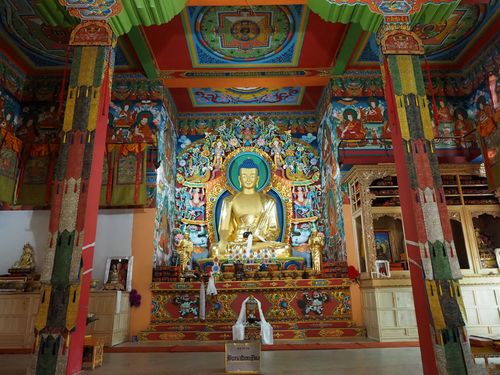
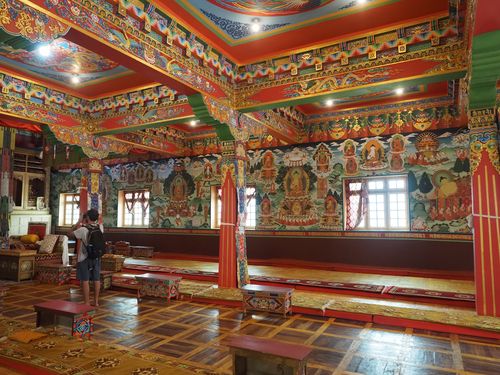
 Phyang Gompa, located in Phyang in the Ladakh state of India, is a significant Buddhist monastery founded in the early 16th century. It is affiliated with the Drikung Kagyu tradition of Tibetan Buddhism and plays a crucial role in the religious and cultural life of the region. Phyang Gompa houses an extensive collection of thangkas, ancient wall paintings, and statues of Buddhist deities. Each year, the monastery hosts the Phyang Tsedup festival, drawing numerous pilgrims and visitors to witness ritual dances and ceremonies.

Monument profile
Phyang Gompa
Monument category: Monastery
Monument family: Monastery
Monument genre: Religious
Cultural heritage: Buddhist
Geographic location: Phyang • Ladakh • India
Construction period: 16th century AD
• Links to •
• Dynasties that contributed to the construction of the monument •

• List of videos about Phyang on this site •
Phyang Tsedup, festival at the monastery, Ladakh • India
The Political and Social Motivations Behind the Construction of Phyang Gompa in Ladakh, India
Phyang Gompa, located in the village of Phyang in Ladakh, India, is a significant Buddhist monastery with deep historical and cultural roots. Founded in the early 16th century, its construction was driven by a combination of political and religious motivations, reflecting the broader socio-political dynamics of the region at the time. This article explores the underlying reasons for the establishment of Phyang Gompa, the key historical events that shaped its development, and the challenges it faces today in preserving its historical integrity.
Political and Social Motivations
Phyang Gompa was established in 1515 under the reign of King Tashi Namgyal, a ruler of Ladakh who was a devout follower of Tibetan Buddhism. The decision to build this monastery was not only religious but also strategically political. At the time, the Namgyal dynasty sought to consolidate its power over Ladakh by aligning closely with influential Buddhist schools, particularly the Drikung Kagyu lineage. By founding Phyang Gompa, the king aimed to reinforce his authority and promote a unified religious identity in the region, which would, in turn, strengthen his rule.
Socially, the monastery served as a focal point for the local community, providing a space for religious education, communal worship, and cultural gatherings. The establishment of such monasteries played a crucial role in fostering social cohesion and maintaining the cultural and spiritual continuity of the region. Phyang Gompa also became a center for the transmission of Buddhist teachings, ensuring that these practices were preserved and passed down through generations.
Key Historical Events and Their Impact
Throughout its history, Phyang Gompa has been influenced by various historical events that have left a lasting impact on its development and the region. Located along key trade routes between India, Tibet, and Central Asia, Ladakh was often at the crossroads of cultural exchanges and territorial conflicts. In the 17th century, Ladakh faced invasions and pressures from neighboring Kashmir and the Mughal Empire, leading to complex political alliances and increased foreign influence in the region.
During these turbulent times, Phyang Gompa served as a spiritual refuge and a center of cultural resistance. The monastery played a role in the region's political negotiations, helping to mediate conflicts and maintain Ladakh’s relative autonomy. The support of Buddhist monasteries like Phyang was essential for the rulers of Ladakh in legitimizing their power and navigating the challenges posed by external forces.
Transformations and External Influences
Over the centuries, Phyang Gompa has undergone several transformations, reflecting changes in political power and cultural influences. The monastery’s architecture and artistic elements have been shaped by interactions with Tibet and other Buddhist regions, leading to the incorporation of new ritual practices, artistic styles, and architectural features. For instance, the introduction of elaborate frescoes and sculptures, influenced by Tibetan and Kashmiri art, has enriched the cultural heritage of the monastery.
The various invasions and conflicts that affected Ladakh also left their mark on Phyang Gompa. Periods of reconstruction and renovation were necessary to repair damages caused by these upheavals, and each phase of rebuilding brought new elements to the monastery’s design. Despite these challenges, Phyang Gompa has maintained its role as a major religious center, attracting pilgrims and Buddhist scholars from across the region.
Cultural Importance and Current State of Conservation
Today, Phyang Gompa remains a vital cultural and spiritual symbol for the people of Ladakh. The monastery continues to host annual festivals, such as the Phyang Tsedup, which draw thousands of visitors and pilgrims, perpetuating the region’s Buddhist traditions and reinforcing its cultural identity.
However, the monastery faces significant conservation challenges. The harsh climate of Ladakh, with its long, cold winters, accelerates the degradation of the monastery’s structures and artworks. Additionally, the growing influx of tourists poses further risks to the site, potentially leading to the deterioration of its ancient frescoes and statues.
Preservation Challenges
The preservation of Phyang Gompa requires ongoing efforts to protect its historical and cultural integrity. Regular restoration work is essential to maintain the monastery’s structures and artworks, ensuring they can withstand the region’s environmental challenges. It is also crucial to manage the impact of tourism by implementing measures that balance visitor access with the need to safeguard the site.
In conclusion, Phyang Gompa is more than just a monastery; it is a testament to the complex history of Ladakh and a crucial center for Tibetan Buddhist culture. Its preservation is vital for maintaining this rich heritage for future generations, while continuing to serve as a place of worship and community for the people of the region.
Architectural Innovation and Cultural Fusion at Phyang Gompa, Ladakh, India
Phyang Gompa, located in the village of Phyang in Ladakh, India, is a remarkable example of Buddhist monastic architecture that reflects the technological advancements and cultural innovations of the early 16th century. The monastery's construction showcases the use of local materials and techniques that were adapted to the challenging environmental conditions of the region, while its architectural features reveal a unique blend of regional artistic traditions and foreign influences.
Technological Advancements and Construction Techniques
The construction of Phyang Gompa illustrates the significant technological advancements of its time, particularly in adapting to the harsh climate and rugged terrain of Ladakh. The monastery was built primarily using locally sourced stone and clay, which were chosen for their durability and insulating properties. These materials were essential for constructing walls thick enough to withstand the extreme temperatures and high-altitude conditions typical of the region.
The construction techniques employed at Phyang Gompa involved the use of dry stone masonry, reinforced with clay to provide structural stability and thermal insulation. Timber was also extensively used for beams and roof structures, often intricately carved with traditional designs. The combination of these materials and techniques allowed the monastery to endure the test of time, preserving its structural integrity despite the environmental challenges.
One of the innovative aspects of Phyang Gompa's architecture is the strategic placement of windows and ventilation openings. These features were carefully designed to maximize natural light and airflow within the monastery's interior spaces, creating a comfortable environment for the monks to live, study, and meditate. The use of natural pigments for painting murals and statues further exemplifies the resourcefulness of the artisans who worked on the monastery.
Architectural Characteristics and Cultural Fusion
Phyang Gompa's architecture is characterized by a distinctive fusion of regional and foreign artistic influences, reflecting the cultural exchanges that took place in Ladakh over the centuries. The monastery follows the traditional Tibetan Buddhist monastic layout, with a central courtyard surrounded by prayer halls, shrines, and residential quarters for the monks. The structures are arranged on terraces, following the natural contours of the hillside, which not only enhances the aesthetic appeal of the monastery but also symbolizes the spiritual ascent toward enlightenment.
The decorative elements of Phyang Gompa are a testament to the artistic richness of the period. The walls of the prayer halls and sanctuaries are adorned with intricate murals depicting scenes from Buddhist scriptures, mandalas, and portraits of revered lamas. These murals, created using natural pigments, are influenced by Tibetan art but also show traces of Kashmiri and Central Asian styles, illustrating the diverse cultural interactions that shaped the region.
One of the most notable features of Phyang Gompa is the Dukhang, or assembly hall, which houses a large statue of Shakyamuni Buddha surrounded by smaller statues of other deities. The hall is supported by intricately carved wooden pillars, each featuring elaborate designs that reflect the craftsmanship of the period. The main temple, known as Gonkhang, is dedicated to the protective deities of Tibetan Buddhism and contains a collection of ancient weapons and ritual objects, highlighting the monastery's role in the spiritual and cultural defense of the region.
Notable Structures and Anecdotes
An interesting anecdote related to Phyang Gompa is that it is one of the few monasteries in Ladakh to have a dedicated school for young monks, which has operated continuously since its foundation. This educational institution has played a crucial role in preserving the religious and cultural heritage of the Drikung Kagyu lineage, ensuring that the teachings and traditions of Tibetan Buddhism are passed down to future generations.
Another notable aspect of Phyang Gompa is its annual Phyang Tsedup festival, during which monks perform traditional Cham dances in the monastery's courtyard. This festival attracts a large number of pilgrims and tourists, contributing to the monastery's cultural significance and its role as a living center of Buddhist practice.
Recognition and UNESCO World Heritage Status
Phyang Gompa, with its architectural and cultural significance, holds the potential for international recognition, particularly through its nomination as a UNESCO World Heritage site. Such recognition would not only highlight the monastery's historical and artistic value but also provide crucial support for its preservation.
If granted UNESCO status, Phyang Gompa would benefit from increased awareness and funding for conservation efforts, ensuring that its structures, murals, and cultural practices are protected from the effects of environmental degradation and increasing tourism. This recognition would also enhance the monastery's global standing, attracting more scholars and visitors interested in exploring its rich heritage.
Conclusion
Phyang Gompa stands as a powerful symbol of Ladakh's architectural innovation and cultural synthesis. Its construction reflects the advanced technological capabilities of its time, while its design and decorative elements highlight the region's ability to absorb and integrate diverse artistic influences. The preservation of Phyang Gompa is essential for maintaining its historical and cultural integrity, allowing future generations to appreciate and learn from this remarkable monument.