

 Français (France)
  Nederlands (nl-NL)
 The Langar Hall at the Golden Temple in Amritsar, in the Indian state of Punjab, is a significant space dedicated to the Sikh tradition of "langar," which offers free meals to all, regardless of caste, religion, or social status. This hall serves thousands of people daily, reflecting the principles of equality, humility, and selfless service. Its operations are sustained by volunteers and community contributions, showcasing the values of solidarity within this spiritual and social practice.
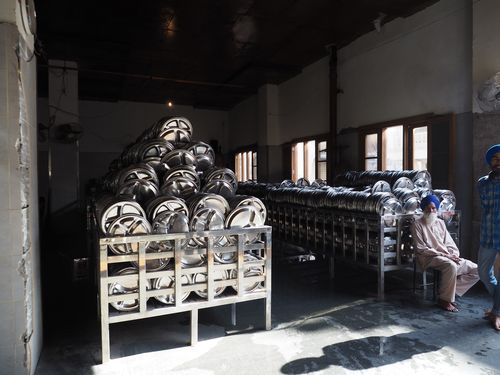
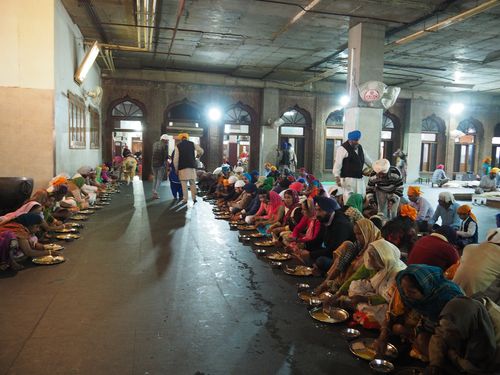

Golden Temple's Langar Hall
Temples • Gurdwaras : Sikh temples in India
The Langar Hall of the Golden Temple: A Symbol of Social Equality and Cultural Resilience
Political and Social Motivations Behind Its Construction
The Langar Hall of the Golden Temple in Amritsar, Punjab, was established as part of the Sikh tradition of "langar," a communal kitchen offering free meals to all without discrimination. This tradition, initiated by Guru Nanak in the 15th century, aimed to challenge the entrenched caste system and promote social equality, humility, and selfless service.
The practice of langar also served political purposes by creating a sense of unity within the Sikh community and asserting their independence from existing hierarchies. The construction of the Langar Hall within the sacred Golden Temple complex further institutionalized these values, reinforcing the Sikh ethos of service and inclusion.
Historical Events and Their Influence
The Langar Hall and the Golden Temple have been deeply intertwined with significant historical events in the region. Under Maharaja Ranjit Singh’s rule (1799–1839), the temple and its facilities, including the Langar Hall, were expanded and enhanced, emphasizing their central role in Sikh religious and social life.
During the colonial period, Amritsar became a focal point of anti-British resistance. The Jallianwala Bagh massacre of 1919, which occurred near the Golden Temple, heightened its symbolic importance as a center of resilience. Later, the 1984 Operation Blue Star, a military assault on the temple complex, profoundly affected the Sikh community. These events have shaped the Langar Hall’s role as a symbol of unity and solidarity in the face of adversity.
Global Context and Comparisons
When the tradition of langar was formalized, other global movements also sought to address social inequality. In Europe, the Protestant Reformation challenged religious hierarchies, while in Asia, Sufi traditions emphasized inclusivity and hospitality. However, the Sikh langar stands out for its universal application, serving people of all backgrounds daily, regardless of religion or status.
Unlike similar practices elsewhere, the langar's scale and community-driven approach make it unique. It exemplifies a harmonious blend of spiritual principles and practical implementation, fostering social cohesion in ways unparalleled in other regions.
Transformations Over the Centuries
The Langar Hall has evolved significantly over time. Initially a modest space, it has expanded into a vast facility capable of serving up to 100,000 meals daily. Modern innovations, such as automated chapati-making machines and solar-powered kitchens, have been incorporated to meet increasing demands while maintaining the tradition's integrity.
These transformations reflect the adaptability of the Sikh community, blending modern technology with traditional values to sustain a centuries-old practice.
Cultural Importance and Current State of Conservation
The Langar Hall remains a cornerstone of Sikh identity, embodying principles of equality, service, and inclusivity. Its ability to serve massive numbers of people daily demonstrates its enduring relevance in a modern context.
The hall’s upkeep is supported by community donations and volunteer efforts, ensuring its continued operation. However, challenges such as overcrowding and environmental sustainability pose risks to its long-term preservation.
Challenges to Preservation
- Overcrowding: The increasing number of visitors requires continuous upgrades to infrastructure and logistics.
- Environmental Impact: Managing waste and resource consumption from large-scale food production is an ongoing challenge.
- Balancing Modernization with Tradition: Incorporating modern technologies while preserving the spiritual and cultural essence of the hall requires careful planning.
- Security Concerns: As a symbol of Sikh identity, the Langar Hall remains sensitive to political and social tensions in the region.
Conclusion
The Langar Hall of the Golden Temple is more than a functional space; it is a living symbol of Sikhism’s core values and a testament to the community’s resilience and adaptability. Its ability to evolve while maintaining its spiritual and social mission highlights its significance on both a local and global scale. As a center of service and equality, the Langar Hall continues to inspire and set an unparalleled example of how faith can be translated into action for the benefit of humanity.
The Langar Hall of the Golden Temple: A Testament to Architectural Innovation and Cultural Fusion
Technological Advancements and Innovation of the Era
The Langar Hall of the Golden Temple in Amritsar exemplifies the architectural and technological ingenuity of its time. Initially established in the 16th century during the early Sikh Gurus' period, the hall has evolved to incorporate modern advancements while preserving its traditional essence. The design reflects a forward-thinking approach, aimed at efficiently serving thousands of people daily through a well-organized layout and infrastructure.
The introduction of mechanized kitchen systems, such as automated chapati-making machines and large-scale cooking equipment, has transformed the Langar Hall into a marvel of logistical efficiency. Solar panels and modern waste management systems further highlight the integration of contemporary technology, ensuring sustainability in an age-old tradition.
Materials and Construction Techniques Reflecting Grandeur
The original construction of the Langar Hall relied on locally sourced materials, including baked bricks, lime mortar, and intricately carved wood for structural and decorative elements. Over time, renovations have introduced modern materials such as reinforced concrete, stainless steel, and marble, enhancing durability and functionality while retaining aesthetic appeal.
The flooring, made of pristine white marble, is both durable and symbolic, reflecting the purity and egalitarian ethos of the Sikh faith. The arched ceilings and spacious interiors demonstrate a keen understanding of spatial efficiency, allowing the hall to accommodate large gatherings without compromising comfort or functionality.
A Unique Blend of Regional and Foreign Artistic Traditions
The Langar Hall’s architectural features showcase a harmonious blend of Punjabi regional traditions and influences from Mughal and Persian styles. The use of arches, vaulted ceilings, and intricate decorative motifs reflects the synthesis of these cultural elements.
While the hall’s primary focus is on functionality, its subtle ornamentation—including geometric patterns and floral designs—is a nod to the artistic sensibilities of the era. The simplicity of the structure, combined with its effective design, emphasizes the Sikh principles of humility and inclusivity while drawing inspiration from broader architectural traditions.
Notable Structure and Layout
The Langar Hall’s layout is designed for maximum efficiency and inclusivity. The hall features a vast open space where visitors sit in rows on the floor, symbolizing equality among all individuals, regardless of caste, religion, or status.
Adjacent kitchens are organized to streamline food preparation and distribution, with separate sections for cooking, cleaning, and storage. The seamless integration of these facilities into the hall’s design ensures a steady flow of meals, even during peak hours. The design’s emphasis on practicality has set a standard for community kitchens worldwide.
Notable Statistics and Anecdotes
- The Langar Hall serves approximately 100,000 meals daily, a feat achieved through the collective efforts of over 5,000 volunteers.
- The hall’s chapati-making machines produce up to 25,000 chapatis per hour, demonstrating the scale of operations.
- Solar panels installed on the premises generate sustainable energy, reducing the environmental footprint of the kitchen.
Contribution to International Recognition
While the Golden Temple complex, including the Langar Hall, is not yet a UNESCO World Heritage Site, it is on the tentative list. The Langar Hall’s unique blend of architecture, technological innovation, and cultural significance enhances its global recognition. Its ability to adapt and modernize while preserving its spiritual and social mission makes it a model for community service and cultural heritage.
The hall’s operation reflects the Sikh tenets of service, equality, and humility, resonating with visitors and scholars worldwide. Its growing prominence has attracted millions of visitors annually, fostering a deeper understanding of Sikh values.
Challenges and Modern-Day Conservation
- Overcrowding: The increasing number of visitors places pressure on infrastructure and demands constant upgrades.
- Environmental Sustainability: Managing waste and energy consumption from large-scale operations is an ongoing challenge.
- Balancing Tradition and Modernization: Preserving the hall’s historical integrity while integrating modern facilities requires careful planning.
- Security Concerns: As a symbol of Sikh identity, the hall remains vulnerable to political and social tensions.
Conclusion
The Langar Hall of the Golden Temple stands as a symbol of architectural innovation, cultural integration, and spiritual values. Its ability to serve humanity on such a massive scale while maintaining its historical and spiritual essence is unparalleled. As the hall continues to evolve, it remains a testament to the Sikh ethos of selfless service and equality, inspiring communities worldwide to embrace similar principles of inclusivity and sustainability.