

 Français (France)
  Nederlands (nl-NL)
 Amidst the expansive Cambodian jungle, Angkor Wat stands as a symbol of resilience and grandeur. This monumental complex, one of the largest religious sites in the world, was originally dedicated to Vishnu, a Hindu deity. Over the centuries, it transitioned into a Buddhist center, drawing pilgrims and visitors from around the globe. With its conical towers and intricate carvings, Angkor Wat captivates with its majesty and mystery, providing a glimpse into the power and sophistication of the Khmer Empire.
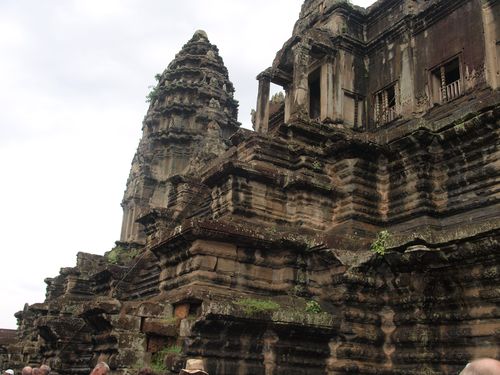
Angkor • Angkor Wat
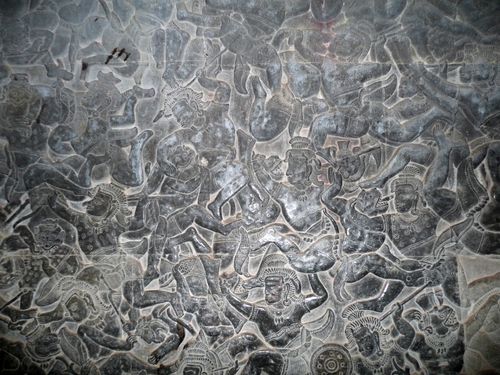
Angkor • Angkor Wat
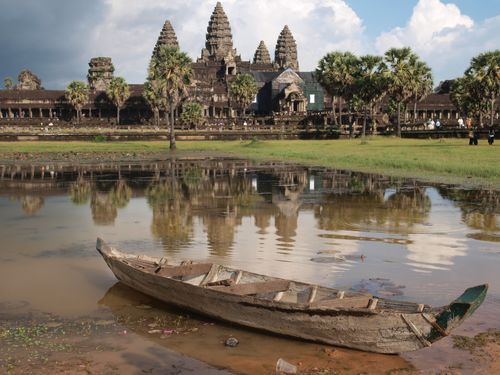
Angkor • Angkor Wat
Monument profile
Angkor Wat
Monument categories: Hindu Temple, Buddhist temple
Monument family: Temple
Monument genre: Religious
Cultural heritages: Hindu, Buddhist
Geographic location: Angkor • Cambodia
Construction period: 12th century AD
This monument in Angkor is inscribed on the UNESCO World Heritage List since 1992 and is part of the serial property "Angkor".See the UNESCO monuments featured on this site
• Links to •
• Dynasties that contributed to the construction of the monument •

• List of videos about Angkor on this site •
Angkor, the Preah Khan temple • Cambodia
Angkor, Ta Prohm temple • Cambodia
Angkor Thom, the Great City • Cambodia
Angkor Wat, masterpiece of Khmer architecture • Cambodia
• References •
UNESCO: Angkor
Wikipedia FR: Angkor
• Sources •
- UNESCO - World Heritage Report: Angkor
- Encyclopædia Britannica - Angkor Wat
- History.com - Angkor Wat: History and Facts
- Archaeology Magazine - Études sur Angkor Wat
- Journal d'archéologie de l'Asie du Sud-Est - Études sur l'architecture khmère
Books and Publications
- "Angkor Wat: History, Art, and Culture" by Michael D. Coe, published by Thames & Hudson, 2003.
- "The Monuments of the Angkor Group" by Maurice Glaize, published by Free Press, 1993.
- "Angkor: An Introduction to the Temples" by Dawn Rooney, published by Weatherhill, 1994.
Angkor Wat: A Monument at the Heart of Cambodian History and Culture
Angkor Wat, located in Angkor, Cambodia, is one of the most iconic monuments in Southeast Asia. Built in the early 12th century by King Suryavarman II, this temple was initially dedicated to Vishnu, a Hindu deity, before becoming a center of Buddhism. Its grand architecture and spiritual significance reflect the political, social, and religious dynamics of the time, while fitting into a global context of cultural transformations.
Political and Social Motivations for Construction
The construction of Angkor Wat occurred during a period of political consolidation and territorial expansion of the Khmer Empire. Under the reign of Suryavarman II, the temple was not only a spiritual center but also a manifestation of royal power and authority. By building Angkor Wat, the king affirmed his divine legitimacy, strengthened his control over conquered lands, and unified his empire under the symbol of a grand architectural achievement. This gesture aligned with monumental constructions in other regions, such as the cathedrals in Europe, which also symbolized the divine power of rulers.
Global Context and Comparisons
At the time of Angkor Wat's construction, the world was experiencing significant cultural and political transformations. In Europe, it was the era of the Crusades, with a series of military expeditions aiming to control holy sites in the Middle East. In China, the Song Dynasty fostered technological and cultural advancements, while Islamic empires expanded in Asia and North Africa. The construction of Angkor Wat can be compared to monumental projects in other civilizations. For example, Gothic cathedrals in Europe, like Notre-Dame de Paris, demonstrated religious devotion and the political power of kings and the Church. Similarly, the pyramids in Central America, built by the Mayans, served both as religious centers and symbols of the rulers' power.
Major Historical Events and Influences
Over the centuries, Angkor Wat has witnessed numerous historical events that influenced the region. After Suryavarman II's death, the temple underwent several modifications under the successive influence of Hindus and Buddhists, reflecting the kingdom's religious changes. In the 15th century, after the capital moved to Phnom Penh and Angkor was abandoned, the temple was somewhat neglected, although it continued to serve as a Buddhist sanctuary. The most significant transformation occurred when Theravada Buddhism took root in the region, influenced by contacts with Sri Lanka and other parts of Asia. Sculptures and inscriptions were modified to fit the new religious practices, reflecting evolving religious and cultural dynamics.
Transformations and External Cultural Influences
Over the centuries, Angkor Wat has undergone transformations that reflect changes in power and cultural influences. The arrival of Theravada Buddhism in the region, influenced by contacts with Sri Lanka and other parts of Asia, led to adaptations in the site's use and decoration. These modifications were often made to align with prevailing religious practices and aesthetics while respecting the original architecture. In the 20th century, under French colonization, the site attracted international attention, and restoration efforts began, aiming to preserve this exceptional heritage.
Cultural Importance and Current State of Conservation
Angkor Wat is a national symbol of Cambodia, even appearing on its flag. It represents not only Khmer heritage but also the ingenuity and creativity of its ancient builders. The temple is a pilgrimage site for Buddhists and a major tourist attraction, drawing millions of visitors annually. The state of conservation of Angkor Wat is a major concern. Local authorities, with the help of international organizations, conduct ongoing restoration work. However, the temple faces threats such as tourist impact, extreme weather conditions, and infrastructure issues.
Preservation Challenges
Specific challenges related to preserving Angkor Wat's historical integrity include sustainable tourism management, protection against natural elements, and the need for ongoing funding and expertise for restoration work. Conservation efforts must balance public access with the site's protection for future generations.
Conclusion
The history of Angkor Wat is that of a monument that has not only survived centuries of political and cultural change but continues to play a crucial role in Cambodia's identity and economy. As a symbol of past grandeur and cultural resilience, Angkor Wat remains a living testament to the historical dynamics that have shaped and continue to influence Southeast Asia and beyond. Its preservation is a crucial challenge for future generations, highlighting the need to protect our shared heritage while adapting to modern realities.
The Architecture of Angkor Wat: Illustrating Technological Advancement and Innovation of the Khmer Empire
Angkor Wat, located in Angkor, Cambodia, is not only a symbol of the grandeur of the Khmer Empire but also a testament to its technological advancements and architectural innovation. Built in the early 12th century during the reign of Suryavarman II, this temple perfectly illustrates the Khmers' ability to blend local artistic traditions with foreign influences. This article explores the materials and construction techniques used, the unique architectural features of the monument, as well as its impact on international recognition and conservation.
Materials and Construction Techniques
Angkor Wat was primarily constructed using sandstone, chosen for its durability and its ability to be finely carved. The sandstone blocks, quarried from sites located about forty kilometers from the site, were transported through an ingenious combination of land routes and canal networks. The construction techniques employed included advanced methods of assembly without mortar, with the stones being perfectly fitted together using tenons and mortises as well as metal clamps.
Architectural Features and Decorative Motifs
The layout of Angkor Wat is based on a temple-mountain design, symbolizing Mount Meru, the center of the universe in Hindu cosmology. This structure consists of three rectangular galleries superimposed on each other, surrounding a central tower that rises to a height of 65 meters. The temple’s walls and columns are adorned with elaborate bas-reliefs depicting scenes from Hindu mythology, such as the Churning of the Ocean of Milk and epic battles.
The decorative motifs of Angkor Wat showcase a unique blend of regional artistic traditions and foreign influences. For example, the Apsaras, or celestial nymphs, exhibit detailed clothing and postures that reflect Indian influences, while the floral and geometric motifs on the lintels and pediments are reminiscent of local Khmer traditions.
Notable Layout and Structure
The temple is designed with a perfect square plan, each side measuring 820 meters, surrounded by a large moat 190 meters wide. The main access to the temple is via a raised causeway flanked by serpent-shaped balustrades known as Nagas. This monumental plan is not only an engineering marvel but also a symbolic representation of cosmic order and divine hierarchy.
Statistics and Anecdotes
The construction of Angkor Wat is said to have involved thousands of workers, artisans, and slaves over a period of 30 years. One of the most famous bas-reliefs, the "Churning of the Ocean of Milk," measures 49 meters long and depicts a scene from Hindu mythology with remarkable precision and detail. A notable anecdote concerns the discovery in 1931 of a solar calendar hidden in the bas-reliefs, used for religious ceremonies and astronomical observations.
International Recognition and UNESCO Impact
The architectural and decorative elements of Angkor Wat greatly contribute to its international recognition. Its inscription as a UNESCO World Heritage Site in 1992 played a crucial role in the site's preservation and restoration. This recognition not only drew global attention to the historical and cultural significance of Angkor Wat but also mobilized funds and international experts for its conservation. UNESCO has also helped implement measures to manage the impact of mass tourism, ensuring the long-term protection of this invaluable monument.
Conclusion
Angkor Wat is an architectural masterpiece that illustrates the innovation and technological advancements of the Khmer Empire. The combination of durable materials, advanced construction techniques, and unique decorative motifs testifies to the cultural richness and grandeur of that era. International recognition and ongoing conservation efforts ensure that this monument continues to inspire and educate future generations about the importance of world heritage.