Français (France)
  Nederlands (nl-NL)
 Semana Santa in Ronda, Andalusia, is a significant religious event marked by solemn processions led by various brotherhoods. Held during Holy Week, the tradition emphasizes the spiritual and communal aspects of Christian observance through carefully organized public ceremonies. Participants dressed in traditional robes carry religious representations through the streets, often accompanied by sacred music. The coordination, generational involvement, and adherence to established forms contribute to the enduring importance of the event, which continues to draw both residents and visitors each year.
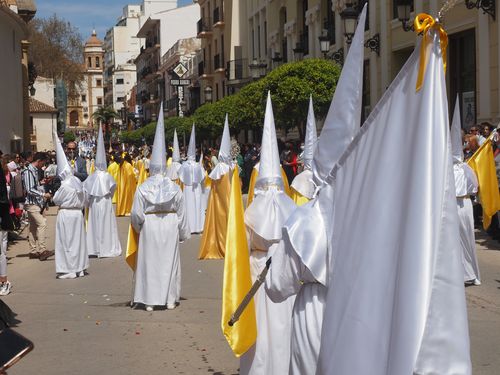
Ronda • Semana Santa in Ronda
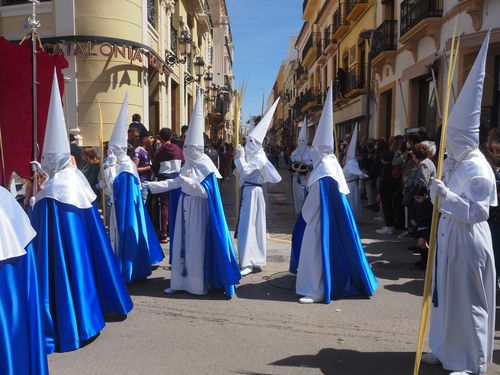
Ronda • Semana Santa in Ronda
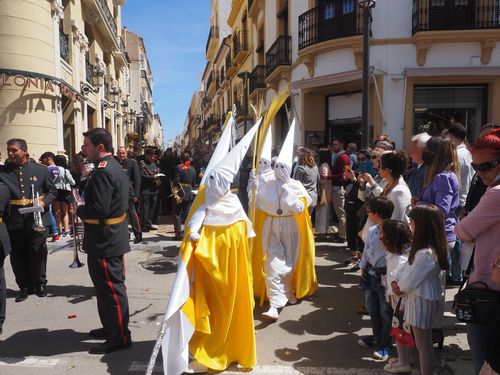
Ronda • Semana Santa in Ronda
Holy Week in Ronda: Ritual Heritage, Social Cohesion, and Cultural Adaptation Across Centuries
The Semana Santa (Holy Week) in Ronda, Andalusia, stands as a deeply rooted religious and cultural tradition that has evolved through centuries of social, political, and spiritual transformation. Often mistakenly associated with Toledo due to thematic similarities, the Ronda observance is firmly embedded in Andalusian history and identity. It reflects the broader context of early modern Spain, where religious rituals became instruments of control, cohesion, and cultural expression in a rapidly changing society.
Origins and Political-Social Motivations
The origins of Holy Week celebrations in Ronda date back to the late 15th and early 16th centuries, following the Christian reconquest of the Iberian Peninsula. After the fall of the Nasrid Kingdom of Granada in 1492, newly conquered territories like Ronda experienced intense efforts by the Catholic Monarchs to reshape public life in accordance with Christian orthodoxy.
Holy Week processions were part of this strategy. They served as highly visible assertions of Catholic faith in cities with deep Muslim heritage. Authorities encouraged the formation of lay brotherhoods (cofradías) that would organize these events. Their involvement enabled a form of religious participation accessible to various social classes, while also fostering community structure under ecclesiastical guidance. These brotherhoods became essential in both spiritual practice and social organization.
Historical Milestones and Their Regional Impact
The Counter-Reformation, following the Council of Trent (1545–1563), had a decisive influence on how these processions evolved. They became more theatrical and pedagogical, with increased emphasis on suffering, redemption, and dramatic iconography. During this period, many of Ronda’s religious floats (pasos) began to take the elaborate baroque form we recognize today.
In subsequent centuries, historical events such as the Napoleonic invasion, liberal reforms, and the secular policies of the 19th century led to periods of decline or transformation. Many brotherhoods were dissolved or restructured, and religious imagery was damaged or confiscated. However, the tradition was revived under Franco’s regime in the mid-20th century, when it was co-opted as a symbol of national unity and Catholic identity. This revitalization reinforced local engagement and restored many of the rituals to their former prominence.
Global Context and Comparative Traditions
The emergence of Semana Santa in Ronda aligns with broader global trends in post-medieval Catholic regions. In Italy, the Philippines, and Latin America, religious processions also became tools of religious education and public devotion. What sets Ronda apart, however, is the intimate scale of its processions, the integration of its dramatic topography into the routes, and the emotional intensity conveyed through saetas—spontaneous flamenco-style laments sung from balconies.
Unlike the grand spectacle of Seville or Málaga, Ronda’s processions prioritize sobriety and contemplative spirituality. The procession of silence, in particular, is a defining element, emphasizing collective emotion through stillness rather than pageantry.
Transformations and Contemporary Dynamics
Over the centuries, Semana Santa in Ronda has shifted from a religiously exclusive expression to a broader form of cultural heritage. It remains highly popular among residents and continues to attract visitors from across Spain and abroad. The tradition has adapted to modern logistics, with increased coordination, lighting, sound systems, and safety measures—yet it retains its original structure and ritual framework.
Today, over twenty brotherhoods actively participate in organizing the events. These organizations also undertake charitable and educational work, reinforcing their social role beyond the religious sphere. However, modern pressures—such as secularization, generational disengagement, and the influence of tourism—pose challenges to maintaining the authenticity and depth of the tradition.
Preservation Challenges and Global Recognition
Ronda’s Holy Week is recognized as a Festival of National Tourist Interest in Spain, granting it visibility and institutional support. However, it has not yet been nominated for inclusion on UNESCO’s Representative List of the Intangible Cultural Heritage of Humanity. Such a listing could strengthen preservation efforts, encourage intergenerational transmission, and safeguard the intangible skills involved—such as paso construction, embroidery, and liturgical music.
Preservation efforts must also address the delicate balance between spiritual sincerity and the risk of commercialization. Local authorities, brotherhoods, and cultural institutions are increasingly aware of the need to protect the experience from becoming purely performative, ensuring it remains a meaningful and living tradition.
Conclusion
Holy Week in Ronda is a compelling example of how a ritual tradition can emerge from political and social necessity, evolve through centuries of change, and adapt to modern cultural landscapes without losing its identity. It encapsulates the power of religious expression to shape community, transmit values, and provide continuity in the face of shifting historical currents. As Ronda looks to the future, its Semana Santa continues to offer a profound reflection of collective memory, local pride, and enduring faith.
Ronda’s Holy Week: A Ritual of Social Innovation, Symbolic Identity, and Cultural Dialogue
The Semana Santa of Ronda, located in Andalusia and not to be confused with the Castilian city of Toledo, represents a living tradition born from the sociopolitical transformations of late medieval Spain. Its emergence and development offer insights into the mechanisms of cultural innovation in a society undergoing religious consolidation, social restructuring, and identity formation. Combining ritual performance, visual grandeur, and collective expression, Holy Week in Ronda is a distinct example of how tradition can simultaneously serve as a spiritual, political, and artistic vehicle.
Social and Cultural Innovation in Post-Reconquista Spain
The appearance of organized Holy Week processions in Ronda around the turn of the 16th century followed the Reconquista and the fall of Muslim-ruled Granada. At a time when Catholic rulers sought to unify Spain religiously and culturally, public rituals such as Holy Week became tools to reinforce Christian orthodoxy and to promote moral order.
What made this tradition socially innovative was the involvement of cofradías, or lay brotherhoods, in leading and structuring the processions. These groups offered a new form of civic participation that transcended class boundaries. Through their hierarchical organization, they mirrored and reinforced the values of discipline, solidarity, and devotion central to the early modern Spanish worldview.
Ritual Elements and Symbolic Grandeur
The visual and performative richness of Ronda’s processions reflects both the religious and aesthetic values of the society that nurtured them. Pasos—carved wooden floats bearing scenes from the Passion of Christ—are carried by costaleros beneath the structure in a coordinated and silent display of endurance and faith. These elaborately decorated floats are often adorned with gold leaf, velvet drapery, silver candlesticks, and floral arrangements, symbolizing the reverence for religious art as a form of worship and civic pride.
Participants wear the traditional robes and conical hoods of nazarenos, emphasizing anonymity, penitence, and spiritual humility. The use of saetas, emotionally charged flamenco-style laments sung from balconies during the procession, adds a powerful auditory dimension unique to Andalusian culture.
Fusion of Regional Traditions and External Influences
Ronda’s Holy Week is shaped by a convergence of local customs and broader Catholic influences. The theatricality and iconography of the processions draw from the Counter-Reformation’s emphasis on visual pedagogy and emotional engagement. At the same time, the integration of Andalusian musical traditions and the city’s dramatic topography give the event a distinctly regional character.
Compared to other Spanish cities like Seville or Málaga, Ronda’s processions are generally smaller in scale but more introspective. The procession of silence, for instance, stands out as a moment of collective contemplation, where the absence of music and speech intensifies the spiritual atmosphere.
Recognition, Impact, and Anecdotes
Although not yet included on UNESCO’s list of Intangible Cultural Heritage, Ronda’s Semana Santa has gained recognition at the national level. It is designated as a Festival of Tourist Interest in Andalusia and attracts thousands of visitors annually. Over 20 active brotherhoods participate in the weeklong observances, involving hundreds of volunteers in preparation, performance, and preservation.
An anecdote from 2008 illustrates the devotion of the local community: during a sudden downpour, members of a brotherhood shielded their paso with plastic tarps and umbrellas, continuing the procession despite the rain. The act was celebrated locally as a testament to the deep emotional bond between the carriers and their sacred image.
UNESCO and Preservation Challenges
The potential inclusion of Ronda’s Holy Week in UNESCO’s intangible heritage list would bolster efforts to protect the tradition against modern pressures such as commercialization, secularization, and demographic shifts. Formal recognition would support training in traditional crafts—such as float construction, embroidery, and sacred music—and encourage intergenerational transmission of rituals and organizational knowledge.
Moreover, global recognition would affirm the value of religious processions as expressions of shared memory, artistry, and ethical commitment, rather than mere tourist attractions. It would also provide a framework for managing visitor flow and ensuring respectful participation in sacred spaces.
Conclusion
Holy Week in Ronda illustrates how a religious celebration can evolve into a sophisticated form of social organization, artistic expression, and cultural resilience. Its continued relevance lies in its capacity to adapt while preserving a core of spiritual meaning, communal identity, and aesthetic excellence. As Andalusia navigates the complexities of cultural preservation in the 21st century, Ronda’s Semana Santa remains a powerful reminder of how tradition, when rooted in community and creativity, can transcend time and boundaries.
 Links to the main sections of the site