Français (France)
  Nederlands (nl-NL)
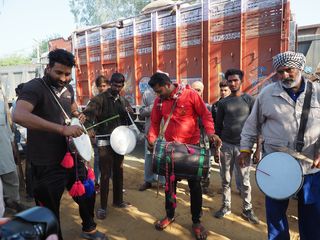
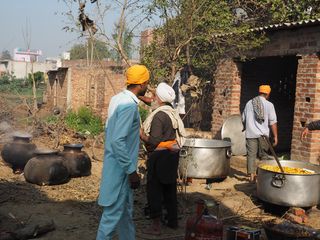
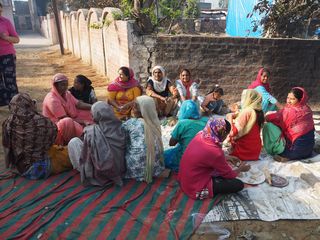
 In the village of Naurangabad in Punjab, preparations for a local celebration bring together residents, musicians, and families around collective activities linked to cooking and festive organization. Large quantities of food are prepared outdoors while groups of women make chapatis and vegetable dishes for the participants. Musicians playing traditional drums contribute to the atmosphere even before the celebration officially begins. This form of communal organization reflects the important role of collective gatherings in Punjabi village life, where ceremonies, shared meals, and music remain closely connected to local traditions and social relationships within the community.
Naurangabad • Preparation for a Village Celebration in Punjab
Naurangabad • Preparation for a Village Celebration in Punjab
Naurangabad • Preparation for a Village Celebration in Punjab
Tradition profile
Preparation for a Village Celebration in Punjab
Tradition category: Life at countryside
Tradition family: Traditional practices and lifestyle
Tradition genre: Agricultural and rural traditions
Geographic location: Naurangabad • Punjab • India
• Links to •
• List of videos about Naurangabad on this site •
Naurangabad, preparation of the feast • Punjab, India
Collective Preparation of Village Celebrations in Punjab
Rural Origins and Community Organization
In the villages of Punjab, the collective preparation of festivals, ceremonies, and communal meals developed within an agricultural society structured around cooperation between families, neighbors, and local groups. Before the spread of commercial catering and modern event infrastructure, large gatherings depended on the direct participation of villagers in cooking, organization, and logistical work. These practices became closely linked to seasonal rhythms, harvest periods, religious observances, and major family ceremonies.
The Punjab region, characterized by intensive agriculture and dense rural settlement, historically relied on strong systems of mutual assistance. Community participation in festive preparation reduced individual costs while reinforcing social cohesion within the village. Shared labor during celebrations also reflected broader traditions of cooperation associated with farming activities and collective rural life.
Social and Cultural Functions
Village celebrations in Punjab have long served both ceremonial and social purposes. Preparations often involve extended families, neighbors, and local associations working together over several hours or several days depending on the scale of the event. Cooking, arranging communal spaces, transporting materials, and organizing music or hospitality traditionally formed part of a shared social responsibility.
These gatherings are connected to multiple contexts, including weddings, harvest-related festivities, Sikh religious commemorations, seasonal celebrations, and local village events. In many rural communities, the preparation phase itself functions as an important social moment during which relationships between families and generations are reinforced.
Communal cooking occupies a particularly important role in this process. Preparing food collectively for large numbers of participants reflects longstanding ideas of hospitality and social obligation that remain influential in Punjabi rural culture. In Sikh communities, these practices also relate indirectly to broader traditions of collective food service associated with langar, although village celebrations may occur outside formal religious settings.
Historical Transformations in Rural Punjab
The organization of village festivities evolved significantly during the twentieth century as Punjab underwent agricultural modernization, urbanization, and increased migration toward major Indian cities and foreign countries. Mechanized agriculture, economic change, and the expansion of transport networks altered the structure of rural communities and reduced certain forms of traditional village labor.
Despite these transformations, collective preparation for ceremonies and local festivals continues to occupy an important place in many villages. Modern equipment, commercial food supplies, and hired services are now sometimes integrated into celebrations that still preserve older forms of communal participation. The coexistence of traditional and modern organizational methods reflects broader social changes within rural Punjab.
Migration has also influenced these practices. Families returning temporarily from urban centers or from abroad often continue to participate in village ceremonies, helping maintain connections between rural traditions and newer social realities.
Present-Day Importance and Transmission
Collective festive preparation remains an important expression of social identity in many parts of Punjab. These events continue to reinforce local solidarity networks while preserving forms of cooperation associated with rural life. The participation of several generations allows practical knowledge related to food preparation, organization, and communal responsibilities to be transmitted within families and local communities.
At the same time, demographic and economic changes increasingly affect the continuity of these traditions. Younger generations often leave villages for education or employment opportunities, reducing the number of people directly involved in large-scale communal preparation. Changing lifestyles and the growing use of professional services also modify the way village celebrations are organized.
Even with these changes, collective preparation for village festivities continues to represent an important aspect of Punjabi rural society, combining social cooperation, shared labor, and communal participation within a rapidly evolving cultural environment.
Collective Preparations for a Village Celebration in Punjab
General Organization of the Preparations
In rural areas of Punjab, the preparation of a village celebration generally takes place in open communal spaces located near houses, village roads, courtyards, or temporary gathering areas. Activities are divided into several functional zones dedicated to cooking, food preparation, music, storage, and social interaction. The organization depends largely on collective participation, with different groups carrying out simultaneous tasks linked to the forthcoming ceremony or festive gathering.
Temporary outdoor kitchens form one of the central elements of the preparations. Large metal cooking vessels are placed over wood fires or gas burners in order to prepare food for a large number of participants. Nearby areas are used for washing vegetables, preparing dough, storing ingredients, and organizing serving utensils. The open arrangement facilitates movement between work areas while allowing smoke and heat to disperse naturally.
The preparation process usually extends over several hours and may continue throughout the day depending on the scale of the event. The atmosphere combines practical work, social interaction, and festive anticipation.
Food Preparation and Culinary Practices
Collective cooking occupies a major place in village celebrations throughout Punjab. Meals are prepared in large quantities using methods adapted to outdoor conditions and communal participation. The work is often divided according to practical roles rather than strict ceremonial functions.
Groups of women commonly prepare chapatis by hand using flour dough shaped into flat discs and cooked directly on heated metal plates. The process involves repeated gestures carried out rapidly and continuously: kneading, portioning, flattening, rotating the dough, and cooking the bread over controlled heat. Nearby, vegetables are cleaned, cut, and sorted in large containers before being transferred into cooking pots.
Men frequently supervise the larger cooking stations that require constant fire management or the handling of heavy metal vessels. The dishes prepared may include lentils, potatoes, onions, vegetable curries, and other foods commonly associated with Punjabi communal meals. Cooking utensils remain relatively simple and functional, consisting mainly of metal trays, knives, ladles, wooden supports, and portable stoves.
The preparation itself becomes a collective social activity in which conversation, coordination, and cooperation remain constant throughout the process.
Music and Sound Environment
Music often accompanies the preparations before the formal celebration begins. Percussionists playing the dhol, a double-sided drum strongly associated with Punjabi festivities, create a rhythmic atmosphere that announces the event to the surrounding community. The instrument produces loud and repetitive beats designed for outdoor gatherings and large communal spaces.
The musicians may move between preparation areas or remain near the main gathering zone. Their role extends beyond entertainment, as the sound of the dhol traditionally signals communal participation and festive activity. The rhythms are closely linked to Punjabi wedding celebrations, harvest festivals, and village ceremonies.
The broader sound environment includes conversations between participants, instructions related to cooking or organization, the noise of utensils and fires, and the movement of people carrying ingredients or equipment. Together, these sounds form an important part of the collective atmosphere surrounding the preparations.
Participants, Clothing, and Distribution of Roles
Village celebrations involve participants from several generations. Men, women, and younger villagers contribute according to practical needs connected with cooking, transport, setup, or musical performance. The preparations rely heavily on cooperation between family groups and neighbors.
Clothing generally reflects everyday rural or semi-urban Punjabi dress rather than formal ceremonial attire during the preparation phase. Women commonly wear salwar kameez with scarves covering part of the head, while many men wear turbans, loose shirts, work clothes, or shawls adapted to outdoor activity. Musicians may wear more visible garments associated with their role in the festivities.
Social interaction forms a visible component of the preparations. Participants work in small groups around specific tasks while maintaining continuous exchanges with other members of the community. The event space therefore functions simultaneously as a work area and a social gathering place.
Use of Space and Rural Environment
The preparations usually take place within environments directly connected to village life in Punjab. Open courtyards, roadside spaces, unpaved surfaces, and temporary shelters provide flexible areas suitable for large communal gatherings. Buildings made of brick or concrete often surround the cooking zones while trees or improvised coverings create shaded sections protecting participants from heat.
The arrangement of spaces allows easy circulation between cooking stations, preparation areas, and gathering points for musicians or visitors. The relative openness of the environment reflects the practical needs of large outdoor events in rural settings.
One distinctive characteristic of these preparations is the close integration of collective labor, food production, and social participation. Rather than separating festive activities from practical organization, Punjabi village celebrations often combine both dimensions simultaneously, making the preparation phase itself an important communal event.
 Links to the main sections of the site