Français (France)
  Nederlands (nl-NL)
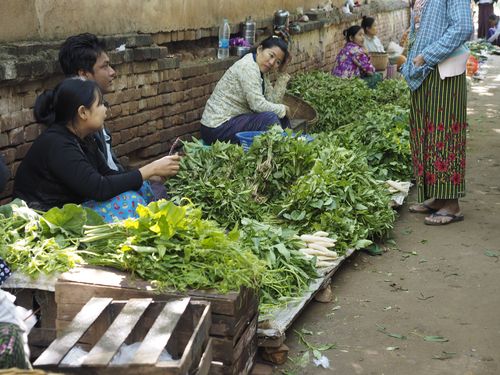
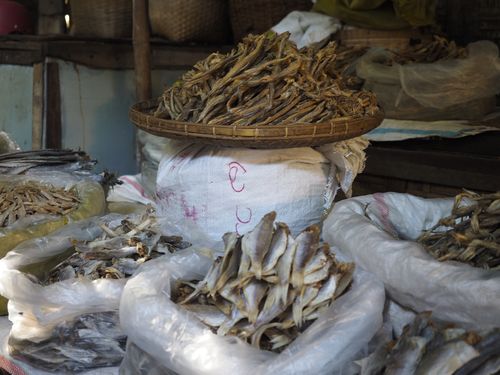
 Mani Sithu Market is a traditional commercial space located in Nyaung U, near the Bagan region of Myanmar. The market brings together traders and producers from surrounding villages who sell a wide range of goods including food products, spices, fruits, vegetables, and everyday household items. It plays an important role in the local economy by connecting rural production with urban demand and supporting small-scale commerce. The market also functions as a social gathering place where residents and visitors observe the daily interactions typical of regional marketplaces. Through its continuous activity and variety of goods, Mani Sithu Market reflects the dynamics of traditional markets in Myanmar.

Nyaung U • Mani Sithu Market
Nyaung U • Mani Sithu Market
Nyaung U • Mani Sithu Market
Tradition profile
Mani Sithu Market
Tradition category: Local market
Tradition family: Traditional markets and fairs
Tradition genre: Trade and Local Creativity
Geographic location: Nyaung U • Myanmar
• Links to •
• List of videos about Nyaung U on this site •
Nyaung-U, Shwezigon pagoda - prototype of Burmese stupas • Myanmar
Nyaung-U, Mani Sithu market • Myanmar
History of the Tradition of Mani Sithu Market in Nyaung U
Political and Social Context of Emergence
The commercial tradition associated with Mani Sithu Market in Nyaung U developed within the broader economic and social organization of the central Myanmar region along the Irrawaddy River. Nyaung U is located near the historic plain of Bagan, an area that served for centuries as a major political, religious, and economic center in Burmese history. The presence of a large population of monks, artisans, traders, and agricultural communities created conditions that required stable systems of distribution for food and everyday goods. Local markets emerged as practical solutions to these needs.
The origins of organized markets in the region can be traced back to the period of the Bagan Kingdom, which flourished between the eleventh and thirteenth centuries. During this era, Bagan became one of the most important urban centers in mainland Southeast Asia. The construction of thousands of Buddhist temples and monasteries attracted large numbers of inhabitants, including religious communities, laborers, and merchants. Such demographic concentration required continuous supplies of food and materials, encouraging the development of structured market spaces.
Agricultural production in the villages surrounding the Bagan plain formed the economic foundation of these exchanges. Farmers cultivated rice, beans, sesame, and vegetables, while fishing communities along the Irrawaddy contributed dried fish and other river products. Markets such as the one that later became known as Mani Sithu served as collection points where rural producers could bring their goods and distribute them to urban consumers.
Local authorities and religious institutions indirectly supported the development of these markets. Buddhist monasteries, which depended on daily alms and food donations, required an active circulation of goods within nearby towns. Political authorities also benefited from stable local commerce, as markets contributed to economic order and facilitated the collection of taxes and duties. The emergence of markets in towns like Nyaung U therefore reflected both practical economic needs and broader political structures.
Major Historical Events Affecting the Tradition
Over the centuries, the market tradition in Nyaung U evolved through multiple political transitions that affected the entire Burmese region. After the decline of the Bagan Kingdom in the late thirteenth century, the region experienced periods of political fragmentation and shifting centers of power. Despite these disruptions, local markets continued to function because they remained essential for everyday economic life.
Subsequent Burmese dynasties, including those based in Ava and later in the Konbaung kingdom, maintained regional trade networks and administrative structures that allowed local commerce to persist. Even when political authority shifted from one capital to another, the practical necessity of food distribution ensured the continuity of market activity in towns such as Nyaung U.
The British colonial period, which began in the late nineteenth century after the annexation of the Burmese kingdom, introduced new administrative and economic frameworks. Colonial authorities invested in transportation infrastructure, particularly river navigation and road networks. These developments facilitated the movement of goods across wider territories and integrated local markets into broader colonial trade systems. Markets in towns near Bagan continued to operate as central nodes linking agricultural villages with regional distribution networks.
Following Myanmar’s independence in 1948, the country experienced several political transformations, including periods of military rule and economic restructuring. Despite these changes, traditional markets retained their importance in the daily life of towns and rural communities. Mani Sithu Market continued to function as a practical space where agricultural production and local consumption met.
Global Context at the Time of Emergence
The emergence of markets in the Bagan region formed part of a broader historical pattern found in many agrarian societies. In preindustrial economies, markets were essential mechanisms that connected producers with consumers and enabled the circulation of goods beyond the boundaries of individual villages.
Comparable institutions existed throughout the world. Medieval towns in Europe relied on periodic markets and fairs, while large urban centers in the Middle East developed extensive bazaar systems. In South and Southeast Asia, market networks frequently emerged in connection with river routes and caravan roads that facilitated long-distance trade.
Within Southeast Asia, river-based economies played a particularly important role in shaping commercial life. Settlements located along major waterways, such as the Irrawaddy River, became natural exchange points where agricultural products from inland areas could be traded and redistributed. The development of markets like Mani Sithu therefore reflects a regional adaptation of global economic patterns characteristic of agricultural civilizations.
These markets also served social and informational functions. They allowed communities to exchange news, establish alliances, and maintain connections between different settlements. In this sense, markets functioned as both economic institutions and centers of social interaction.
Transformations of the Tradition
Over time, the organization and activities of Mani Sithu Market have undergone various transformations. Improvements in transportation and communication have expanded the range of products available in local markets. Goods from other parts of Myanmar or neighboring regions can now reach Nyaung U more easily than in earlier periods.
Changes in agricultural production have also influenced the structure of the market. While traditional crops remain central to local commerce, the introduction of new varieties of produce and packaged goods has diversified the range of items offered to customers.
The expansion of tourism in the Bagan region during the late twentieth and early twenty-first centuries has further altered the market’s environment. Visitors often explore local markets as part of their experience of daily life in Myanmar. As a result, some vendors have adapted their offerings to include items appealing to tourists, while maintaining their primary role as suppliers for the local population.
These transformations illustrate the capacity of traditional markets to adapt to changing economic circumstances while preserving core aspects of their historical organization.
Contemporary Role and Cultural Importance
Today, Mani Sithu Market remains a central component of daily life in Nyaung U. Residents rely on the market for fresh produce, spices, meat, fish, and other essential goods. The market provides an accessible point of contact between agricultural producers and urban consumers, ensuring the continued circulation of locally grown products.
Beyond its economic role, the market functions as a social meeting place. Regular interactions between vendors and customers reinforce community relationships and contribute to the exchange of information about local events, agricultural conditions, and family networks. Such interactions strengthen the social fabric of the town.
The market also reflects regional culinary traditions and agricultural practices. The products displayed on its stalls represent the resources of the surrounding countryside and illustrate the dietary patterns typical of central Myanmar.
Current Preservation and Modern Challenges
Like many traditional markets around the world, Mani Sithu Market faces challenges related to modernization and urban development. The growth of supermarkets and modern retail structures in larger cities can alter consumer habits and reduce reliance on traditional marketplaces.
Urban expansion and changes in infrastructure may also affect the spatial organization of local markets. However, in many parts of Southeast Asia, traditional markets continue to coexist with modern commercial systems because they provide advantages that large retail structures cannot easily replicate. These include the availability of fresh local produce, flexible pricing, and direct relationships between producers and consumers.
Although Mani Sithu Market does not currently hold formal international heritage recognition, it represents an important example of living cultural practice in Myanmar. The continuity of its activities demonstrates the resilience of traditional commercial institutions within rapidly changing societies.
Local communities, vendors, and municipal authorities all play a role in maintaining the market’s vitality. By preserving its daily rhythms and social functions, the market continues to embody a historical tradition of exchange that has shaped the economic and cultural landscape of the Bagan region for generations.
Characteristics of the Tradition of Mani Sithu Market in Nyaung U
Origins and Context of Emergence
The commercial tradition represented by Mani Sithu Market in Nyaung U developed within the broader socio-economic framework of central Myanmar, particularly in the Irrawaddy River basin. This region has historically been dominated by agricultural production and by trade networks linking rural villages with urban settlements. In such an environment, markets emerged as essential mechanisms for distributing food and everyday goods among communities.
Nyaung U occupies a strategic position near the Bagan plain, one of the most historically significant areas in Myanmar. For centuries, this region hosted dense populations of farmers, monks, artisans, and traders who depended on regular systems of exchange. The existence of a structured market environment allowed agricultural producers from surrounding villages to bring their harvests to a central location where urban residents and traveling merchants could obtain necessary supplies.
The tradition of markets in this region reflects a long-standing economic pattern in Southeast Asia, where agricultural surplus and river-based transportation systems created favorable conditions for regular trade gatherings. Local markets such as Mani Sithu therefore developed as both economic and social institutions that supported the daily functioning of communities in and around Nyaung U.
Constituent Elements and Daily Practices
The functioning of Mani Sithu Market follows patterns typical of traditional markets throughout Myanmar and neighboring regions. Market activity generally begins early in the morning, when vendors arrive with goods transported from nearby villages. Many traders bring their products in baskets, containers, or carts, arranging them carefully on tables, mats, or wooden stalls.
The range of products offered reflects the agricultural environment of the surrounding countryside. Vegetables, fruits, beans, spices, herbs, and rice products form the core of the market’s activity. Other sections of the market may include fish, meat, prepared foods, and everyday household items. These goods provide essential ingredients for the local cuisine and daily domestic needs of the population.
Commercial gestures and routines are central to the functioning of the market. Vendors weigh produce, count quantities, and negotiate prices with customers according to established practices. Bargaining often takes place in a relaxed and familiar atmosphere, as many buyers and sellers know one another through long-standing social relationships.
The participation of different members of the community shapes the structure of the market. Women frequently play a major role in retail trading, while farmers and producers supply goods harvested from nearby fields. Transporters, food preparers, and occasional traveling traders also contribute to the complex ecosystem of the market.
Knowledge related to product quality, seasonal availability, and pricing is often transmitted informally from one generation to the next. Families involved in market activities frequently pass on commercial skills, ensuring continuity in the organization and management of stalls.
Symbolism and Cultural Meanings
Traditional markets such as Mani Sithu carry symbolic meanings that extend beyond their economic role. They represent visible expressions of community life, reflecting the agricultural cycles and social relationships that structure daily existence in rural Myanmar.
The visual diversity of market stalls contributes to this symbolic dimension. The colors of vegetables, fruits, spices, and flowers create a vibrant environment that reflects the productivity of the surrounding landscape. These elements also highlight the connection between local agriculture and regional culinary traditions.
Sounds and interactions are equally significant. Conversations between vendors and customers, the calling of prices, and the exchange of greetings all contribute to the atmosphere of the market. Such interactions reinforce social bonds and strengthen a shared sense of belonging among participants.
Different sections of the market may exhibit subtle variations in arrangement or specialization, reflecting local preferences and community identities. These variations illustrate how markets adapt to the needs of specific populations while maintaining common organizational principles.
Evolution and External Influences
Over time, the Mani Sithu Market tradition has evolved in response to broader economic and social changes. Improvements in transportation infrastructure have expanded the range of products available in the market, allowing goods from other parts of Myanmar to reach Nyaung U.
The development of tourism in the Bagan region has introduced additional influences. Visitors interested in local culture often explore traditional markets, encouraging some vendors to offer handicrafts or packaged foods alongside everyday commodities. Nevertheless, the primary function of the market remains focused on serving the needs of local residents.
Technological changes have also affected the organization of market activities. The use of modern packaging, refrigeration, and transportation has altered some aspects of product handling and distribution. However, many traditional practices continue to shape the overall structure of the market.
Comparable market traditions exist throughout Southeast Asia, where open-air markets play similar roles in linking agricultural production with urban consumption. In countries such as Thailand, Vietnam, and Laos, traditional markets operate as essential spaces of exchange, reflecting shared regional patterns of economic organization.
Social Organization and Community Impact
Mani Sithu Market plays an important role in structuring social relationships within the community of Nyaung U. It functions as a meeting place where residents interact regularly, reinforcing networks of trust and cooperation among traders, farmers, and consumers.
The market also supports local livelihoods by providing opportunities for small-scale commerce. Farmers can sell their products directly to customers without relying on large intermediaries, while traders can maintain independent businesses based on family labor.
Social interactions within the market contribute to the transmission of knowledge and cultural practices. Conversations about agriculture, cooking techniques, and seasonal changes circulate among participants, strengthening the continuity of local traditions.
During religious festivals or periods of increased activity in the Bagan region, the market may experience heightened participation. Such moments demonstrate the close connection between economic activity and communal life.
Statistics, Anecdotes, and Notable Narratives
Although precise statistical data are rarely available for traditional markets, the scale of activity at Mani Sithu Market suggests significant participation. Numerous vendors operate daily, representing various villages and occupational groups within the surrounding region.
Some market stalls have reportedly been managed by the same families for multiple generations. These long-standing presences contribute to the identity and continuity of the market. Experienced traders often serve as informal organizers, guiding newcomers and maintaining established norms of behavior within the marketplace.
Local anecdotes frequently emphasize the importance of early morning trading, when the freshest produce arrives and regular customers gather to purchase ingredients for daily meals. These routines form part of the rhythm that defines the market’s social environment.
Recognition and Preservation Challenges
Today, Mani Sithu Market continues to function as a vital component of Nyaung U’s economic and cultural landscape. It represents a living tradition of exchange that has adapted to changing circumstances while maintaining many long-standing practices.
However, traditional markets face challenges linked to urban development, changes in consumer habits, and the spread of modern retail systems. Supermarkets and new commercial infrastructures may alter the way residents purchase food and household goods.
Despite these pressures, markets such as Mani Sithu retain important advantages. They provide direct access to fresh local produce, support small-scale producers, and preserve social interactions that are often absent from modern retail environments.
Although the market itself is not formally recognized as an international heritage site, it forms part of the broader cultural environment of the Bagan region, which is internationally known for its historical significance. The continuity of market practices therefore contributes indirectly to the preservation of local cultural identity.
Local authorities and community members play an essential role in sustaining the vitality of such markets. By maintaining traditional patterns of exchange while adapting to contemporary conditions, Mani Sithu Market continues to embody an enduring commercial tradition in Myanmar’s central region.
 Links to the main sections of the site