Français (France)
  Nederlands (nl-NL)
 Traditional weaving in the rural areas around Kalaw remains closely connected to the daily life of farming communities in Myanmar’s Shan region. Usually practiced within families or small villages, it relies on manual looms and skills passed down through generations. The textiles produced are used for clothing, traditional longyi garments and household fabrics sold in local markets. This craft activity continues to play an important role in the rural economy and social organization of the region. Despite gradual modernization, weaving remains part of the cultural identity and everyday life of many communities in the Burmese countryside.
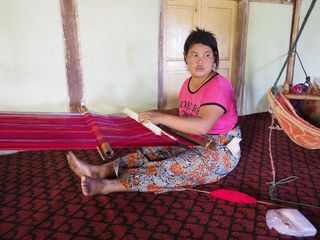
the countryside near Kalaw • Traditional weaving in rural Myanmar
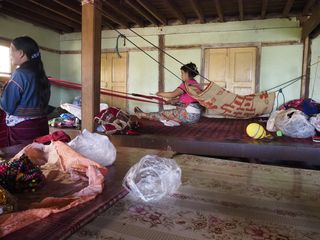
the countryside near Kalaw • Traditional weaving in rural Myanmar
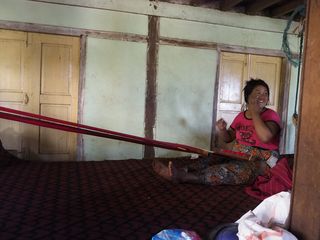
the countryside near Kalaw • Traditional weaving in rural Myanmar
Tradition profile
Traditional weaving in rural Myanmar
Tradition category: Craftsmanship
Tradition family: Crafts and professions
Tradition genre: Trade and Local Creativity
Geographic location: the countryside near Kalaw • Myanmar
• Links to •
• List of videos about the countryside near Kalaw on this site •
Walk in the Burmese countryside • Myanmar
Development of Traditional Weaving in the Burmese Countryside
Origins of Rural Textile Production
Traditional weaving has occupied an important place in rural Burmese communities for centuries. In the mountainous regions around Kalaw and the Shan Plateau, textile production developed within village societies where agriculture and household crafts were closely connected. Weaving techniques were gradually adapted to locally available materials, climatic conditions and the practical needs of rural populations.
Early weaving activities were generally organized within family households. Looms were installed inside homes or in small open structures attached to domestic living spaces. Skills were transmitted through observation and practical training between generations, especially among women responsible for textile production within the family.
The expansion of weaving traditions was also linked to regional trade networks connecting Shan communities with other areas of Myanmar. Textile fibers, dyes and weaving methods circulated through commercial exchanges between rural markets and neighboring regions.
Economic Role and Social Organization
In many Burmese rural communities, weaving represented both a domestic necessity and a supplementary economic activity. Handwoven fabrics were used to produce longyi garments, household textiles and everyday clothing intended for local use or small-scale trade. Families often combined agricultural work with textile production according to seasonal rhythms.
The organization of weaving remained closely connected to village life. During periods of reduced agricultural activity, households devoted more time to textile work. This balance between farming and craft production allowed weaving traditions to remain integrated into the rural economy for long periods.
In several Shan communities, weaving also contributed to local cultural identity. Specific textile patterns, colors and production techniques could reflect regional customs or the social organization of certain villages. Textile production therefore played both an economic and cultural role within rural society.
Transformations During the Modern Period
During the twentieth century, rural weaving traditions in Myanmar underwent significant changes linked to industrial production and evolving trade systems. Imported fabrics and factory-made textiles progressively reduced the economic importance of handmade weaving in certain regions.
Despite these transformations, traditional weaving survived in many rural areas around Kalaw. Small family workshops continued to operate using manual looms, particularly in villages where industrial products remained less accessible or where handmade fabrics retained cultural value.
Modern materials and commercially produced threads gradually appeared alongside older techniques. Some workshops adapted by combining traditional weaving methods with newer materials while maintaining manual production processes. In parallel, growing interest in regional handicrafts contributed to preserving part of the textile tradition within local markets.
Contemporary Importance and Transmission
Today, traditional weaving in the Burmese countryside remains associated with the continuity of rural craftsmanship and inherited technical knowledge. In several communities around Kalaw, weaving is still practiced within households using manual looms and family-based teaching methods.
The textiles produced continue to serve practical purposes while also representing an important element of local cultural heritage. Rural weaving workshops remain connected to village economies through the sale of fabrics and garments in regional markets.
However, the transmission of weaving knowledge faces several contemporary challenges. Urban migration, industrial competition and changing economic conditions have reduced the number of people practicing weaving on a regular basis. Younger generations often seek employment outside traditional village activities, limiting the continuity of certain artisanal practices.
Even with these changes, traditional weaving continues to survive in parts of the Shan region as a visible expression of rural craftsmanship and community-based production in the Burmese countryside around Kalaw.
Organization of Traditional Weaving in the Burmese Countryside
Looms and Rural Working Spaces
Traditional weaving around Kalaw is generally practiced within domestic rural environments closely connected to everyday village life. Handlooms are commonly installed inside wooden houses, under covered verandas or in partially open workspaces allowing natural ventilation and daylight. The weaving area is rarely separated from other household activities, reflecting the close relationship between craft production and family life in rural Burmese communities.
The looms themselves are usually made of wood and consist of pedals, horizontal beams, thread rollers and manually operated weaving mechanisms. Their dimensions remain relatively modest and adapted to small-scale household production. Around the loom, baskets containing thread, folded fabrics, weaving tools and partially completed textiles are often visible.
The working environment remains simple and functional. Textile production is organized within spaces that may also be used for cooking, storage or family activities, illustrating the integration of weaving into the daily rhythm of rural households.
Technical Processes and Visible Gestures
Traditional weaving relies on a sequence of precise manual operations repeated continuously during production. The weaver uses foot pedals to separate warp threads while simultaneously passing the shuttle carrying the weft thread from one side of the loom to the other. After each movement, the woven section is tightened using a built-in reed or comb structure.
The gestures appear highly coordinated and rhythmic, reflecting years of practical experience. Constant attention is required to maintain thread tension, align patterns and correct irregularities in the fabric. Interruptions frequently occur to replace spools, untangle threads or adjust the loom structure.
Before weaving begins, several preparation stages are necessary. Threads are wound manually onto reels, sorted according to color and organized for placement on the loom. In some workshops, fibers are dyed using locally available materials or commercially produced pigments before the weaving process starts.
The textiles produced in rural Burmese workshops often display geometric bands, striped compositions or simple decorative motifs suitable for everyday clothing and household use. More elaborate fabrics may include contrasting borders or color combinations associated with Shan textile traditions and regional village identities.
Textile Production and Everyday Uses
The fabrics woven in the countryside around Kalaw are mainly intended for practical daily use. They are transformed into longyi garments, shawls, household cloths, blankets or lightweight textiles adapted to local climatic conditions. Part of the production remains within the family while additional fabrics may be sold in nearby markets.
Finished textiles are often folded, stacked or suspended near the loom before transport to village trading areas. Production remains relatively limited in scale compared to industrial manufacturing, with each piece requiring long periods of manual labor.
In many rural communities, weaving functions as a complementary activity alongside agricultural work. Families alternate between farming and textile production according to seasonal demands. During periods of reduced agricultural activity, weaving occupies a more important place within household organization.
This relationship between farming and craftsmanship remains visible in many villages where weaving workshops coexist directly with storage areas, domestic spaces and agricultural equipment.
Participants, Transmission and Workshop Atmosphere
Traditional weaving in the Burmese countryside is practiced mainly by women, although other family members may participate in preparing threads, transporting materials or organizing finished fabrics. Technical knowledge is transmitted primarily through observation and practical learning within households.
The atmosphere inside weaving spaces is generally calm and repetitive. The dominant sounds come from the movement of wooden loom components, the rhythm of pedals and the continuous passage of the shuttle through the threads. Unlike mechanized textile factories, production speed depends entirely on the physical movements and experience of the individual weaver.
The clothing worn during weaving activities remains simple and adapted to manual work. Light shirts, longyi garments and practical fabrics are commonly used to facilitate movement and comfort during long working periods.
The weaving workshops around Kalaw illustrate a form of rural craftsmanship where domestic life, manual production and inherited technical skills remain closely interconnected. Even as industrial textiles increasingly dominate commercial markets, these traditional weaving practices continue to preserve visible elements of local artisanal culture in the Burmese countryside.
 Links to the main sections of the site