Français (France)
  Nederlands (nl-NL)
 Rural life around Kalaw in Myanmar remains closely connected to agricultural work, seasonal crops and monsoon rhythms. Villages in the Shan highlands still preserve practices based on manual labour, community cooperation and the use of draft animals or small vehicles adapted to rural tracks. Agricultural landscapes reveal cultivated fields, paths used daily by workers and activities linked to the preparation, transport and sale of crops. These practices reflect the continuity of rural lifestyles that remain important in several parts of Myanmar and continue to shape the organisation of local communities.
the countryside near Kalaw • Rural life and traditional farming
the countryside near Kalaw • Rural life and traditional farming
the countryside near Kalaw • Rural life and traditional farming
Tradition profile
Rural life and traditional farming
Tradition categories: Work in the countryside, Traditional agriculture
Tradition family: Traditional practices and lifestyle
Tradition genre: Agricultural and rural traditions
Geographic location: the countryside near Kalaw • Myanmar
• Links to •
• List of videos about the countryside near Kalaw on this site •
Walk in the Burmese countryside • Myanmar
Rural Life and Agricultural Work around Kalaw
Development of Rural Communities in the Shan Highlands
The region around Kalaw, located in the Shan highlands of Myanmar, developed through agricultural activities adapted to mountainous terrain and seasonal monsoon conditions. Rural communities gradually organised their daily life around subsistence farming, small-scale livestock breeding and local trade networks connecting villages and regional markets.
Agricultural work traditionally depended on family and village structures. Tasks were distributed according to seasons, physical abilities and the needs of each household. Daily journeys to the fields formed an essential part of rural life, while collective labour during ploughing, planting and harvesting periods reinforced social ties within the communities.
In many areas of the Shan State, Buddhist monasteries also played an important social role in village organisation. Agricultural cycles remained closely linked to seasonal rhythms and climatic variations associated with the monsoon.
Traditional Farming Practices and Rural Economy
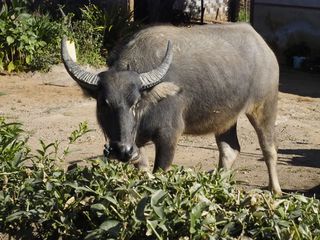
For centuries, farming methods around Kalaw relied mainly on manual labour, draft animals and locally produced tools. Oxen and water buffaloes were widely used for ploughing and transporting agricultural goods, particularly in areas where steep terrain limited the use of larger machinery.
Crop production varied according to altitude and environmental conditions. Rural communities cultivated rice, vegetables, pulses, chillies and other products intended for local consumption and regional trade. Commercial routes connecting the Shan plateau with other parts of Myanmar gradually encouraged the circulation of agricultural products and strengthened rural economic exchanges.
Despite certain forms of modernisation introduced during the twentieth century, many Burmese rural areas preserved relatively low levels of mechanisation. In numerous villages, agricultural work continued to depend heavily on human labour and practical knowledge transmitted within families across generations.
Community Organisation and Daily Rural Life
Agricultural work in the countryside around Kalaw extends far beyond food production alone. Farming activities structure family organisation, social relationships and forms of local cooperation within the villages. Planting and harvesting periods frequently involve several generations working together within the same household or community.
The rural landscape reflects this long-standing relationship between human activity and the natural environment. Footpaths used daily by farmers, cultivated plots and small rural infrastructures remain important components of the regional landscape.
Local markets also play an essential role in village life. Vegetables, grains and processed products from family farms are regularly exchanged or sold through small-scale rural trade networks. Agricultural income continues to support a significant part of the population living in the Shan countryside.
Contemporary Changes and Continuity of Practices
During recent decades, some rural regions of Myanmar have experienced gradual mechanisation and changes in agricultural production methods. Small motorised vehicles, light tractors and modern farming techniques have progressively altered certain traditional practices.
However, around Kalaw, many agricultural activities still follow methods closely connected to older rural traditions. Mountainous terrain, economic limitations and the organisation of family-based farms contribute to the persistence of labour-intensive farming systems.
These rural practices now represent an important testimony to the historical evolution of the Burmese countryside. They also illustrate the continued importance of seasonal rhythms, community cooperation and agricultural knowledge in several rural regions of Myanmar.
Organisation of Rural Agricultural Work around Kalaw
Daily Rhythms and Seasonal Activities
In the countryside surrounding Kalaw, agricultural work follows a rhythm closely connected to seasonal changes and monsoon conditions. Daily activities often begin early in the morning, when farmers leave their villages to reach cultivated plots before the strongest heat of the day. Movement between houses, fields and rural tracks forms a constant part of village life.
The tasks performed in the fields vary according to crops and seasons. Some scenes involve ploughing, preparing the soil or maintaining cultivated land, while others focus on harvesting, sorting vegetables or transporting agricultural products. The work is distributed across small plots scattered throughout the hilly landscape of the Shan plateau.
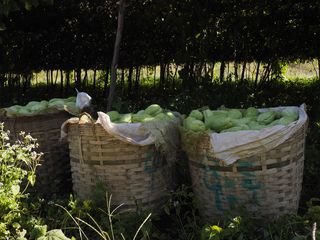
Harvest periods frequently involve several members of the same family working together. Crops are often sorted directly in the fields before being carried to nearby villages or local markets. Agricultural labour remains strongly linked to manual participation and close cooperation between households.
Tools, Draft Animals and Agricultural Vehicles
The equipment used in many rural areas around Kalaw remains relatively simple and directly adapted to local conditions. Hoes, baskets, sacks and cutting tools continue to play an important role in daily agricultural activities. Manual labour still dominates many farming tasks, particularly in areas where the terrain limits mechanised cultivation.
Draft animals remain visible in several aspects of agricultural work. Oxen and water buffaloes are used for ploughing, carrying goods and moving agricultural products between villages and cultivated areas. Farmers rely on practical knowledge linked to guiding animals, maintaining harnesses and navigating uneven ground.
Alongside these traditional methods, small-scale mechanisation has gradually appeared in some rural areas. Certain vehicles resemble improvised tractors or reinforced motor cultivators designed for narrow and irregular rural roads. These machines are used to transport workers, crops and farming equipment between villages and agricultural zones.
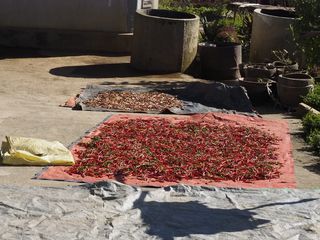
Drying agricultural products is also a common activity in the countryside. Vegetables, chillies and harvested crops are often spread along roadsides, on mats or near houses to dry under the sun before being stored or sold.
Rural Landscapes and Village Organisation
Agricultural work around Kalaw takes place within a fragmented landscape composed of small cultivated plots distributed across rolling hills and valleys. Fields alternate with dirt roads, isolated trees, rural houses and occasional Buddhist structures visible throughout the countryside.
Village organisation remains closely linked to farming activities. Houses, storage areas and small family farms are generally located near cultivated land, creating a continuous relationship between domestic and agricultural space. Daily movement between homes and fields structures much of local rural life.
Temporary roadside markets sometimes appear along rural routes, allowing farmers to sell vegetables, grains and locally produced goods directly from their farms. Transportation relies on baskets, carts or small utility vehicles adapted to the road conditions of the Shan countryside.
The sound environment remains dominated by conversations between workers, animal movements, engines from agricultural vehicles and tools used in the fields. Compared with large industrial farming regions, agricultural activities around Kalaw continue to operate on a relatively modest scale.
Clothing, Gestures and Community Participation
Agricultural work involves men, women and sometimes children participating in family-based farming activities. Clothing is chosen mainly for practical reasons and protection against sun, dust and humidity. Workers commonly wear lightweight shirts, loose trousers, traditional longyi garments and various forms of head coverings designed for outdoor labour.
The gestures associated with farming remain repetitive and highly practised. Carrying crops manually, handling animals and maintaining cultivated land require constant adaptation to terrain and weather conditions.
Many scenes from the countryside also reveal a strong level of cooperation between villagers. Certain tasks, particularly during harvest or field preparation periods, are carried out collectively. This community-based organisation continues to shape agricultural life around Kalaw and contributes to the preservation of farming practices still largely dependent on human labour and locally transmitted knowledge.
 Links to the main sections of the site