Français (France)
  Nederlands (nl-NL)
 Community singing traditions among Jain women in Nalagarh represent a collective form of religious and social expression linked to everyday Jain practices in northern India. These vocal gatherings are commonly associated with religious ceremonies, spiritual festivals, and family events connected to the Jain calendar. Performed in groups, the songs convey values related to discipline, non-violence, meditation, and devotion. In Nalagarh, this tradition also illustrates the important role of women in preserving cultural practices and transmitting local religious memory. The repertoire may differ according to communities, generations, and ceremonial contexts, while maintaining a strong communal and cultural identity within Jain society.
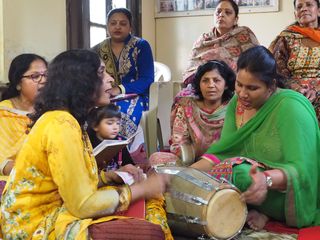
Nalagarh • Devotional Singing in a Jain Household
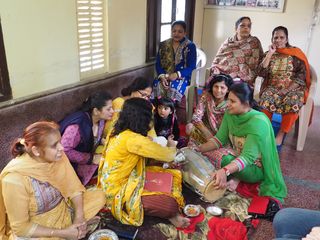
Nalagarh • Devotional Singing in a Jain Household
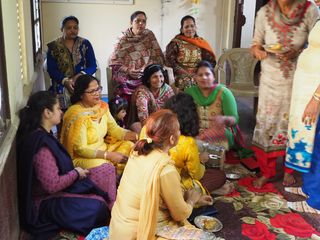
Nalagarh • Devotional Singing in a Jain Household
Tradition profile
Devotional Singing in a Jain Household
Tradition category: Concerts and musical shows
Tradition family: Traditional music
Tradition genre: Performing arts
Cultural heritage: Jain
Geographic location: Nalagarh • Himachal Pradesh • India
• Links to •
• List of videos about Nalagarh on this site •
Nalagarh, an ordinary town • Himachal Pradesh, India
Community Singing Traditions of Jain Women in Nalagarh
Religious Origins and Community Context
Community singing among Jain women in Nalagarh belongs to a long-established devotional tradition linked to the oral transmission of Jain religious teachings. In many Jain communities across northern India, collective singing gatherings form part of everyday spiritual life alongside prayer, scripture recitation, meditation, and religious assemblies held in temples or community spaces.
Nalagarh historically occupied a transitional zone between the plains of Punjab and the Himalayan foothills, an environment shaped by commercial exchanges and regional mobility. Jain merchant communities active in these networks contributed to the circulation of religious practices, devotional literature, and communal rituals throughout northern India. Within this context, women’s singing gatherings became an important form of religious participation and social cohesion.
Historical Development of the Practice
Collective devotional singing developed as a practical and accessible means of transmitting Jain ethical principles, including non-violence, self-discipline, restraint, and respect for living beings. Women often played a central role in preserving these traditions through domestic religious activities, family ceremonies, and local devotional associations.
In several Jain traditions, especially among urban and semi-urban communities, religious singing evolved alongside temple institutions, study groups, and charitable organizations. Gatherings could be associated with fasting periods, religious festivals, commemorations of spiritual teachers, or important moments in the Jain ritual calendar.
The oral nature of these traditions allowed them to remain active even in communities where access to formal religious education was limited. Hymns and devotional texts were memorized collectively and transmitted across generations through repeated participation rather than written instruction alone.
Social Role and Cultural Significance
Beyond their religious dimension, these singing gatherings reinforce social relationships within Jain communities. They create spaces where women participate actively in community organization, cultural continuity, and the preservation of shared religious memory.
The gatherings also contribute to maintaining links between generations. Older participants frequently guide the recitations and teach the repertoire to younger members, helping preserve linguistic expressions, ritual formulas, and devotional practices associated with Jain traditions in northern India.
In smaller urban centers such as Nalagarh, these collective practices remain connected to local identity and community solidarity. They represent both a spiritual activity and a social structure through which members maintain regular contact and reinforce communal ties.
Contemporary Transformations and Transmission
During the twentieth century, urbanization, professional mobility, and changing family structures altered the organization of many traditional religious gatherings in India. In some cases, meetings once held mainly in private homes shifted toward community halls or temple-related spaces.
At the same time, recorded devotional music, digital media, and online religious content introduced new forms of musical practice and learning. Younger generations are increasingly exposed to modern devotional styles that differ from older oral traditions.
Despite these transformations, community singing among Jain women continues to play an important role in several local communities. In Nalagarh, the practice remains associated with collective devotion, social continuity, and the preservation of religious traditions adapted to contemporary community life.
Organization and Practices of Community Singing Among Jain Women in Nalagarh
General Structure of the Gatherings
Community singing gatherings among Jain women in Nalagarh usually take place in a religious hall, a community building, or a private residence associated with the local Jain community. Participants generally sit on floor mats arranged in rows or circles facing a small devotional area containing religious texts, framed images, lamps, or ritual objects used during the meeting.
The gathering commonly begins with a short prayer, a collective invocation, or the recitation of devotional formulas. Singing sessions then follow a structured sequence directed by senior participants or by women responsible for organizing the event. Some meetings are connected to the Jain religious calendar, while others accompany fasting periods, commemorative ceremonies, or family-related religious occasions.
The format often alternates between solo recitation and collective repetition. One participant may introduce the opening verses before the rest of the group joins in. This structure allows women of different ages and levels of experience to participate actively in the gathering.
Chants, Vocal Practices, and Religious Expressions
The repertoire mainly consists of devotional hymns, religious verses, and songs inspired by Jain ethical teachings. The texts frequently refer to non-violence, spiritual discipline, meditation, detachment from material life, and respect for all living beings.
The vocal style generally favors clarity and collective participation rather than individual musical performance. Melodies are often repetitive and moderate in rhythm, making them accessible for group recitation. In some meetings, participants accompany the chants with synchronized hand movements or simple percussion instruments used to maintain a regular tempo.
The language of the chants may vary according to the community and the source of the texts. Hindi is commonly used, alongside regional dialects and liturgical expressions associated with Jain devotional literature. Certain phrases are repeated rhythmically to reinforce concentration and the meditative atmosphere of the gathering.
Participants and Community Roles
The gatherings are composed primarily of women belonging to the local Jain community. Older women frequently guide the proceedings by selecting hymns, leading the recitations, and maintaining the sequence of the ritual activities.
Younger participants may assist with preparing the meeting space, distributing prayer books, or following the chants as part of an informal learning process. This intergenerational participation contributes to the oral transmission of devotional texts and ritual practices.
Organization is usually collective and based on shared responsibilities. Some participants prepare seating arrangements and ritual objects, while others coordinate the singing or assist elderly members of the group. In many cases, the gathering concludes with the distribution of vegetarian refreshments or small offerings prepared according to Jain dietary principles.
Spaces, Objects, and Visual Environment
The spaces used for these gatherings are generally simple and arranged to encourage concentration and group participation. Participants usually sit barefoot on carpets or fabric coverings placed directly on the floor. Decorative elements remain limited and may include religious illustrations, devotional books, oil lamps, or cloth coverings placed near the prayer area.
Clothing reflects the religious and social character of the event. Women commonly wear modest garments suitable for devotional activities, including saris, shawls, or regional clothing associated with everyday community life. Head coverings may be used during prayers or recitations.
The sound environment is dominated by collective voices, repetitive vocal patterns, and low-volume exchanges between participants. Unlike stage performances or public concerts, these gatherings emphasize shared participation and spiritual continuity rather than musical display.
Distinctive Features of the Tradition
One of the notable characteristics of these gatherings is the balance between religious devotion and social interaction. The meetings function simultaneously as ritual activities, educational spaces, and forms of community organization.
Another distinctive aspect is the central role played by women in preserving the continuity of local Jain devotional culture. Through repeated gatherings, memorized chants, and collective participation, these groups maintain forms of oral transmission that remain important within community life in Nalagarh and other Jain settlements of northern India.
 Links to the main sections of the site