Français (France)
  Nederlands (nl-NL)
 Paşabağ and the fairy chimneys, located in Cappadocia, Turkey, are among the most representative landscapes of the region. The site is known for its spectacular rock formations created by ancient volcanic activity and shaped through long natural processes. These mineral silhouettes have greatly contributed to Cappadocia’s international reputation. The area offers a remarkable example of the interaction between geology, climate, and time. Included within the UNESCO World Heritage property listed in 1985, Paşabağ is one of the key places for understanding the distinctive landscape identity of Cappadocia.
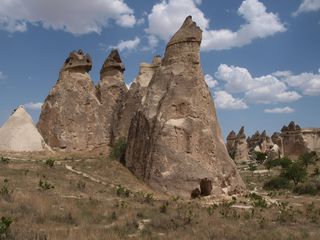
Cappadocia • Paşabağ and the Fairy Chimneys
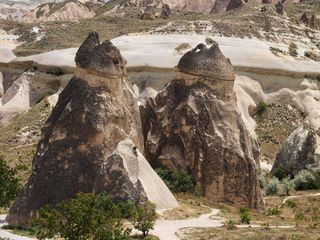
Cappadocia • Paşabağ and the Fairy Chimneys
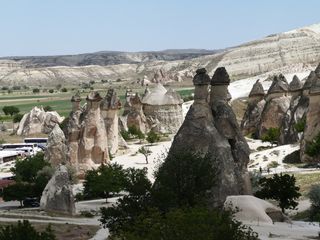
Cappadocia • Paşabağ and the Fairy Chimneys
Natural site profile
Paşabağ and the Fairy Chimneys
Natural site category: Fairy chimneys
Natural site family: Natural volcanic sculptures
Natural site genre: Terrestrial
Geographic location: Cappadocia • Turkey
This natural site in Cappadocia is inscribed on the UNESCO World Heritage List since 1985 and is part of the serial property "Göreme National Park and the Rock Sites of Cappadocia".See the UNESCO natural sites featured on this site
• Links to •
• List of videos about Cappadocia on this site •
Cappadoce • Göreme, valleys and cave villages Turkey
Paşabağ and the Fairy Chimneys: Preservation, Heritage Value, and Changing Meanings in Cappadocia
From Natural Curiosity to Protected Landscape
Paşabağ, one of the best-known concentrations of fairy chimneys in Cappadocia, owes its modern importance to a combination of geological spectacle, cultural symbolism, and economic potential. For centuries these unusual rock pillars were part of a lived rural landscape rather than a formally protected natural monument. Their transformation into a recognized heritage site began mainly in the twentieth century, when scholars, travellers, photographers, and later state institutions identified Cappadocia as a landscape of exceptional national and international value.
The decisive stage came in the 1980s. In 1985, the wider area was inscribed on the UNESCO World Heritage List under the name Göreme National Park and the Rock Sites of Cappadocia. This marked the shift from local landmark to globally acknowledged heritage landscape. Protection was motivated not only by environmental concerns, but also by cultural diplomacy, tourism development, and the wish to preserve one of Turkey’s most distinctive landscapes.
Political, Economic, and Cultural Motivations
Politically, the preservation of Paşabağ formed part of a broader strategy to highlight nationally significant heritage sites. Cappadocia offered a rare combination of natural formations, historic rock-cut settlements, and international visibility. Protecting such a place strengthened Turkey’s cultural profile abroad and reinforced domestic pride in regional diversity.
Economically, tourism became a major driving force. As international travel expanded after the mid-twentieth century, Cappadocia emerged as one of Turkey’s leading destinations. Paşabağ’s fairy chimneys became iconic promotional images. Visitor spending encouraged hotels, restaurants, transport services, handicrafts, guiding professions, and infrastructure investment. For nearby communities, landscape preservation and tourism income became closely linked.
Culturally, the site acquired symbolic status. The term “fairy chimneys” reflects how unusual geological forms inspire folklore and imagination. Paşabağ came to represent the dreamlike identity of Cappadocia in books, films, travel media, and later digital imagery.
Historical Events and Regional Development
Several historical developments increased the importance of the site. The rise of archaeological and art-historical interest in Cappadocia during the nineteenth and early twentieth centuries drew wider attention to the region. Although scholars often focused on rock-cut churches and settlements, dramatic natural formations such as Paşabağ benefited indirectly from this growing recognition.
The rapid expansion of global tourism after the Second World War had even greater consequences. Improved roads, aviation networks, and international travel markets made central Anatolia more accessible. As visitor numbers rose, regional economies diversified beyond agriculture.
UNESCO inscription in 1985 further accelerated this process. It encouraged stronger planning controls, conservation awareness, and international visibility. Similar patterns can be observed at other globally recognized landscapes such as Bryce Canyon in the United States, Zhangjiajie in China, or the karst regions of Southeast Asia, where heritage designation increased both protection and tourism pressure.
Transformations Through the Centuries
The most significant long-term transformations at Paşabağ have been natural rather than human-made. Wind erosion, seasonal rain, freeze-thaw cycles, and gravity slowly shaped the tuff pillars over thousands of years. Some chimneys widened, cracked, lost their protective caps, or collapsed, while new forms emerged elsewhere. The landscape seen today represents only one stage in an ongoing geological process.
Human influence also changed the site. In earlier centuries, the surrounding land was primarily agricultural and pastoral. Paths, orchards, grazing activity, and occasional rock use connected the formations to everyday rural life. In modern times, the dominant transformation has been tourism infrastructure: parking areas, marked trails, visitor facilities, and controlled access routes.
These changes reflect broader political and cultural shifts—from subsistence land use to heritage economy, and from local familiarity to international admiration.
Ecological and Symbolic Importance
Ecologically, Paşabağ is part of a semi-arid Anatolian environment where fragile soils, sparse vegetation, and exposed rock surfaces interact closely. The formations create microhabitats through shade, shelter, and moisture variation. While not a biodiversity hotspot in the tropical sense, the site illustrates how life adapts to dry volcanic terrain.
Symbolically, Paşabağ has become one of the defining images of Cappadocia. Its towers and cones are instantly recognizable and help shape regional identity. The landscape is also educational, demonstrating volcanic deposition, erosion mechanics, and long-term environmental change in a visually accessible way.
Present Condition and Modern Threats
Paşabağ remains relatively well preserved, especially compared with many unprotected geological sites worldwide. Legal protection, visitor management, and international recognition have helped maintain its visibility and general integrity.
However, serious challenges remain. Natural erosion cannot be stopped and forms part of the site’s essence, but climate variability may accelerate deterioration. Heavy tourism can damage soils, create path erosion, generate waste, and increase pressure for new infrastructure. Visual pollution from uncontrolled development in surrounding areas can also weaken landscape character.
The central challenge is balance: preserving a fragile geological landscape while allowing public access and sustaining local livelihoods. Paşabağ’s future depends on careful management that respects both natural change and human use.
Paşabağ and the Fairy Chimneys: A Geological Masterpiece of Cappadocia
A Landscape Formed by Fire, Ash, and Time
Paşabağ, one of the most celebrated natural sites in Cappadocia, is renowned for its dense concentration of fairy chimneys—tall rock pinnacles capped by harder stone blocks. These formations illustrate an exceptional sequence of geological processes that began millions of years ago. Repeated volcanic eruptions from nearby mountains such as Erciyes, Hasan Dağı, and Göllü Dağ spread ash, lava fragments, and pyroclastic materials across central Anatolia. Over time, these deposits compacted into soft volcanic tuff.
The true originality of Paşabağ lies in what followed. Rainwater, wind abrasion, seasonal temperature changes, and gravity gradually eroded the softer tuff. Where harder capstones protected the upper layers, slender columns remained standing while surrounding material disappeared. This process, known as differential erosion, produced the fairy chimneys that define the site today.
Exceptional Geological Formations
Paşabağ contains some of the most visually distinctive fairy chimneys in Cappadocia. Many rise several metres high, while some exceed ten metres. A notable feature of the site is the presence of multi-headed chimneys, where one column supports two or more capstones. These forms are less common elsewhere and have made Paşabağ one of the most photographed parts of the region.
Unlike mountain scenery based on scale alone, Paşabağ impresses through repetition and variation. Hundreds of isolated pillars stand close together, each shaped differently by erosion. Some are smooth and cylindrical, others fractured or tapering. The landscape resembles a natural sculpture garden created over geological time.
These formations are not permanent monuments. Once a protective capstone falls, the column below erodes more rapidly. Paşabağ is therefore a dynamic landscape in which creation and destruction continue simultaneously.
Topography and Ecological Adaptation
The site combines shallow valleys, exposed slopes, rocky clusters, and open viewpoints. This varied topography creates multiple microclimates within a relatively small area. South-facing surfaces receive intense summer sunlight, while shaded recesses remain cooler and sometimes retain more moisture.
Vegetation reflects the semi-arid conditions of central Anatolia. Grasses, seasonal wildflowers, drought-resistant shrubs, and scattered cultivated species appear depending on rainfall and soil depth. Although Paşabağ is not known for high biodiversity compared with forests or wetlands, it offers an important example of ecological adaptation in a mineral landscape.
Birds often use cavities, ledges, and high rock points for shelter or observation. Small mammals and insects also benefit from cracks, shade zones, and sparse vegetation cover. The site demonstrates how even harsh volcanic terrain can support specialized ecological communities.
Local Geology and Global Environmental Forces
Paşabağ is deeply rooted in local conditions: Cappadocia’s volcanic history, Anatolian continental climate, and regional drainage patterns. Yet its appearance also reflects universal natural forces found worldwide. Erosion by water, wind weathering, freeze-thaw expansion, and gravitational collapse are global processes acting on a uniquely local material.
Modern environmental pressures add another global dimension. Climate change may influence rainfall intensity, drought cycles, and temperature extremes, potentially accelerating erosion or affecting vegetation patterns. Thus, a landscape shaped over millions of years now faces changes linked to contemporary planetary systems.
International Recognition and UNESCO Impact
Paşabağ forms part of the UNESCO World Heritage property inscribed in 1985 under the name Göreme National Park and the Rock Sites of Cappadocia. International recognition was granted because the region combines extraordinary volcanic landscapes with historic rock-cut human settlements.
For Paşabağ, UNESCO status increased worldwide visibility, scientific interest, and tourism demand. The fairy chimneys became among the most recognizable symbols of Turkey’s natural heritage. The designation also strengthened conservation frameworks, planning controls, and public awareness of geological fragility.
As in other famous natural sites such as Bryce Canyon in the United States or the karst towers of Guilin in China, global recognition brought both benefits and pressures. Greater protection was accompanied by heavier visitor numbers and infrastructure needs.
Interesting Facts and Cultural Perception
The term “fairy chimneys” reflects the imaginative response these formations inspire. Across many cultures, unusual rock landscapes generate legends involving spirits, giants, or mythical beings. In Cappadocia, the name itself helped transform geology into cultural identity.
Paşabağ is especially valued at sunrise and sunset, when the tuff changes colour from pale beige to pink, gold, and ochre. This shifting light contributes greatly to the site’s popularity with photographers and visitors.
Another striking feature is that no two chimneys are exactly alike. Small differences in capstone hardness, cracks, slope exposure, and water runoff produce unique individual forms.
Present Preservation and Future Challenges
Paşabağ remains comparatively well preserved, but its vulnerability is constant. Natural erosion is inevitable and forms part of the site’s character, yet uncontrolled human pressure can accelerate damage. Footpath erosion, soil compaction, litter, visual intrusion, and demands for visitor facilities all require management.
The main challenge is preserving authenticity while allowing access. Because the site’s beauty depends on fragile geological forms, successful conservation must respect both tourism realities and natural processes. Paşabağ’s greatness lies not only in what exists today, but in the slow forces that continue to reshape it.
 Links to the main sections of the site