Français (France)
  Nederlands (nl-NL)
 Of Sikh tradition, (with additional Hindu influence), the Sandhawalia Aristocratic Clan ruled for approximately 48 years, ± between 1801 and 1849 over all or part of North India, during the Colonial Period.
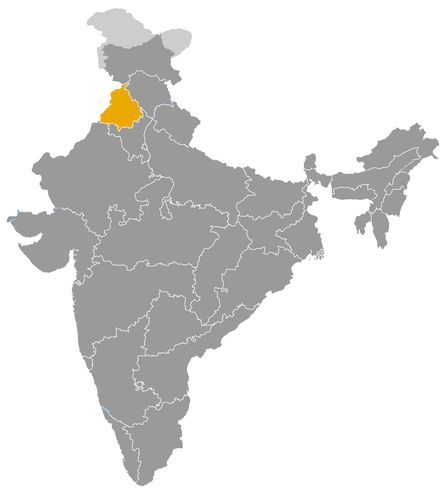
This map illustrates the maximum territory that the Sandhawalia Aristocratic Clan Dynasty had reached at its height, covering the current regions of Punjab in India. Its main purpose is to provide a visual aid to understand the geographical extent of this dynasty. However, it's important to note that the contemporary borders of these regions may not necessarily coincide with the historical territories.
The Sandhawalia Aristocratic Clan and Its Role in the History of Sikh Punjab
A Noble Lineage in the Political Orbit of the Sukerchakias
The Sandhawalia aristocratic clan occupies a distinct place in the history of nineteenth century northern India. It should not be treated as an independent sovereign dynasty with a separate kingdom and a continuous succession of rulers. The Sandhawalias were a Sikh noble lineage of Punjab, associated especially with Raja Sansi and with the aristocratic circles of Lahore. Their importance lies in their role as chiefs, sardars, landholders, military figures, and political actors within the wider framework of the Sikh Empire.
This distinction is essential because the sovereign line in this political context was the Sukerchakia lineage. The Sukerchakias, through Ranjit Singh, transformed a Sikh misl into the powerful Sikh Empire centred on Lahore. The Sandhawalias belonged to the same aristocratic and military world, but they did not exercise comparable sovereign authority. Their role was that of an influential noble clan operating around Sukerchakia power, sometimes as allies, sometimes as rivals, and often as participants in the politics of succession.
Political Influence during the Succession Crises of Lahore
The political role of the Sandhawalias became especially visible after the death of Ranjit Singh in 1839. During his lifetime, the Sukerchakia monarchy was strong enough to contain tensions between noble families, military commanders, court dignitaries, and regional interests. After his death, this balance weakened rapidly. The succession of Kharak Singh, Nau Nihal Singh, Chand Kaur, Sher Singh, and Duleep Singh unfolded in a context of factional rivalry and court intrigue.
The Sandhawalias were involved in these struggles. Figures such as Ajit Singh Sandhawalia, Lehna Singh Sandhawalia, and Attar Singh Sandhawalia appear in the political tensions surrounding the Sukerchakia royal family, the Dogras of Jammu, military commanders, and other Punjabi noble groups. Their actions did not amount to the creation of a rival dynasty. They instead reveal how aristocratic clans could shape, disturb, or redirect the politics of a kingdom without being the ruling house themselves.
This influence shows that power in the Sikh Empire did not depend solely on the person of the maharaja. It also rested on aristocratic loyalties, family alliances, military support, and access to state resources. The Sandhawalias illustrate the importance of noble networks in the final decades of independent Sikh rule.
Cultural Identity within the Sikh Aristocracy
The cultural significance of the Sandhawalias belongs to the broader world of Sikh aristocracy in Punjab. Their prestige was linked to lineage, honour, martial reputation, religious identity, and proximity to the Lahore court. In this society, a noble family’s status was shaped by service, patronage, alliances, titles, memory, and participation in the political culture of the Sikh elite.
Their association with Raja Sansi gave them a recognized territorial and social base. This was not the capital of a Sandhawalia kingdom, but a family seat that supported their local authority and aristocratic identity. Such a base allowed them to maintain dependents, preserve family prestige, and participate in the networks that connected rural Punjab with the court of Lahore.
The Sandhawalias also help explain how cultural authority in nineteenth century Punjab extended beyond the ruling throne. The Sukerchakias held sovereign power, but noble clans helped shape the courtly environment in which that power functioned. They contributed to the norms of honour, loyalty, factional identity, and aristocratic conduct that defined the Sikh political order.
Economic Foundations of Sandhawalia Influence
The economic strength of the Sandhawalias was based on land, jagirs, local revenues, privileges, and service within the Sikh state. Like other aristocratic families of Punjab, they drew political weight from their ability to command rural resources, maintain followers, and intervene in regional power struggles. Their economic position did not equal that of a sovereign fiscal state, but it gave them practical influence.
Within the Sikh Empire dominated by the Sukerchakias, land revenue, military service, and recognition by the central authority were closely connected. Noble families could receive or retain rights over land in return for loyalty, service, or political usefulness. This system strengthened aristocratic houses, but it also made them vulnerable to changes at court. When the Sukerchakia succession became unstable, offices, privileges, and estates could be contested or threatened.
The Sandhawalias were therefore a landed and military elite integrated into the Lahore political order. Their wealth enabled action, but their position depended on the survival of the broader Sikh state and on their relationship with the ruling Sukerchakia dynasty.
A Lineage that Reveals the Fragility of the Sikh Empire
The historical importance of the Sandhawalias lies above all in what they reveal about the final phase of the Sikh Empire. They show how a noble clan could influence succession, support or oppose claimants, and contribute to the tensions of a weakened state. Their history illuminates the internal mechanisms of a monarchy that depended not only on the Sukerchakia ruling house, but also on noble alliances and military factions.
The British annexation of Punjab in 1849 ended the independent political framework in which the Sandhawalias had exercised their main influence. Family prestige, landholding, and social memory could continue, but their direct role in sovereign politics was reduced. Their place in Indian history is therefore that of an aristocratic lineage linked to both the strength and the fragility of the Sikh Empire. To understand sovereignty, they must be read in relation to the Sukerchakias. To understand court rivalry and noble influence, the Sandhawalias remain an essential reference.
The Territorial Reach of the Sandhawalia Aristocratic Clan in Sikh Punjab
A Local Lineage within the Wider Sukerchakia Political Space
The Sandhawalia aristocratic clan did not rule an independent kingdom with fixed borders, a separate capital, and a continuous sovereign administration. Its geographic extension must therefore be understood as the territorial presence of a noble Sikh lineage rather than the expansion of a ruling dynasty. The Sandhawalias were associated above all with Raja Sansi in central Punjab, near Amritsar, and their influence came from landholding, local authority, family prestige, military service, and proximity to the Lahore court.
This distinction is central to understanding their place beside the Sukerchakias. The Sukerchakia lineage, especially through Ranjit Singh, formed the sovereign house that transformed a Sikh misl into the Sikh Empire. The Sandhawalias belonged to the same aristocratic and military world, but they did not control the empire as rulers. Their geography was local in origin, but their influence became wider because Raja Sansi was connected to the political system centred on Lahore.
Raja Sansi as the Territorial Base of the Clan
Raja Sansi was the main territorial reference point of the Sandhawalia clan. It gave the family a concrete base in central Punjab, a region of considerable religious, military, and political importance. Its position near Amritsar linked the clan to one of the major sacred and social centres of Sikh life, while its relative proximity to Lahore placed it within reach of the capital of the Sikh Empire.
This local base should not be mistaken for the capital of a Sandhawalia state. It was a family seat, a landed centre, and a source of local authority. Through land, dependents, revenue rights, and aristocratic connections, the Sandhawalias could maintain a recognized position in Punjabi society. Their power was therefore rooted in territory, but it was not sovereign in the same way as the rule of the Sukerchakia maharajas of Lahore.
The control associated with Raja Sansi gave the clan social weight. It allowed its chiefs to participate in military service, political negotiation, and factional alliances. In nineteenth century Punjab, such a territorial base could give a noble family influence greater than the size of its estates might suggest.
Influence beyond Local Lands through Lahore
The geographic importance of the Sandhawalias extended beyond Raja Sansi because of their relationship with the Lahore court. Under Ranjit Singh, the Sukerchakia state expanded across much of Punjab and projected authority toward Kashmir, Multan, Peshawar, and the Himalayan foothills. The Sandhawalias did not govern these regions as sovereigns, but their presence within the political world of Lahore connected them to decisions that affected this larger imperial space.
Their influence therefore worked through networks rather than direct territorial administration. A Sandhawalia chief could matter politically because he could support or oppose a claimant, participate in court factions, obtain privileges, or intervene in disputes among leading noble houses. The clan’s geographic reach was thus indirect. It was based on the link between a local landed base and the central institutions of the Sikh Empire.
This pattern was common in the political geography of nineteenth century India. Noble families often exercised power through estates, service, court access, and personal allegiance. The Sandhawalias illustrate this system clearly. Their land gave them substance, while Lahore gave them political reach.
Relations with the Sukerchakias and Other Punjabi Powers
The Sandhawalia position shaped their relations with the Sukerchakia ruling house and with other power groups in Punjab. As long as Ranjit Singh maintained strong authority, aristocratic families could be integrated into a relatively stable political order. After his death in 1839, this order weakened. The succession of Kharak Singh, Nau Nihal Singh, Chand Kaur, Sher Singh, and Duleep Singh created intense competition between noble clans, military commanders, court officials, and royal factions.
The Sandhawalias became involved in these struggles not as territorial conquerors, but as aristocratic actors linked to succession politics. Their relation to the Sukerchakias was therefore ambivalent. They were connected to the same political system and benefited from the power of Lahore, but they could also become rivals within the unstable court environment that followed Ranjit Singh’s death.
Their geographic position also brought them into contact with other influential forces, including the Dogras of Jammu, Sikh military leaders, Punjabi landed families, and British authorities watching the weakening Sikh state. These relationships were shaped less by frontier control than by access to land, offices, revenue, military support, and court favour.
The Effect of British Annexation on Sandhawalia Territory
The British annexation of Punjab in 1849 transformed the political meaning of Sandhawalia territory. The Sikh Empire ceased to exist as an independent state, and Lahore was no longer the centre of sovereign Sikh authority. The clan’s local prestige and landed identity could continue, but their ability to influence the politics of a ruling Sikh monarchy was greatly reduced.
Under colonial rule, families such as the Sandhawalias were increasingly defined by estate, rank, memory, and local administration rather than by participation in sovereign court politics. Some members remained socially significant, but the framework that had connected Raja Sansi to the Sukerchakia state disappeared.
A Territorial Role Based on Influence rather than Sovereignty
The geographic extension of the Sandhawalia aristocratic clan should not be measured as the expansion of a conquering dynasty. Their principal space was central Punjab, especially Raja Sansi, but their historical importance came from their connection with Lahore and the Sukerchakia ruling line. The Sukerchakias represented sovereign continuity in the Sikh Empire. The Sandhawalias represented the noble, landed, and factional world that surrounded that sovereignty.
Their history shows that territorial power in India did not always take the form of direct rule over large provinces. A noble clan could influence a wide political space through land, alliances, military status, and court access. The Sandhawalias belonged to that category: locally rooted, politically connected, and deeply involved in the tensions that linked the end of the Sikh Empire to the rise of British control in Punjab.
The Sandhawalias of Raja Sansi did not form an independent sovereign dynasty. They were a Sikh aristocratic clan of Punjab, connected by rank, alliances, and the Lahore court to the political world of the Sukerchakias, who formed the sovereign line of Ranjit Singh and the maharajas of the Sikh Empire. The dates below indicate periods of activity or influence, not sovereign reigns.
- Amir Singh Sandhawalia (active c. 1784–1827) • Chief and jagirdar of Raja Sansi, he consolidated the family’s position in central Punjab while the Sukerchakias were expanding their influence.
- Budh Singh Sandhawalia (active c. 1811–1827) • A sardar connected with Ranjit Singh’s service, he took part in the military and territorial system of the Sikh Empire dominated by the Sukerchakia line.
- Attar Singh Sandhawalia (active c. 1820–1844) • An important figure of the clan, he belonged to the aristocratic circle that revolved around Lahore after the consolidation of Sukerchakia power.
- Lehna Singh Sandhawalia (active c. 1820–1843) • An influential sardar at the Lahore court, he was connected with the political struggles that followed the death of Ranjit Singh, the principal Sukerchakia ruler.
- Ajit Singh Sandhawalia (active c. 1839–1843) • A political chief of the succession crisis generation, he intervened in conflicts surrounding the Sukerchakia maharajas of Lahore and was involved in the assassination of Sher Singh.
- Kehar Singh Sandhawalia (active c. 1842–1864) • A member of the lineage, he was associated with tensions caused by the succession of the Sukerchakia maharajas and experienced exile after the court conflicts.
- Shamsher Singh Sandhawalia (active c. 1846–1871) • A sardar of Raja Sansi, he lived through the transition from the Sukerchakia political order to British administration after the annexation of Punjab.
- Thakur Singh Sandhawalia (active c. 1873–1887) • An aristocratic chief and Sikh reformer, he defended the political memory of the Sikh Empire and supported the cause of Duleep Singh, the last maharaja of the line descended from Ranjit Singh.
 Links to the main sections of the site