

 Français (France)
  Nederlands (nl-NL)
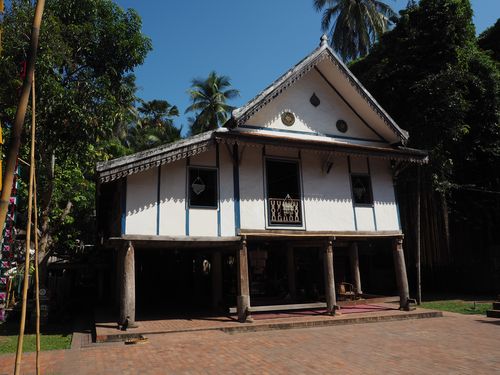
 Heuan Chan Heritage House, located in Luang Prabang in Laos, is a cultural site dedicated to presenting and transmitting aspects of the local heritage. Established in a restored traditional residence, the building allows visitors to explore different elements of daily life and cultural practices associated with the historic royal city. The site hosts exhibitions, demonstrations, and educational activities designed to illustrate traditional skills and social customs linked to the history of Luang Prabang. Heuan Chan Heritage House therefore plays an important role in preserving and communicating knowledge related to the cultural heritage of the city.
Luang Prabang • Heuan Chan Heritage
Luang Prabang • Heuan Chan Heritage
Luang Prabang • Heuan Chan Heritage
Monument profile
Heuan Chan Heritage
Monument categories: Museum, Traditional house
Monument families: Historic or traditional habitat • Museum, remarkable architecture or group of buildings
Monument genres: Residential, Cultural or scientific
Geographic location: Luang Prabang • Laos
Construction period: 19th century AD
This monument in Luang Prabang is inscribed on the UNESCO World Heritage List since 1995 and is part of the serial property "Town of Luang Prabang".See the UNESCO monuments featured on this site
• Links to •
• List of videos about Luang Prabang on this site •
Luang Prabang, Royal Palace • Laos
Luang Prabang, the markets • Laos
Luang Prabang, Wat Sensoukharam temple • Laos
Luang Prabang, Sunset on Mount Phou Si • Laos
Luang Prabang, Wat Xieng Thong temple • Laos
Luang Prabang, paper making workshop • Laos
Laos • Fabric Arts
Luang Prabang, a City in the Countryside • Laos
Luang Prabang, some temples • Laos
History of Heuan Chan Heritage House in Luang Prabang, Laos
Construction and Original Residential Function
Heuan Chan Heritage House is located in the historic center of Luang Prabang, a city that served for centuries as the royal capital of Laos. The building was constructed in the early twentieth century as a traditional Lao residence. Its establishment occurred during a period when Luang Prabang functioned as the political and ceremonial center of the Lao kingdom while also being integrated into the administrative framework of French Indochina.
The house was originally built as a private residence for a local family connected to the urban society of Luang Prabang. The structure reflects the organization of domestic life typical of the period, with interior spaces designed for reception, daily household activities, and family living. The arrangement of rooms corresponds to the lifestyle of urban households that occupied traditional wooden houses within the historic quarters of the city.
For several decades the building maintained its residential role. During this period the house formed part of a broader network of traditional dwellings that characterized the urban fabric of Luang Prabang.
Changes in Use During the Twentieth Century
Throughout the twentieth century Luang Prabang experienced political and administrative transformations that affected the use of many buildings in the historic center. The Heuan Chan house continued to function primarily as a private residence during much of this period.
Over time, shifts in economic conditions and urban development led to changes in the occupancy and maintenance of traditional houses in the city. Some buildings were altered or abandoned, while others remained inhabited but underwent modifications intended to maintain their functionality.
The Heuan Chan residence appears to have retained many of its original features despite these changes. Limited alterations were made in order to preserve the usability of the building while maintaining the structure and layout typical of traditional houses in Luang Prabang. This continuity later facilitated efforts aimed at conserving the building as part of the city’s architectural heritage.
Conversion into a Cultural Heritage House
At the end of the twentieth century initiatives aimed at protecting the historic urban environment of Luang Prabang gained increasing importance. Traditional houses within the historic district began to be identified as valuable elements of the city’s cultural heritage.
Heuan Chan House was selected as a representative example of a traditional Lao urban residence. A restoration project was undertaken to preserve the structure and to adapt the building for a new cultural function. The works focused on repairing structural elements, stabilizing the wooden framework, and restoring architectural components that had deteriorated over time.
Following these interventions the building was opened to the public as the Heuan Chan Heritage House. Its new function was to present aspects of the cultural traditions associated with the historic city of Luang Prabang. The transformation from private residence to heritage site allowed the building to serve as a place where elements of local culture could be documented and demonstrated.
Current Cultural Role and Preservation
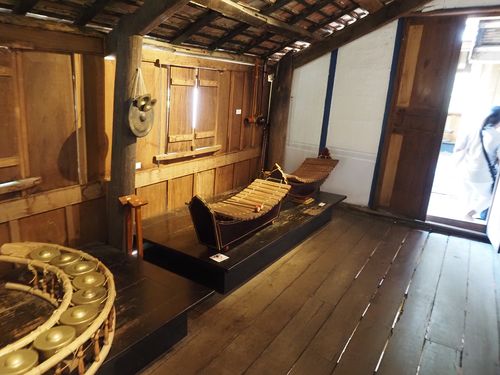
Today Heuan Chan Heritage House functions as a cultural and educational space dedicated to the preservation of local traditions. The building hosts exhibitions and demonstrations that illustrate different aspects of Lao cultural practices. Activities organized within the house present crafts, domestic traditions, and forms of cultural knowledge historically associated with the region.
The building itself forms part of the interpretation of the site. Visitors encounter a traditional residential structure whose preserved layout reflects historical domestic life in Luang Prabang. The use of the building as a heritage center therefore combines architectural preservation with cultural presentation.
Maintenance and conservation measures aim to ensure the long-term stability of the structure. Restoration work focuses on protecting the wooden framework, maintaining the roof and structural components, and preserving the architectural character of the house while accommodating its public function.
Global Historical Context
The construction of Heuan Chan House in the early twentieth century occurred when Laos was incorporated into French Indochina. During the same period Europe experienced the political tensions that preceded the First World War. In Asia several territories were undergoing transformations linked to colonial administration and modernization. Within this international context, Luang Prabang continued to function as a royal center while maintaining its traditional urban architecture.
Architecture of Heuan Chan Heritage House in Luang Prabang, Laos
Urban Setting and Site Placement
Heuan Chan Heritage House stands within the historic district of Luang Prabang, an area characterized by a dense arrangement of traditional residences, religious buildings, and narrow streets. The house occupies a modest urban plot aligned with the street pattern that structures this part of the city. Its placement reflects the organization typical of residential buildings constructed in Luang Prabang during the early twentieth century.
The building is positioned slightly set back from the street, creating a transitional zone between the public thoroughfare and the entrance of the house. This small forecourt functions as an intermediate space that marks the threshold between exterior circulation and the domestic interior. The orientation of the structure allows the façade to face the street while maintaining visual continuity with neighboring houses.
The volume of the building remains relatively compact and low in height. Its scale corresponds closely to surrounding residential structures, allowing the house to integrate into the urban landscape without architectural dominance. The relationship between the house and adjacent buildings reflects the continuous residential frontage characteristic of the historic center of Luang Prabang.
Natural ventilation is facilitated by the orientation of openings along the façades. The building’s position allows airflow from the surrounding streets and courtyards to pass through interior spaces, an important architectural adaptation to the tropical climate.
Structural System and Construction Techniques
The primary structure of Heuan Chan Heritage House is based on a wooden framework. Vertical wooden posts form the main load-bearing elements and support the roof structure through a system of beams and cross-members. These posts define the structural grid of the building and determine the distribution of interior spaces.
The elevated construction of the house is one of its defining architectural characteristics. The floor is raised above ground level and supported by the wooden structural framework. This elevation protects the building from ground humidity and improves air circulation beneath the structure.
Walls are composed of wooden panels or lightweight masonry elements covered with plaster. In some areas wooden partitions divide interior rooms while maintaining structural continuity with the supporting framework. These partitions allow flexible organization of interior space while preserving the stability of the structure.
The roof structure consists of a timber frame assembled with traditional joinery techniques. Rafters and beams create a pitched roof form that facilitates rapid drainage of rainwater during the monsoon season. The roof covering is composed of tiles or similar materials capable of withstanding heavy rainfall and intense sunlight.
These construction techniques result in a structure that combines structural stability with relatively lightweight materials suited to local environmental conditions.
Interior Layout and Spatial Organization
The interior organization of Heuan Chan Heritage House reflects the arrangement typical of traditional urban residences in Luang Prabang. The plan is based on a rectangular footprint with rooms arranged in sequence from the entrance toward the interior of the building.
The entrance leads into a reception area that historically served as the principal space for receiving visitors. This area forms the transition between the exterior environment and the more private interior sections of the house. Its location near the façade allows access without requiring movement through the entire structure.
Beyond the reception area, interior rooms are arranged to accommodate domestic functions such as living, storage, and household activities. Circulation between these spaces occurs through openings in interior partitions that maintain visual continuity and allow airflow between rooms.
Windows positioned along the exterior walls contribute to both illumination and ventilation. Their placement ensures that natural light reaches interior spaces while allowing cross-ventilation across the floor plan. The arrangement of openings reflects careful consideration of climatic conditions rather than purely decorative intent.
The raised floor structure creates an additional layer of environmental control. Air circulating beneath the building reduces heat accumulation within the interior spaces and contributes to thermal comfort.
Architectural Details and Exterior Features
The façade of Heuan Chan Heritage House is characterized by a rhythm of regularly spaced openings that provide light and ventilation to the interior. Windows are typically fitted with wooden shutters that allow occupants to regulate airflow and control the amount of sunlight entering the rooms.
Doors and window frames display modest decorative elements carved into wooden components. These details remain relatively restrained and are integrated into the structural framework rather than applied as separate ornamental features.
The roof silhouette forms one of the most recognizable elements of the house. Its sloping planes extend beyond the wall line, creating overhanging eaves that protect façades and openings from rainfall. These projecting roof edges also shade the exterior walls, reducing heat absorption during periods of intense sunlight.
Structural beams and wooden columns remain partially visible in some sections of the building, emphasizing the construction system of the house. Their presence contributes to the visual character of the structure and reveals the functional logic of the building’s framework.
Restoration and Architectural Preservation
The conversion of the building into Heuan Chan Heritage House required architectural interventions aimed at preserving its structural integrity while adapting it for public use. Restoration work focused on stabilizing the wooden framework and repairing deteriorated structural components.
Roof elements, floor structures, and supporting columns were reinforced where necessary in order to maintain the stability of the building. Replacement materials were selected to match the original construction in both appearance and structural performance.
Interior spaces were adapted to accommodate exhibitions and cultural activities. These modifications were implemented without altering the overall layout of the house. The preservation of the original spatial organization allows visitors to observe the structure as a traditional residence while using it as a cultural heritage site.
Ongoing conservation efforts concentrate on protecting wooden components from humidity, insects, and environmental degradation. Regular maintenance ensures that the architectural characteristics of the house remain intact while the building continues to function as a public cultural space.