

 Français (France)
  Nederlands (nl-NL)
 The Jagdish Temple in Udaipur, located in the state of Rajasthan, India, is an important Hindu temple dedicated to Vishnu in his form as Jagannath, Lord of the Universe. Built in the 17th century by Maharana Jagat Singh, it remains an active spiritual center, attracting numerous devotees and visitors. The temple is notable for its towering architecture and intricately detailed sculptures depicting deities, animals, and mythological scenes. It stands as a significant cultural and religious site in the city of Udaipur.
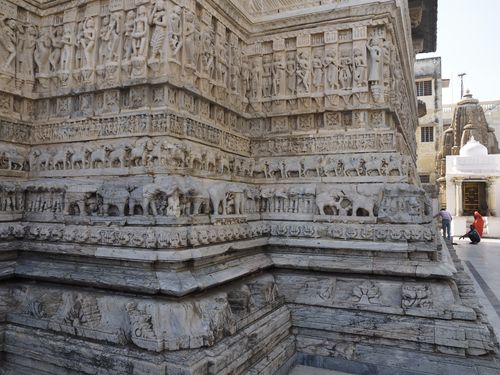
Udaipur • Jagdish temple

Udaipur • Jagdish temple
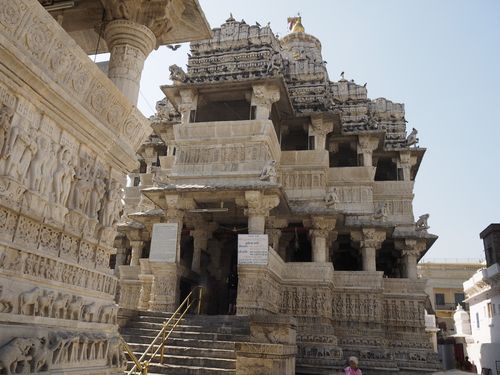
Udaipur • Jagdish temple
Monument profile
Jagdish temple
Monument category: Hindu Temple
Monument family: Temple
Monument genre: Religious
Cultural heritage: Hindu
Geographic location: Udaipur • Rajasthan • India
Construction period: 17th century AD
• Links to •
• Dynasties that contributed to the construction of the monument •


• List of videos about Udaipur on this site •
Udaipur • City of the Lakes • Rajasthan, India
• References •
Udaipur Guide: Udaipur Guide
Wikipedia EN: Jagdish Temple, Udaipur
The Political and Social Motivations Behind the Construction of the Jagdish Temple in Udaipur: Historical Significance and Global Context
Political and Social Motivations and Construction Period
The Jagdish Temple, located in Udaipur, Rajasthan, was constructed in 1651 during the reign of Maharana Jagat Singh I of the Sisodia dynasty. The temple was built during a period of intense political and social developments, where the Rajput rulers sought to consolidate their power in the face of external threats, particularly from the Mughal Empire. One of the primary political motivations behind the construction of the temple was to assert the cultural and religious identity of the Hindu Rajputs in a predominantly Islamic political landscape dominated by the Mughals. By constructing this grand temple dedicated to Lord Vishnu in his form as Jagannath (Lord of the Universe), Maharana Jagat Singh was reaffirming his dynasty’s devotion to Hinduism and its role as protectors of dharma (cosmic and social order).
Socially, the temple served as a spiritual hub for the people of Udaipur, reinforcing the city’s position as a cultural and religious center. It brought together worshippers and devotees, fostering a sense of community and religious continuity in a time of political tension.
Historical Events and Their Impact on the Region
The construction of the Jagdish Temple took place during a period when Udaipur and the broader Mewar region were navigating their relationship with the Mughal Empire. While Maharana Jagat Singh's predecessors had resisted Mughal dominance, by the mid-17th century, political pragmatism led to a more conciliatory approach, with Rajput rulers often entering into alliances with the Mughals. The temple, therefore, also symbolized a balancing act: while asserting Rajput cultural and religious sovereignty, it coexisted with the Mughal influence, as evidenced by the incorporation of Indo-Islamic architectural elements.
The temple was constructed at a time when major global powers were asserting themselves through monumental architecture. In Europe, the Baroque period was flourishing with grand cathedrals and palaces being built, while in the Ottoman Empire, mosques like the Sultan Ahmed Mosque (Blue Mosque) were being erected. The Jagdish Temple, though rooted in Rajput traditions, mirrored this global trend of rulers using architecture to solidify their power and cultural legacy.
Major Transformations and Shifts in Power
Over the centuries, the Jagdish Temple has witnessed numerous political changes that shaped the region of Rajasthan. After its construction, Udaipur continued to serve as the capital of the Mewar kingdom. The temple remained a central place of worship even as the political landscape shifted. During British colonial rule in India, the temple, like many religious monuments, remained under local control, preserving its importance as a spiritual and cultural symbol.
The temple’s architecture and decoration reflect a blend of influences that evolved over time. While primarily built in the Nagara style typical of North Indian temples, the addition of Mughal-inspired features, such as the use of arches and floral motifs, showcases how external influences were assimilated into Rajput architecture.
Throughout these political transformations, the temple remained a constant, reflecting both the cultural resilience of the Rajput dynasty and the capacity to adapt to changing political environments.
Cultural Significance and Current State of Conservation
Today, the Jagdish Temple is not only a site of religious devotion but also a cultural landmark in Udaipur. Its towering shikhara (spire), intricate carvings, and elaborate sculptures make it one of the finest examples of temple architecture from the Rajput era. The temple attracts both devotees and tourists from around the world, contributing to the cultural and economic vitality of Udaipur.
In terms of conservation, the temple is well-preserved thanks to periodic restoration efforts. The local community and heritage organizations have been instrumental in maintaining its structural integrity. However, challenges such as environmental degradation, the wear and tear from tourism, and urban encroachment threaten the long-term preservation of the monument.
Challenges in Preservation and Modern Threats
One of the main challenges facing the preservation of the Jagdish Temple is the impact of modern development around the site. Udaipur has grown significantly as a tourist destination, and the increased foot traffic has placed pressure on the temple’s delicate carvings and structure. Pollution and weathering have also contributed to the gradual erosion of the temple’s marble and sandstone surfaces.
Conservation efforts focus on balancing the need for accessibility with the necessity of protecting the temple's intricate details. Steps are being taken to control the number of visitors and implement regular maintenance to prevent further degradation. The use of traditional restoration techniques ensures that the temple retains its historical authenticity while being preserved for future generations.
Conclusion
The Jagdish Temple stands as a testament to the political, cultural, and religious significance of the Rajput dynasty during the 17th century. Built during a time of political complexity, the temple reflects the ambition of the Sisodia rulers to assert their sovereignty and cultural identity. Over the centuries, the temple has maintained its importance as a religious site and has adapted to the changing political landscape. Today, it remains a symbol of Udaipur’s rich cultural heritage, though the challenges of preservation in the modern era demand continued attention to protect its historical integrity.
Technological Advancements and Architectural Innovation of the Jagdish Temple in Udaipur: A Testament to Rajput Grandeur
Technological Innovation and Advancements of the Rajput Era
The Jagdish Temple in Udaipur, constructed in 1651 under the rule of Maharana Jagat Singh I, is an excellent representation of the architectural and technological advancements of the Rajput period. This grand structure reflects not only the religious devotion of the era but also the technical sophistication achieved by the artisans and engineers of the time. Built on a raised platform, the temple’s verticality and the intricacy of its design demonstrate mastery over stone construction techniques, which were a hallmark of Rajput architecture.
One of the key technological advancements of the period was the precision with which artisans worked marble and sandstone, the primary materials used in the construction of the Jagdish Temple. The use of marble, sourced from the surrounding region of Rajasthan, allowed for fine, detailed carvings that adorned the temple's pillars, walls, and ceilings. These carvings, intricate and elaborate, highlight the technical skill that enabled the construction of a temple that has withstood centuries of wear while retaining its elegance and structural integrity.
Materials and Construction Techniques Reflecting Grandeur
The temple was primarily constructed using white marble and sandstone, materials renowned for their durability and aesthetic appeal. The elevated platform on which the temple sits was designed to create a sense of grandeur and reverence, allowing the temple to dominate the surrounding landscape. The elevation also served practical purposes, protecting the structure from flooding and other environmental factors.
The Nagara-style architecture, typical of North Indian temples, can be seen in the towering shikhara (spire), which rises above the main sanctum and is a defining feature of the temple. This vertical emphasis, combined with the intricate carvings that cover every surface of the temple, reflects the grandeur and attention to detail that characterized Rajput architecture. The base of the temple is surrounded by 108 stone-carved elephants, each meticulously detailed, symbolizing strength and stability.
The craftsmanship involved in creating the temple's pillared halls, arched entrances, and ornamented ceilings also speaks to the technological capabilities of the artisans of the time. Each pillar is decorated with scenes from Hindu mythology, showcasing the skillful use of relief carving techniques. The layout, designed to facilitate movement around the sanctum, allows for both functional and symbolic circulation, directing worshippers toward the central deity of Vishnu as Jagannath.
Fusion of Regional Traditions and Foreign Influences
The architecture of the Jagdish Temple reflects a unique blend of indigenous Rajput styles with external influences, particularly those of the Mughal period. While the temple’s overall design adheres to traditional Hindu temple architecture, the decorative motifs borrow heavily from the Indo-Islamic aesthetic that was prominent during the Mughal era.
For example, the use of jaali (perforated stone screens), arches, and floral patterns in the temple’s design reflects the Islamic influence on Rajput architecture. This fusion of styles is indicative of the cultural exchanges that occurred in Rajasthan, where the Rajput rulers, while asserting their Hindu identity, were also open to incorporating artistic elements from their Mughal contemporaries. This melding of artistic traditions created a unique architectural identity that remains one of the temple’s most striking features.
Notable Structure and Layout of the Jagdish Temple
The temple follows a traditional Nagara-style layout, with a mandapa (pillared hall) leading to the garbhagriha (sanctum) where the deity Jagannath is enshrined. The shikhara, which is the tallest structure in the temple complex, towers over the sanctum, symbolizing a spiritual connection between the earth and the heavens. Surrounding the main sanctum are smaller shrines dedicated to other deities, including Shiva, Ganesha, and the Sun God, reflecting the temple’s role as a center for comprehensive Hindu worship.
One of the most unique features of the Jagdish Temple is its integration with the urban landscape of Udaipur. Built at the entrance to the City Palace complex, the temple acts as both a religious and a civic landmark, blending seamlessly with the surrounding architecture while maintaining its distinct religious significance.
Statistical Insights and Noteworthy Anecdotes
The Jagdish Temple stands approximately 24 meters tall, with its platform adding to its overall elevation. The temple's main shikhara is decorated with sculpted figures of dancers, musicians, and celestial beings, all arranged in ascending order to lead the worshipper’s gaze upwards. The construction took several years, employing hundreds of artisans skilled in stone carving, reflecting the monumental effort required to create such an intricate structure.
A fascinating anecdote about the temple’s construction is the personal involvement of Maharana Jagat Singh I, who ensured that the temple was built to exact specifications, symbolizing both his religious devotion and his political power.
Contribution to International Recognition and UNESCO Status
Though the Jagdish Temple is not currently a UNESCO World Heritage Site, it plays a crucial role in Udaipur's status as a cultural and architectural treasure. The temple's architectural and historical significance has garnered international attention, particularly among scholars of Indian and Mughal architecture. Its role as a focal point for both religious devotion and cultural tourism has helped preserve its importance in contemporary times.
The temple's integration into Udaipur's broader architectural landscape, particularly its proximity to the City Palace and the Lake Pichola, has made it a major draw for visitors from around the world. The recognition of the temple’s architectural grandeur contributes to Udaipur’s reputation as a historic city rich in Rajput heritage, which is further reinforced by its inclusion in various heritage conservation efforts.
Preservation Challenges and Modern Threats
Like many historic monuments in India, the Jagdish Temple faces several conservation challenges. Environmental factors, such as monsoons and pollution, have caused wear on the intricate carvings and the marble surfaces of the temple. The increase in tourism, while beneficial for cultural awareness, has also placed stress on the temple’s structure, leading to the need for careful management of visitor access.
Efforts to preserve the temple involve regular cleaning and restoration of the stone surfaces, along with initiatives to protect the delicate carvings from further erosion. Local authorities, along with cultural heritage organizations, continue to work on maintaining the temple’s historical integrity while ensuring it remains accessible to worshippers and visitors alike.
Conclusion
The Jagdish Temple stands as a symbol of Rajput technological prowess and architectural innovation. Its intricate carvings, towering shikhara, and harmonious blend of Hindu and Indo-Islamic design elements make it a unique testament to the cultural fusion that characterized the era. While the temple faces modern challenges in terms of preservation, its significance both as a place of worship and a historical monument ensures its continued relevance and recognition on the global stage.