

 Français (France)
  Nederlands (nl-NL)
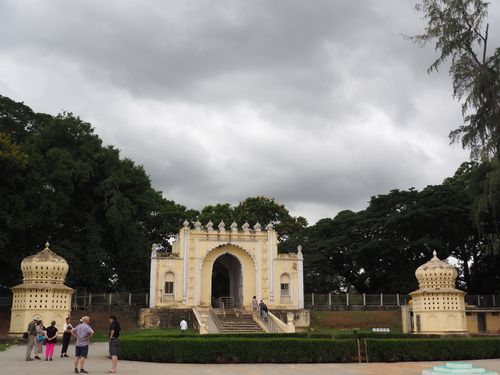
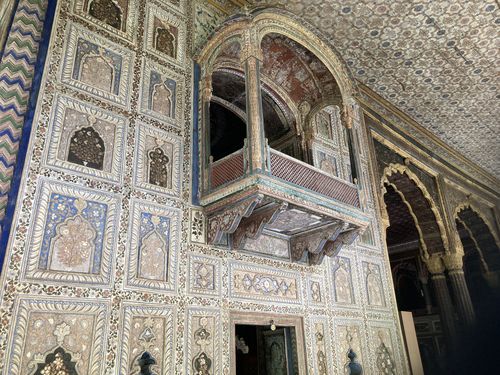
 The Summer Palace of Sultan Tipu, located in Srirangapatna, Karnataka, India, stands as a prominent example of Islamic architecture in the region. Built by Sultan Tipu, also known as the Tiger of Mysore, the palace was used as a summer retreat. It features elegant arches, colonnades, and painted floral motifs that reflect the artistic influences of the period. Constructed mainly from teak wood, known for its durability and fine appearance, the palace today draws visitors eager to appreciate its beauty and its historical significance as a center of power during the reign of Tipu Sultan.

Monument profile
Tipu Sultan Summer Palace
Monument category: Palace
Monument family: Palace and Annexes
Monument genre: Residential
Geographic location: Srirangapatna • Karnataka • India
Construction period: 18th century AD
• Links to •
• Dynasties that contributed to the construction of the monument •

• List of videos about Srirangapatna on this site •
Srirangapatna, Tippu Sultan's summer palace • India, Karnataka
• References •
Wikipedia EN: Tipu Sultan's Summer Palace
UNESCO: Monuments of Srirangapatna Island Town
• Sources •
Sources
Karnataka Tourism - Tipu Sultan’s Summer Palace Wikipedia - Tipu SultanThe Summer Palace of Tipu Sultan in Srirangapatna: History, Political Context, and Cultural Legacy
A Palace Rooted in Political Strategy and Vision
The Summer Palace of Tipu Sultan, also known as Daria Daulat Bagh, was completed in 1784, at a time when the Kingdom of Mysore was at the height of its power under Tipu Sultan. Designed as a royal summer retreat, the palace symbolized both the sovereignty and political ambitions of the ruler and his appreciation for refined art and architecture. The choice of Srirangapatna as its location was strategic: the city, then the capital of Mysore, was fortified and surrounded by the Cauvery River, making it a formidable stronghold against external invasions.
Tipu Sultan, often called the "Tiger of Mysore", was one of the fiercest opponents of British colonial rule in India. His kingdom was a center of cultural, military, and economic influence, engaging in trade and diplomatic relations with the Mughals, Ottomans, French, and Persians. His palace was not just a residence but a symbol of independence and resistance, embodying his efforts to fortify Mysore’s identity while incorporating artistic and architectural influences from various cultures.
Historical Context and Major Events
The palace was built during a time of great conflict and transformation in South India. Following the rise of Mysore under Hyder Ali, Tipu Sultan's father, the kingdom was locked in a series of wars with the British East India Company, which sought to expand its influence in the region.
The palace witnessed key moments in the Anglo-Mysore Wars, which shaped the region’s history:
- First and Second Anglo-Mysore Wars (1767–1784): Mysore successfully resisted British expansion, strengthening Tipu Sultan's rule.
- Third Anglo-Mysore War (1790–1792): After initial victories, Tipu Sultan was forced to cede large territories to the British and their allies under the Treaty of Seringapatam.
- Fourth Anglo-Mysore War (1799): The final battle led to Tipu Sultan’s death and the British occupation of Srirangapatna, marking the end of Mysore’s independence.
A Monument Reflecting Power Shifts
After the fall of Tipu Sultan in 1799, the palace underwent significant changes. Initially looted by the British, who took many valuable artifacts and manuscripts, it was later converted into an administrative center under British rule.
The loss of Mysore’s sovereignty led to a decline in Srirangapatna’s status, with power shifting to other colonial centers. Parts of the palace were altered or neglected, though its main structure was preserved due to its historical and aesthetic value.
By the late 19th century, the palace was recognized as an important historical site, leading to partial restorations aimed at preserving its unique Indo-Islamic architecture and artistic heritage.
Global Context and Historical Comparisons
The late 18th century was a period of worldwide upheaval, marked by revolutions and geopolitical conflicts:
- American Revolution (1775–1783): While Tipu Sultan was resisting British forces in India, American colonies fought for and gained independence.
- French Revolution (1789–1799): The rise of republican ideals in France coincided with Tipu’s efforts to modernize Mysore and counter British imperialism.
- British Colonial Expansion: While Tipu sought alliances with France and the Ottoman Empire, Britain was consolidating its control over India and beyond, culminating in its victory in Mysore.
These parallels demonstrate that Tipu Sultan’s fall and Mysore’s incorporation into British India were part of a broader global struggle between imperial powers and independence movements.
The Palace Today: A Heritage Site in Need of Preservation
Today, the Summer Palace is a protected monument under the Archaeological Survey of India (ASI). It now serves as a museum, displaying manuscripts, murals, and artifacts from Tipu Sultan’s era.
However, its long-term preservation faces several challenges:
- Deterioration of murals and wooden structures due to humidity and climatic conditions.
- Impact of mass tourism, leading to accelerated wear and tear.
- Urban development around Srirangapatna, threatening the historical environment of the palace.
Despite these issues, the palace remains an important site of memory and a symbol of resistance against colonial rule. It continues to attract historians and visitors interested in the history of Mysore and Tipu Sultan’s defiance of British expansion.
Conclusion
The Summer Palace of Tipu Sultan is more than just a royal residence; it is a testament to India’s resistance to colonization, a masterpiece of Indo-Islamic architecture, and a symbol of the grandeur of Mysore. Its importance extends beyond regional history, offering insights into global resistance movements and cultural exchanges between India, the Middle East, and Europe.
Its preservation and international recognition are vital to ensuring that this unique heritage is passed down to future generations.
The Architectural and Technological Significance of Tipu Sultan’s Summer Palace in Srirangapatna
Innovation and Technological Advancements of the Wodeyar Era
Although Tipu Sultan’s Summer Palace, known as Daria Daulat Bagh, was built under his rule in 1784, it represents the architectural advancements of the broader Wodeyar era, which preceded and influenced his reign. The Wodeyars of Mysore (1399–1761, later reinstated in 1799) were instrumental in developing sophisticated construction techniques that balanced aesthetics, functionality, and climatic adaptability.
Tipu Sultan adopted and enhanced these innovations, particularly in the integration of wooden structures with strategic ventilation systems and the incorporation of intricate murals. His palace reflects a deep understanding of local materials, environmental considerations, and the necessity of fortification—an essential aspect given the ongoing conflicts with the British and other regional adversaries.
Construction Materials and Techniques Reflecting Grandeur
Tipu Sultan’s Summer Palace was built primarily using teakwood, a material chosen for its durability, resistance to insects, and ability to withstand humidity. Unlike traditional stone or brick structures, the extensive use of wood provided both flexibility in artistic expression and resilience against climatic fluctuations.
The architectural techniques employed include:
- Elevated wooden framework: The palace’s base is slightly raised to prevent water damage, a technique borrowed from traditional South Indian architecture.
- Intricate latticework and perforated screens (jali designs): These were used to regulate airflow and maintain cool interiors, particularly crucial for a summer residence.
- Ornamental plastering: The walls and ceilings feature finely polished stucco and lime plaster, ensuring smooth surfaces for mural paintings.
- Lightweight structural design: Unlike stone palaces, the use of wood allowed for greater artistic detailing while maintaining structural integrity.
This innovative combination of materials and techniques not only reflected the grandeur of the Mysorean court but also provided practical solutions for the region’s tropical climate.
A Unique Fusion of Regional and Foreign Artistic Influences
The palace’s architectural and decorative elements showcase a remarkable blend of indigenous South Indian styles and foreign influences. The structure is a fine example of Indo-Islamic architecture, incorporating elements from Persian, Mughal, and Deccan Sultanate styles, while still maintaining regional artistic traditions.
Key features illustrating this fusion include:
- Extensive Frescoes: The walls and ceilings are adorned with large-scale murals depicting scenes from Tipu Sultan’s military campaigns, courtly life, and diplomatic encounters. The detailing of these murals reflects Persian and Mughal artistic influences, particularly in the use of floral motifs and intricate geometric patterns.
- Islamic Arches and Domes: The palace features horseshoe-shaped arches and domed ceilings, elements characteristic of Islamic architecture, yet adapted to a more open and ventilated structure suitable for the South Indian climate.
- South Indian Vernacular Influences: The verandahs, open courtyards, and sloping roof structures are reminiscent of traditional Dravidian architectural styles, ensuring protection against monsoon rains.
This blend of architectural styles was not merely decorative but symbolized Tipu Sultan’s vision of Mysore as a cosmopolitan power engaged in trade, diplomacy, and military alliances with regions as diverse as France, the Ottoman Empire, and Persia.
Notable Structural Layout and Design Features
The rectangular layout of Tipu Sultan’s Summer Palace is particularly distinctive. The building is a two-story wooden structure, characterized by:
- Open verandahs on all sides, allowing for optimal airflow.
- Symmetrical gardens surrounding the palace, designed in the Persian Charbagh style, symbolizing paradise.
- Grand arches leading to interior halls, where the Sultan conducted state affairs.
- Four main entrances, each reflecting aspects of Mughal and South Indian design traditions.
A unique aspect of the palace is that it does not follow the fortress-like designs of many contemporary Indian palaces. Instead, it embraces an open, airy structure, designed for leisure and governance rather than defense.
Noteworthy Statistics and Anecdotes About Its Construction
The palace was completed in six years, a remarkably short time given its extensive decorative program.
The mural paintings cover nearly 1,500 square meters, making them one of the largest surviving sets of 18th-century frescoes in India.
Tipu Sultan is said to have personally overseen the selection of colors and motifs used in the paintings, emphasizing themes of resistance against the British.
The palace was used not only as a summer retreat but also as a military planning hub, where Tipu Sultan devised strategies against British expansion.
It is rumored that secret tunnels existed beneath the palace, designed as escape routes in case of an attack, though these have not been fully explored.
Global Recognition and UNESCO Status
Tipu Sultan’s Summer Palace is not currently listed as a UNESCO World Heritage Site, but it is designated as a protected monument by the Archaeological Survey of India (ASI). Despite its absence from the UNESCO list, the palace is internationally recognized for its architectural and historical significance.
If it were to be granted UNESCO status, it would likely receive increased funding for conservation, more rigorous protection against urban encroachment, and heightened global awareness. This would place it among India’s premier historical landmarks, alongside sites such as the Taj Mahal and the forts of Rajasthan.
Current Conservation Efforts and Challenges
Despite its protected status, the palace faces several conservation challenges:
- Climate-related deterioration: The wooden structures are vulnerable to humidity, termite infestations, and monsoonal damage.
- Tourist pressure: The influx of visitors contributes to wear and tear, particularly on the delicate frescoes.
- Encroaching urban development: The growing population and commercialization of Srirangapatna threaten the palace’s surroundings.
- Lack of extensive international funding: Unlike some UNESCO-listed sites, the palace relies primarily on national and regional heritage funds, limiting large-scale restoration efforts.
The Archaeological Survey of India (ASI) has undertaken several conservation projects, including controlled humidity measures, structural reinforcements, and digital documentation of murals to prevent loss of historical details. However, sustainable tourism policies need to be implemented to balance public access with long-term preservation.
Conclusion
Tipu Sultan’s Summer Palace in Srirangapatna is a testament to the architectural, artistic, and technological advancements of 18th-century Mysore. Its unique combination of Indo-Islamic and South Indian design elements highlights the Sultan’s vision of a powerful, culturally sophisticated kingdom. While the palace remains a significant historical site, its long-term preservation depends on sustained conservation efforts and increased recognition on the global heritage stage.