

 Français (France)
  Nederlands (nl-NL)
 The Tombs of Hadj Jamal and Muhammad Momin, located in Nakodar in the Indian state of Punjab, form a Mughal funerary complex protected by the Archaeological Survey of India. The site is associated with two figures connected to the cultural and spiritual traditions of historic Punjab. The complex is particularly known for its monumental architecture, domes, and polychrome ceramic decoration recalling several mausoleums of northern India dating from the Mughal period. Today, the monuments retain a local religious and heritage function while also representing an important example of the artistic and cultural exchanges that developed in Punjab between the seventeenth and eighteenth centuries.
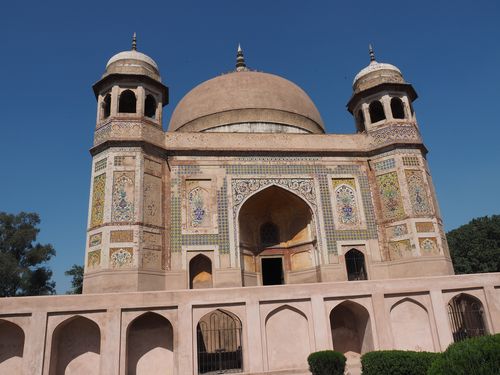
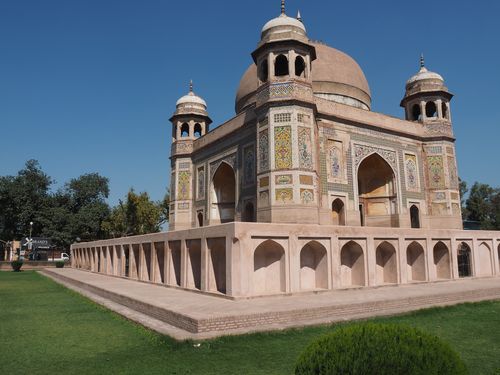
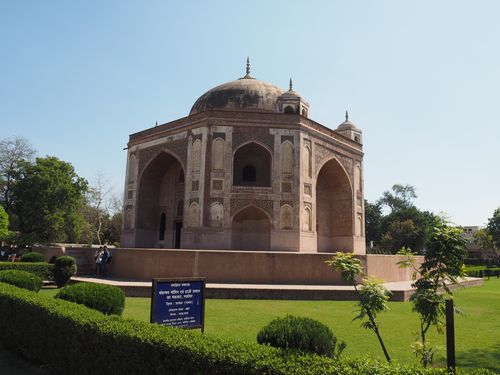
Monument profile
Tomb of Hadj Jamal
Monument category: Mausoleum
Monument family: Tomb, Necropolis, Mausoleum or Cenotaph
Monument genre: Funerary
Cultural heritage: Islamic
Geographic location: Nakodar • Punjab • India
Construction period: 17th century AD
• Links to •
• Dynasties that contributed to the construction of the monument •

• This monument illustrates the following theme •
Architecture • Mausoleums : Muslim Mausoleums
• List of videos about Nakodar on this site •
Nakodar • Punjab, India
The Tombs of Hadj Jamal and Mohammad Momin in Nakodar: A Mughal Funerary Complex in Punjab
Foundation of the Complex and Mughal Context
The Tombs of Hadj Jamal and Mohammad Momin are located in Nakodar, in the Jalandhar district of the Indian state of Punjab. The site forms a Mughal funerary complex associated with two figures connected to the cultural and spiritual environment of Punjab during the Mughal period. Inscriptions and local traditions generally associate the construction of the complex with the seventeenth century, a period marked by intense architectural activity in northern India under the reigns of Jahangir, Shah Jahan, and Aurangzeb.
The monument is commonly identified as an “Ustad-Shagird” complex, referring to the relationship between a master and a disciple. Mohammad Momin is described in several local traditions as a figure connected with the Mughal court, while Hadj Jamal is considered his disciple or close associate. Precise historical information concerning the biographies of the two individuals remains limited, and several aspects of their identities continue to rely on regional oral traditions rather than extensive written documentation.
The decision to construct a monumental funerary complex in Nakodar reflects the importance attributed to the personalities associated with the site. The scale of the monument, the sophistication of its decoration, and the coherence of its architectural organization indicate the availability of substantial technical knowledge and financial resources during its construction.
Religious Function and Regional Importance
The complex was conceived both as a funerary site and as a place associated with regional devotional traditions. Tombs connected with religious or cultural figures occupied an important place in Mughal Punjab, where numerous shrines combined commemorative, spiritual, and symbolic functions. The tombs of Hadj Jamal and Mohammad Momin appear to have formed part of this regional network of revered sites.
Over time, the complex preserved an active local religious role. Pilgrimage visits, devotional gatherings, and regional commemorative practices contributed to maintaining the importance of the monument within Nakodar and the surrounding region. The site remained associated with Sufi and cultural traditions linked to historic Punjab.
Following the gradual decline of Mughal authority during the eighteenth century, and later during Sikh and British rule, the monument continued to survive despite political transformations affecting the region. Unlike several major imperial complexes directly supported by central power, the Nakodar tombs appear to have depended largely on local attachment and continued regional significance.
The Partition of India in 1947 profoundly altered the cultural and religious geography of historic Punjab. Several important Muslim shrines became part of Pakistan, while monuments remaining in Indian Punjab acquired additional significance as surviving elements of the region’s Mughal heritage. The Tombs of Hadj Jamal and Mohammad Momin belong to this group of monuments that continued to preserve historical continuity despite major political changes.
Restoration, Heritage Protection, and Current Condition
The complex today displays evidence of restorations and repairs carried out during different periods. Certain decorative sections were repaired or partially replaced, while structural interventions were undertaken to stabilize areas affected by erosion and aging. Despite these modifications, the monument retains most of its original architectural organization.
The site has been protected by the Archaeological Survey of India since 1919, demonstrating its official recognition as a heritage monument from the early twentieth century onward. This protected status contributed to the preservation of the principal structures despite the effects of climate, urban expansion, and gradual material deterioration.
The urban environment of Nakodar progressively expanded around the monument during the twentieth century, altering the original spatial relationship between the funerary complex and its surrounding landscape. Nevertheless, the tombs remain among the most significant surviving Mughal funerary monuments in this part of Indian Punjab.
Current conservation challenges mainly concern the preservation of ceramic decoration, plaster surfaces, and upper structural sections exposed to humidity and atmospheric pollution. Several decorative elements show visible signs of erosion caused by climatic conditions and the natural aging of materials. Conservation efforts primarily focus on maintaining structural stability while preserving surviving historic ornamentation.
International Chronological Context
The probable construction of the complex during the seventeenth century corresponds to the period of major architectural expansion under the Mughal emperors Shah Jahan and Aurangzeb. During the same period, the Ottoman Empire continued administrative and military reforms across several Mediterranean territories. In Western Europe, the seventeenth century was shaped by the consequences of the Thirty Years’ War and the consolidation of centralized monarchies. In China, the Qing dynasty progressively strengthened its authority after the fall of the Ming dynasty.
Architectural Organization of the Tombs of Hadj Jamal and Mohammad Momin in Nakodar
Setting of the Complex and Overall Composition
The Tombs of Hadj Jamal and Mohammad Momin are located within the urban environment of Nakodar in the Indian state of Punjab. The funerary complex stands on an elevated platform that separates the monument from the surrounding ground level and reinforces its visibility within the built landscape. This raised base also contributes to the structural stability of the mausoleums by protecting the lower sections of the buildings from humidity and seasonal water infiltration.
The architectural organization of the complex is based on a symmetrical composition structured around a central monumental mass. The principal mausoleum dominates the ensemble through the scale of its dome and the vertical articulation of its façades. The arrangement of the various architectural elements reflects a carefully balanced composition in which the proportions of the domes, corner pavilions, terraces, and arches are coordinated to create visual coherence.
The complex is associated with the “Ustad-Shagird” tradition linking Mohammad Momin and Hadj Jamal. This relationship appears to have influenced the conceptual unity of the site, which functions as a coherent funerary ensemble rather than as two entirely independent structures. The monumentality of the composition exceeds what would normally be expected from a modest local shrine and indicates the importance attributed to the individuals connected with the site.
Although modern urban development has altered the monument’s original spatial isolation, the elevated silhouette of the domes and the vertical treatment of the façades still allow the complex to remain visually distinct within Nakodar.
Structural Organization and Spatial Layout
The principal architectural core consists of a central funerary chamber covered by a large hemispherical dome. This dome forms the dominant vertical feature of the complex and rises from a relatively high drum that increases the perceived height of the structure. The transition between the square base of the chamber and the circular profile of the dome is achieved through carefully integrated structural elements concealed within the upper sections of the building.
At the four corners of the roof stand chhatris, small domed kiosks positioned symmetrically around the central cupola. These structures reinforce the balance of the composition and create a stepped vertical hierarchy extending outward from the main dome. The chhatris also contribute to the monument’s recognizable silhouette and emphasize the ceremonial character of the complex.
The façades are dominated by large recessed iwans deeply carved into the wall surfaces. These monumental arches create strong shadow effects and provide depth to the elevations. Secondary niches and openings are integrated into carefully organized architectural panels that maintain strict symmetry across the façades. The arrangement of decorative and undecorated surfaces prevents visual overcrowding despite the richness of the ornamental treatment.
The elevated terrace surrounding the principal structures is supported by open arcades positioned beneath the platform. These lower galleries visually lighten the mass of the substructure while contributing to the monument’s stability. The use of open arcades beneath the raised platform also creates transitional spaces between the exterior environment and the funerary core of the complex.
Interior spaces appear relatively compact when compared to the external dimensions of the monument. The spatial organization prioritizes the exterior visibility and ceremonial presence of the mausoleum rather than the multiplication of interior rooms or corridors. Circulation within the complex remains limited and concentrated around the central funerary chamber.
Materials, Decorative Surfaces, and Ceramic Ornamentation
One of the most distinctive architectural characteristics of the complex is the extensive use of polychrome ceramic decoration applied to the exterior surfaces. Decorative panels combining geometric, floral, and calligraphic motifs cover substantial sections of the façades, arches, drums, and upper architectural zones. These ceramic revetments constitute a major visual component of the monument.
Blue, turquoise, yellow, white, and ochre tones dominate the decorative compositions. The chromatic contrasts emphasize the divisions between architectural registers and reinforce the legibility of the monument’s structural organization. The most elaborate ceramic panels are concentrated around the principal arches and upper façade sections, where they accentuate the monument’s vertical emphasis.
The main structural system appears to be based on brick masonry covered with plaster and ceramic facing. Brick construction enabled the realization of large arches, domes, and vaulted structures while maintaining relative structural lightness. Plastered surfaces provided a support for painted decoration and ceramic ornamentation integrated into the façades.
The decorative techniques employed in the complex show strong connections with the artistic traditions of historic Punjab. The organization of ceramic panels and the treatment of ornamental surfaces recall several funerary and religious monuments from the former Mughal territories of the region. Certain decorative sections display highly detailed floral compositions and carefully balanced geometric arrangements, demonstrating considerable technical skill in their execution.
Not all surfaces are equally decorated. More restrained wall sections play an important role in balancing the ornamental density of the monument and directing visual attention toward the principal decorative zones.
Restoration History and Current State of Preservation
The complex displays visible traces of restoration and repair campaigns carried out during different periods. Certain ceramic panels were repaired or partially replaced, while sections of plaster coating reveal more recent interventions intended to stabilize weakened structural areas. Variations in texture, coloration, and material quality make several restoration phases identifiable on the façades.
Long-term exposure to the climatic conditions of Punjab has significantly affected the monument’s exterior decorative surfaces. Humidity, water infiltration, biological growth, and atmospheric pollution contribute to the gradual deterioration of ceramic ornamentation and plaster coatings. The upper sections of the domes, drums, and corner pavilions appear particularly vulnerable to erosion and weathering.
Urban expansion around the site has also modified the architectural perception of the complex. Modern buildings now surround areas that were probably more open during the Mughal period. Despite these transformations, the principal architectural masses remain clearly visible, and the monument continues to preserve its overall compositional coherence.
Protection by the Archaeological Survey of India has contributed to the preservation of the principal structural and decorative elements of the complex. Current conservation efforts mainly focus on stabilizing ceramic revetments, preserving remaining original ornamentation, and limiting the effects of moisture and atmospheric deterioration on the monument’s upper architectural sections.