

 Français (France)
  Nederlands (nl-NL)
 The Jami Masjid in Mandu, located in the Indian state of Madhya Pradesh, is a grand mosque built in the 15th century during the reign of Hoshang Shah. Known for its expansive courtyard, imposing domes, and graceful arches, it represents the elegance of Indo-Islamic architecture. Inspired by the mosque in Damascus, this monumental structure embodies a harmonious blend of functionality and aesthetics. It remains a place of worship while drawing visitors for its cultural heritage and religious significance.
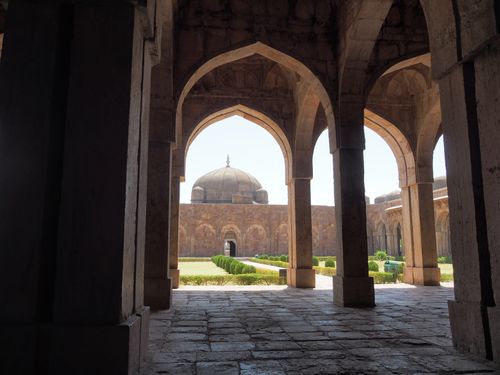
Mandu • Jami Mashid
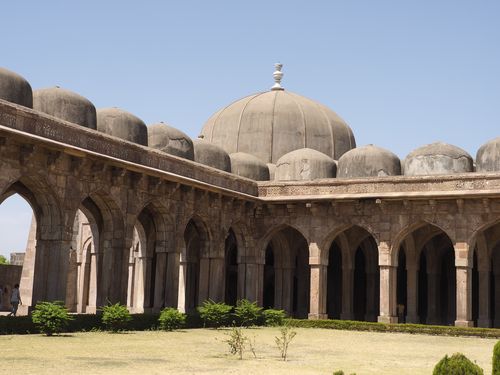
Mandu • Jami Mashid
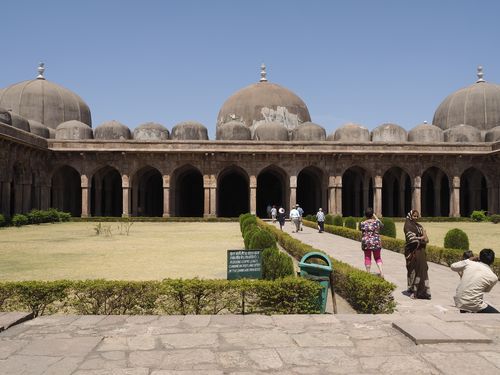
Mandu • Jami Mashid
Monument profile
Jami Mashid
Monument category: Mosque
Monument family: Mosque, Minaret or Madrasa
Monument genre: Religious
Cultural heritage: Islamic
Geographic location: Mandu • Madhya Pradesh • India
Construction period: 15th century AD
• Links to •
• Dynasties that contributed to the construction of the monument •

• List of videos about Mandu on this site •
Mandu, ghost capital • Madhya Pradesh, India
Jami Masjid in Mandu: Political Ambitions, Historical Transformations, and Cultural Legacy
The Jami Masjid in Mandu, located in Madhya Pradesh, India, stands as a monumental testament to the architectural, political, and social aspirations of the Malwa Sultanate. Built during the 15th century under the reign of Hoshang Shah and completed by Mahmud Khilji, this mosque represents a fusion of regional craftsmanship and external influences, reflecting the broader dynamics of its time. Over centuries, it has witnessed significant historical events that shaped its legacy, making it a vital cultural landmark.
Political and Social Motivations Behind Its Construction
The construction of the Jami Masjid began around 1405 and was completed by 1454. Hoshang Shah envisioned the mosque as a grand symbol of the Sultanate of Malwa’s power and its role as a cultural and religious hub in central India. The mosque’s design was inspired by the Umayyad Mosque in Damascus, emphasizing the Malwa rulers' intent to align themselves with the prestige of Islamic empires in the Middle East.
Beyond its religious significance, the Jami Masjid served as a political statement. Its monumental scale and strategic location in Mandu, a fortified city, underscored the Sultanate's dominance over the region. The mosque also acted as a unifying space for the community, fostering social cohesion through shared worship and cultural activities.
Historical Events and Regional Impact
Throughout its history, the Jami Masjid has borne witness to key events that influenced the political and social landscape of Malwa. The Sultanate's fall in the 16th century, following repeated invasions by the Mughals and neighboring kingdoms, marked a period of decline for Mandu. Despite these upheavals, the mosque retained its significance as a religious center, even under changing rulers.
During the Mughal era, the mosque's maintenance was prioritized, highlighting its enduring importance as a cultural and architectural asset. The decline of the Mughal Empire and subsequent British colonial rule saw Mandu's prominence diminish, but the Jami Masjid continued to attract attention from historians and architects for its grandeur and historical relevance.
Global Context and Comparisons
The construction of the Jami Masjid occurred during a transformative period in global history. In the 15th century, the world saw the rise of powerful empires and architectural marvels that symbolized their authority. While Europe was experiencing the early Renaissance, with developments in science and art, Asia was witnessing the expansion of Islamic architecture. Monuments such as the Alhambra in Spain and the Blue Mosque in Turkey were being built or gaining prominence, showcasing the universality of architecture as a tool for political expression.
Compared to these structures, the Jami Masjid’s design reflects a blend of Persian, Central Asian, and Indian influences. Its simplicity and symmetry are hallmarks of Malwa architecture, distinguishing it from the more ornate styles of contemporaneous Mughal or Ottoman monuments.
Transformations Over the Centuries
Over the centuries, the Jami Masjid has undergone various transformations that reflect shifts in power and cultural influences. While the original structure remains largely intact, minor modifications during the Mughal era introduced new decorative elements, such as intricate carvings and patterns inspired by Mughal aesthetics.
The mosque also adapted to the needs of the changing community. During periods of neglect, parts of the structure suffered from natural wear and tear. However, restoration efforts initiated in the 20th century aimed to preserve its historical integrity, ensuring that it remains a symbol of Mandu’s rich cultural heritage.
Cultural Importance and Current State of Preservation
Today, the Jami Masjid is recognized as one of Mandu’s most iconic landmarks, attracting visitors for its architectural beauty and historical significance. Its vast courtyard, domes, and symmetrical layout continue to inspire admiration, serving as a reminder of the Malwa Sultanate’s architectural achievements.
The Archaeological Survey of India (ASI) has played a crucial role in conserving the mosque. While the structure is in relatively good condition, it faces challenges from environmental factors such as erosion, water seepage, and the impact of tourism. Preservation efforts have included repairing damaged sections, stabilizing the foundations, and preventing further deterioration.
Modern Challenges and Conservation Efforts
Preserving the Jami Masjid in the face of modern threats requires a multifaceted approach. Climate change, with its impact on rainfall patterns and humidity, poses a significant risk to the sandstone structure. Additionally, increasing tourism, while economically beneficial, has led to wear and tear on the site.
Efforts to address these challenges include implementing sustainable tourism practices, such as controlled visitor access and educational initiatives to raise awareness about the mosque's significance. Modern technologies, such as 3D mapping, are also being employed to document the structure for future restoration projects.
Conclusion
The Jami Masjid of Mandu is a masterpiece of medieval Islamic architecture and a testament to the political ambitions and cultural sophistication of the Malwa Sultanate. Its enduring legacy, shaped by centuries of historical change, continues to resonate as a symbol of India’s diverse heritage. With ongoing conservation efforts and global recognition, this monumental mosque remains an invaluable cultural treasure, bridging the past and the present.
The Jami Masjid in Mandu: Architectural Innovation and Technological Excellence of the Malwa Sultanate
The Jami Masjid in Mandu, located in Madhya Pradesh, India, is a remarkable example of architectural ingenuity and technological advancement during the reign of the Malwa Sultanate in the 15th century. This grand mosque, inspired by the Umayyad Mosque in Damascus, stands as a testament to the Sultanate's ambition, reflecting a blend of regional craftsmanship and external influences. Its design, materials, and construction techniques illustrate the sophistication of the era and contribute to its enduring legacy.
Technological and Material Innovations
The Jami Masjid demonstrates the advanced construction techniques and resourcefulness of its builders. Built primarily with locally sourced sandstone in shades of red and yellow, the mosque showcases the Sultanate's ability to utilize natural resources effectively. The sandstone was finely carved and polished to create intricate designs, while its durability ensured the monument’s longevity.
One of the key technological innovations of the mosque is its use of pointed arches and domes. These structural elements distributed weight evenly, allowing for the creation of large open spaces without compromising stability. The mosque’s expansive courtyard, framed by symmetrical arcades, and the grand central dome reflect a mastery of architectural engineering that was ahead of its time.
Architectural Features and Cultural Synthesis
The architecture of the Jami Masjid is a harmonious blend of local traditions and foreign influences. The overall design, with its clean lines and grand scale, reflects Persian and Central Asian aesthetics, while the decorative details incorporate motifs from Indian craftsmanship. Floral patterns, geometric designs, and calligraphy are etched into the stone, showcasing the artistic expertise of the era.
The mosque’s layout is symmetrical and monumental, centered around a vast courtyard that could accommodate large congregations. The main prayer hall, crowned by a series of domes, features a mihrab intricately carved with Quranic inscriptions. The three grand gateways, each framed by pointed arches, serve as both functional entrances and visual highlights, emphasizing the monument’s grandeur.
Distinctive Layout and Structural Excellence
The Jami Masjid's plan is notable for its simplicity and functionality. The rectangular structure surrounds a central courtyard, with colonnaded arcades providing shaded areas for worshippers. The prayer hall, located on the western side, is divided into three sections, each covered by a large dome. The domes are supported by massive pillars and arches, ensuring both strength and aesthetic balance.
One of the most striking aspects of the mosque is the scale of its dimensions. The central dome rises high above the structure, symbolizing spiritual elevation and creating an imposing silhouette against the skyline of Mandu. The mosque’s careful orientation towards Mecca reflects the precision and devotion embedded in its design.
Noteworthy Statistics and Anecdotes
The construction of the Jami Masjid took several decades, beginning under Hoshang Shah and completed by Mahmud Khilji. Historical records indicate that the mosque was modeled after the grand mosque of Damascus, reflecting the Sultanate’s aspiration to align itself with the grandeur of Islamic empires in the Middle East.
An interesting anecdote concerns the precision of its construction: artisans used simple yet effective tools such as limestone-infused cords to ensure perfectly straight lines and symmetrical proportions. This meticulous attention to detail has contributed to the mosque’s enduring structural integrity.
International Recognition and UNESCO Impact
While the Jami Masjid is not currently listed as a UNESCO World Heritage Site, it holds immense cultural and historical significance. Its architectural brilliance attracts scholars and visitors from around the world, enhancing its reputation as a masterpiece of Indo-Islamic architecture.
The recognition of Mandu as a potential UNESCO heritage site could elevate the mosque’s profile, providing greater resources for its conservation and increasing global awareness of its importance. Such recognition would ensure the monument's preservation while fostering sustainable tourism.
Challenges and Conservation Efforts
The Jami Masjid faces several modern challenges, including environmental degradation, weathering of the sandstone, and the impact of tourism. Erosion caused by wind and rain has affected some of the intricate carvings, while the growing number of visitors risks overburdening the site.
The Archaeological Survey of India (ASI) has undertaken restoration and maintenance efforts to address these issues. Modern technologies, such as laser scanning and 3D modeling, are being explored to document and preserve the structure. Public awareness campaigns aim to educate local communities and visitors about the mosque’s historical significance, fostering collective responsibility for its protection.
Conclusion
The Jami Masjid in Mandu is a remarkable example of the architectural and technological advancements of the Malwa Sultanate. Its innovative design, use of durable materials, and cultural synthesis make it a monument of enduring importance. While challenges remain, ongoing conservation efforts and potential international recognition will ensure that this architectural marvel continues to inspire future generations as a symbol of India’s rich heritage.