

 Français (France)
  Nederlands (nl-NL)
 The Temple of Philae, located in Aswan, Egypt, is dedicated to the goddess Isis and dates back to the 4th century BC. This iconic site of ancient Egypt highlights the cultural and religious significance of the era. Relocated to the nearby island of Agilkia during the construction of the Aswan Dam, it was part of a UNESCO-led international preservation effort. Listed as a World Heritage Site since 1979, it stands as a remarkable example of ancient architectural and religious traditions.
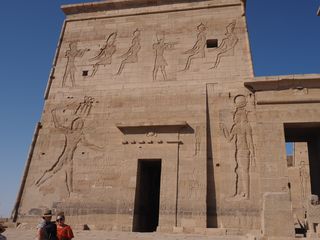
Aswan • Temple of Philae
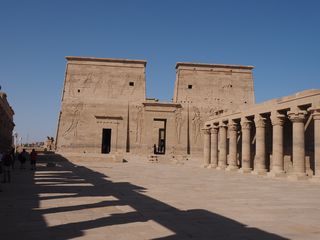
Aswan • Temple of Philae
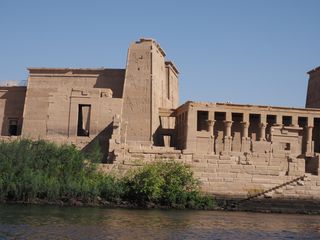
Aswan • Temple of Philae
Monument profile
Temple of Philae
Monument category: Egyptian temple
Monument family: Temple
Monument genre: Religious
Cultural heritage: Ancient Egypt
Geographic location: Aswan • Egypt
Construction period: 4th century BC
This monument in Aswan is inscribed on the UNESCO World Heritage List since 1979 and is part of the serial property "Nubian Monuments from Abu Simbel to Philae".See the UNESCO monuments featured on this site
• Links to •
• Dynasties that contributed to the construction of the monument •

• List of videos about Aswan on this site •
Aswan, High Dam and Philae Temple • Egypt
The Temple of Philae: Political Motives, Historical Transformations, and Modern Challenges
The Temple of Philae, located in Aswan, Egypt, stands as a remarkable symbol of ancient religious devotion and cultural resilience. Constructed primarily during the 4th century BCE under the Ptolemaic dynasty and later expanded under Roman rule, the temple was dedicated to Isis, one of the most revered deities of ancient Egypt. This article explores the political and social motivations behind its construction, the key historical events that shaped its legacy, and the ongoing efforts to preserve its integrity in the face of modern challenges.
Political and Social Motivations
The construction of the Temple of Philae served several intertwined political and social objectives:
- Strengthening the Cult of Isis: During the Ptolemaic period, the worship of Isis became central to Egyptian religion. Establishing an impressive temple dedicated to her reinforced her influence and highlighted her significance as a unifying figure.
- Legitimizing Ptolemaic Rule: The Ptolemies, of Greek origin, sought to integrate themselves into Egyptian society by embracing and expanding traditional religious practices. The temple symbolized their connection to Egyptian heritage while consolidating their political authority.
- Serving as a Regional Religious Hub: Philae was a pilgrimage site for both Egyptians and Nubians, fostering cultural and religious exchanges between these groups and solidifying the region's importance.
Historical Events and Regional Impact
- Roman Annexation: After Egypt became part of the Roman Empire in 30 BCE, the temple remained an active religious site, demonstrating the adaptability of Egyptian traditions under foreign rule.
- End of Pagan Worship: In the 6th century CE, Emperor Justinian ordered the closure of pagan temples, including Philae. Parts of the temple were repurposed for Christian worship, marking a profound cultural and religious shift.
- 20th-Century Relocation: The construction of the Aswan High Dam threatened to submerge the temple under Lake Nasser. From 1972 to 1980, UNESCO led an international effort to dismantle and reconstruct the temple on the nearby island of Agilkia, preserving its cultural legacy.
Global Context and Comparisons
During the construction and use of the Temple of Philae, similar monumental structures were being built worldwide to assert power and influence:
- The Parthenon in Athens symbolized the political and cultural dominance of ancient Greece.
- Mayan temples in Central America served as centers for religious and political authority.
Philae’s unique significance lies in its enduring role as a religious and cultural bridge, adapting to changing powers and ideologies over centuries.
Transformations of the Monument
The Temple of Philae has undergone significant changes reflecting the shifting dynamics of power and culture:
- Architectural Evolution: Originally built in the classical Egyptian style, later additions incorporated Greco-Roman elements, such as floral capitals and detailed friezes.
- Religious Conversion: After the rise of Christianity, parts of the temple were transformed into churches, with crosses and other Christian symbols etched into the walls.
- Relocation and Preservation: The monumental task of moving the temple to Agilkia Island involved dismantling it into tens of thousands of pieces, showcasing modern engineering and global collaboration.
Cultural Importance and Current Conservation
Listed as part of the UNESCO World Heritage Site "Nubian Monuments from Abu Simbel to Philae" in 1979, the temple has become a symbol of international efforts to protect cultural heritage. It is celebrated as a testament to human ingenuity and cultural continuity.
Modern Challenges to Preservation
Despite its good condition, the Temple of Philae faces several threats:
- Tourism Pressure: Heavy foot traffic from global visitors requires careful management to prevent wear and tear on the ancient structure.
- Environmental Factors: The temple’s proximity to Lake Nasser exposes it to humidity, erosion, and the effects of fluctuating water levels.
- Climate Change: Shifts in regional weather patterns pose new risks to its preservation.
- Ongoing conservation efforts focus on mitigating these risks while ensuring sustainable access for future generations.
Conclusion
The Temple of Philae stands as a beacon of cultural and religious significance, embodying the resilience of Egyptian heritage through millennia of change. From its construction during the Ptolemaic era to its modern relocation and preservation, the temple reflects the ingenuity of its creators and the enduring importance of its legacy. Today, it continues to inspire visitors and scholars alike, while reminding the world of the necessity of preserving our shared cultural history.
The Architecture of the Temple of Philae: A Blend of Innovation and Cultural Fusion
The Temple of Philae, located in Aswan, Egypt, is an enduring symbol of ancient engineering and cultural synthesis. Constructed primarily during the 4th century BCE under the Ptolemaic dynasty and expanded during the Roman period, it showcases the technological advancements and artistic ingenuity of its time. Dedicated to the goddess Isis, the temple stands as a testament to religious devotion, architectural precision, and the cultural interweaving of Egyptian, Greek, and Roman traditions.
Materials and Construction Techniques
The Temple of Philae highlights the advanced construction methods and material use of ancient Egypt:
- Local Sandstone: Extracted from nearby quarries, sandstone was the primary material used, prized for its durability and ease of carving.
- Precision Engineering: Large blocks of sandstone were meticulously cut and fitted together without mortar, relying on weight and interlocking techniques to ensure structural stability.
- Elaborate Relief Carving: Intricate bas-reliefs and inscriptions were etched directly into the stone, depicting religious rituals, mythological scenes, and royal dedications, reflecting both artistic skill and spiritual significance.
The use of such high-quality materials and techniques allowed the temple to withstand centuries of environmental and cultural change.
Architectural Features and Cultural Influences
Philae’s architectural design illustrates a unique blend of regional and external influences:
- Traditional Layout: The temple follows a classical Egyptian layout, with pylons, open courtyards, hypostyle halls, and a sanctuary. This layout preserves the sacred progression central to Egyptian religious practices.
- Hellenistic Elements: Introduced during the Ptolemaic era, features such as floral capitals and more intricate friezes reflect Greek artistic sensibilities.
- Roman Contributions: Under Roman rule, structures like the Kiosk of Trajan were added, blending Roman architectural aesthetics with Egyptian religious iconography.
The result is a harmonious synthesis of styles, making the temple a significant example of cross-cultural architectural innovation.
Notable Structures and Statistics
The Temple of Philae includes several iconic features:
- Massive Pylons: The temple’s entrance is marked by two towering pylons, adorned with reliefs showing Ptolemaic kings offering tributes to Isis.
- The Kiosk of Trajan: Often referred to as the "Pharaoh’s Bed," this pavilion was a ceremonial structure featuring 14 elegantly carved columns, representing a blend of Roman and Egyptian design.
- Dimensions: The temple complex spans an area of approximately 8,000 square meters, with its pylons reaching heights of 18 meters, symbolizing the grandeur and importance of the site.
A notable anecdote involves the temple’s role in Egyptian mythology: it was believed to be the burial site of Osiris, making it a focal point of pilgrimage and religious festivals.
International Recognition and UNESCO Status
In the 20th century, the construction of the Aswan High Dam threatened to submerge the temple under the waters of Lake Nasser. From 1972 to 1980, UNESCO led an ambitious relocation project to move the temple piece by piece to the nearby Agilkia Island, ensuring its preservation.
- UNESCO World Heritage Site: Since 1979, the Temple of Philae has been part of the "Nubian Monuments from Abu Simbel to Philae," recognized for its historical and cultural significance.
- Global Impact: The successful relocation of Philae became a model for international heritage preservation efforts, highlighting the value of collective action in protecting cultural landmarks.
Challenges and Modern Conservation
Despite its successful relocation, the Temple of Philae faces several challenges:
- Environmental Exposure: Proximity to Lake Nasser and exposure to humidity pose risks of erosion and stone deterioration.
- Tourism Management: Heavy visitor traffic necessitates careful maintenance to prevent damage to the ancient reliefs and structures.
- Climate Change: Rising temperatures and fluctuating water levels add complexity to ongoing preservation efforts.
Efforts are underway to balance access for visitors with the long-term sustainability of the site.
Conclusion
The Temple of Philae stands as a beacon of architectural brilliance and cultural exchange, embodying the technological and artistic achievements of ancient civilizations. Its seamless integration of Egyptian, Greek, and Roman styles reflects a rich history of adaptation and collaboration. Recognized globally for its historical and cultural value, Philae remains a symbol of resilience and innovation, inspiring preservation efforts and celebrating the enduring legacy of the ancient world.