

 Français (France)
  Nederlands (nl-NL)
 The Temple of Ramses II at Abu Simbel in Egypt stands as a monumental tribute to the reign of Pharaoh Ramses II. Located on the banks of Lake Nasser, it was carved directly into the rock in the 13th century BCE. The temple is renowned for its four colossal statues of Ramses II that dominate the entrance, each towering over 20 meters high. In the 1960s, the temple was relocated to prevent it from being submerged due to the construction of the Aswan High Dam, marking a significant achievement in the preservation of cultural heritage.
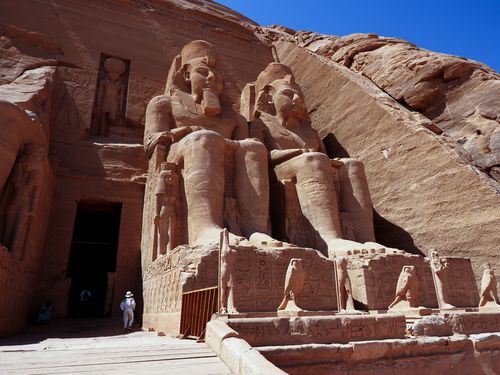
Abu Simbel • Temple of Ramses II
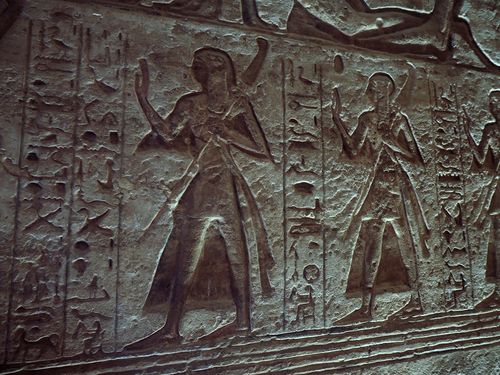
Abu Simbel • Temple of Ramses II
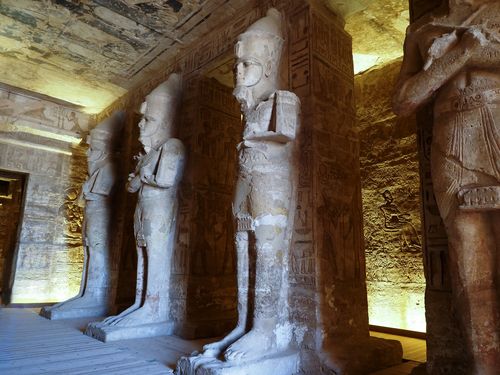
Abu Simbel • Temple of Ramses II
Monument profile
Temple of Ramses II
Monument categories: Rock Sanctuary, Egyptian temple
Monument families: Temple • Rock Sanctuary and Monumental Bas-reliefs
Monument genres: Religious
Cultural heritage: Ancient Egypt
Geographic location: Abu Simbel • Egypt
Construction period: before the 6th century BC
This monument in Abu Simbel is inscribed on the UNESCO World Heritage List since 1979 and is part of the serial property "Nubian Monuments from Abu Simbel to Philae".See the UNESCO monuments featured on this site
• Links to •
• Dynasties that contributed to the construction of the monument •

• List of videos about Abu Simbel on this site •
Abu Simbel • Temples of Ramses & Nefertari, Egyptian Wonders
The Temple of Ramses II at Abu Simbel: A Monument of Power, Transformation, and Preservation
Political and Social Motivations Behind the Construction
The Temple of Ramses II at Abu Simbel, dating back to around 1264 BCE, was erected under the reign of Pharaoh Ramses II of Egypt’s 19th Dynasty. Its construction served as a statement of political and military power, marking Egypt’s southern boundary and asserting dominance over Nubia. Located along the Nile, it symbolized Ramses II’s authority and was intended to display the strength and reach of the Egyptian empire. The temple’s colossal statues of Ramses II, towering over 20 meters each, represent the pharaoh as a divine figure, underlining a theocratic structure that merged political authority with religious symbolism.
Major Historical Events and Their Regional Impact
Throughout its history, the temple has witnessed numerous shifts in power, from the Egyptian empire to foreign rule under Persians, Greeks, and Romans. Each of these changes brought different cultural influences to the region, reshaping the social and political landscape. Buried under sand for centuries, the temple was rediscovered in 1813 by Swiss explorer Johann Ludwig Burckhardt, later inspiring Egyptology’s emergence as a field of study. This rediscovery marked a significant moment in the temple’s history, positioning it as a symbol of Egypt’s rich cultural heritage and attracting global scholarly interest.
The Global Context: A Comparison with Other Regions
During the period when the Temple of Ramses II was constructed, other civilizations were also creating monumental works. In the Middle East, the Assyrians built massive palaces, emphasizing military and administrative power, while the Mycenaeans in Greece were constructing fortified citadels. Unlike these structures, Abu Simbel’s grandeur and intricate designs focused on projecting divine kingship. This practice of depicting rulers as deities was unique to ancient Egypt and provided a powerful image of the pharaoh as a central figure uniting politics, religion, and social order.
Transformations and Cultural Influences Over the Centuries
The most profound transformation of Abu Simbel took place in the 1960s during the construction of the Aswan High Dam. Faced with the threat of submersion by Lake Nasser, UNESCO launched an international campaign to relocate the temple. The temple was painstakingly dismantled and moved to a higher location, preserving it for future generations. This remarkable project not only saved Abu Simbel but also set a precedent for global cooperation in cultural preservation, underscoring the temple’s importance as a shared world heritage.
Architectural and Symbolic Features that Highlight Its Significance
The temple’s architectural layout includes a unique axis, aligned so that sunlight illuminates the inner sanctuary twice a year, on Ramses II’s birthday and coronation day. This alignment emphasizes Ramses’s divine connection and understanding of astronomy, showcasing advanced architectural knowledge. The wall carvings and battle scenes reflect influences from neighboring cultures, particularly Nubian, Levantine, and Libyan iconography, symbolizing Egypt’s political relationships and military conquests. This blend of native and foreign elements adds to the temple’s distinct cultural and historical depth.
The Temple’s Current State and Global Recognition
Since its relocation, the Temple of Ramses II at Abu Simbel has been recognized as a UNESCO World Heritage site (1979), affirming its cultural significance on an international scale. The site remains in excellent condition thanks to continued preservation efforts. It is one of Egypt’s most visited sites, attracting tourists worldwide and serving as a vital link to the nation’s ancient heritage. The temple’s global recognition has enhanced appreciation for Egypt’s historical achievements and contributed to increased cultural tourism, benefitting the region economically and educationally.
Modern Preservation Challenges
Today, preserving Abu Simbel faces specific challenges. Erosion from winds and fluctuating water levels in Lake Nasser, along with mass tourism, create risks to the site’s structural integrity. To counter these, conservationists employ environmental monitoring systems, and visitor regulations have been enforced to limit damage. Climate change’s potential impact on water levels around the temple is an ongoing concern, emphasizing the need for proactive measures in site preservation.
Conclusion
The Temple of Ramses II at Abu Simbel stands as an architectural and cultural marvel, embodying the glory of Ramses II’s reign and reflecting the innovations of ancient Egypt. From its role as a political and religious symbol to its preservation as a shared global treasure, Abu Simbel is a testament to the ingenuity and artistic achievements of humanity. The temple’s relocation, global recognition, and modern conservation efforts highlight the vital importance of preserving such heritage sites in an ever-evolving world, ensuring their legacy endures for future generations.
The Temple of Ramses II at Abu Simbel: Architectural Innovation and Cultural Fusion of the 19th Dynasty
Technological Advancements and Construction Techniques of the 19th Dynasty
The Temple of Ramses II at Abu Simbel, constructed in the 13th century BCE, represents the pinnacle of technological and architectural advancements of Egypt’s 19th Dynasty. Built directly into the sandstone cliffs, this temple illustrates the skill of ancient Egyptian engineers who used specialized tools and techniques to carve the temple’s interior chambers, statues, and intricate reliefs. The temple was entirely cut into the rock, an approach that required immense precision and planning to maintain structural integrity. The design and construction techniques showcase the Egyptians’ mastery over stonework and their ability to execute large-scale, enduring monuments.
The materials used at Abu Simbel are primarily the natural sandstone of the cliffs, shaped with copper chisels and stone hammers, tools that demanded labor-intensive craftsmanship and considerable expertise. In addition, the design incorporated significant astronomical knowledge, evidenced by the unique alignment that illuminates the temple’s sanctuary twice a year, on dates believed to coincide with Ramses II’s birthday and coronation. This solar alignment reflects both a sophisticated understanding of astronomy and a symbolic integration of nature within the architectural concept.
Architectural Plan and Unique Features
The temple’s architectural layout is as remarkable as its construction. The entrance features four colossal statues of Ramses II, each standing around 20 meters high. These statues portray the pharaoh as a divine figure and were strategically positioned to instill awe in visitors approaching the temple. Inside, the temple’s layout follows a progression of halls leading to the inner sanctuary, where seated statues of gods Amun-Ra, Ptah, and Ra-Horakhty flank Ramses II in a divine assembly, reinforcing his god-like status.
The alignment of the temple so that sunlight illuminates the sanctuary on specific dates each year is a unique architectural marvel. Known as a “solar phenomenon,” this effect symbolizes Ramses II’s eternal connection to the gods. The meticulous planning required for this alignment highlights the Egyptians’ advanced knowledge of geometry and astronomy, adding to the temple’s architectural and symbolic significance.
Artistic and Cultural Fusion: Regional and Foreign Influences
The decorative reliefs and motifs at Abu Simbel illustrate a blend of regional artistic traditions and foreign cultural elements. The intricate carvings depict scenes of Ramses II in battle, including the famous Battle of Kadesh, and show interactions with the gods in a style that adheres to Egyptian artistic conventions. However, these carvings also incorporate stylistic elements from Nubia and neighboring regions, reflecting Egypt’s interactions and exchanges with surrounding cultures.
The temple’s depictions of Ramses II’s military triumphs and religious rituals were intended not only to exalt the pharaoh but also to emphasize Egypt’s influence over its territories, including Nubia. This cross-cultural representation, showcasing foreign motifs alongside traditional Egyptian styles, highlights the temple’s role as both a symbol of Egyptian supremacy and a bridge between cultures, contributing to its lasting historical significance.
Notable Statistics and Anecdotes
Construction of the Temple of Ramses II was a massive undertaking, estimated to have involved thousands of laborers and artisans over two decades. The four colossal statues of Ramses II, weighing hundreds of tons each, demonstrate the scale and ambition of the project. The solar alignment, occurring on February 22 and October 22, continues to attract global interest as a unique aspect of ancient Egyptian engineering and remains a significant draw for visitors today.
One fascinating anecdote is that the temple lay buried under sand for centuries, obscured from the world until its rediscovery in 1813 by Swiss explorer Johann Ludwig Burckhardt. This rediscovery sparked interest in Egyptology and contributed to renewed recognition of ancient Egyptian culture.
UNESCO World Heritage Status and International Recognition
In 1979, the Temple of Ramses II at Abu Simbel was designated a UNESCO World Heritage site, solidifying its place as a monument of outstanding global importance. The temple’s relocation in the 1960s, an extraordinary feat of engineering, saved it from submersion by Lake Nasser following the construction of the Aswan High Dam. This relocation, achieved by cutting the temple into large blocks and reconstructing it on a higher plateau, was a milestone in heritage preservation and underscored the value of global cooperation to protect cultural assets.
UNESCO’s involvement in the temple’s preservation has enhanced its international status, attracting millions of visitors and reinforcing the importance of conservation efforts. The temple now stands as a symbol of Egypt’s rich history and cultural legacy, inspiring continued global appreciation and support for historical preservation.
Modern Preservation Challenges
Today, Abu Simbel faces preservation challenges, particularly due to environmental factors. The rising and falling water levels of Lake Nasser pose a risk of erosion, while high winds and temperature fluctuations can cause gradual damage to the sandstone facade. Additionally, the impact of mass tourism, though beneficial for Egypt’s economy, requires ongoing conservation efforts to prevent wear on the temple’s structure and delicate carvings. Conservationists have implemented monitoring systems and controlled visitor access to protect the site’s integrity.
Conclusion
The Temple of Ramses II at Abu Simbel is a testament to the architectural ingenuity, cultural depth, and political power of ancient Egypt. Its construction methods, innovative solar alignment, and artistic fusion illustrate the heights of 19th Dynasty craftsmanship and Ramses II’s legacy. As a UNESCO World Heritage site, Abu Simbel remains a global symbol of ancient Egyptian achievement, protected through international collaboration and dedicated conservation efforts.