

 Français (France)
  Nederlands (nl-NL)
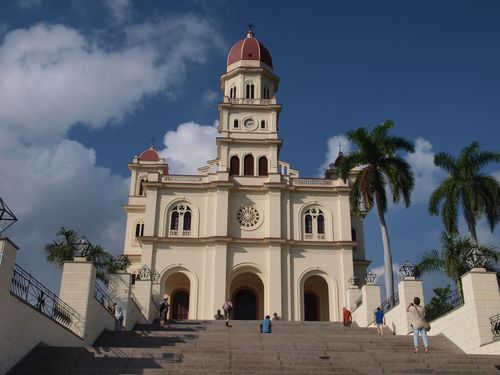
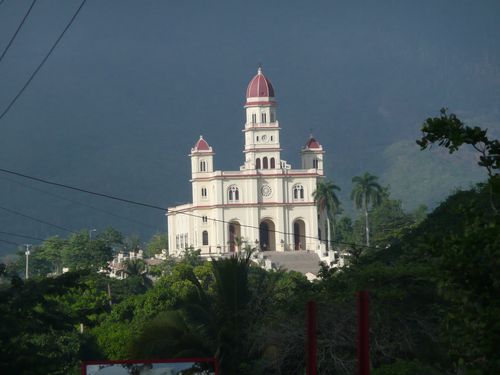
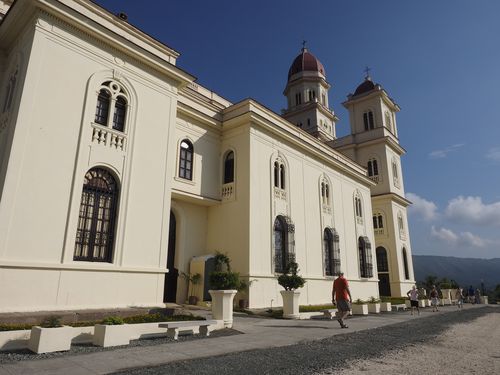
 The Basilica of El Cobre is a well-known monument located in Santiago de Cuba, Cuba. It attracts a significant number of visitors due to its spiritual prominence and its symbolic role in local life. The site serves as an important gathering place for those seeking to express their faith and to experience an essential aspect of the region's cultural identity.
Monument profile
Basilica of El Cobre
Monument categories: Basilica, Pilgrimage site
Monument families: Church, cathedral, basilica, chapel • Pilgrimage site or memorial
Monument genres: Religious
Cultural heritage: Christian
Geographic location: Santiago de Cuba • Cuba
Construction period: 20th century AD
• Links to •
• List of videos about Bay of Pigs, Baracoa, Santiago de Cuba on this site •
Some historical places • Cuba
Santiago, historical city • Cuba
• Sources •
National Archives of Cuba The Catholic Church and Cuban National Identity (University of Havana Publications) Vatican Documents on the Patronage of Our Lady of Charity Reports from the Cuban National Council of Cultural Heritage Academic studies on Caribbean Religious Architecture and Cuban cultural history
The Basilica of El Cobre: A Symbol of Faith, Power, and Cultural Identity in Cuba
1. Origins and Political-Social Motivations Behind Its Construction
The Basilica of Our Lady of Charity of El Cobre, located near Santiago de Cuba, stands as an emblematic monument with deep historical, political, and social significance. The original chapel was built around 1612-1613 following the discovery of a statue of the Virgin Mary—later known as Nuestra Señora de la Caridad del Cobre—by three local fishermen in the Bay of Nipe. This miraculous find fueled widespread devotion, prompting the establishment of a sanctuary to honor the Virgin.
The construction of the original church was driven by both religious fervor and strategic colonial objectives. Under Spanish rule, Catholicism served as a tool to consolidate imperial authority over diverse populations, including Indigenous communities, African slaves, and European settlers. The Spanish Crown and the Catholic Church sought to use religious structures not only as places of worship but also as instruments of social control, fostering unity among disparate groups while reinforcing colonial dominance.
2. Key Historical Events and Their Impact on Regional Development
The Basilica of El Cobre has been at the heart of numerous pivotal events in Cuban history, each influencing the region’s political and social landscape:
Cuban Wars of Independence (1868–1898): The basilica became a symbol of national identity and hope for freedom. Soldiers fighting against Spanish rule often carried medals of the Virgin of Charity, invoking her protection as a unifying figure beyond religious lines.
Patronage Declaration (1916): In recognition of her significance, Pope Benedict XV declared Our Lady of Charity the Patroness of Cuba, further embedding the basilica within the national consciousness during a period of growing Cuban nationalism after independence from Spain in 1898.
Papal Visits: The visits of Popes John Paul II (1998), Benedict XVI (2012), and Francis (2015) highlighted the basilica’s role as a spiritual and cultural landmark. These events not only affirmed its importance within Catholicism but also symbolized the evolving relationship between the Cuban state and religious institutions, especially following decades of restrictive policies during the communist era.
3. Global Context and Comparisons with Other Regions
The basilica’s construction and evolution reflect broader global trends during the colonial period. Across the Americas, Europe, and Asia, religious monuments were key to asserting imperial influence. In Latin America, Spanish colonial powers erected grand cathedrals, such as the Basilica of Guadalupe in Mexico, blending European architectural styles with local cultural elements.
Similarly, in Asia, Jesuit missionaries introduced Christian architecture that merged Western religious forms with local aesthetics, as seen in churches throughout the Philippines and India. In Europe, the construction of monumental churches during the Baroque period served not only religious purposes but also demonstrated the political power and cultural superiority of monarchies and the Catholic Church.
4. Architectural Transformations Reflecting Power Shifts and Cultural Influences
The current basilica, completed in 1927, replaced earlier structures damaged by time and natural disasters. Its architecture reflects a blend of neo-Baroque European influences and Caribbean adaptations, symbolizing the intersection of colonial heritage and Cuban identity.
Key Architectural Changes:
- Early Structures (17th–19th centuries): Simple chapels with modest materials, reflecting the limited resources of the early colonial era.
- Modern Basilica (1927): Constructed using more durable materials like reinforced concrete, brick, and local stone, designed to withstand Cuba’s tropical climate and seismic activity. Its imposing dome, symmetrical towers, and decorative facades reflect Baroque aesthetics, while local craftsmanship adds a distinct Cuban character.
These transformations mirror Cuba’s transition from a Spanish colony to an independent republic, with the basilica evolving from a colonial religious outpost to a national symbol of resilience and identity.
5. Cultural Significance and Symbolic Legacy
The Basilica of El Cobre transcends its religious origins, serving as a powerful symbol of Cuban cultural identity. The Virgin of Charity holds a unique place in Cuban spirituality, venerated not only in Catholicism but also in Afro-Cuban religions like Santería, where she is syncretized with the orisha Oshun, goddess of love and fresh waters.
This fusion of beliefs reflects the rich cultural tapestry of Cuba, shaped by African, Indigenous, and European influences. The basilica stands as a testament to this syncretism, embodying the spirit of unity amid diversity.
6. Current State of Preservation
The basilica is well-preserved, benefiting from restoration projects supported by the Cuban government, the Catholic Church, and international organizations. Its status as a national shrine has ensured regular maintenance, particularly after natural disasters like hurricanes, which pose significant threats to the structure.
Conservation Challenges:
- Environmental Threats: Exposure to humidity, tropical storms, and seismic activity accelerates deterioration, particularly of the façade and interior decorations.
- Tourism Impact: The growing influx of pilgrims and tourists strains the infrastructure, necessitating careful management to balance accessibility with preservation.
- Economic Constraints: Limited resources in Cuba’s economy pose challenges for long-term conservation efforts, often relying on external support for major restoration projects.
7. International Recognition and Global Reception
While the Basilica of El Cobre is not a UNESCO World Heritage Site, it holds considerable international recognition due to its religious significance and historical importance. The papal visits and global devotion to the Virgin of Charity have elevated its status, attracting attention from both scholars and the faithful worldwide.
Although lacking formal UNESCO designation, the basilica’s cultural and spiritual resonance ensures its continued protection as a vital part of Cuba’s heritage. Efforts to preserve and promote the site underscore the importance of safeguarding not only the physical structure but also the intangible cultural heritage it represents.
Architectural Innovation and Cultural Synthesis: The Basilica of El Cobre in Santiago de Cuba
1. Technological Advancements and Construction Techniques
The Basilica of Our Lady of Charity of El Cobre, inaugurated in 1927, stands as a testament to the architectural and engineering innovations of its time. Situated in the town of El Cobre near Santiago de Cuba, the basilica reflects a blend of traditional craftsmanship and modern construction techniques that marked the early 20th century.
One of the key technological advancements evident in the basilica's construction is the extensive use of reinforced concrete, a material that gained prominence during this period for its durability and versatility. This allowed the architects to design large domes, wide arches, and robust structural frameworks capable of withstanding Cuba’s tropical climate, including high humidity, seismic activity, and hurricanes. The integration of concrete with brick masonry provided both structural integrity and aesthetic flexibility, enabling intricate decorative features while maintaining resilience.
2. Materials Used to Reflect the Era’s Grandeur
The basilica’s construction showcases a thoughtful selection of materials that reflect both the architectural trends of the early 20th century and the local environment:
- Reinforced Concrete: Used for the foundational structures, dome, and pillars, offering strength against natural disasters common in the Caribbean.
- Brick and Stone: Locally sourced materials provided thermal insulation and added to the visual texture of the exterior façades.
- Stucco and Plaster Finishes: Applied to interior walls and ceilings, allowing for detailed ornamental work characteristic of neo-Baroque design.
- Stained Glass Windows: Imported from Europe, these vibrant glass artworks depict biblical scenes and Cuban religious icons, creating dynamic light effects within the basilica.
- Wood Carvings: Indigenous woods were used for altars, pews, and decorative elements, blending European religious artistry with Cuban craftsmanship.
These materials were not only chosen for their practicality but also to convey a sense of grandeur and sacredness, befitting a national shrine dedicated to Cuba’s patron saint.
3. Architectural Features: A Unique Blend of Regional Traditions and Foreign Influences
The basilica’s architectural design is a fusion of neo-Baroque European styles and Caribbean influences, resulting in a structure that embodies Cuba’s complex cultural identity.
Structural Design and Layout
The basilica follows a Latin cross plan, a hallmark of Catholic church architecture, with a prominent central nave, flanked by side aisles, and a transept that intersects the main body of the church. The central feature is a striking dome rising above the crossing, which dominates the skyline and symbolizes the heavens. The dome’s octagonal drum allows natural light to filter into the basilica, enhancing the spiritual ambiance.
Decorative Elements
- Neo-Baroque Façade: Characterized by symmetrical towers, ornate cornices, and elaborate stonework that reflects the grandeur of Spanish colonial architecture.
- Interior Ornamentation: The basilica’s interior features intricate stucco moldings, gilded details, and religious iconography that merge traditional Catholic motifs with Cuban artistic expressions.
- Syncretic Symbolism: Elements of Afro-Cuban religious symbolism subtly appear in the artwork, reflecting Cuba’s syncretic spiritual heritage, where the Virgin of Charity is associated with the Yoruba deity Oshun in Santería practices.
This combination of European design principles with local craftsmanship and cultural motifs makes the Basilica of El Cobre a unique architectural landmark in the Caribbean.
4. Notable Statistics and Anecdotes
Height of the Dome: Approximately 30 meters (98 feet), offering panoramic views of the surrounding Sierra Maestra mountains.
Capacity: The basilica can accommodate over 1,000 worshippers, making it a major pilgrimage site, especially on September 8th, the feast day of Our Lady of Charity.
Historical Anecdote: According to legend, the statue of the Virgin was miraculously discovered floating on the waters of Nipe Bay by three fishermen—an event that sparked widespread devotion and led to the basilica’s eventual construction.
5. International Recognition and Impact on Conservation
While the Basilica of El Cobre is not listed as a UNESCO World Heritage Site, it enjoys significant international recognition due to its religious, historical, and cultural importance. The site has been visited by three Popes—John Paul II in 1998, Benedict XVI in 2012, and Francis in 2015—each visit reaffirming its status as a national symbol of faith and resilience.
These high-profile visits have heightened global awareness of the basilica, fostering increased interest from scholars, pilgrims, and tourists. This international attention has contributed to preservation efforts, attracting support for restoration projects and raising awareness of the need to maintain the site’s architectural integrity.
Impact of Global Recognition on Conservation:
- Funding for Restoration: International donations and Catholic Church initiatives have supported conservation work, particularly after damage from natural disasters.
- Cultural Diplomacy: The basilica’s prominence has facilitated cultural exchanges and collaborations between Cuban institutions and foreign heritage organizations.
6. Challenges in Preserving Historical Integrity
Despite its well-maintained appearance, the basilica faces several challenges related to preservation:
- Environmental Threats: Cuba’s tropical climate, with high humidity, salt exposure, and the risk of hurricanes, accelerates the deterioration of materials such as stucco, wood, and metal fixtures.
- Tourism Pressure: The growing number of visitors places stress on the infrastructure, requiring constant maintenance to prevent wear and tear.
- Resource Constraints: Economic limitations in Cuba can hinder large-scale restoration projects, making international partnerships crucial for ongoing conservation efforts.
- Efforts to address these challenges involve a combination of traditional restoration techniques and modern conservation technologies, ensuring that the basilica remains a vibrant symbol of Cuba’s cultural and religious heritage.