

 Français (France)
  Nederlands (nl-NL)
 The Church of the Sacred Heart in Saint-Leu, located on Réunion Island, serves as a notable Catholic place of worship valued for its spiritual significance in the region. Its architecture is characterized by simplicity and elegance, creating a peaceful atmosphere conducive to prayer and reflection. The church plays a significant role in the religious and cultural life of the local community, providing a tranquil setting for gatherings and spiritual practices.
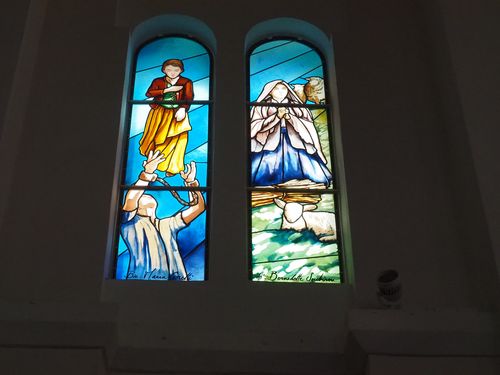
Reunion Island • Church of the Sacred Heart: one of the windows

Reunion Island • Church of the Sacred Heart: in the church
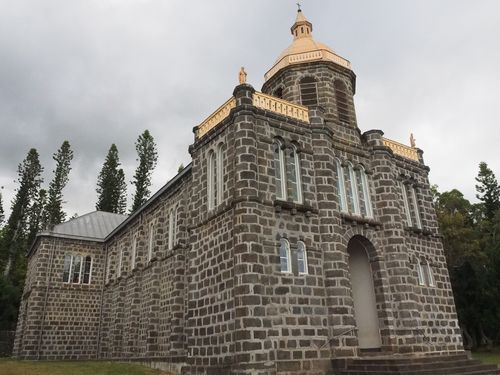
Reunion Island • Church of the Sacred Heart: seen from outside
Monument profile
Church of the Sacred Heart
Monument category: Church
Monument family: Church, cathedral, basilica, chapel
Monument genre: Religious
Cultural heritage: Christian
Geographic location: Saint Leu • Reunion Island
Construction period: 19th century AD
• Links to •
• List of videos about on this site •
Reunion: the volcano, the landscapes and the people • Reunion Island
• References •
Ministère de la Culture - France: Eglise des Colimaçons
The Sacred Heart Church in Saint-Leu: Political, Social, and Architectural Significance
Political and Social Motivations Behind Its Construction
The Sacred Heart Church in Saint-Leu, located on the island of La Réunion, was constructed in 1860 during a transformative period in the island’s history. The abolition of slavery in 1848 and the resulting societal restructuring influenced the church’s creation. It served as a symbol of unity and reconciliation in a population divided by colonial hierarchies and emerging social tensions. The colonial authorities and the Catholic Church saw its construction as a means of consolidating their influence and fostering spiritual and social stability within the local community.
The dedication to the Sacred Heart of Jesus reflected a broader global Catholic movement in the 19th century. At the time, the Church sought to reaffirm its presence amidst rising secularism and social upheaval in various parts of the world. Locally, the church became a central space for spiritual guidance and cultural identity, helping shape the socio-political landscape of Saint-Leu and its surrounding areas.
Historical Events and Their Impact
Over the years, the Sacred Heart Church has witnessed several historical milestones. It played a role in religious ceremonies and community gatherings, becoming a focal point for cultural expression and social cohesion. In the 20th century, it became a venue for significant events, reflecting the evolving identity of La Réunion as it transitioned from a French colony to a département in 1946.
The church’s endurance through cyclones and other natural disasters highlights its resilience, both as a physical structure and as a symbol of faith. Restoration efforts undertaken in the mid-20th century were pivotal in preserving its architectural integrity while adapting to modern needs.
Global Context and Comparisons
The construction of the Sacred Heart Church aligns with a global trend of monumental church-building during the 19th century. Similar structures, such as the Basilica of the Sacred Heart in Paris, were erected as responses to social and political crises. In colonial settings like La Réunion, churches often served dual purposes: spiritual sanctuaries and instruments of cultural assimilation.
In other regions, particularly in British and Spanish colonies, churches reflected the blending of local traditions with European architectural styles. This phenomenon is evident in Saint-Leu, where the Sacred Heart Church embodies a unique synthesis of local materials and European Gothic influences, symbolizing the cultural interplay that characterized the colonial era.
Architectural Transformations and Cultural Significance
The church’s original design featured volcanic stone and wooden structures, showcasing local craftsmanship. Over time, renovations introduced modern techniques and materials while retaining the church’s traditional aesthetic. The blend of Gothic arches, indigenous motifs, and vibrant colors reflects both the regional artistic heritage and external influences.
The addition of a prominent bell tower and reinforced structural elements during later restorations enhanced its resilience against climatic challenges. These architectural transformations underscore the shifting priorities and resources available during different periods of its history.
Current State and Preservation Challenges
Today, the Sacred Heart Church stands as a testament to the region’s cultural and spiritual legacy. However, it faces significant challenges in preserving its historical integrity. The tropical climate, characterized by heavy rainfall and cyclones, poses constant threats to its structural stability. Urban development around Saint-Leu further complicates conservation efforts, raising concerns about maintaining the church’s prominence in an increasingly modernized landscape.
Collaborative efforts between local authorities, heritage organizations, and the community are crucial for its preservation. Restorative projects must balance historical authenticity with modern standards of durability and sustainability.
Conclusion
The Sacred Heart Church in Saint-Leu is more than a place of worship; it is a symbol of La Réunion’s historical journey, blending local traditions with global influences. Its enduring presence highlights the importance of safeguarding such monuments as repositories of cultural identity and communal memory. Addressing modern preservation challenges will ensure that this iconic structure continues to inspire future generations while honoring its rich legacy.
Architectural Innovation and Cultural Fusion: The Sacred Heart Church of Saint-Leu
Architectural Innovation and Technological Advances
The Sacred Heart Church in Saint-Leu reflects the technological and architectural advancements of the 19th century. Built in 1860, the church’s construction utilized locally sourced volcanic stone, highlighting the adaptability of builders to the island’s unique resources. These stones provided both durability and aesthetic appeal, essential for a tropical environment prone to cyclones.
Wooden frameworks, crafted from termite-resistant exotic timbers, supported the roof structures, showcasing a marriage of local craftsmanship and practical innovation. The use of pointed arches and reinforced buttresses not only provided structural integrity but also aligned with the prevailing Gothic Revival style, a hallmark of ecclesiastical architecture in this era.
A Unique Blend of Artistic Traditions
The church stands out as a synthesis of regional and foreign artistic influences. While its Gothic-inspired arches and spires draw from European ecclesiastical designs, the decorative motifs incorporate elements of local flora and fauna. This integration symbolizes the cultural diversity of La Réunion, where French, Indian, and African influences coalesce.
Inside, vibrant stained glass windows depict Christian iconography infused with tropical imagery, creating a spiritual atmosphere rooted in the island’s identity. Carvings and murals display a meticulous attention to detail, blending traditional Catholic symbols with patterns reminiscent of Indian textile art.
Notable Structural Features
The church’s layout follows a classical basilical plan, with a central nave flanked by side aisles and culminating in a semi-circular apse. This arrangement facilitates both functionality and grandeur. A prominent bell tower, added in later years, enhances the monument’s visual prominence and acts as a landmark for the surrounding community.
One remarkable anecdote is the logistical challenge of transporting construction materials. Historical records indicate that hundreds of laborers carried volcanic stones manually over rugged terrain, emphasizing the dedication involved in creating this architectural masterpiece.
Global Recognition and UNESCO Consideration
Although the Sacred Heart Church is not currently listed as a UNESCO World Heritage site, its architectural and cultural significance has garnered regional acclaim. The intricate blending of styles and its enduring presence make it a potential candidate for future recognition. Such a designation would amplify global awareness and attract resources for its preservation.
Current Preservation Challenges
The church’s tropical location presents ongoing challenges. Frequent exposure to cyclones and high humidity accelerates material degradation, necessitating regular maintenance. Urbanization poses additional threats, potentially diminishing the historical ambiance of the site.
Efforts to preserve the church have included community-driven initiatives and collaborations with heritage organizations. These projects aim to retain the building’s original character while integrating modern conservation techniques.
Conclusion
The Sacred Heart Church of Saint-Leu exemplifies the convergence of technological ingenuity, cultural synthesis, and spiritual devotion. Its unique architectural features and historical significance continue to resonate with the local population and beyond. By addressing contemporary preservation challenges, this iconic monument can maintain its legacy as a testament to La Réunion’s rich and diverse heritage.