

 Français (France)
  Nederlands (nl-NL)
 The Baptism Site of Jesus Christ, located in Bethany, Jordan, holds immense religious and spiritual significance for Christians worldwide. This site is traditionally recognized as the place where Jesus was baptized by John the Baptist in the waters of the Jordan River. Attracting thousands of pilgrims and visitors annually, the location is a UNESCO World Heritage site, offering a serene and contemplative environment. Beyond its religious importance, the site is also valued for its natural setting and exceptional preservation.
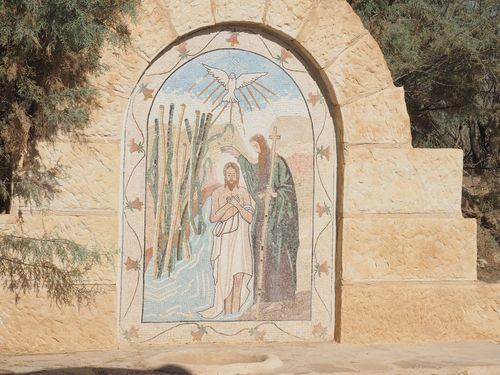
Bethany-beyond-the-Jordan • Baptism site of Jesus Christ

Bethany-beyond-the-Jordan • Baptism site of Jesus Christ

Bethany-beyond-the-Jordan • Baptism site of Jesus Christ
Monument profile
Baptism site of Jesus Christ
Monument categories: Pilgrimage site, Archaeological
Monument families: Pilgrimage site or memorial • Archaeological
Monument genres: Religious, Archaeological site
Cultural heritage: Christian
Geographic location: Bethanie • Jordan
Construction period: 1st century AD
This monument in Bethanie is inscribed on the UNESCO World Heritage List under the name Baptism Site “Bethany Beyond the Jordan” (Al-Maghtas) since 2015.See the UNESCO monuments featured on this site
• Links to •
• List of videos about Bethany-beyond-the-Jordan on this site •
Bethany beyond the Jordan • Jordan
• References •
Wikipedia FR: Béthanie-au-delà-du-Jourdain
UNESCO: Site du baptême « Béthanie au-delà du Jourdain » (Al-Maghtas)
The Baptism Site of Jesus Christ in Bethany: Historical Significance, Transformations, and Modern Challenges
The Baptism Site of Jesus Christ, located in Bethany-beyond-the-Jordan, holds profound spiritual, cultural, and historical importance. Beyond its religious significance as the traditional location where John the Baptist baptized Jesus, the site embodies centuries of political and social evolution, shaped by regional and global influences. This article explores the motivations behind its construction, its historical trajectory, and the challenges of preserving its integrity today.
Political and Social Motivations Behind Its Establishment
The site, which dates back to the 1st century AD, was not a constructed monument in the traditional sense but a sacred location recognized by early Christian communities. Its significance as a religious site was solidified during the Byzantine period (4th–7th centuries), as Christianity became the dominant religion of the Roman Empire.
Politically, the development of the site reflected efforts by the Byzantine authorities to consolidate Christian identity and extend their influence over the eastern territories. Socially, it served as a focal point for pilgrims, reinforcing communal ties among believers and promoting the spread of Christian doctrine in a region that was historically a crossroads of different cultures and religions.
Historical Events and Their Impact
The site’s historical trajectory was shaped by key events:
- Christianization of the Roman Empire: In the 4th century, the baptism site was officially recognized and churches and monasteries were constructed. This marked the beginning of its development as a pilgrimage destination.
- Muslim Conquest (7th Century): With the arrival of Islamic rule, the region experienced significant changes. While Christian practices were restricted, the site remained respected as part of shared Abrahamic traditions.
- Crusades (11th–13th Centuries): The Crusaders reestablished Christian control over the site, leading to renewed interest and construction. However, the region’s instability limited long-term development.
- Modern Rediscovery (20th Century): The site was largely forgotten for centuries until archaeological excavations in the 1990s uncovered its historical significance, revealing ancient churches, baptismal pools, and related structures.
Contextualizing the Era on a Global Scale
The significance of Bethany during the Byzantine period can be compared to other sacred sites worldwide. For example:
In Europe, the Christianization of the continent led to the development of pilgrimage sites like Santiago de Compostela in Spain, similarly serving as centers of faith and power.
In Asia, religious centers like Bodh Gaya in India played comparable roles in Buddhism, symbolizing the spread of spiritual influence and cultural exchange.
In the Americas, indigenous ceremonial sites such as Teotihuacan (albeit predating the baptism site) reflected local traditions tied to power and cosmology.
Bethany stood out as a site of intersection between Roman imperial ambitions and the spread of a universal religion, demonstrating the role of sacred places in uniting diverse populations.
Transformations Over the Centuries
The site’s physical and symbolic landscape underwent several transformations:
- Byzantine Period: The construction of churches and baptismal facilities emphasized its role as a pilgrimage destination, with architectural features reflecting Roman and local traditions.
- Islamic Period: Many structures fell into disuse, yet the site’s association with John the Baptist ensured its reverence in Islamic tradition.
- Modern Era: Rediscovery in the 1990s led to restoration efforts, revealing remnants of ancient buildings and water systems. These efforts have transformed the site into a global heritage landmark, recognized for its universal spiritual value.
Cultural Importance and UNESCO Recognition
The site was inscribed as a UNESCO World Heritage Site in 2015, solidifying its cultural and spiritual legacy. This designation brought international attention, funding, and conservation initiatives. It also fostered interfaith dialogue, highlighting the shared significance of the site across Christian, Muslim, and Jewish traditions.
Current State of Conservation
Today, the Baptism Site is well-preserved but remains fragile. Archaeological findings, including the remnants of churches, baptismal pools, and associated structures, have been carefully stabilized. Visitor pathways and information centers have been established to ensure accessibility while protecting the site’s integrity.
Modern Challenges in Preservation
The preservation of the Baptism Site faces several challenges:
- Environmental Threats: The Jordan River’s declining water levels and regional desertification pose risks to the surrounding ecosystem and the archaeological features.
- Tourism Pressure: The influx of pilgrims and tourists has the potential to damage delicate remains. Sustainable tourism practices are essential to balance accessibility with conservation.
- Geopolitical Instability: Located in a historically volatile region, the site’s preservation depends on continued peace and cooperation between Jordan and neighboring countries.
- Climate Change: Rising temperatures and unpredictable weather patterns could accelerate the degradation of ancient materials.
Conclusion
The Baptism Site of Jesus Christ in Bethany is not merely a religious landmark but a cultural and historical treasure reflecting centuries of human interaction, faith, and innovation. Its enduring legacy, safeguarded by UNESCO and local efforts, serves as a testament to the resilience of spiritual heritage. Preserving this site against modern challenges ensures that future generations can continue to appreciate its profound significance on both a regional and global scale.
Architectural Significance of the Baptism Site of Jesus Christ in Bethany: Innovation, Materials, and Global Recognition
The Baptism Site of Jesus Christ in Bethany-beyond-the-Jordan, Jordan, is an architectural and archaeological treasure that reflects both the technological advancements and the cultural exchanges of its era. This article explores the materials, construction techniques, and artistic elements that define the site, as well as its role in regional and global history. Furthermore, it examines how these aspects contribute to its international recognition and ongoing preservation.
Technological and Material Innovations
The site, primarily developed during the Byzantine period (4th–7th centuries), demonstrates the use of advanced construction techniques and locally available materials, which were chosen to endure the region's challenging climate.
Materials Used:
- Limestone: A durable local stone was extensively used for walls and foundations, providing resilience against erosion.
- Hydraulic Plaster: Applied in baptismal pools and water channels to ensure waterproofing, this technique illustrates advanced knowledge of material science.
- Baked Bricks: Used for lighter superstructures and vaults, these bricks reduced weight and allowed for more intricate designs.
- Wood: Employed in roofing and support structures, although most wooden elements have not survived.
Construction Techniques:
The site featured stone masonry with interlocking blocks, a method that enhanced structural stability.
Water management systems, including aqueducts and channels connected to the Jordan River, were designed to ensure a steady water supply for baptismal ceremonies, reflecting advanced hydraulic engineering.
Domes and arches, characteristic of Byzantine architecture, provided both aesthetic appeal and structural strength.
These materials and methods not only illustrate the technological capabilities of the period but also underscore the site’s symbolic importance, as considerable resources were allocated to its development.
Artistic and Architectural Fusion
The architecture of the Baptism Site reveals a blend of regional artistic traditions and influences from neighboring cultures, reflecting its position at the crossroads of civilizations.
- Basilica Layouts: The churches built on the site followed the classic Byzantine basilica design, with a central nave flanked by aisles. These layouts were functional for large congregations and aligned with Christian liturgical practices.
- Baptismal Pools: Unique rectangular and circular pools, adorned with geometric patterns, were central features. These pools highlight the ritualistic significance of the site and its link to early Christian practices.
Decorative Elements:
Mosaics: Geometric and floral motifs, influenced by Nabataean and Roman art, adorned the floors and walls, blending local artistry with imperial styles.
Carvings and Inscriptions: These often included religious symbols and dedications, emphasizing the site's sacred nature.
This fusion of styles underscores the cultural interactions of the region, where Byzantine, Roman, and local Nabataean influences converged.
Notable Structures and Plans
The Baptism Site’s layout is defined by its proximity to the Jordan River and its integration with natural features. Key elements include:
- Baptismal Complex: A series of interconnected pools and chapels near the riverbank, symbolizing the transition from physical to spiritual purification.
- Churches and Monasteries: Multiple structures were built over time, each reflecting the prevailing architectural trends of its period. The Church of John the Baptist, reconstructed several times, is a notable example of early Christian devotion.
- Pilgrimage Pathways: Designed to guide pilgrims through the sacred spaces, these pathways demonstrate an understanding of spatial planning to enhance the spiritual experience.
Historical Anecdotes and Global Context
One of the earliest mentions of the site comes from the writings of Egeria, a 4th-century pilgrim who described the region as the location of Jesus’ baptism. Her accounts, along with those of other travelers, highlight the site's early significance as a pilgrimage destination.
Statistically, the rediscovery of the site in the 1990s revealed more than 11 ancient churches and chapels, along with numerous pools and hermit caves. This extensive archaeological evidence underscores its historical and spiritual prominence.
Globally, the Baptism Site parallels other major religious sites such as Santiago de Compostela in Spain and Bodh Gaya in India, both of which served as centers of spiritual devotion and cultural exchange.
UNESCO Recognition and Its Impact
In 2015, the Baptism Site was inscribed on the UNESCO World Heritage List, marking a turning point in its global recognition and conservation efforts. This designation has had several key impacts:
Conservation Initiatives: International support has enabled the stabilization of structures, protection of artifacts, and development of sustainable tourism practices.
Cultural Diplomacy: As a shared symbol among Christian, Jewish, and Islamic traditions, the site has become a focal point for interfaith dialogue and cultural understanding.
Economic Benefits: The site attracts thousands of visitors annually, contributing to the local economy and raising awareness of Jordan’s cultural heritage.
Modern Challenges and Preservation Efforts
Despite its importance, the site faces significant challenges:
- Environmental Risks: The declining water levels of the Jordan River, exacerbated by climate change and human activity, threaten the site’s ecological and cultural integrity.
- Tourism Pressure: Managing large numbers of visitors without damaging fragile remains requires careful planning.
- Regional Instability: Political tensions in the Middle East pose ongoing risks to the site's accessibility and preservation.
Efforts to address these challenges include improved visitor management, international funding for research and conservation, and cross-border cooperation to protect the Jordan River’s ecosystem.
Conclusion
The Baptism Site of Jesus Christ in Bethany is a testament to the ingenuity, artistry, and faith of its creators. Its architecture reflects a blend of technological innovation and cultural synthesis, offering invaluable insights into the region’s history. UNESCO recognition has amplified its global significance, ensuring that this sacred site continues to inspire and educate future generations while remaining a symbol of shared heritage and human achievement.