

 Français (France)
  Nederlands (nl-NL)
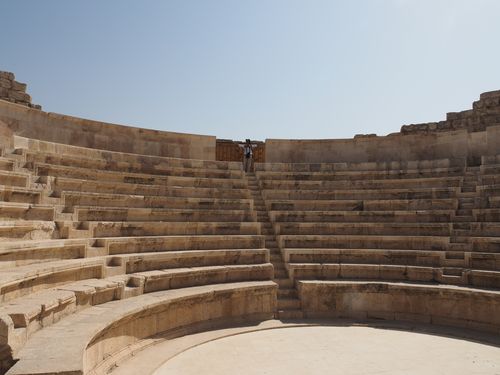
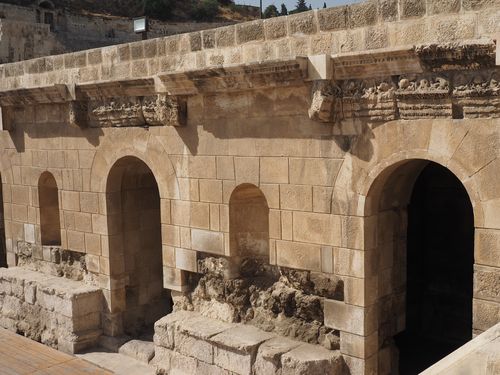
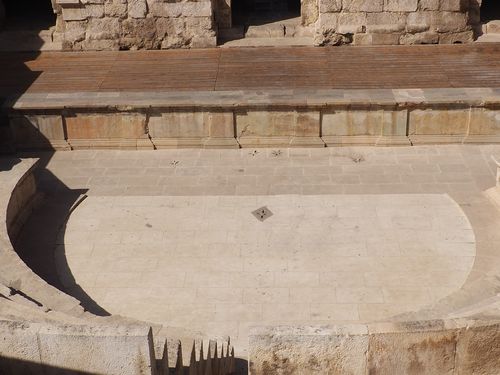
 The Odeon in Amman, located in Jordan’s capital, is a small Roman theater dating back to the 2nd century CE. It could accommodate approximately 500 spectators and was primarily used for musical performances and cultural events. Restored in the 20th century, it stands as a significant example of Roman heritage in the region and remains a venue for cultural activities.
Amman • Odeon
Amman • Odeon
Amman • Odeon
Monument profile
Odeon
Monument categories: Ancient, Amphitheatre
Monument families: Archaeological • Monument for cultural purposes
Monument genres: Archaeological site, Cultural or scientific
Cultural heritage: Roman antiquity
Geographic location: Amman • Jordan
Construction period: 2nd century AD
• Links to •
• List of videos about Amman, Jerash, Umm Qais on this site •
Jordan • the Roman Jordan
Amman, the capital • Jordan
• References •
Wikipedia EN: Odeon theater (Amman)
The Odeon of Amman: Political Significance, Historical Transformations, and Contemporary Challenges
The Odeon of Amman, a small Roman theater dating back to the 2nd century CE, is a key representation of Roman architectural influence in the region. Constructed during a period of significant Roman expansion and cultural integration, it served as a focal point for social and cultural life in ancient Philadelphia, now modern-day Amman. This article explores the motivations behind its construction, its historical transformations, and the challenges it faces in the modern era.
Political and Social Motivations for Its Construction
The Odeon was built during the height of Roman influence in the Decapolis, a group of ten cities in the Levant that served as hubs for administration and culture. These cities were key to Rome’s strategy of consolidating power in its eastern provinces. In this context, the construction of public spaces such as theaters and odeons was a deliberate move to promote Roman culture and facilitate civic life.
The Odeon, with a capacity of approximately 500 spectators, was designed for intimate gatherings, including musical performances, public speeches, and community events. Its construction underscored Rome’s emphasis on creating spaces for cultural and social cohesion, serving both as a symbol of imperial generosity and as a practical venue for public engagement.
Historical Context and Global Comparisons
The 2nd century CE, known as the Pax Romana, was a period of relative stability and prosperity across the Roman Empire. During this time, cities in the eastern provinces saw significant investments in infrastructure and public buildings. Similar structures were constructed across the empire, such as the Odeon of Herodes Atticus in Athens and smaller theaters in Roman Gaul, highlighting the importance of cultural venues in fostering loyalty and unity.
Elsewhere in the world, this era marked the flourishing of other major civilizations. The Han Dynasty in China was expanding its influence through the Silk Road, while the Gupta Empire in India was laying the foundations of its cultural and scientific achievements. The construction of public monuments, such as the Odeon, can be seen as part of a broader global trend of using architecture to assert power and cultural identity.
Major Transformations Over the Centuries
Over the centuries, the Odeon of Amman underwent significant changes, reflecting the shifting political and cultural landscape of the region. Following the decline of the Roman Empire, the structure likely fell into disuse and was repurposed or abandoned. During the medieval period, much of it was buried under debris as the city evolved.
In the 20th century, extensive restoration efforts were undertaken to uncover and preserve the Odeon. These efforts aimed to restore its original purpose as a cultural venue, ensuring that it could once again serve the community. Today, the Odeon hosts concerts, performances, and cultural events, continuing its legacy as a space for public gatherings.
Cultural Importance and Current State of Conservation
The Odeon holds significant cultural value as a symbol of Roman architectural ingenuity and its impact on the eastern provinces. Its compact design and specialized purpose make it distinct from larger theaters like the nearby Roman Theater of Amman. As a cultural landmark, it bridges the ancient and modern worlds, connecting the city’s Roman heritage with its contemporary identity.
The monument’s state of conservation is relatively good, thanks to restoration efforts that have stabilized its structure and preserved key elements. The seating area, stage, and surrounding walls have been carefully reconstructed to maintain the site’s historical authenticity while accommodating modern use.
Challenges to Preservation
Despite its good condition, the Odeon faces several preservation challenges. Environmental factors such as erosion and weathering threaten its limestone construction, while the urban expansion of Amman creates risks from traffic vibrations and pollution. Additionally, increased tourism and cultural use of the site require careful management to prevent wear and tear.
Climate change presents further uncertainties, with extreme weather potentially accelerating the deterioration of the site. Ongoing maintenance and the application of advanced preservation techniques are crucial to ensuring the Odeon’s long-term survival.
Conclusion
The Odeon of Amman is a testament to the political and cultural ambitions of the Roman Empire in the eastern Mediterranean. Its construction, transformations, and continued use highlight its enduring significance as a cultural and architectural landmark. Preserving this unique site is essential to maintaining its role as a bridge between the past and present, allowing future generations to appreciate its historical and cultural value.
The Odeon in Amman: Architectural Innovation and Cultural Fusion
The Odeon in Amman, a compact Roman theater constructed in the 2nd century CE, showcases the advanced engineering and architectural innovation of its era. Built during a time of Roman expansion and cultural integration in the eastern provinces, this structure reflects a blend of Roman ingenuity and regional artistic influences. This article examines the materials, construction techniques, and unique architectural features of the Odeon, as well as its role in the cultural and historical heritage of Amman.
Materials and Construction Techniques
The Odeon was constructed primarily using local limestone, a durable and readily available material in the region. The limestone blocks were precisely cut and fitted without the use of mortar, a hallmark of Roman engineering that ensured both stability and aesthetic appeal. The seating (cavea) and walls were designed to withstand time and the elements while maintaining a refined appearance.
One of the most innovative aspects of the Odeon’s design was its acoustic optimization. The semi-circular arrangement of the seating, combined with the curved walls and orchestra area, allowed for excellent sound projection. This was critical for the theater’s primary purpose as a venue for music and oratory performances. The potential use of a lightweight wooden or fabric roof to enhance acoustics and protect spectators from the weather reflects advanced engineering practices of the Roman period.
Architectural Features and Cultural Influences
The Odeon’s architectural design follows the traditional Roman theater layout, with a semi-circular seating arrangement, a central orchestra space, and a raised stage. However, its smaller size—accommodating approximately 500 spectators—indicates that it was intended for more intimate gatherings, such as concerts, poetry readings, or civic discussions.
The decorative motifs of the Odeon reflect a synthesis of Roman and local artistic traditions. While much of the ornamentation has been lost over time, remnants suggest a combination of classical Roman elements, such as geometric patterns and Corinthian columns, with motifs that may have been inspired by regional styles. This blending of traditions illustrates the cultural exchange between the Roman Empire and its provinces.
Notable Structure and Design
The Odeon is particularly notable for its compact scale and multi-functional design. Unlike larger theaters or amphitheaters, it was designed specifically for performances requiring a controlled acoustic environment. Its integration into the urban fabric of ancient Philadelphia (modern Amman) highlights its role as a central cultural hub within the city.
The semi-circular cavea is divided into tiers, allowing a clear view of the stage from every seat. This design, combined with the potential use of a retractable covering, demonstrates the ingenuity of Roman architects in creating functional yet aesthetically pleasing spaces.
Statistics and Anecdotes
One interesting fact about the Odeon is its relationship with the nearby Roman Theater of Amman, a much larger structure. Together, these venues formed a cultural complex that catered to different types of audiences and events, showcasing the Romans’ commitment to fostering civic and cultural life in their provinces.
An anecdote from modern times highlights the successful restoration of the Odeon: its current use for concerts and performances mirrors its original purpose, providing a living link between ancient and contemporary cultural practices.
International Recognition and UNESCO Impact
While the Odeon is not individually listed as a UNESCO World Heritage Site, it is part of Amman’s broader Roman heritage, which attracts international attention. Its restoration and integration into cultural programming have enhanced its reputation as a significant historical site. This recognition has spurred efforts to preserve and protect the structure as part of Jordan’s cultural heritage.
Preservation Challenges
The Odeon faces several challenges related to preservation. Environmental factors, including erosion and weathering, threaten the limestone structure, while urban development in Amman introduces risks from vibrations and pollution. Increased tourist activity requires careful management to prevent damage from overuse.
Climate change poses additional risks, as extreme weather patterns could accelerate the deterioration of the materials. Conservation efforts must therefore focus on stabilizing the structure, protecting it from environmental stressors, and maintaining its usability as a cultural venue.
Conclusion
The Odeon in Amman is a testament to the architectural and cultural achievements of the Roman Empire. Its innovative design, durable construction, and blending of artistic traditions underscore its importance as both a historical monument and a living cultural space. Preserving this unique site is essential to honoring its legacy and ensuring that future generations can continue to appreciate its role in the history and heritage of Jordan.