

 Français (France)
  Nederlands (nl-NL)
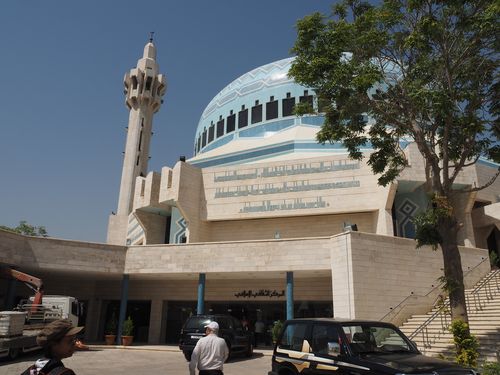
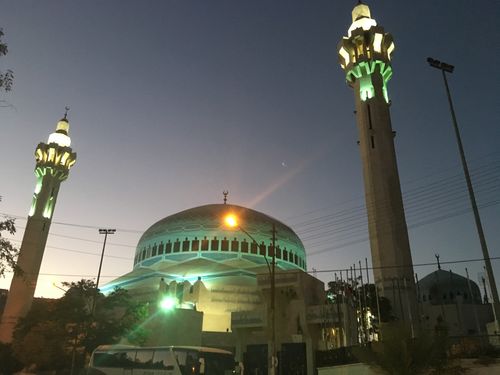
 The Blue Mosque, located in Amman, Jordan, is a prominent contemporary place of worship, recognized for its striking blue dome adorned with geometric patterns. Built in the 20th century, it accommodates several thousand worshippers and combines modern architectural elements with inspiration from Islamic traditions. It is a significant site for both visitors and locals.

Monument profile
Blue Mosque
Monument category: Mosque
Monument family: Mosque, Minaret or Madrasa
Monument genre: Religious
Cultural heritage: Islamic
Geographic location: Amman • Jordan
Construction period: 20th century AD
• Links to •
• List of videos about Amman, Jerash, Umm Qais on this site •
Jordan • the Roman Jordan
Amman, the capital • Jordan
• References •
Universe in Universe, art destinations: King Abdullah I Mosque
The Blue Mosque in Amman: Political Significance, Historical Transformations, and Modern Challenges
The Blue Mosque, also known as the King Abdullah I Mosque, is one of Amman’s most prominent landmarks. Built in the 1980s to honor King Abdullah I, the founder of the Hashemite Kingdom of Jordan, the mosque serves as both a place of worship and a symbol of national unity. This article explores the political and social motivations behind its construction, its historical context, global parallels, transformations over time, and the challenges it faces today.
Political and Social Motivations Behind Its Construction
The construction of the Blue Mosque was deeply tied to the political aspirations of the Hashemite monarchy. Dedicated to King Abdullah I, who was assassinated in 1951 at Jerusalem’s Al-Aqsa Mosque, the mosque commemorates his role in establishing the modern Jordanian state. Its construction during the reign of King Hussein was intended to reinforce national identity, emphasizing the monarchy’s historical connection to Islam and its role as a unifying force in Jordan.
The mosque was also envisioned as a statement of modernity, showcasing Jordan’s ability to blend traditional Islamic values with contemporary architectural techniques. Its large capacity and central location highlight its role as a hub for both religious and social gatherings, reinforcing its importance in the daily lives of the people.
Historical Context and Global Comparisons
The Blue Mosque was constructed in the 1980s, a period marked by political and social transformations in the Middle East. The region was grappling with the aftermath of the Arab-Israeli conflicts, the rise of nationalism, and economic reforms. Amid these dynamics, the construction of monumental structures like the Blue Mosque served as a means to assert stability and cultural pride.
Globally, the 1980s witnessed similar trends of blending modernity with tradition in public architecture. In other parts of the Islamic world, such as Malaysia and Turkey, mosques with contemporary designs began to emerge, reflecting a desire to align religious identity with modern aesthetics.
Transformations and Historical Significance
The Blue Mosque has largely retained its original design and purpose since its construction. While it has not undergone significant structural transformations, its role has expanded beyond that of a religious site to include cultural and educational functions. The mosque regularly hosts public lectures, religious festivals, and events, fostering community engagement.
Architecturally, the mosque’s blue dome, decorated with intricate geometric patterns, and its towering minarets are key features that reflect both traditional Islamic art and modern design principles. The use of local and imported materials, along with its innovative construction techniques, underscores the blending of regional and global influences.
Cultural Importance and Current State of Conservation
The Blue Mosque holds significant cultural and religious value, symbolizing both Jordan’s Islamic heritage and its modern aspirations. Its capacity to host 7,000 worshippers makes it one of the largest mosques in Jordan. The mosque’s prominent location and striking design also make it a key attraction for visitors, enhancing its status as a cultural landmark.
The mosque is well-maintained, with regular restoration efforts focusing on preserving its mosaics, dome, and interior decorations. These initiatives have ensured that the mosque remains both functional and visually stunning, serving as a testament to Jordan’s commitment to preserving its architectural heritage.
Challenges to Preservation
Despite its good state of conservation, the Blue Mosque faces challenges typical of urban heritage sites. Air pollution and vibrations from nearby traffic pose risks to its structural integrity and decorative elements. The increasing number of visitors, while beneficial for cultural appreciation, requires careful management to prevent wear and tear.
Climate change also introduces new uncertainties, with extreme weather potentially accelerating the degradation of the mosque’s exterior. Addressing these challenges will require a balance between modernization and preservation, ensuring the mosque’s continued relevance and longevity.
Conclusion
The Blue Mosque in Amman is more than a place of worship; it is a powerful symbol of Jordanian identity and a testament to the country’s ability to harmonize tradition and modernity. Its construction reflects the political and social aspirations of a nation seeking stability and cultural pride in a rapidly changing world. Preserving this iconic structure is essential to safeguarding its legacy as a bridge between past and present, tradition and innovation.
The Blue Mosque in Amman: Architectural Innovation and Cultural Synthesis
The Blue Mosque in Amman, also known as the King Abdullah I Mosque, is a landmark that exemplifies advanced construction techniques and architectural innovation from the late 20th century. Built in the 1980s, the mosque reflects the fusion of traditional Islamic artistry with modern design principles. Its unique materials, structural features, and decorative motifs highlight its significance as a symbol of Jordanian heritage and contemporary identity.
Materials and Construction Techniques
The Blue Mosque was constructed using a combination of modern and traditional materials. The central dome, which measures 35 meters in height, is made of reinforced concrete, ensuring durability and the ability to span large open spaces without intermediate supports. The dome is clad in blue ceramic tiles arranged in intricate geometric and calligraphic patterns, embodying traditional Islamic design.
The mosque’s minarets, also constructed with reinforced concrete, are slender and symmetrical, blending structural stability with aesthetic elegance. The interior features marble flooring and walls, while painted motifs and stained glass windows create a serene and luminous atmosphere. These materials and techniques demonstrate a seamless blend of functionality and artistic expression.
Architectural Features and Cultural Influences
The mosque’s layout follows a symmetrical plan centered on the large prayer hall, which can accommodate up to 7,000 worshippers. The dome serves as a visual and spiritual focal point, symbolizing the heavens. The use of blue and white in the dome’s design reflects Islamic artistic traditions, where these colors are associated with tranquility and divine infinity.
The decorative elements combine influences from Ottoman, Persian, and local Jordanian styles. Calligraphic inscriptions of Quranic verses adorn the interior and exterior, showcasing the importance of scriptural art in Islamic architecture. The design also incorporates regional elements, such as motifs inspired by Jordanian landscapes and patterns.
Notable Structure and Plan
The mosque’s dome, with a diameter of 26 meters, is an engineering marvel that demonstrates the use of modern construction technologies to achieve both structural integrity and aesthetic grandeur. The dome’s lightweight yet robust design enables it to cover the prayer hall without additional columns, creating an unobstructed space for worship.
The mosque’s forecourt is paved with local stone and serves as a gathering area for worshippers during large religious events, such as Eid prayers. The symmetry and open design of the mosque reflect the inclusivity and communal spirit central to Islamic worship practices.
Noteworthy Statistics and Anecdotes
The mosque was commissioned as a tribute to King Abdullah I, the founder of modern Jordan, and remains a significant symbol of the Hashemite dynasty’s connection to Islam. Its construction involved collaboration between local and international architects, reflecting a shared vision of blending tradition and modernity.
One anecdote highlights the careful planning behind the mosque’s construction: the choice of blue tiles was inspired by the color’s association with peace and spirituality in Islamic culture, making the mosque a symbol of harmony in a rapidly modernizing city.
International Recognition and UNESCO Status
While the Blue Mosque is not a UNESCO World Heritage Site, it is widely recognized as an architectural and cultural landmark in Jordan. Its modern yet traditional design draws visitors from around the world, contributing to its role as a bridge between historical Islamic architecture and contemporary aesthetics.
Challenges to Preservation
The mosque faces several challenges related to preservation. Urban development and pollution in Amman pose risks to the structure’s exterior, particularly the ceramic tiles and intricate decorations. The increasing number of visitors necessitates regular maintenance to ensure that the mosque remains both functional and visually pristine.
Climate change introduces additional risks, with fluctuations in temperature and humidity potentially affecting the integrity of the materials. Efforts to integrate modern preservation techniques, such as protective coatings for the tiles and improved climate control systems, are crucial for the mosque’s longevity.
Conclusion
The Blue Mosque in Amman stands as a testament to architectural innovation and cultural synthesis. Its construction techniques, materials, and design reflect a unique fusion of modern engineering and Islamic artistic traditions. As a symbol of Jordan’s heritage and identity, the mosque continues to inspire admiration and serves as a vital link between the past and the present. Ensuring its preservation will maintain its legacy as a landmark of spiritual and cultural significance for generations to come.