

 Français (France)
  Nederlands (nl-NL)
 The Santa Maria del Monte staircase in Caltagirone, Sicily, was built in the 13th or 15th century to connect two parts of the city. Its famous ceramic tiles, added either in the 19th century or the 1950s, reflect the importance of local ceramic traditions and the effort to enhance public spaces.

Caltagirone • Staircase of Santa Maria del Monte
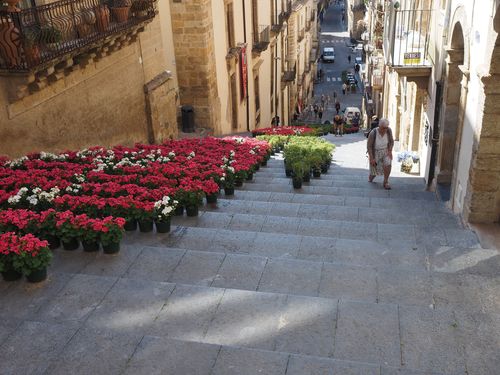
Caltagirone • Staircase of Santa Maria del Monte
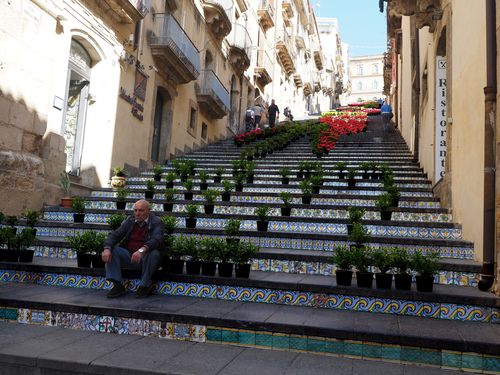
Caltagirone • Staircase of Santa Maria del Monte
Monument profile
Staircase of Santa Maria del Monte
Monument category: Monumental staircase
Monument family: Civil engineering structures (bridges, wells, etc.) and factories
Monument genre: Economic
Geographic location: Caltagirone • Sicily • Italy
Construction period: 17th century AD
• Links to •
• List of videos about Caltagirone on this site •
Caltagirone, capital of ceramics, Sicily • Italy
• References •
Wikipedia EN: Staircase of Santa Maria del Monte
Political and Social Motivations Behind Its Construction
The Staircase of Santa Maria del Monte, located in Caltagirone, Sicily, was constructed in 1606. Its primary purpose was to connect the upper and lower parts of the city, improving accessibility and integrating the urban landscape. Beyond its practical utility, the staircase also served as a statement of political and social cohesion, symbolizing the unity of a community divided by geography. By linking the historical core of the city with its newer districts, the staircase facilitated religious, social, and commercial interactions.
Politically, the staircase highlighted the influence of local rulers in enhancing urban infrastructure, asserting their authority through monumental public works. Socially, it played a role in fostering unity, particularly during religious processions, which often used the staircase as a ceremonial route to the Church of Santa Maria del Monte at the top.
Historical Events and Their Impact
The Staircase of Santa Maria del Monte has undergone significant transformations over the centuries, reflecting the cultural and political shifts in Sicily.
- Construction Period (17th Century): Built under Spanish rule, the staircase was part of a broader effort to modernize Sicilian cities while emphasizing their religious and cultural importance. Its alignment with the church at the summit underscored its dual role as a functional and spiritual axis.
- 19th Century Enhancements: While no significant structural changes occurred during this time, the staircase began to gain recognition for its symbolic value, aligning with Sicily’s growing awareness of its cultural identity.
- Decorative Transformation (1954): Under the leadership of Mayor Luigi Sturzo, the staircase was adorned with ceramic tiles crafted in local workshops. These tiles featured motifs spanning various historical styles—Arab, Norman, Spanish, Renaissance, and Baroque—representing Sicily’s rich and diverse cultural heritage. This addition not only elevated the staircase’s aesthetic appeal but also celebrated Caltagirone’s reputation as a center of ceramic craftsmanship.
- Modern Celebrations and Tourism:Today, the staircase is central to events like the Scala Infiorata (decorations with flowers) and the Scala Illuminata (lighting with oil lamps), reinforcing its role as a cultural and tourist landmark.
Context in the Global Landscape
During the 17th century, Europe experienced significant urban transformations, often driven by political and religious motivations. The construction of monumental staircases and public spaces was common:
In France, urban projects like the Staircase of Montée Saint-Barthélemy in Lyon connected different parts of the city while reflecting religious influences.
In Spain, the grand staircases of Toledo highlighted the integration of Islamic, Christian, and Gothic elements.
In Italy, projects like the Spanish Steps in Rome similarly combined urban functionality with artistic expression.
The Staircase of Santa Maria del Monte stands out for its later addition of ceramic tiles, creating a unique blend of functionality, art, and tradition.
Transformations and Current Condition
Over the centuries, the staircase has transformed from a utilitarian structure into a cultural and artistic icon. Key transformations include:
The addition of ceramic tiles in 1954, creating a visual narrative of Sicily’s history through intricate designs.
Periodic restorations to maintain the structure’s stability and preserve the delicate ceramic artwork.
Today, the staircase remains in good condition, largely due to continuous conservation efforts. However, it faces challenges related to environmental and human pressures.
Preservation Challenges
Despite its well-maintained state, the staircase is not immune to modern threats:
Environmental Factors: Exposure to weather and pollution accelerates the wear on the tiles and stone structure.
Tourism Impact: Heavy foot traffic during events and peak tourist seasons can cause physical damage.
Financial Constraints: Ensuring regular maintenance and funding large-scale restoration projects requires significant resources.
Urbanization: Changes in the surrounding environment, including increased development, can impact the staircase’s historical context.
Conclusion
The Staircase of Santa Maria del Monte is more than an architectural marvel; it is a living testament to the history, culture, and craftsmanship of Caltagirone and Sicily. Its evolution from a practical urban connection to a celebrated artistic and cultural symbol underscores its enduring importance. Preserving this monument is crucial not only for Caltagirone but also for the global appreciation of Sicily’s unique heritage. With ongoing conservation efforts and responsible tourism, this iconic staircase will continue to inspire and captivate future generations.
Architectural features
The Santa Maria del Monte Staircase: A Fusion of Architecture, Craftsmanship, and Cultural Heritage
Architectural Innovation and Technological Advances
The Santa Maria del Monte Staircase in Caltagirone, Sicily, built in 1606, is an exemplary piece of urban engineering and artistic design. Its construction demonstrated advanced techniques for managing the steep terrain between the lower and upper parts of the city. The staircase was constructed primarily using local limestone, chosen for its durability and ease of carving, allowing for both structural stability and aesthetic enhancements.
The design ensured not only functionality but also grandeur. The staircase's linear alignment and the evenly spaced steps were meticulously planned to facilitate both pedestrian use and ceremonial processions. Its integration into the existing urban layout reflects an understanding of both the natural topography and the social importance of connecting the sacred and secular parts of the city.
Materials and Decorative Techniques
In 1954, the staircase underwent a remarkable transformation when ceramic tiles were added to its 142 risers, making it an iconic landmark. These tiles were crafted using traditional local clay, glazed and fired in kilns operated by skilled artisans of Caltagirone, a town renowned for its ceramic tradition. The tiles display a variety of motifs:
- Floral and geometric designs, inspired by Arab and Norman influences.
- Figurative depictions of religious and historical themes, echoing Renaissance and Baroque styles.
- Vivid polychromatic patterns, showcasing a blend of Sicilian and Spanish artistic legacies.
The use of ceramic tiles not only added aesthetic value but also symbolized the resilience of Caltagirone's craft heritage. The intricate designs narrate a story of the island's rich cultural history, making the staircase a visual representation of Sicily's diverse influences.
Structure and Notable Features
The staircase spans a total length of over 130 meters, with its 142 steps divided into visually distinct sections. This segmentation is achieved through the use of varying decorative styles on the tiles, creating a rhythmic interplay of colors and patterns. The staircase is uniquely symmetrical, emphasizing balance and harmony in its design.
An interesting anecdote about its use is its role in religious processions, where the staircase served as a stage for ceremonies leading to the Church of Santa Maria del Monte at its summit. These processions underscore the staircase's dual role as a functional and symbolic structure.
A Unique Blend of Traditions and External Influences
The staircase is a testament to the integration of regional artistry with external influences. Its decorative elements reflect the island’s history as a cultural crossroads, influenced by:
- Arab craftsmanship, evident in the geometric motifs.
- Norman architectural principles, visible in the structural simplicity.
- Spanish and Renaissance aesthetics, particularly in the detailed patterns and themes of the tiles.
This blend highlights the adaptability of Sicilian artisans in embracing and incorporating diverse styles into a cohesive, local identity.
Recognition and Global Significance
While the Santa Maria del Monte Staircase is not individually listed as a UNESCO World Heritage Site, its craftsmanship and cultural significance contribute to the recognition of Caltagirone as a center of ceramic artistry. This reputation has attracted international visitors and researchers, enhancing the global appreciation of Sicilian heritage.
The staircase plays a central role in local cultural events, such as:
Scala Infiorata, where the steps are adorned with intricate floral patterns.
Scala Illuminata, featuring thousands of oil lamps arranged to create illuminated designs, particularly during religious festivals.
These events have cemented the staircase's status as a cultural and artistic landmark.
Conservation Challenges
Despite its significance, the staircase faces several challenges in maintaining its integrity:
Environmental factors: Weathering and pollution pose a threat to the ceramic tiles and limestone structure.
Tourism impact: High foot traffic during events and throughout the year increases wear and tear.
Funding constraints: The preservation of the tiles, many of which require meticulous restoration, demands substantial financial resources.
Urban development pressures: Changes in the surrounding environment risk altering the historical context of the staircase.
Conclusion
The Santa Maria del Monte Staircase is a masterpiece of urban and artistic ingenuity that bridges functionality, aesthetics, and cultural heritage. Its architecture and decorative elements encapsulate centuries of Sicilian history and reflect the island’s role as a melting pot of civilizations. Ensuring its preservation is vital not only for the local community but also for the global appreciation of this unique cultural and architectural landmark.