

 Français (France)
  Nederlands (nl-NL)
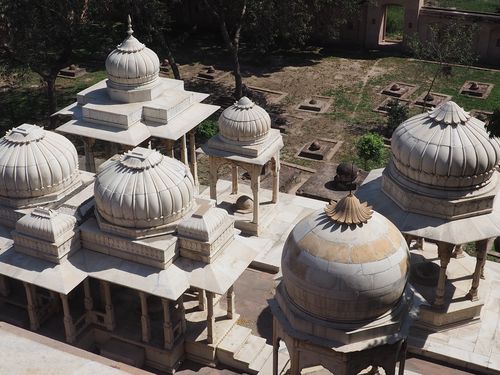
 The Shahi Samadhan Mausoleum, located in Patiala, Punjab, India, is a significant monument dedicated to the memory of the rulers of the Patiala royal dynasty, which belonged to the Phulkian family. This burial site serves as a symbol of respect and reverence, attracting both locals and visitors interested in the history of the region. The Shahi Samadhan is a vital part of Patiala's cultural heritage, reflecting the importance of the royal dynasty in the history of Punjab.


Monument profile
Shahi Samadhan Mausoleum
Monument category: Mausoleum
Monument family: Tomb, Necropolis, Mausoleum or Cenotaph
Monument genre: Funerary
Cultural heritage: Sikh
Geographic location: Patiala • Punjab • India
Construction period: 18th century AD
• Links to •
• Dynasties that contributed to the construction of the monument •

• List of videos about Patiala on this site •
Patiala, the splendours of the past • Punjab, India
Shahi Samadhan Mausoleum: Political and Social Motivations Behind Its Construction and Historical Significance
The Shahi Samadhan Mausoleum in Patiala, Punjab, India, stands as a testament to the political and social aspirations of the Phulkian dynasty during the 19th century. This monument, built to honor the rulers of Patiala, reflects the intricate interplay of power, culture, and identity during a time of significant change in the region and the world.
Political and Social Motivations Behind the Construction
The construction of the Shahi Samadhan Mausoleum began in the mid-19th century, during a period when the rulers of Patiala sought to solidify their authority and legacy amid the growing influence of the British Empire in India. The mausoleum was not just a burial site; it was a statement of the dynasty’s enduring power, cultural importance, and their role as protectors of Sikhism and Punjabi culture. By erecting this grand structure, the rulers of Patiala aimed to reinforce their legitimacy and ensure that their memory would be preserved for generations.
Historical Events and Their Impact on the Region
The 19th century was a tumultuous time for the Indian subcontinent, marked by the increasing dominance of the British East India Company and later direct British rule following the Indian Rebellion of 1857. The Shahi Samadhan Mausoleum was constructed during this era, reflecting the desire of the Patiala rulers to assert their autonomy and cultural identity in the face of colonial pressures. The site became a focal point for the local population, symbolizing both the spiritual and temporal power of the Phulkian dynasty.
Global Context and Comparisons
Globally, the 19th century was a period of empire-building and nation-state formation. In Europe, monumental architecture was often used to legitimize power and foster national identity, much like in Patiala. For example, in France, the Arc de Triomphe was constructed to commemorate Napoleon's victories and solidify his legacy. Similarly, in the United States, the construction of the Washington Monument aimed to honor the country's first president and unify the young nation. The Shahi Samadhan Mausoleum, in this context, served a similar purpose for the Phulkian rulers, embedding their legacy within the cultural and religious landscape of Punjab.
Transformations and Cultural Influences
Over the centuries, the Shahi Samadhan Mausoleum has undergone several transformations, both architecturally and in terms of its cultural significance. These changes reflect shifts in power, cultural exchanges, and evolving political landscapes. The architectural style of the mausoleum integrates elements of Mughal, Sikh, and regional Punjabi architecture, showcasing a blend of local traditions and external influences. These transformations highlight the adaptive nature of the monument, as it absorbed and reflected the cultural currents of each era.
Cultural Importance and Current State of Conservation
Today, the Shahi Samadhan Mausoleum remains a vital cultural and historical landmark in Patiala. It stands as a symbol of the region’s rich heritage and the enduring legacy of the Phulkian rulers. However, the mausoleum faces significant conservation challenges. Environmental factors such as pollution and climate change, coupled with urbanization pressures, threaten its structural integrity. Preservation efforts are crucial to maintaining the historical and cultural significance of the site, requiring a balance between modern conservation techniques and traditional restoration practices.
Preservation Challenges and Modern Threats
The Shahi Samadhan Mausoleum, like many historical structures, is vulnerable to modern threats. Urban expansion, environmental degradation, and limited funding for conservation efforts pose significant risks to its long-term preservation. Addressing these challenges requires a concerted effort from local authorities, historians, and conservationists to ensure that this monument continues to be a source of cultural pride and historical insight for future generations.
In conclusion, the Shahi Samadhan Mausoleum is more than just a burial site; it is a symbol of political power, cultural identity, and historical continuity in Patiala. Its construction was driven by the desire of the Phulkian rulers to assert their legacy in a rapidly changing world, and its preservation is essential to keeping that legacy alive. The challenges it faces today underscore the importance of sustained conservation efforts to protect this invaluable piece of history.
Architectural Innovation and Technological Advancement in the Shahi Samadhan Mausoleum of Patiala
The Shahi Samadhan Mausoleum in Patiala, India, stands as a testament to the architectural ingenuity and technological advancement of the Sidhu Jats during the 19th century. This monument, constructed to honor the rulers of the Phulkian dynasty, exemplifies the sophisticated use of materials and construction techniques that were employed to reflect the grandeur and power of the era.
Materials and Construction Techniques
The Shahi Samadhan Mausoleum was built using high-quality materials such as sandstone, marble, and lime mortar. Sandstone, sourced locally, was extensively used for the structure's exterior, providing durability and a majestic appearance. Marble was used for intricate inlays and ornamental work, adding a layer of refinement and elegance to the monument. The use of lime mortar in construction not only ensured the structural integrity of the building but also allowed for the creation of elaborate stucco decorations that adorned the walls and ceilings.
One of the most significant technological advancements of the time reflected in the mausoleum is the use of load-bearing arches and domes. The central dome, a hallmark of the mausoleum’s design, is a feat of engineering, showcasing the Sidhu Jats' mastery over large-scale construction. The dome’s precise curvature and the method of its construction demonstrate an advanced understanding of weight distribution and architectural symmetry.
Architectural Features and Cultural Synthesis
The Shahi Samadhan Mausoleum is a fusion of various architectural styles, blending regional artistic traditions with external influences. The structure features elements of Mughal architecture, such as the grand arches and domes, combined with local Punjabi styles, characterized by floral motifs and geometric patterns. This blend of styles is particularly evident in the intricate jali (lattice) work and the ornamental detailing found throughout the monument.
The mausoleum’s facade is adorned with intricate carvings that incorporate both Persian and Hindu motifs, reflecting the cultural exchanges that were prevalent in the region during the 19th century. The decorative elements, including calligraphy in Arabic and Persian script, further highlight the influence of Islamic art, while the layout of the mausoleum is reminiscent of traditional Sikh religious structures, with a central space for prayer surrounded by smaller chambers.
Notable Structure and Design
One of the most remarkable features of the Shahi Samadhan Mausoleum is its symmetrical layout centered around the main dome. The dome itself is flanked by four smaller minarets, each meticulously designed to balance the overall structure. The mausoleum’s interior is equally impressive, with a spacious central chamber that houses the tombs of the royal family, surrounded by elaborately decorated corridors.
The central dome, rising high above the structure, serves as both a visual focal point and a symbol of the spiritual and temporal power of the rulers it commemorates. The use of a symmetrical design reflects the influence of classical Mughal architecture, while the incorporation of local stylistic elements gives the mausoleum a unique identity that is both regional and cosmopolitan.
Anecdotes and Statistics
It is said that the construction of the Shahi Samadhan Mausoleum involved artisans and craftsmen from across the Indian subcontinent, reflecting the importance of the project to the Patiala rulers. The construction process, which spanned several years, required meticulous planning and coordination, particularly in the execution of the dome and the intricate marble inlay work. The monument has since become a significant landmark, attracting visitors not only for its historical importance but also for its architectural splendor.
Recognition and Conservation
While the Shahi Samadhan Mausoleum has not been inscribed as a UNESCO World Heritage Site, it has garnered recognition for its architectural and cultural significance. The monument's design and construction are studied by architects and historians alike, offering insights into the technological capabilities and artistic sensibilities of the Sidhu Jats. The mausoleum’s recognition has prompted efforts to preserve and restore the site, though challenges such as environmental degradation and urban encroachment continue to pose threats.
The lack of UNESCO status means that the mausoleum relies on local and national initiatives for its preservation. These efforts are crucial in maintaining the monument’s structural integrity and ensuring that it continues to be a source of pride for the region. The ongoing conservation work aims to protect the mausoleum’s unique architectural features while making it accessible to future generations.
In conclusion, the Shahi Samadhan Mausoleum is a shining example of the architectural innovation and cultural synthesis that characterized the Sidhu Jats' era. Its construction not only reflects the technological advancements of the time but also serves as a lasting symbol of the dynasty’s legacy. The monument’s preservation is essential to safeguarding this heritage, allowing it to continue inspiring admiration and respect on a global scale.