

 Français (France)
  Nederlands (nl-NL)
 The Royal Palace in Leh, located in India's Ladakh state, is a prominent structure that reflects the region's rich cultural heritage. Built in the 17th century, this stone-and-wood building offers a stunning view of Leh town and its mountainous surroundings. Once the residence of Ladakh's kings, it showcases the influence of Buddhist and Tibetan traditions in its architecture and decorations. Today, it is open to visitors and houses a museum featuring ancient artifacts, paintings, and manuscripts related to the area's history.
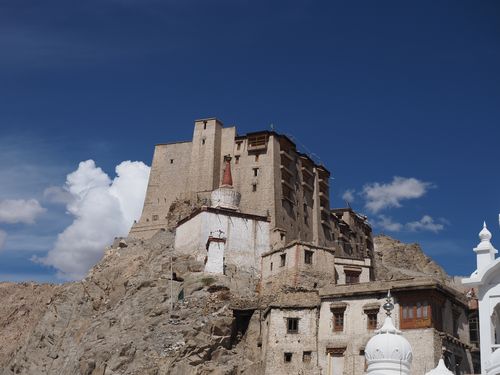
Leh • Royal Palace
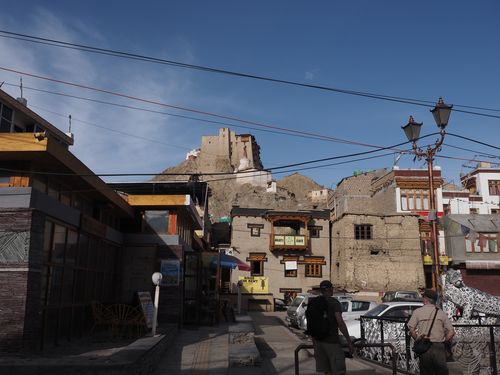
Leh • Royal Palace
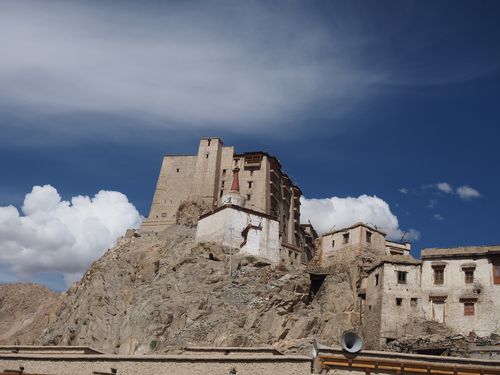
Leh • Royal Palace
Monument profile
Royal Palace
Monument category: Palace
Monument family: Palace and Annexes
Monument genre: Residential
Cultural heritage: Buddhist
Geographic location: Leh • Ladakh • India
Construction period: 17th century AD
• Links to •
• Dynasties that contributed to the construction of the monument •

• List of videos about Leh on this site •
Leh, the capital of Ladakh • India
The Royal Palace of Leh: A Symbol of Power, Culture, and Resilience
The Royal Palace of Leh, constructed in the 17th century during the reign of King Sengge Namgyal, stands as a testament to the political ambition and cultural richness of the Ladakh region in northern India. Its construction was driven by a blend of political and social motivations, reflecting both the need for a secure royal residence and a symbol of the Namgyal dynasty's authority. Situated strategically along ancient trade routes connecting India, Tibet, and Central Asia, the palace underscored Leh's importance as a political and economic hub.
Political and Social Motivations Behind Construction
The primary motive for building the Royal Palace was to establish a fortified and centralized seat of power for the Namgyal kings. The location provided a commanding view of the Leh valley, enhancing the monarch's ability to oversee the region. Socially, the palace symbolized the consolidation of Ladakhi identity and served as a focal point for religious and cultural activities, including Buddhist ceremonies and festivals.
The palace also acted as a visual assertion of Ladakh's independence amid external pressures from the Mughal Empire to the south and Tibet to the east. Its grandeur reflected the Namgyal dynasty's aspirations to project stability and prosperity in a geopolitically volatile era.
Historical Context and Global Comparison
The 17th century marked a period of significant transformation globally. In Asia, empires like the Mughals, Ottomans, and Qing were consolidating power, while Europe was witnessing the rise of centralized monarchies and the dawn of colonial expansion. The Royal Palace of Leh, though less monumental than structures like the Taj Mahal in India or Versailles in France, shared a common purpose: to symbolize authority and foster cultural cohesion.
In Ladakh, the palace's construction coincided with increased interaction between Tibet, India, and Central Asia. This interaction influenced not only trade but also cultural exchanges, evident in the architectural and artistic elements of the palace.
Major Historical Events and Transformations
The palace was a key player in the region's political history. In 1834, Ladakh was annexed by the Dogras, leading to a decline in the Namgyal dynasty's influence. This event marked the beginning of the palace's transformation from a royal residence to an abandoned structure. Over time, its significance as a political center waned, but its cultural and historical importance endured.
In subsequent centuries, natural decay and lack of maintenance contributed to the deterioration of the palace. However, restoration efforts in the 20th and 21st centuries have sought to stabilize the structure and preserve its historical and cultural artifacts.
Architectural Transformations and External Influences
The architecture of the Royal Palace reflects both regional traditions and external influences. Built with locally sourced materials like stone, wood, and mud bricks, its design showcases an adaptation to the harsh Himalayan climate. The structure, inspired by the Potala Palace in Lhasa, demonstrates the strong cultural ties between Ladakh and Tibet.
The palace's design evolved over time, influenced by changing rulers and external cultural exchanges. This transformation mirrors the broader political and cultural shifts in the region, highlighting its role as a bridge between South and Central Asia.
Cultural Importance and Current State of Preservation
Today, the Royal Palace is celebrated as a cultural and historical landmark. Though it has not been inscribed as a UNESCO World Heritage Site, it remains a significant attraction, drawing scholars, tourists, and pilgrims alike. Restoration efforts, led by local and international organizations, have focused on preserving its murals, woodwork, and overall structural integrity.
Challenges in Preservation
The palace faces several modern threats, including environmental degradation, seismic activity, and the pressures of tourism. Limited funding and expertise further complicate conservation efforts. Balancing the needs of the local community with heritage preservation remains a critical challenge.
Conclusion
The Royal Palace of Leh is more than an architectural marvel; it is a symbol of Ladakh's political history, cultural syncretism, and resilience. Its story reflects the region's unique role in connecting diverse cultures and traditions. As efforts to preserve this iconic structure continue, it stands as a reminder of the importance of safeguarding heritage in the face of modern challenges.
Architectural Brilliance of the Royal Palace in Leh: Innovation, Craftsmanship, and Cultural Syncretism
The Royal Palace of Leh, built in the 17th century under the rule of King Sengge Namgyal, is a remarkable testament to the technological advancements and architectural ingenuity of the Namgyal era. Positioned in the high-altitude region of Ladakh, this monumental structure not only reflects the grandeur of its time but also illustrates a unique blend of regional and foreign artistic influences.
Technological and Structural Innovations of the Namgyal Era
The architecture of the Royal Palace of Leh showcases advanced construction techniques that were remarkably suited to the harsh Himalayan environment. Local materials such as stone, timber, and sun-dried mud bricks were skillfully utilized to create a structure that was both resilient and aesthetically impressive.
The palace's walls, built with thick layers of rammed earth, provided insulation against the extreme temperatures of the region. The use of wooden beams for floors and ceilings added flexibility to the structure, a crucial feature for withstanding seismic activity in this earthquake-prone zone. Additionally, the terraced design and strategic placement of windows maximized sunlight and ventilation, reflecting an understanding of environmental dynamics.
The Notable Structure and Layout
Inspired by the Potala Palace in Lhasa, the Royal Palace of Leh is a nine-story building designed to reflect both functional and symbolic aspects of Ladakhi royalty. The uppermost floors housed the royal family, while the lower levels were used for administrative purposes and storage. This hierarchical organization of space emphasized the status and authority of the Namgyal kings.
The terraces and balconies provided panoramic views of the surrounding Leh valley and the Zanskar mountain range, underscoring the palace's strategic significance. The central courtyard served as a focal point for public ceremonies, reflecting the integration of governance, culture, and community life.
Aesthetic and Cultural Syncretism
The Royal Palace is a compelling example of cultural syncretism, blending Ladakhi, Tibetan, and Central Asian influences. The motifs and frescoes adorning the walls draw heavily from Tibetan Buddhist traditions, featuring depictions of deities, mandalas, and religious symbols. These artistic elements not only highlight the spiritual importance of Buddhism but also underscore Ladakh's historical ties to Tibetan culture.
Decorative wooden carvings, niches, and door frames reflect the craftsmanship of Ladakhi artisans, showcasing intricate designs unique to the region. Simultaneously, the layout and scale of the palace reveal external influences, particularly from Central Asian and Mughal architectural styles encountered through trade and diplomacy.
Noteworthy Anecdotes and Construction Statistics
Historical records suggest that the palace was constructed in approximately three years, a feat accomplished through the efficient mobilization of local resources and skilled labor. The speed of construction highlights the organizational capabilities of the Namgyal court and the expertise of its architects and workers.
Legend has it that the palace's commanding position was chosen not just for strategic reasons but also to symbolize the unification of Ladakh under Sengge Namgyal's rule. This vision was reinforced by the palace's design, which projected authority and cultural sophistication.
Contribution to International Recognition
Although the Royal Palace of Leh is not a UNESCO World Heritage Site, it is a significant cultural landmark, attracting scholars, pilgrims, and tourists from around the world. Its architectural and historical value has led to increased efforts to preserve and promote it as a symbol of Ladakhi heritage. The palace is often included in studies and exhibitions focusing on Himalayan art and architecture, further solidifying its international reputation.
Current Conservation Efforts and Challenges
Over the centuries, the palace has faced degradation due to natural wear, neglect, and environmental factors such as severe weather and earthquakes. Restoration projects, led by local and international organizations, have focused on stabilizing the structure and preserving its murals and woodwork.
Modern challenges include balancing tourism with preservation. The influx of visitors poses risks to the delicate interiors, while limited funding and expertise hinder large-scale restoration. Climate change and its impact on the region's fragile ecosystem add another layer of complexity to conservation efforts.
Conclusion
The Royal Palace of Leh is a masterful blend of technological innovation, cultural syncretism, and architectural grandeur. Its design, materials, and motifs encapsulate the spirit of the Namgyal era, making it a key symbol of Ladakh's historical and cultural legacy. As restoration efforts continue, the palace remains a beacon of resilience and an enduring testament to the ingenuity of Himalayan architecture.