

 Français (France)
  Nederlands (nl-NL)
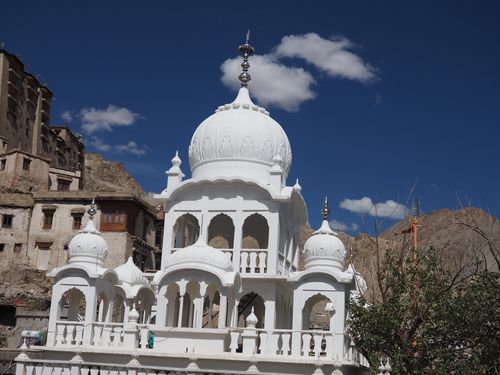
 Gurdwara Sri Datun Sahib is a Sikh place of worship located in Leh, Ladakh, India. Dedicated to Guru Nanak, the founder of Sikhism, it is said that he visited this area in the 16th century. Positioned in the Himalayas, the gurdwara offers a serene setting for meditation and prayer. It attracts visitors who come to pay their respects and enjoy the surrounding natural beauty of Leh. Gurdwara Sri Datun Sahib acts as a spiritual hub for the local Sikh community and welcomes pilgrims from across India.


Monument profile
Gurdwara Sri Datun Sahib
Monument categories: Gurdwara, Sikh temple
Monument families: Temple • Gurdwara
Monument genres: Religious
Cultural heritage: Sikh
Geographic location: Leh • Ladakh • India
Construction period: 15th century AD
• Links to •
• This monument illustrates the following theme •
Temples • Gurdwaras : Sikh temples in India
• List of videos about Leh on this site •
Leh, the capital of Ladakh • India
The Historical and Cultural Significance of Gurdwara Sri Datun Sahib in Leh
Foundational Motivations and Construction Era
The Gurdwara Sri Datun Sahib in Leh, Ladakh, was established in memory of Guru Nanak, the founder of Sikhism, who is believed to have visited the region during his spiritual journeys in the early 16th century. The primary motivations for constructing this Gurdwara were both social and spiritual, aiming to provide a sanctuary for prayer and to spread the teachings of Sikhism in the Himalayan region. This period marked an era of religious and cultural proliferation in India, mirrored globally by the Renaissance in Europe, the rise of the Aztec and Inca civilizations in the Americas, and the Ming dynasty's advancements in China.
Historical Events and Regional Influence
Throughout its history, Gurdwara Sri Datun Sahib has witnessed significant events that reflect the political and social dynamics of the region. The spread of Sikhism in Northern India, including Ladakh, often paralleled the Mughal empire's expansion and later conflicts, which significantly influenced the region's cultural and religious landscape. As a spiritual site, the Gurdwara played a crucial role in maintaining community cohesion and resilience against external influences and internal strife.
Architectural Transformations and External Influences
The architecture of Gurdwara Sri Datun Sahib has undergone several transformations over the centuries, each reflecting the shifting power dynamics and external cultural influences. Originally simple in design, the Gurdwara evolved to include more elaborate decorative elements and structural expansions, indicative of the increasing influence of Sikh architecture as seen in other parts of India. These changes not only demonstrate technological advancements but also symbolize the enduring nature of Sikh heritage amidst diverse cultural pressures.
Cultural Significance and Conservation Status
Today, Gurdwara Sri Datun Sahib stands as a beacon of Sikh culture and history. Its significance extends beyond its immediate geographical location, offering insights into the broader cultural interchanges within the Himalayan region. The current state of conservation of the Gurdwara is satisfactory, with ongoing efforts to maintain its structural integrity and historical authenticity. However, modern threats such as climate change, increased tourism, and urban development pose significant challenges to its preservation.
Preservation Challenges and Global Context
Preserving Gurdwara Sri Datun Sahib's historical integrity involves combating both environmental and anthropogenic threats. The region's increasing popularity as a tourist destination has led to concerns over sustainable visitation practices and infrastructure development that could undermine the Gurdwara's historical context and physical structure. These challenges are not unique to Leh; they mirror global struggles to balance heritage conservation with contemporary development, as seen in similar cases around the world.
Conclusion
In conclusion, Gurdwara Sri Datun Sahib is not just an architectural relic but a living monument that continues to serve as a spiritual haven and a cultural landmark in Leh. Reflecting the complex tapestry of historical influences and the resilience of the Sikh community, it stands as a testament to the enduring power of faith and tradition in shaping human history. Its ongoing preservation is crucial not only for maintaining its cultural and historical significance but also for educating future generations about the rich heritage of Ladakh and the broader Sikh diaspora.
Architectural Mastery at Gurdwara Sri Datun Sahib: A Fusion of Innovation and Tradition
Technological Innovation and Construction Techniques
The Gurdwara Sri Datun Sahib in Leh, India, stands as a testament to the architectural innovation of its time. Constructed during a period when the region was a crossroads of trade and cultural exchange, the Gurdwara reflects advanced building techniques adapted to the challenging Himalayan environment. Specific materials used in its construction include locally sourced stone and wood, chosen for their durability and natural insulation properties. These materials not only catered to the practical needs of thermal comfort and structural stability but also mirrored the grandeur of the era, emphasizing the importance of the site as a spiritual and community center.
Architectural Features and Cultural Blending
The architecture of Gurdwara Sri Datun Sahib showcases a remarkable blend of regional artistic traditions and foreign influences. The structure features a combination of Tibetan and Islamic architectural elements, evident in the use of pointed arches and intricate wood carvings that adorn the façade and interior halls. These elements are not merely decorative; they are symbolic of the Gurdwara's role in bridging diverse cultural practices. The layout of the Gurdwara, centered around a main prayer hall with surrounding courtyards, facilitates both religious ceremonies and communal gatherings, reflecting the social dynamics of the time.
Notable Structure and Construction Anecdotes
One of the most notable aspects of the Gurdwara's architecture is its strategic design, which incorporates features tailored to the extreme weather conditions of Leh. The thick walls and small, recessed windows minimize heat loss during the harsh winters, while the spacious courtyard serves as a communal area during the milder summer months. Anecdotal evidence suggests that the construction of the Gurdwara was a communal effort, involving artisans and volunteers from various parts of India, showcasing a collective endeavor that transcends regional boundaries.
Contribution to International Recognition
While Gurdwara Sri Datun Sahib is not currently listed as a UNESCO World Heritage Site, its architectural significance and historical importance contribute greatly to its recognition on an international level. The unique fusion of architectural styles, along with its historical role as a spiritual sanctuary, makes it a subject of interest among historians, architects, and scholars from around the world. The Gurdwara’s design and construction reflect a period of rich cultural synthesis and technological advancement, making it an invaluable piece of India's cultural heritage.
Impact of Global Recognition on Conservation
Although not inscribed by UNESCO, the global recognition of Gurdwara Sri Datun Sahib has heightened awareness regarding its preservation. This awareness is crucial for mobilizing resources and expertise necessary to maintain the structural integrity and aesthetic value of the Gurdwara, ensuring that it continues to serve as a beacon of cultural pride and historical legacy. The attention helps in advocating for sustainable tourism practices and conservation measures that respect the site’s historical context while accommodating the needs of modern-day visitors.
Conclusion
The Gurdwara Sri Datun Sahib's architecture is a narrative of innovation, reflecting the technological advancements of its era through material use and construction techniques. Its design—a blend of local and foreign influences—illustrates the region's historical role as a cultural melting pot. While global recognition has its advantages in terms of conservation efforts, the true value of Gurdwara Sri Datun Sahib lies in its continued role as a center for spiritual reflection and cultural dialogue, preserving its legacy for future generations.