

 Français (France)
  Nederlands (nl-NL)
 The Lodravpur Parshavnath Temple, located near Jaisalmer in Rajasthan, India, is a significant Jain religious site. Dedicated to Parshavnath, the 23rd Tirthankara of Jainism, the temple serves as both a place of pilgrimage for devotees and a prominent representation of Jain spirituality in the region. It reflects centuries of religious devotion and cultural patronage that have shaped the local heritage. The temple remains a point of attraction for its spiritual importance and cultural significance.
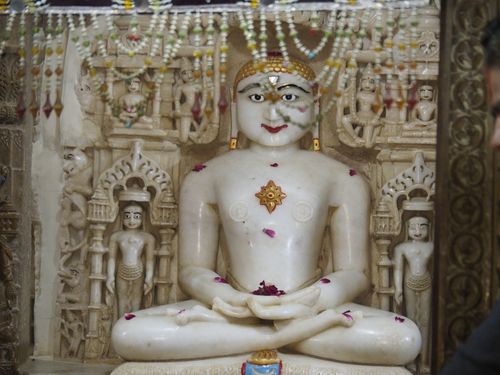
Jaisalmer • Lodravpur Parshavnath Temple: Parshvanath, 23rd Tirthankara
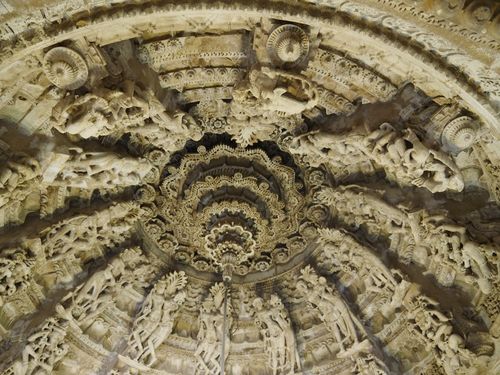
Jaisalmer • Lodravpur Parshavnath Temple: ceiling
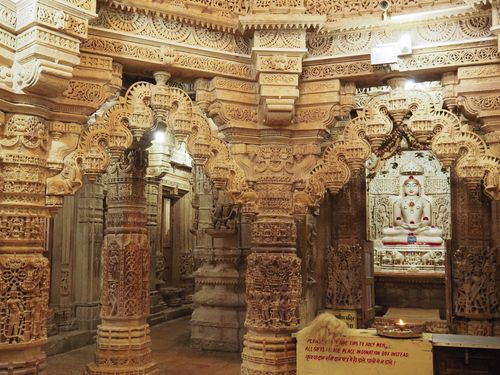
Jaisalmer • Lodravpur Parshavnath Temple: columns and statue of Thirhankara
Monument profile
Lodravpur Parshavnath Temple
Monument category: Jain temple
Monument family: Temple
Monument genre: Religious
Cultural heritage: Jain
Geographic location: Jaisalmer • Rajasthan • India
Construction period: 11th century AD
• Links to •
• Dynasties that contributed to the construction of the monument •


• List of videos about Jaisalmer on this site •
Jaisalmer, the Golden City • Rajasthan, India
The Lodravpur Parshavnath Temple: A Testament to Political, Social, and Cultural Dynamics in Rajasthan
Political and Social Motivations Behind its Construction
The Lodravpur Parshavnath Temple, located near Jaisalmer, India, was constructed during a period when the Bhati Rajput dynasty ruled the region. The temple’s creation was deeply intertwined with the socio-political dynamics of the time. It served as a symbol of the alliance between the Rajput rulers and the influential Jain merchant communities, who played a vital role in the region’s thriving economy.
Politically, the temple demonstrated the Rajput rulers' patronage of religious and cultural institutions, reinforcing their legitimacy and status as protectors of diverse faiths. Socially, it provided a spiritual hub for the Jain community, integrating them into the region’s political and cultural framework while allowing them to showcase their wealth and influence.
Construction Date and Historical Context
The origins of the temple are debated, with some sources suggesting its construction in the 11th century when Lodurva was the Bhati Rajputs' capital, while others argue for a 15th-century timeline, likely tied to significant reconstruction efforts following invasions. The temple’s history reflects a duality, with earlier structures serving as the foundation for later renovations and expansions.
This period was marked by frequent invasions, including those by Muslim rulers, which led to the partial destruction and subsequent rebuilding of the temple. These cycles of destruction and restoration highlight the resilience of both the Jain community and the region's cultural heritage.
Global Context and Comparisons
Globally, the period of the temple’s initial construction or reconstruction corresponds to significant architectural developments in other parts of the world:
In Europe, Romanesque cathedrals were emerging, emphasizing religious grandeur and engineering innovation.
In China, the Song Dynasty saw the construction of elaborate Buddhist temples, showcasing intricate craftsmanship and spiritual devotion.
Like its global counterparts, the Lodravpur Parshavnath Temple demonstrates how religious architecture served as a medium for both spiritual expression and the consolidation of political power.
Transformations Over the Centuries
The temple has undergone numerous transformations reflecting shifts in power and cultural influences:
- Invasions and Reconstructions: Raids by Muslim rulers led to significant damage, prompting later generations to restore the temple, incorporating new architectural elements while retaining its original spirit.
- Cultural Assimilation: Restorations introduced elements influenced by Islamic aesthetics, such as floral and geometric motifs, blended seamlessly with traditional Jain iconography.
- Tourism and Modernization: In recent decades, the temple has adapted to serve as both a religious site and a tourist attraction, with modifications to improve accessibility and visibility.
These transformations underscore the temple’s ability to adapt to changing circumstances while maintaining its cultural and spiritual significance.
Cultural Importance and Current Conservation Status
Today, the Lodravpur Parshavnath Temple remains a vital symbol of Jain heritage and Rajput patronage. Its ornate sculptures, intricate carvings, and spiritual ambiance attract both pilgrims and tourists. However, its preservation faces significant challenges:
- Environmental factors: The arid climate of the Thar Desert causes gradual erosion of the sandstone structures.
- Tourism impact: Increased foot traffic risks damaging delicate carvings and structures.
- Resource limitations: A lack of consistent funding and expertise hampers large-scale conservation efforts.
Despite these challenges, local communities and organizations have worked to preserve the temple, emphasizing its historical and cultural value.
Challenges to Historical Integrity and Modern Threats
The temple’s historical integrity is threatened by several modern factors:
- Urbanization and Development: Encroaching infrastructure projects pose risks to the site’s surrounding environment.
- Loss of Traditional Skills: The decline in artisans skilled in traditional restoration techniques makes it difficult to maintain the temple authentically.
- Lack of International Recognition: Without designation as a UNESCO World Heritage Site, the temple lacks access to global conservation resources and awareness.
Conclusion
The Lodravpur Parshavnath Temple is not only a masterpiece of Jain and Rajput architecture but also a testament to the resilience of cultural heritage in the face of adversity. Its history, marked by cycles of destruction and renewal, reflects the dynamic interplay of politics, religion, and culture in Rajasthan. To ensure its preservation for future generations, increased attention to conservation, possibly bolstered by international recognition, is essential. The temple stands as a powerful symbol of the enduring legacy of Rajasthan’s rich cultural past.
Architectural features
Lodravpur Parshavnath Temple: A Testament to Rajput-Era Architectural Innovation and Craftsmanship
Technological Advancements and Innovations of the Rajput Era
The Lodravpur Parshavnath Temple near Jaisalmer exemplifies the technological ingenuity and architectural brilliance of the Rajput era. Constructed primarily from the locally sourced yellow sandstone of the Thar Desert, the temple reflects an advanced understanding of material properties and climate adaptability. The choice of sandstone, known for its durability and ability to capture light beautifully, demonstrates a deliberate effort to create a structure that would endure both the test of time and the harsh desert environment.
Key innovations include:
- Precision Stone Carving: Artisans employed sophisticated hand-carving techniques to create intricate motifs and sculptural details without modern machinery.
- Mortar-Free Construction: The temple's interlocking sandstone blocks exhibit advanced engineering, ensuring structural stability without the use of binding agents.
- Climate-Responsive Design: Strategically placed openings allow natural ventilation and lighting, making the interior spaces comfortable despite the extreme desert heat.
These innovations highlight the integration of aesthetics, functionality, and environmental consciousness in Rajput architecture.
Materials and Construction Techniques
The temple is a showcase of masterful use of yellow sandstone, shaped with tools that required exceptional skill and precision. Techniques such as relief carving and engraving enabled artisans to create ornate designs that adorn walls, pillars, and ceilings.
Additional construction techniques include:
- Load Distribution: The use of multiple columns and intricately designed brackets helps evenly distribute weight, ensuring the temple's stability over centuries.
- Polished Stone Finishes: The surfaces were polished to enhance their visual appeal, reflecting light in a way that accentuates the intricate carvings.
The materials and methods used embody the sophistication of Rajput artisanship, blending form and function seamlessly.
Unique Blend of Regional Traditions and Foreign Influences
The temple’s architectural elements reflect a unique confluence of regional and external artistic traditions. Jain iconography dominates, with depictions of Tirthankaras, celestial beings, and floral motifs, symbolizing spiritual purity and transcendence. However, elements borrowed from Islamic architecture, such as intricate geometric patterns and floral designs, reveal the influence of cross-cultural interactions during periods of political and cultural exchange.
This blend of styles is evident in:
- Ornamentation: The harmonious integration of Jain and Islamic motifs on pillars and doorways showcases the cultural dialogue of the era.
- Shikharas (Spired Towers): The temple’s soaring towers, characteristic of Jain architecture, symbolize spiritual ascent and are richly adorned with carvings.
Notable Structural Features
The temple follows a traditional Jain layout, with distinct features that highlight its architectural significance:
- Sanctum Sanctorum (Garbhagriha): The innermost chamber houses a striking idol of Parshavnath, crafted with intricate detail to inspire devotion.
- Mandapa (Pillared Hall): A large hall with exquisitely carved columns serves as a gathering place for worshippers.
- Ornamental Ceilings: The ceilings are adorned with concentric carvings, depicting scenes from Jain cosmology, creating a mesmerizing visual effect.
- Courtyards and Pathways: Open courtyards provide a serene environment for reflection and rituals, emphasizing the spiritual focus of the structure.
Anecdotes and Statistics
It is said that the temple's construction involved over 1,000 artisans and spanned several decades. Jain merchants who funded the project closely supervised its progress, ensuring every detail adhered to spiritual and aesthetic principles. The temple’s intricate carvings reportedly took years to complete, with each artisan dedicating their expertise to specific sections.
International Recognition and Potential UNESCO Impact
Although the Lodravpur Parshavnath Temple has yet to achieve UNESCO World Heritage status, such recognition would significantly enhance its preservation efforts and global appreciation. Inclusion on the list would:
Attract international funding for conservation projects.
Increase awareness of Jain architectural contributions to world heritage.
Boost cultural tourism, providing economic benefits to the region while fostering a deeper understanding of its historical and spiritual significance.
Challenges to Preservation
The temple faces several preservation challenges, including:
- Environmental Degradation: Sandstone erosion due to wind and temperature fluctuations threatens the integrity of carvings and structures.
- Tourism-Related Wear: Growing tourist traffic increases the risk of damage to delicate elements.
- Resource Constraints: Limited access to skilled artisans and funding complicates restoration efforts.
Conclusion
The Lodravpur Parshavnath Temple stands as a remarkable example of Rajput-era architectural excellence and cultural synthesis. Its innovative construction techniques, exquisite craftsmanship, and harmonious blend of artistic traditions make it a jewel of India’s cultural heritage. Addressing its preservation challenges through international recognition and sustainable conservation efforts will ensure that this architectural masterpiece continues to inspire future generations.