

 Français (France)
  Nederlands (nl-NL)
 Golconda Fort is a large fortified complex located to the west of the city of Hyderabad in the Indian state of Telangana. It is one of the region’s most important historical sites and reflects the strategic significance of the area over several centuries. The fort rises on a rocky hill and includes successive defensive walls, monumental gateways, and a range of military and residential structures. Once a major political and economic center, it is now a prominent tourist destination, known for its expansive views, impressive remains, and evening sound-and-light shows that evoke its historical role.
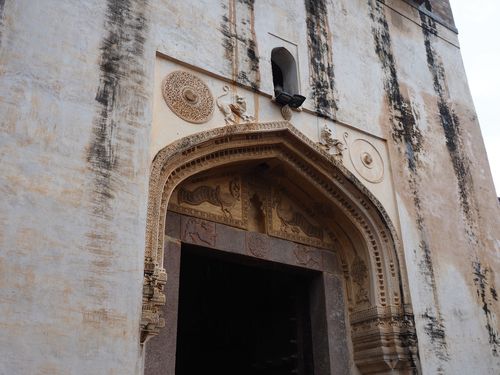
Hyderabad • Golconda fort
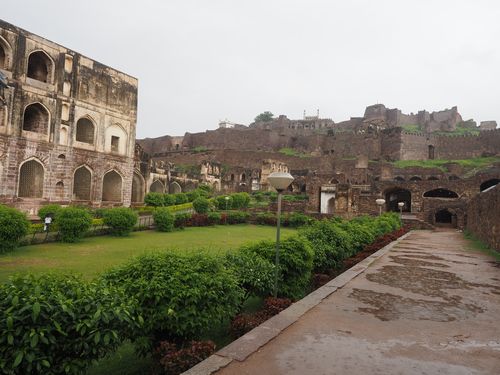
Hyderabad • Golconda fort
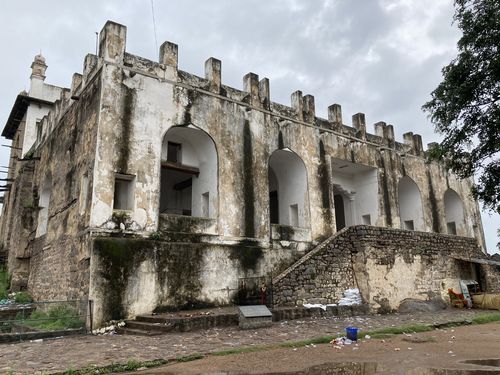
Hyderabad • Golconda fort
Monument profile
Golconda fort
Monument categories: Fort, Palace
Monument families: Fort, Fortifications or Citadel • Palace and Annexes
Monument genres: Military, Residential
Cultural heritages: Islamic, Hindu
Geographic location: Hyderabad • Telangana • India
Construction period: 13th century AD
• Links to •
• Dynasties that contributed to the construction of the monument •


• List of videos about Hyderabad on this site •
Hyderabad, Charminar Square and its surroundings • India, Telangana
Hyderabad, Golconda fort • India, Telangana
Hyderabad • Hidden Gems: Ashoorkhana, Chowmahalla, Bhagyalakshmi
Hyderabad, mausoleums and remarkable tombs • India, Telangana
History of Golconda Fort (Hyderabad, Telangana)
Golconda Fort, located to the west of present-day Hyderabad in the Indian state of Telangana, is one of the most significant fortified complexes of the Deccan plateau. Its history spans several centuries and reflects the political, economic, and cultural transformations of southern India, from medieval Hindu kingdoms to the expansion of the Mughal Empire and the emergence of the princely state of Hyderabad.
Early origins and political context
The earliest fortifications at Golconda date back to the thirteenth century, during the rule of the Kakatiya dynasty, which controlled large parts of the eastern Deccan. At that time, the site was likely a modest earthen fort built on a granite hill, chosen for its strategic position overlooking important regional trade routes. The construction of such forts was part of a broader defensive network intended to secure territories and maintain control over agricultural and commercial zones.
In the fourteenth century, the Kakatiya kingdom was defeated by forces of the Delhi Sultanate, and the region later came under the control of the Bahmani Sultanate. During the Bahmani period, Golconda was strengthened and converted into a provincial administrative center. The expansion of the fort during this period reflected the need to consolidate authority over a vast and diverse territory characterized by shifting alliances and internal rivalries among regional elites.
Rise of the Qutb Shahi dynasty and transformation into a capital
A decisive transformation occurred in the early sixteenth century. Sultan Quli Qutb-ul-Mulk, a Bahmani governor of Turkic origin, declared independence following the fragmentation of the Bahmani Sultanate and established the Qutb Shahi dynasty. Golconda became the capital of this new kingdom.
The choice of Golconda as the capital was shaped by strategic and economic considerations. The surrounding region was famous for its diamond mines, which produced some of the most valuable gemstones known in the early modern world. Control of this resource provided the Qutb Shahi rulers with substantial wealth, allowing them to finance military campaigns, diplomatic relations, and monumental construction projects.
Politically, the Qutb Shahi state emerged in a landscape dominated by competing powers, including other Deccan sultanates and the powerful Hindu empire of Vijayanagara. The construction and expansion of Golconda were therefore closely tied to the need for a secure capital capable of withstanding sieges and projecting royal authority.
Golconda at its political and economic peak
Between the sixteenth and early seventeenth centuries, Golconda developed into one of the most prosperous centers in the Deccan. The Qutb Shahi rulers governed a culturally diverse population and maintained a relatively inclusive administration that incorporated both Muslim and Hindu elites.
The wealth generated by the diamond trade attracted merchants from Persia, the Ottoman world, Central Asia, and Europe. By the late sixteenth century, Golconda had become synonymous with extraordinary wealth in European accounts. The prosperity of the kingdom supported not only the expansion of the fort itself but also the development of urban settlements and commercial networks throughout the region.
The kingdom participated in major regional conflicts, most notably against the Vijayanagara Empire. The decisive Battle of Talikota in 1565, in which a coalition of Deccan sultanates defeated Vijayanagara, significantly altered the political balance of southern India and enhanced the influence of the Qutb Shahi rulers.
Despite the continued importance of the fort, the dynasty decided in 1591 to establish a new capital, Hyderabad, located a few kilometers away. This decision reflected both practical and symbolic considerations. The expanding kingdom required a larger urban center with improved infrastructure, and the new city was conceived as a planned capital with grand avenues, markets, and monumental buildings. Golconda remained an important military stronghold and royal treasury, but its role as the primary seat of government diminished.
Global context and economic significance
During the sixteenth and seventeenth centuries, Golconda’s development took place within a broader global context marked by the expansion of maritime trade and the consolidation of large imperial states. European trading companies were establishing commercial bases along the Indian coast, while powerful empires such as the Ottomans, Safavids, and Mughals dominated vast territories across Asia.
In this environment, the diamond mines of Golconda became part of an international trade network. Precious stones from the region were exported to markets in Persia, the Ottoman Empire, and Europe. The fort, as the administrative and military center of this prosperous kingdom, symbolized the economic vitality of the Deccan.
The architectural expansion of Golconda also paralleled developments elsewhere in the world, where rulers invested in fortified capitals and monumental complexes to demonstrate their authority. Similar processes were visible in the Mughal Empire, the Ottoman domains, and European states undergoing military and administrative centralization.
Mughal campaigns and the fall of Golconda
By the seventeenth century, the Mughal Empire sought to extend its control over the Deccan. The wealth and strategic position of Golconda made it a primary target. Relations between the Qutb Shahi rulers and the Mughal court fluctuated between diplomacy and conflict, but tensions escalated under Emperor Aurangzeb.
In 1687, Aurangzeb launched a major campaign against Golconda. The fort endured a prolonged siege lasting several months. Despite its formidable defenses, the fortress ultimately fell, reportedly due to treachery that allowed Mughal forces to enter the complex. The last Qutb Shahi ruler, Abul Hasan, was captured, and the kingdom was annexed into the Mughal Empire.
The conquest marked a decisive turning point in the history of Golconda. The Mughal forces seized the royal treasury, including large quantities of diamonds and precious objects. Although the fort remained in use under Mughal administration, it gradually lost its political centrality as imperial priorities shifted elsewhere.
Under the Nizams and the colonial period
Following the decline of Mughal authority in the early eighteenth century, regional powers reasserted their independence. In 1724, the Nizam of Hyderabad established a semi-autonomous state in the Deccan. Golconda became part of this princely domain.
By this time, the political and administrative center was firmly established in Hyderabad. The fort of Golconda lost its strategic importance and was used only occasionally for military or administrative purposes. Its buildings gradually fell into disrepair, and parts of the complex were abandoned.
During the colonial period, the princely state of Hyderabad remained under indirect British rule. Golconda was no longer an active seat of power but survived as a historic site associated with the region’s earlier dynasties.
Integration into modern India and heritage recognition
In 1948, after India gained independence, the princely state of Hyderabad was incorporated into the Indian Union. Golconda became a protected historical monument under national archaeological authorities.
Throughout the twentieth century, efforts were made to stabilize and preserve the remaining structures. Conservation projects focused on the fortifications, gateways, reservoirs, and surviving palace ruins. As Hyderabad expanded into a major urban center, Golconda became an important tourist destination and a symbol of the city’s historical identity.
Cultural role and contemporary perception
Today, Golconda Fort is widely regarded as one of the most significant historical monuments in the Deccan. It represents the era of regional sultanates and evokes the prosperity associated with the diamond trade. The site is an important element of Hyderabad’s cultural landscape and features prominently in the city’s historical narratives.
The fort is used primarily as a heritage and tourism site. Visitors explore its walls, gates, and terraces, while evening sound-and-light shows recount episodes from its past. The monument also serves as a visual and symbolic reference point in the collective memory of the region, linking contemporary Hyderabad with its pre-modern political and economic history.
Conservation status and modern challenges
Golconda Fort is protected by the Archaeological Survey of India and forms part of a group of Qutb Shahi monuments proposed for inclusion on the UNESCO World Heritage list. Its preservation, however, faces several challenges.
Rapid urban expansion around Hyderabad has brought the city closer to the historic site. Pollution, vegetation growth, weathering of granite structures, and the impact of mass tourism all contribute to gradual deterioration. Conservation policies aim to stabilize the walls, maintain drainage systems, and regulate visitor access to sensitive areas.
Despite these challenges, Golconda remains one of the most important historical landmarks of southern India. Its layered history—from a medieval hill fort to the capital of a prosperous sultanate and later a Mughal stronghold—illustrates the shifting political and economic dynamics of the Deccan over several centuries.
Architecture of Golconda Fort (Hyderabad, Telangana)
Golconda Fort represents one of the most sophisticated defensive complexes of the Deccan plateau. Developed gradually between the thirteenth and seventeenth centuries, the site illustrates the evolution of military architecture from a regional hill fort into a vast fortified capital. Its design combines local building traditions, Persianate influences, and technical innovations adapted to the rocky terrain and the political realities of the Deccan sultanates.
General layout and defensive structure
The fort occupies an irregular area organized around a prominent granite hill that forms the natural core of the complex. Its spatial arrangement follows a hierarchical defensive system, consisting of multiple concentric enclosures. Each successive ring of walls marks a higher and more secure zone, culminating in the citadel at the summit.
The outer fortifications extend across several kilometers, enclosing residential quarters, markets, workshops, and military installations. Within these walls, the terrain rises gradually toward the inner fort, where administrative and royal structures were concentrated. The uppermost citadel served as the last defensive refuge and contained the most important buildings, including royal apartments, audience halls, and storage facilities.
This layered arrangement reflects a defensive logic typical of hill forts in the Deccan, where the natural topography was used as a primary element of protection. Attackers were forced to advance through a series of controlled passages, gates, and narrow approaches, each designed to slow movement and expose them to defensive fire.
Materials and construction techniques
The principal building material at Golconda is the local granite, a hard and durable stone abundantly available in the surrounding landscape. Builders made extensive use of the natural rock formations, incorporating them directly into the fort’s walls and terraces. In many sections, the masonry appears to grow organically from the bedrock, reducing the need for extensive quarrying and improving structural stability.
The fortifications consist of massive stone blocks bonded with lime mortar. This mortar was often mixed with organic additives, such as plant extracts or powdered materials, to enhance cohesion and resistance. The outer faces of the walls frequently display a slight inward slope, known as batter, which improves resistance against artillery impacts and increases the structural integrity of the fortifications.
Arched openings and vaulted chambers were constructed using techniques associated with Islamic architecture. These included pointed or slightly curved arches built from dressed stone, as well as domed roofing systems in palatial and religious structures. The integration of these forms into a largely granite-built environment demonstrates the adaptation of foreign architectural traditions to local materials.
Technological innovations and defensive features
Golconda is renowned for several technical features that reflect advanced planning and engineering. One of the most notable is the acoustic communication system. At certain gateways, especially the main entrance, a clap or sharp sound beneath a domed chamber can be heard clearly at the summit of the citadel. This phenomenon results from the careful shaping of vaults and passages, which channel sound waves along the stone surfaces. The system allowed guards to signal arrivals or threats without relying on visual contact.
The circulation network within the fort also reflects careful defensive planning. Paths leading toward the upper citadel are deliberately indirect, consisting of winding ramps, steep staircases, and narrow corridors. These routes prevented the rapid movement of attacking forces and allowed defenders to control access at multiple points.
The gateways were designed as complex defensive structures. Many doors were reinforced with heavy wooden panels studded with iron spikes, intended to deter war elephants used in siege warfare. Some entrances were arranged along angled or zigzagging approaches, forcing attackers to change direction repeatedly while under fire from elevated bastions.
Water management and urban infrastructure
An essential aspect of Golconda’s architectural planning was its sophisticated water supply system. The fort contained numerous reservoirs, cisterns, and channels designed to collect and distribute water throughout the complex. This infrastructure was vital for sustaining the population during prolonged sieges.
Water was stored in large tanks located at various levels of the fort. Mechanical lifting devices, including Persian wheels and inclined channels, were used to raise water to higher elevations. From there, gravity-fed conduits distributed water to palaces, gardens, and service areas.
The urban organization within the outer enclosures followed a functional hierarchy. Military zones, administrative buildings, and royal residences were positioned at higher and more secure levels, while residential quarters and markets occupied lower terraces. This arrangement allowed for efficient control of movement and ensured that critical structures remained protected.
Architectural influences and stylistic elements
The architecture of Golconda reflects a synthesis of regional Deccan traditions and Persianate influences introduced by the ruling dynasties. The defensive structures retain features characteristic of earlier Hindu hill forts, such as the integration of natural rock formations and the emphasis on massive, sloping walls.
At the same time, the palatial and religious buildings exhibit elements associated with Islamic architectural traditions. Arches, domes, and symmetrical courtyards appear in royal and ceremonial spaces. These features were adapted to the local environment, often using granite rather than the brick or marble more common in northern India.
Decorative elements were generally restrained in the military zones but more elaborate in residential areas. Plastered surfaces, painted interiors, and carved stone details once adorned the palace structures. Although much of this ornamentation has disappeared, traces remain, indicating the presence of refined decorative programs.
Spatial organization and notable structures
The fort is organized into several distinct zones, each with specific functions. The outermost enclosure contained residential districts, military barracks, and commercial areas. Further inward, the second and third enclosures housed administrative buildings, storage facilities, and additional defensive installations.
The citadel at the summit formed the core of royal authority. It included audience halls, private apartments, and observation points. From this elevated position, rulers and guards could survey the surrounding landscape and monitor activity within the fort.
Several architectural elements stand out within the complex. Monumental gateways mark the entrances to successive enclosures. Bastions of circular or polygonal form project outward from the walls, allowing defenders to fire along the curtain walls. Large open courtyards provided space for assemblies, ceremonies, and military drills.
Dimensions and notable features
The fort complex covers an extensive area, with outer walls stretching for approximately ten kilometers. The height of the fortifications varies depending on the terrain but can reach more than fifteen meters in certain sections. Numerous bastions punctuate the walls, each designed to provide overlapping fields of fire.
The citadel at the highest point of the fort offers panoramic views of the surrounding region, emphasizing its strategic importance. The main gateways are notable for their scale and defensive detailing, including heavy doors and protective projections.
The acoustic system remains one of the most distinctive features of the fort. This arrangement demonstrates the builders’ understanding of sound transmission and their ability to incorporate such knowledge into practical defensive applications.
Transformations and present condition
Over the centuries, the architectural fabric of Golconda has undergone significant changes. Some structures were damaged during military campaigns, particularly during the Mughal siege of the seventeenth century. Others fell into disuse after the capital shifted to Hyderabad, leading to gradual deterioration.
Today, the site consists largely of stabilized ruins. The surviving elements include the main fortifications, gateways, bastions, reservoirs, and fragments of palatial buildings. Conservation efforts focus on reinforcing weakened walls, controlling vegetation, and preserving key architectural features.
Architectural significance and conservation challenges
Golconda Fort is an important example of Deccan military architecture, illustrating the adaptation of defensive strategies to a rocky landscape and the integration of hydraulic and acoustic systems. Its combination of natural terrain and constructed defenses reflects a pragmatic and technically informed approach to fortification.
The preservation of the site presents ongoing challenges. Granite surfaces are subject to weathering, while vegetation growth can destabilize masonry joints. Urban expansion around Hyderabad has increased environmental pressures, including pollution and visitor impact.
Conservation programs aim to maintain the structural integrity of the fort while accommodating tourism. These efforts involve periodic restoration of walls, improved drainage, and controlled access to vulnerable areas.
Despite these challenges, Golconda remains one of the most significant fortified complexes in southern India. Its architecture demonstrates the technical skill, strategic planning, and cultural synthesis characteristic of the Deccan sultanates, making it a key reference point in the study of early modern military architecture in the region.