

 Français (France)
  Nederlands (nl-NL)
 Hemis Gompa is a Buddhist monastery located in Hemis, in the Ladakh region of India. It stands as one of the most significant monasteries in the area, drawing attention for its cultural and religious importance. Established in the 17th century, it is renowned for its collection of paintings, sculptures, and sacred artifacts. The monastery hosts the renowned Hemis Festival annually, celebrating the Buddhist traditions and culture of the region. It serves as a center of spirituality and knowledge, contributing to the unique heritage of Ladakh.
Monument profile
Hemis Gompa
Monument category: Gompa
Monument family: Monastery
Monument genre: Religious
Cultural heritage: Buddhist
Geographic location: Hemis • Ladakh • India
Construction period: 17th century AD
• Links to •
• Dynasties that contributed to the construction of the monument •

• List of videos about Hemis on this site •
Hemis Gompa • Cultural Jewel of Ladakh in the Heart of Himalayas
• References •
Wikipedia EN: Hemis Monastery
Hemis Gompa: Political Ambitions, Historical Transformations, and Cultural Resilience in Ladakh
Hemis Gompa, a prominent Buddhist monastery in Hemis, Ladakh, was established in 1672 during the reign of King Sengge Namgyal and the spiritual leadership of Staktsang Raspa. Beyond its spiritual significance, the monastery was a cornerstone in the political and social consolidation of the Ladakhi kingdom. Its construction reflects the interplay of religious devotion, political strategy, and cultural identity in a region at the crossroads of major trade and cultural routes.
Political and Social Motivations for Construction
The foundation of Hemis Gompa was a calculated effort to solidify the Drukpa Kagyu school of Buddhism as the dominant religious force in Ladakh. By aligning with this school, Sengge Namgyal sought to centralize authority, promote regional unity, and counter external influences, particularly those of the expanding Moghul Empire. The monastery also served as a focal point for community life, fostering education, artistic expression, and spiritual practice.
Additionally, Hemis Gompa’s strategic location near major caravan routes connecting Central Asia, Tibet, and India underscores its role as both a spiritual haven and a node in the region’s economic and cultural network. This dual function strengthened the kingdom's identity and bolstered its position against external threats.
Key Historical Events and Regional Impact
Hemis Gompa witnessed several pivotal moments in Ladakhi history. The Moghul invasion in the 18th century, although disruptive, did not diminish the monastery’s role as a bastion of culture and religion. Instead, it became a symbol of resilience, safeguarding sacred artifacts and manuscripts.
In the 19th century, the annexation of Ladakh by the Dogra rulers of Jammu and Kashmir introduced new political dynamics. Despite these shifts, Hemis Gompa retained its importance as a religious and cultural hub. Its annual Hemis Festival, celebrating Padmasambhava, emerged as a key event, attracting pilgrims and showcasing the region's rich heritage.
Global Context and Comparisons
The construction of Hemis Gompa coincided with transformative global events. In Europe, the 17th century marked the rise of scientific inquiry and centralized nation-states, while Asia experienced the flourishing of empires like the Qing in China and the Mughals in India. Unlike the monumental architecture of these empires, which often symbolized imperial dominance, Hemis Gompa exemplifies a subtler form of power—cultural and spiritual resilience in a remote, challenging environment.
Similar to Tibetan monasteries like Tashilhunpo, Hemis Gompa blends architectural functionality with artistic splendor, reflecting cross-cultural exchanges and local adaptation. Its frescoes, sculptures, and manuscripts bear witness to the interconnectedness of Himalayan civilizations.
Transformations Over the Centuries
Over time, Hemis Gompa has undergone several transformations. Renovations have preserved its structural integrity while incorporating stylistic elements influenced by Tibetan and Indian art. The monastery's expanding library and art collection reflect centuries of cultural exchange and adaptation.
These changes also mirror shifts in regional power dynamics. For instance, the introduction of new artistic motifs during the Dogra period highlights the monastery’s capacity to absorb and reinterpret external influences while maintaining its core identity.
Current State and Conservation Challenges
Today, Hemis Gompa is recognized as a symbol of Ladakhi heritage and Buddhist tradition. However, its preservation faces significant challenges. The harsh climate of Ladakh, combined with increasing tourism and modern development, threatens the structural stability and authenticity of the site. Efforts to balance conservation with sustainable tourism are ongoing, often requiring collaboration between local communities, conservationists, and international organizations.
Despite not being a UNESCO World Heritage Site, Hemis Gompa enjoys global recognition, partly due to its cultural significance and the popularity of the Hemis Festival. This visibility has attracted funding and expertise for its preservation, but also heightened the need for effective management to protect its integrity.
Conclusion
Hemis Gompa stands as a testament to Ladakh’s rich cultural and spiritual history. Its construction, shaped by political ambition and social cohesion, and its endurance through historical upheavals, illustrate the resilience of Himalayan civilizations. As modern challenges threaten its preservation, Hemis Gompa’s legacy continues to inspire efforts to safeguard this unique monument for future generations.
The Architectural Marvel of Hemis Gompa: A Testament to Innovation and Cultural Synthesis
Hemis Gompa, constructed in 1672 during the reign of Sengge Namgyal, is a remarkable example of architectural ingenuity and cultural synthesis in the Ladakh region of India. The monastery’s design, materials, and craftsmanship not only reflect the technological and artistic advancements of the Namgyal era but also embody a unique blend of regional and foreign influences. Its enduring legacy continues to captivate visitors and scholars alike.
Technological and Architectural Innovation
The construction of Hemis Gompa demonstrates significant technological foresight and innovation. Built on a rocky foundation, the monastery takes advantage of the natural topography, ensuring structural stability in a region prone to seismic activity. The builders employed a combination of local materials, including stone, clay, and wood, to create a durable and thermally efficient structure capable of withstanding the harsh Ladakhi winters.
The use of thick stone and mud-brick walls, coated with lime plaster, provided insulation while also giving the building its distinctive appearance. Wooden beams, intricately carved, supported the roofs and ceilings, showcasing advanced carpentry skills. The integration of these materials and techniques highlights a sophisticated understanding of both functionality and aesthetics.
Distinctive Features and Artistic Synthesis
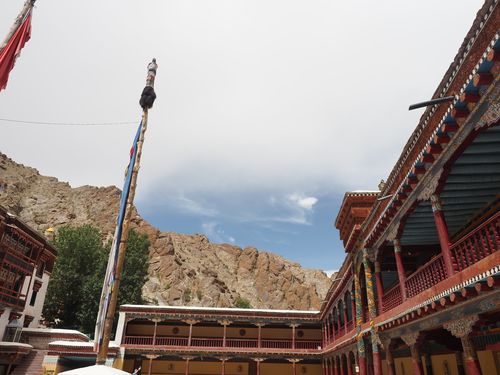
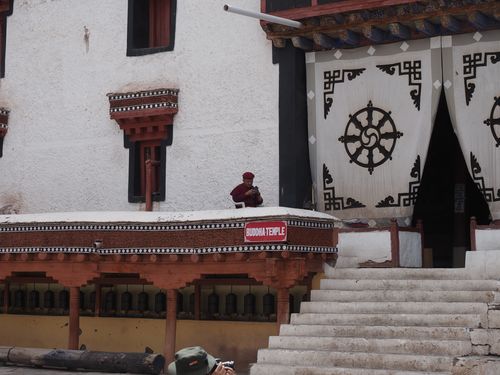
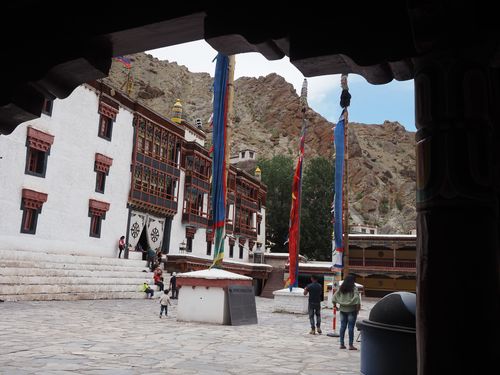
Hemis Gompa is characterized by its well-planned layout centered around a spacious courtyard, which serves as a communal space for rituals and festivals. The Dukhang, or assembly hall, is the architectural heart of the monastery, adorned with vibrant frescoes depicting Buddhist deities, mandalas, and scenes from Padmasambhava’s life. The motifs reveal influences from Tibetan, Kashmiri, and Central Asian artistic traditions, illustrating Ladakh’s position as a cultural crossroads.
The monastery’s statues, including the iconic gilded figure of Padmasambhava, are masterpieces of craftsmanship. One of the tallest statues in the region, it exemplifies the grandeur and spiritual significance attributed to the site. Additionally, the library at Hemis Gompa contains rare manuscripts and thangkas, further emphasizing its role as a repository of cultural and religious heritage.
Notable Structures and Anecdotes
Hemis Gompa’s architecture includes unique elements that set it apart from other monasteries in the region. Its two-story structure with layered galleries offers sweeping views of the surrounding landscape, while its hidden chambers house ancient relics and treasures. According to local lore, some of these artifacts were concealed during periods of political unrest to protect them from plunder.
One fascinating anecdote involves the discovery of a manuscript in the monastery’s library that allegedly details the lost years of Jesus Christ in India, a claim that has sparked intrigue and scholarly debate.
Cultural Recognition and Global Impact
Though Hemis Gompa is not a UNESCO World Heritage Site, its international recognition is substantial, bolstered by the annual Hemis Festival. This vibrant celebration draws visitors from across the globe, showcasing the monastery’s cultural and spiritual significance. The growing interest in the site has increased awareness of its architectural brilliance and historical value.
Challenges and Conservation Efforts
Preserving Hemis Gompa poses several challenges. The harsh climate of Ladakh, coupled with increasing tourism, accelerates the wear and tear on the structure. Modern conservation efforts focus on maintaining the site’s authenticity while addressing the pressures of development and environmental changes.
Local and international collaborations have been key to ensuring the monastery’s longevity. Restoration projects prioritize the use of traditional materials and techniques, complemented by modern scientific methods to safeguard the site’s unique architectural and artistic heritage.
Conclusion
Hemis Gompa stands as a testament to the innovation and cultural richness of the Namgyal era. Its architecture embodies a harmonious blend of practicality, artistry, and spiritual depth, reflecting the technological prowess and cosmopolitan outlook of its time. As efforts to preserve this iconic monument continue, Hemis Gompa remains a symbol of Ladakh’s enduring legacy and a beacon of cultural synthesis in the Himalayan region.