

 Français (France)
  Nederlands (nl-NL)
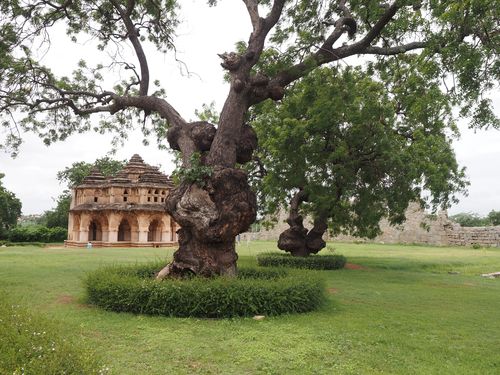
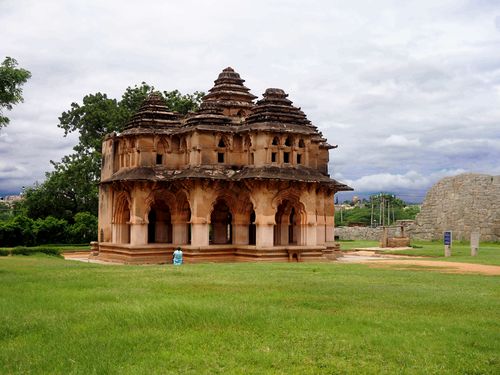
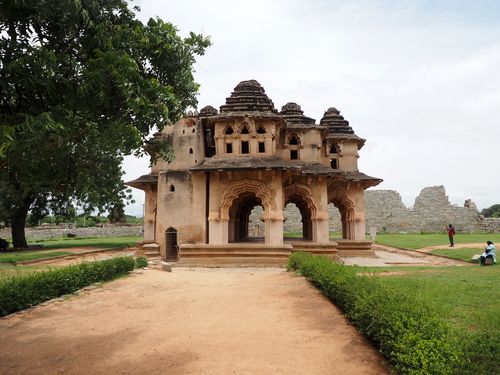
 The Lotus Mahal is one of the most distinctive monuments within the royal enclosure of Hampi in the state of Karnataka, southern India. This elegant pavilion is known for its refined architectural appearance and balanced proportions, which give the structure its recognizable silhouette. It formed part of a broader complex associated with the courtly life of the former Vijayanagara capital. Today the building is regarded as an important testimony to the organization and prestige of the imperial city. Owing to its unusual form and relatively well-preserved condition, the Lotus Mahal remains one of the most recognizable monuments within the archaeological landscape of Hampi.
Monument profile
Lotus Mahal
Monument category: Palace
Monument family: Palace and Annexes
Monument genre: Residential
Cultural heritages: Hindu, Islamic
Geographic location: Hampi • Karnataka • India
Construction period: 16th century AD
This monument in Hampi is inscribed on the UNESCO World Heritage List since 1986 and is part of the serial property "Group of Monuments at Hampi".See the UNESCO monuments featured on this site
• Links to •
• Dynasties that contributed to the construction of the monument •

• List of videos about Hampi on this site •
Hampi, capital of the Vijayanagara empire • Karnataka, India
• References •
UNESCO: Group of Monuments at Hampi
History of the Lotus Mahal of Hampi
Political and Social Context of the Construction
The Lotus Mahal was constructed during the period of prosperity of the Vijayanagara Empire, one of the most powerful political entities in South India between the fourteenth and sixteenth centuries. Located within the royal enclosure of the imperial capital at Hampi, the pavilion formed part of a complex environment designed to accommodate the administrative, ceremonial, and domestic life of the ruling court. The building is generally dated to the fifteenth or early sixteenth century, when Vijayanagara was consolidating its authority across large parts of the Deccan and southern India.
The creation of structures such as the Lotus Mahal reflects the broader urban vision pursued by the rulers of Vijayanagara. The capital was developed as a monumental city whose architecture symbolized the stability and prestige of imperial power. Royal pavilions, administrative halls, ceremonial platforms, and residential spaces were carefully arranged to support the functioning of the court and the display of royal authority.
The Lotus Mahal is traditionally associated with the area often referred to as the women’s quarter of the royal complex. While its exact function remains uncertain, it was likely used as a pavilion for relaxation, meetings, or observation within the courtly environment. Buildings of this kind illustrate the refined domestic life of the elite and the importance placed on comfort and aesthetic sophistication within the palace complex.
The political environment of Vijayanagara during this period was defined by rivalry with the Deccan sultanates to the north. These neighboring states frequently contested territory and influence across the region. As a result, Vijayanagara rulers invested heavily in the development of their capital both as a defensive stronghold and as a symbol of imperial power. Monumental construction served to reinforce the legitimacy of the dynasty and demonstrate its prosperity to both allies and rivals.
Beyond military considerations, Vijayanagara also aimed to present itself as a cultural center of southern India. The development of elegant courtly structures such as the Lotus Mahal formed part of this strategy, reflecting the artistic ambitions and political confidence of the empire.
Major Historical Events Affecting the Site
During the fifteenth and early sixteenth centuries, Vijayanagara emerged as one of the largest and most prosperous cities in the world. Contemporary accounts from foreign travelers describe a vast urban landscape filled with markets, temples, gardens, and royal buildings. The royal enclosure, where the Lotus Mahal stands, functioned as the administrative and ceremonial heart of this metropolis.
Under rulers such as Deva Raya II and Krishnadevaraya, the empire experienced territorial expansion and economic growth. During this period, major architectural projects were undertaken throughout the capital. The construction of palaces, pavilions, and ceremonial spaces reflected the increasing complexity of the imperial court.
This period of prosperity came to an abrupt end in 1565 with the Battle of Talikota. A coalition of Deccan sultanates defeated the army of Vijayanagara in a decisive confrontation. Following this defeat, the victorious forces advanced toward the capital and subjected the city to extensive destruction and looting.
Large parts of Vijayanagara were abandoned after this event. The royal court relocated to other locations, effectively ending the city’s role as the political center of the empire. Many buildings were damaged or fell into ruin during the chaotic aftermath of the conquest.
The Lotus Mahal appears to have survived the devastation better than many other structures within the royal enclosure. Although the building lost its original function, its structural integrity allowed it to remain standing while other parts of the palace complex deteriorated.
Over the following centuries, the site gradually transformed into a landscape of ruins. Local populations continued to inhabit surrounding areas, and some religious structures remained active pilgrimage sites, but the royal district itself was largely abandoned.
Global Context During the Period of Construction
The construction of the Lotus Mahal occurred during a period of major political and cultural transformations across the world. During the fifteenth and sixteenth centuries, many large states developed monumental capitals that expressed their authority through architecture and urban planning.
In Europe, centralized monarchies were consolidating power and investing in royal palaces, fortifications, and administrative buildings. These architectural projects served both practical and symbolic purposes, reinforcing the authority of ruling dynasties.
The Ottoman Empire was simultaneously transforming Istanbul into a grand imperial capital after its conquest in the mid-fifteenth century. Palaces, mosques, and civic structures were constructed on a monumental scale to reflect the power of the state.
In East Asia, the Ming dynasty undertook extensive architectural developments in Beijing, including the construction of the Forbidden City. These large-scale projects were designed to embody imperial authority and administrative organization.
The Vijayanagara Empire participated in this broader global pattern of monumental urban development. The capital at Hampi was planned as an impressive political center capable of receiving foreign envoys and demonstrating the wealth and power of the empire. Within this environment, pavilions such as the Lotus Mahal formed part of a sophisticated architectural landscape that combined ceremonial, administrative, and residential functions.
Transformations of the Monument Over Time
After the fall of Vijayanagara in the sixteenth century, the Lotus Mahal lost its original purpose as part of the royal complex. The departure of the court and the collapse of imperial administration led to the abandonment of most structures within the royal enclosure.
Despite this decline, the building remained relatively well preserved. Its construction using durable materials and its location within a protected area contributed to its survival. Over time, however, the structure was affected by weathering, vegetation growth, and gradual deterioration.
During the nineteenth century, colonial administrators and scholars began documenting the ruins of Vijayanagara. Their observations brought renewed attention to the historical significance of the site. The Lotus Mahal was recognized as one of the most distinctive and best-preserved buildings within the royal complex.
In the twentieth century, archaeological authorities undertook conservation efforts aimed at stabilizing and preserving the monuments of Hampi. These interventions included structural reinforcement, removal of vegetation, and measures to protect vulnerable architectural elements.
As archaeological research progressed, the Lotus Mahal became an important reference point for understanding the layout and function of the royal enclosure. The preservation of the building helped historians reconstruct aspects of court life and the spatial organization of the Vijayanagara capital.
Cultural Significance in the Present Day
Today the Lotus Mahal is one of the most recognizable monuments within the archaeological landscape of Hampi. It plays a central role in the interpretation of the former royal complex and provides insight into the domestic and ceremonial life of the Vijayanagara court.
The monument has also become an important symbol of regional heritage in the state of Karnataka. The ruins of Vijayanagara evoke a historical period of political strength and cultural achievement that continues to shape regional identity.
The Lotus Mahal does not currently serve a religious function, unlike many temples in the region. However, it contributes significantly to the cultural tourism associated with the Hampi archaeological site. Visitors from across India and around the world come to explore the remains of the imperial capital, and the pavilion is among the most frequently visited structures.
Cultural festivals and heritage events organized in the region often highlight the monuments of Vijayanagara, reinforcing their role in the preservation of historical memory and regional pride.
Conservation Status and Contemporary Challenges
The archaeological site of Hampi has been designated a UNESCO World Heritage site because of its exceptional historical and architectural significance. This international recognition has strengthened efforts to preserve the remains of the former capital.
The Lotus Mahal benefits from conservation programs designed to stabilize the structure and prevent further deterioration. Archaeological authorities monitor the building’s condition and implement restoration work when necessary.
Nevertheless, several challenges affect the long-term preservation of the monument. Environmental factors such as heavy rainfall, temperature fluctuations, and biological growth can weaken historic materials over time. Additionally, increasing tourist activity requires careful management to prevent structural damage.
Urban development in surrounding areas also presents potential risks to the historical landscape of Hampi. Heritage management policies therefore aim to balance the protection of archaeological remains with the needs of local communities and visitors.
Despite these challenges, the Lotus Mahal remains one of the most remarkable surviving structures of the Vijayanagara capital. Its preservation offers valuable insight into the social organization, cultural ambitions, and architectural environment of one of South India’s most influential historical empires.
Architecture of the Lotus Mahal of Hampi
Architectural Context within the Royal Enclosure
The Lotus Mahal stands within the royal enclosure of the former imperial capital of Vijayanagara at Hampi. Unlike the monumental temple complexes that dominate much of the city’s architectural landscape, the Lotus Mahal represents a refined example of courtly pavilion architecture. Its design reflects a different set of priorities from those governing religious or administrative buildings. Rather than emphasizing massive structural scale, the pavilion expresses elegance, balance, and spatial openness.
The structure formed part of the royal compound commonly associated with the private quarters of the palace complex. Within this controlled environment, architecture served both practical and ceremonial functions. Pavilions such as the Lotus Mahal provided spaces for relaxation, observation, and informal gatherings within the courtly setting. The building illustrates how the architects of Vijayanagara incorporated smaller, sophisticated structures into the broader urban composition of the capital.
Although relatively modest in scale compared with other monuments in Hampi, the Lotus Mahal demonstrates a remarkable level of architectural refinement. Its proportions, structural organization, and decorative restraint illustrate the aesthetic principles guiding the construction of royal pavilions during the height of the Vijayanagara Empire.
Spatial Organization and Structural Layout
The Lotus Mahal follows a symmetrical rectangular plan composed of an open ground level surrounded by arcades and a more compact upper structure crowned by a domed pavilion. The building is organized around a central hall, which is supported by a network of pillars and arches. These elements create an open and ventilated interior space that connects visually with the surrounding gardens and courtyards of the royal enclosure.
The ground level consists of a series of interconnected arcades that run along each side of the building. These arcades form shaded galleries that likely served as transitional spaces between the interior and exterior environments. The open design allows air to circulate freely, a feature particularly important in the hot climate of southern India.
Above the arcaded base rises the upper structure, which is characterized by smaller chambers and decorative elements that give the building its distinctive silhouette. The upper level is lighter in appearance than the base and is visually articulated by a series of projecting balconies and small domed pavilions.
At the center of the roof stands a prominent dome surrounded by smaller corner towers. This arrangement creates a hierarchical architectural composition in which the central dome functions as the focal point of the structure. The vertical articulation of the building contrasts with the horizontal rhythm of the arcades below, producing a balanced architectural composition.
Arches, Domes, and Structural Elements
One of the most recognizable features of the Lotus Mahal is its extensive use of arches. These arches are arranged in multiple tiers and display a distinctive curved profile that combines structural efficiency with aesthetic refinement. The arches support the upper levels of the building while also creating open spaces that enhance ventilation and light.
The arches rest on slender pillars that divide the façade into regular bays. This repetitive structural pattern generates a rhythm across the exterior surfaces of the pavilion. The repetition of arches also contributes to the visual lightness of the structure, despite the solid materials used in its construction.
The roof structure incorporates a central dome flanked by smaller domed pavilions at the corners. These domes are relatively modest in scale but play an important role in defining the architectural identity of the building. Their rounded forms contrast with the geometric order of the arcades below, adding a sense of vertical movement to the design.
The domes also serve structural and environmental functions. Their curved form allows them to distribute loads efficiently across the supporting walls and pillars. At the same time, the domed roof spaces facilitate the upward movement of warm air, contributing to the building’s natural ventilation.
Materials and Construction Techniques
The Lotus Mahal was constructed using a combination of stone, brick, and plaster. The lower structural elements are built primarily from stone, which provides the necessary strength and durability to support the building’s upper levels. Stone was widely used in Vijayanagara architecture because of its resilience and availability in the rocky landscape surrounding Hampi.
The upper portions of the building incorporate brick masonry covered with a layer of plaster or stucco. This combination of materials allowed builders to create lighter architectural forms and more delicate decorative details than would have been possible using stone alone. Brick construction also made it easier to shape curved elements such as domes and vaulted structures.
The plaster finish served both protective and decorative purposes. It protected the masonry from weathering while also allowing artisans to apply ornamental patterns and surface treatments. Although much of the original decoration has eroded over time, traces of these finishing techniques remain visible on parts of the structure.
Construction methods relied on a careful distribution of weight through pillars, arches, and load-bearing walls. The architects used these elements to balance structural stability with architectural openness, creating a building that appears light despite its solid construction.
Technological Innovations and Climatic Adaptation
The architecture of the Lotus Mahal demonstrates an advanced understanding of environmental design. The open arcades surrounding the ground level allow continuous air circulation through the building. This passive ventilation system was essential in the hot and dry climate of the Deccan plateau.
The building’s elevated upper structure further enhances airflow. Warm air rising within the central hall can escape through openings near the roof, while cooler air enters through the shaded arcades at ground level. This natural ventilation strategy helped maintain a more comfortable environment inside the pavilion.
The projecting balconies and overhanging roof elements also provide shade, reducing direct exposure to sunlight. These features help regulate temperature within the structure and protect the walls from excessive heat.
The integration of these environmental adaptations into the architectural design illustrates the technical sophistication of Vijayanagara builders. Their solutions combined structural ingenuity with practical responses to climatic conditions.
Artistic Influences and Architectural Synthesis
The Lotus Mahal is often cited as an example of architectural synthesis within the Vijayanagara capital. While the empire was deeply rooted in South Indian traditions, its architecture also absorbed influences from neighboring cultures.
The curved arches and domed superstructure reflect stylistic elements associated with Indo-Islamic architecture, particularly those found in the Deccan sultanates. These features suggest that architectural ideas circulated across political boundaries, even during periods of rivalry.
At the same time, the building retains characteristics typical of South Indian architectural traditions. The emphasis on symmetry, the use of pillared halls, and the integration of the pavilion within a landscaped royal compound are consistent with broader Vijayanagara architectural practices.
The combination of these elements produces a unique architectural language. Rather than representing a simple imitation of external styles, the Lotus Mahal demonstrates how diverse influences were adapted to create a distinctive form suited to the cultural environment of the imperial court.
Decorative Elements and Architectural Ornamentation
Although the Lotus Mahal is not heavily ornamented compared with temple architecture, it incorporates several subtle decorative features that contribute to its elegance. The arches are framed by delicate moldings that emphasize their curvature and highlight the structural rhythm of the building.
Horizontal cornices divide the exterior walls into distinct visual layers, reducing the apparent mass of the structure and creating a refined façade composition. These cornices also serve practical purposes by directing rainwater away from the walls.
The domed roof elements are carefully proportioned and arranged to create a visually harmonious skyline. The corner towers provide vertical accents that frame the central dome and reinforce the symmetry of the building.
The smooth plaster surfaces that once covered much of the structure allowed for painted or sculpted decoration. Although these details have largely disappeared, the remaining architectural forms still convey the aesthetic refinement intended by the builders.
Dimensions and Notable Characteristics
The Lotus Mahal is relatively compact when compared with other major monuments in Hampi, yet its design gives it a striking visual presence. The building rises across two principal levels and is surrounded by multiple arcades that open toward the surrounding courtyard.
The structure’s proportions emphasize balance rather than scale. The height of the central dome is carefully calibrated in relation to the width of the base structure, creating a harmonious architectural composition.
The repetition of arches along each façade produces a rhythmic pattern that enhances the pavilion’s visual coherence. The interplay between horizontal arcades and vertical towers adds complexity to the overall design.
The distinctive shape of the roofline, which resembles the petals of an unfolding lotus flower, has inspired the modern name of the monument. Although the historical name of the building remains uncertain, this association reflects the graceful appearance of the structure.
International Significance and Conservation
The Lotus Mahal forms part of the broader archaeological complex of Hampi, which is recognized internationally for its exceptional historical and architectural importance. The monument contributes to the understanding of Vijayanagara’s urban planning and courtly architecture.
Its preservation provides valuable insight into the non-religious architectural traditions of the empire. While temples dominate many historical narratives about Vijayanagara, buildings such as the Lotus Mahal reveal the sophistication of its secular architecture.
Today the pavilion is protected as part of the Hampi World Heritage site. Conservation efforts focus on stabilizing the masonry, protecting the plaster surfaces, and preventing structural deterioration caused by weathering.
The materials used in the building present particular conservation challenges. Brick and plaster are more vulnerable to environmental damage than stone, requiring careful monitoring and restoration work.
Despite these challenges, the Lotus Mahal remains one of the most distinctive structures within the royal enclosure of Hampi. Its architectural elegance, combined with its relatively good state of preservation, makes it an important reference point for understanding the artistic and technical achievements of Vijayanagara architecture.