

 Français (France)
  Nederlands (nl-NL)
 Saint Paul’s Church, located in Diu in the Indian state of Gujarat, is a prominent religious building from the Portuguese colonial period. It stands as one of the most representative examples of Baroque architecture introduced by Europeans in the region. Still in use for worship, it is also a significant tourist site, valued for its cultural importance and role in the local religious history.

Diu • Saint Paul’s Church
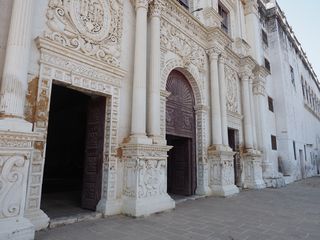
Diu • Saint Paul’s Church

Diu • Saint Paul’s Church
Monument profile
Saint Paul’s Church
Monument category: Church
Monument family: Church, cathedral, basilica, chapel
Monument genre: Religious
Cultural heritage: Christian
Geographic location: Diu • Gujarat • India
Construction period: 17th century AD
• Links to •
• List of videos about Diu on this site •
Diu • Colonial Heritage and Living History of Gujarat
Diu • Lively fish market on India’s Arabian Sea coast
The History of the Church of St. Paul in Diu: Colonial Faith and Cultural Legacy
The Church of St. Paul, located in Diu in the present-day Indian state of Gujarat, stands as one of the most significant monuments of Portuguese colonial architecture in Asia. Built in the early 17th century, it remains a testament to the religious, political, and cultural ambitions of the Portuguese empire in the Indian Ocean. Beyond its architectural splendour, its history reflects the dynamics of colonial rivalry, the resilience of Christian communities, and the integration of European traditions into an Indian coastal context.
Political and Social Context of Construction
Construction of the Church of St. Paul began in 1601 and was completed in 1610, during the height of Portuguese dominance in the western Indian Ocean. The Portuguese had established control over Diu in 1535, initially through an alliance with the Sultan of Gujarat, and consolidated their authority after the decisive naval victory against a combined Ottoman-Gujarati force in 1538. By the early 17th century, Diu had become a fortified trading hub and a strategic outpost for controlling maritime routes between the Persian Gulf, East Africa, and the spice ports of South Asia.
The church was built by the Jesuit order, which had been active in India since the arrival of St. Francis Xavier in 1542. Its purpose went beyond serving as a place of worship for the Portuguese settlers—it was intended as a centre of evangelisation for the local population and a symbol of the Catholic Counter-Reformation’s influence overseas. The decision to dedicate it to St. Paul reflected both the Jesuits’ devotion to missionary work and the saint’s association with the spread of Christianity to non-European lands.
Political Ambitions and Rivalries
The construction of the Church of St. Paul occurred within a context of intense colonial rivalry. The Portuguese sought to consolidate their presence in Gujarat against threats from the Mughals, who were expanding their territory north and east of Diu, and from other European powers such as the Dutch and the English, who were entering the Indian Ocean trade network. The church was therefore as much a statement of cultural dominance as it was a religious institution.
Internally, the Portuguese crown and the Jesuit order occasionally clashed over resources and the scope of missionary activities. However, the shared goal of maintaining a stronghold in Diu ensured that the project received sustained support from both secular and religious authorities.
Major Historical Events
The Church of St. Paul survived several turbulent episodes in Diu’s history. During the 17th and 18th centuries, the city endured sieges and naval blockades, notably by Dutch forces attempting to disrupt Portuguese trade. Although the fortified town bore the brunt of these attacks, the church’s location within the main settlement provided some protection from direct destruction.
In the 19th century, as Portuguese influence in India waned, Diu became increasingly isolated from the larger colonial network centred in Goa. The church continued to serve as the main Catholic place of worship, but its maintenance suffered due to limited funding. Despite these challenges, it retained its religious function without major interruptions.
When Diu was integrated into the Republic of India in 1961, following the Indian military operation that ended Portuguese rule in Goa, Daman, and Diu, the Church of St. Paul came under the jurisdiction of the Indian Catholic hierarchy. Its heritage value began to be recognised more widely, leading to restoration campaigns in the late 20th century.
Global Context at the Time of Construction
The building of the Church of St. Paul coincided with a broader global movement of monumental religious construction driven by European colonial expansion and the Counter-Reformation. In Asia, this included the Jesuit churches of Goa, such as the Basilica of Bom Jesus (1605), and the cathedral of Macau (1602), both sharing stylistic and functional similarities with the Diu church. Across the world, in the Americas, Spanish and Portuguese missions were producing comparable blends of European architectural styles and local craftsmanship.
The choice of elaborate baroque ornamentation in Diu was not merely an aesthetic preference; it reflected a conscious effort to project Catholic grandeur and assert Portugal’s role as a guardian of the faith in contested territories.
Transformations Over the Centuries
Architectural modifications to the Church of St. Paul have been relatively minor, preserving much of its original design. However, interior refurbishments, including repainting and the restoration of the wooden altarpiece, have taken place at various points in its history. The introduction of modern lighting and seating arrangements reflects adaptation to contemporary liturgical needs.
The surrounding urban environment has changed dramatically. What was once a fortified colonial enclave is now a bustling area with a mix of residential, commercial, and heritage zones. While the church remains a functioning religious building, it also serves as a major tourist attraction.
The Church in Modern Context
Today, the Church of St. Paul is both a living place of worship and a heritage landmark. It continues to host regular masses and special celebrations, particularly during the feast of St. Paul in January, which draws pilgrims from across the region. The event is marked by processions, music, and communal gatherings, blending Catholic ritual with local traditions.
For the residents of Diu, the church is a symbol of the town’s layered history—a reminder of its centuries-long role as a meeting point of cultures. It also plays an important role in educational outreach, with local schools incorporating visits into their curricula to teach students about the region’s heritage.
State of Conservation and Preservation Challenges
The conservation of the Church of St. Paul faces significant challenges. The humid, saline environment of Diu accelerates the erosion of stone and the deterioration of wooden structures. Tourism, while beneficial economically, increases foot traffic and the potential for wear and damage to delicate features.
Efforts to preserve the church include periodic restoration work carried out by the Archaeological Survey of India and the Catholic Church. These projects focus on structural repairs, protection of wooden carvings, and cleaning of stone surfaces. There have been discussions about proposing the church, along with other Portuguese-era monuments in Diu, for UNESCO World Heritage status, which would bring international recognition and potential funding for conservation.
Conclusion
The Church of St. Paul in Diu stands as a remarkable example of how religion, politics, and culture intersected in the colonial era. Built in the early 17th century as a Jesuit mission and a symbol of Portuguese authority, it has endured centuries of geopolitical change, continuing to serve as a religious, cultural, and historical landmark. Its preservation today is not only a matter of architectural conservation but also of maintaining a living link to the diverse narratives that have shaped Diu’s identity.
Architectural Analysis of the Church of St. Paul in Diu: A Masterpiece of Portuguese Baroque in India
The Church of St. Paul in Diu, Gujarat, built in the early 17th century, is regarded as one of the finest surviving examples of Portuguese Baroque architecture in India. Conceived and executed by the Jesuits, it combines European design principles with adaptations to the local climate and the availability of materials, resulting in a structure that is both visually striking and technically enduring. Its architectural complexity reflects the religious, political, and cultural ambitions of the Portuguese empire in the Indian Ocean.
Technological and Architectural Innovations of the Period
When the Church of St. Paul was constructed (1601–1610), Portuguese colonial architecture in Asia had reached a mature stage, informed by earlier experiences in Goa, Malacca, and Macau. The Jesuits brought with them advanced European building techniques, particularly in stone masonry, vault construction, and façade ornamentation.
One of the most notable innovations lies in the elaborate façade, carved in local sandstone but treated to mimic European limestone finishes. The multi-tiered composition, rich in sculptural reliefs, is designed to withstand strong monsoon rains and the intense coastal sunlight without losing detail over time. The adaptation of the Baroque style to local conditions included deeper cornices to provide shade, slightly recessed niches to protect statuary, and a tiered gable profile that allowed rainwater to drain quickly.
Internally, the church makes use of thick load-bearing walls, ensuring stability against coastal winds and occasional seismic activity. High vaulted ceilings promote air circulation, creating a cooler environment in the tropical climate. Clerestory windows and side openings enhance cross-ventilation, a feature not commonly found in contemporary European churches but essential in India.
Materials and Construction Methods
The Church of St. Paul was constructed primarily with locally quarried sandstone, chosen for its durability in the saline coastal environment. The exterior stonework was often coated with lime plaster to protect against weathering and to create a smoother surface for decorative painting.
Teak wood, abundant along the western coast of India, was extensively used for structural beams, roof trusses, and especially for the intricately carved high altar. Teak’s natural resistance to termites and moisture made it ideal for long-term preservation in a humid climate. The use of locally sourced wood and stone, combined with European design elements, demonstrates a hybrid approach to construction.
Innovative techniques for the time included the use of vaulted ceilings supported by hidden buttressing, allowing for wider interior spans without obstructive columns. The altar itself, carved in the Rococo style, represents one of the finest examples of woodwork in Portuguese India, employing traditional joinery methods without the use of nails, ensuring flexibility and resilience over centuries.
Architectural and Artistic Influences
The design of the Church of St. Paul clearly derives from the Jesuit churches of Portugal, particularly the Church of St. Paul in Macau and the Bom Jesus Basilica in Goa. The Baroque façade, with its dynamic interplay of columns, pilasters, and sculptural panels, is a hallmark of Counter-Reformation architecture aimed at inspiring awe and devotion.
Local influences are equally evident. The floral and vegetal motifs carved into the altar and façade incorporate patterns common in Gujarati woodwork, while the use of bright interior colours in earlier periods reflected Indian decorative traditions. The blending of European iconography with regional craftsmanship creates a distinctive Indo-Portuguese aesthetic.
Organisation and Structure
The Church of St. Paul follows a single-nave plan, a characteristic feature of Jesuit architecture, optimised for large congregations and clear sightlines towards the altar. The nave leads directly to a semi-circular apse, housing the imposing wooden altarpiece dedicated to St. Paul. Side chapels are integrated along the nave walls, each with its own small altar and devotional imagery.
The façade is organised into three vertical sections divided by Corinthian pilasters. The central bay features the main entrance, above which lies a large window providing natural light to the nave. The upper tiers incorporate niches for statues, scrollwork, and a crowning pediment flanked by finials.
Inside, the absence of heavy transepts creates an elongated, almost theatrical progression towards the altar, drawing the eye and the faithful’s attention to the liturgical focal point. The coffered wooden ceiling above the sanctuary area is richly decorated, contrasting with the simpler vaults of the nave.
Distinctive Features and Notable Details
The most striking interior feature is the intricately carved teak altarpiece, one of the largest in India. Executed in high relief, it depicts scenes from the life of St. Paul surrounded by a profusion of floral ornamentation. Gilded elements, now faded, would originally have heightened the sense of grandeur.
Among the distinctive structural adaptations are the wide overhanging eaves, designed to shield the walls from heavy rain, and the slightly inclined floor of the nave, which facilitates drainage during monsoons.
The church’s dimensions—approximately 25 metres in length and 8 metres in width—are modest compared to European cathedrals but monumental in proportion to Diu’s urban fabric.
Anecdotes and Historical Curiosities
Local tradition holds that the Jesuit craftsmen who worked on the church trained Indian artisans in Portuguese carving techniques, creating a legacy that influenced woodwork in the region long after the Portuguese departure. Some accounts also suggest that elements of the altar woodwork were transported from Goa, though this remains debated among historians.
Recognition and Conservation Challenges
The Church of St. Paul is widely recognised as one of the most beautiful Portuguese churches in Asia still in active use. It is protected under Indian heritage legislation and has been subject to several restoration campaigns, most notably in the late 20th century when the façade was cleaned and structural repairs were undertaken.
Conservation challenges remain significant due to the combination of high humidity, saline air, and fluctuating temperatures. Salt crystallisation in the stonework can lead to gradual erosion, while biological growth affects both masonry and wooden elements. Urban development around the church increases environmental stress, particularly during tourist peak seasons.
Efforts to preserve the building have focused on sensitive restoration using historically accurate materials, preventive maintenance for wooden structures, and improved drainage to protect the foundations.
Conclusion
Architecturally, the Church of St. Paul in Diu stands as an enduring symbol of Indo-Portuguese artistry, skill, and adaptation. Its successful fusion of European Baroque principles with local craftsmanship and climate-specific modifications demonstrates the adaptability of colonial architecture in diverse environments. More than four centuries after its completion, it remains not only a place of worship but also a living monument to the cultural exchanges that shaped the history of Diu and the wider Indian Ocean world.