

 Français (France)
  Nederlands (nl-NL)
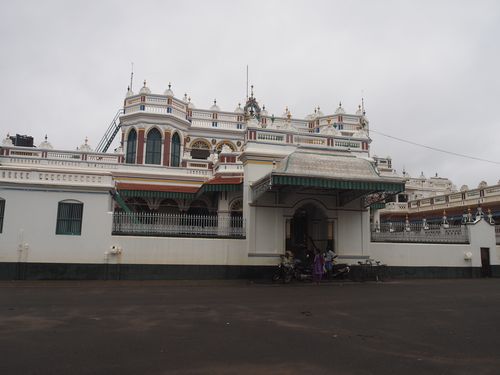
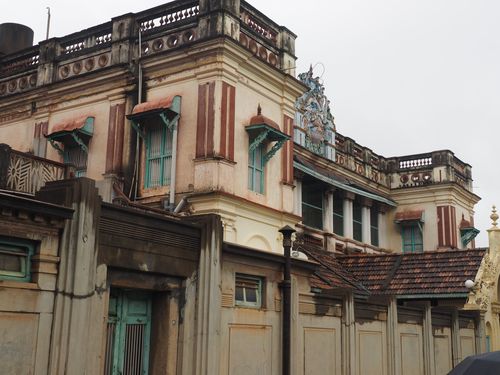
 The Chettiar mansions of Chettinad, located in the state of Tamil Nadu, represent a distinctive residential tradition developed by a merchant community active across Southeast Asia. These houses are notable for their scale, refined internal layout and use of imported materials reflecting extensive commercial networks. They illustrate the lifestyle of local elites who expressed their prosperity through domestic architecture. Today, the Chettiar mansions form a unique cultural heritage, frequently examined to understand the social, economic and residential evolution of a region shaped by long-distance trade and the influence of the Chettiar community.
Monument profile
Chettiar mansions
Monument category: Historic house
Monument family: Historic or traditional habitat
Monument genre: Residential
Cultural heritage: Hindu
Geographic location: Chettinad • Tamil Nadu • India
Construction period: 19th century AD
• Links to •
• List of videos about Chettinad on this site •
Chettinad, the Chettiar mansions • Tamil Nadu, India
• References •
BBC: ndia's 10,000 forgotten mansions
History of the Chettiar Mansions of Chettinad
Political and Social Context behind Their Emergence
The Chettiar mansions of Chettinad do not correspond to a single monumental project but to a vast residential tradition developed over nearly two centuries by the Nattukottai Chettiar community, an influential merchant and banking group of Tamil Nadu. Their construction was tied to the profound socio-economic transformations affecting South India from the eighteenth to the early twentieth century. During this period, political authority gradually shifted from regional kingdoms to British colonial administration, bringing relative stability to the region. This climate enabled the expansion of trade routes and financial networks, creating new opportunities for a community whose influence depended on mobility, cross-regional collaboration and capital circulation.
The emergence of these residences reflects the ambitions of extended merchant families rather than those of rulers or dynasties. As lenders and financial intermediaries across South and Southeast Asia, the Chettiars accumulated significant wealth and sought to materialise their status in the built environment. The mansions served multiple roles: symbols of prosperity, nodes of family organisation and spaces that affirmed the identity of a community dispersed across large geographical areas. Their construction was thus shaped not by political rivalries or military pressures but by the internal dynamics of a wealthy mercantile group seeking permanent, recognisable anchors in their ancestral homeland.
Commercial Expansion and the Rise of a Merchant Elite
The nineteenth century marks the apogee of Chettiar commercial expansion. Operating in Burma, Ceylon, Malaya, and Singapore, they became essential actors in financing agriculture, trade and urban development. Their networks benefitted from British colonial policies that secured maritime routes and favoured cross-regional economic exchanges. The resulting prosperity allowed families to reinvest in their home region, leading to the progressive construction of large residences organised according to strict cultural norms and ceremonial needs.
These mansions were designed to accommodate large extended families, host important religious and social events, and maintain the cohesion of a community dispersed through diasporic trade networks. The scale and refinement of the buildings demonstrate an architectural ambition comparable to elite residences elsewhere in Asia, yet rooted in a local context where hierarchy, kinship and communal rituals played essential roles. Through these monumental homes, the Chettiars expressed both their economic success and their attachment to traditional social structures.
Historical Events and Economic Shifts Affecting the Mansions
While the mansions were not directly shaped by dynastic conflicts, sieges or royal transitions, their development was closely linked to global economic fluctuations. The two World Wars and the political upheavals surrounding the independence of Burma in 1948 profoundly affected Chettiar financial networks. Confiscation of assets, nationalisation of local banks and declining commercial activity diminished the economic base that sustained the construction and maintenance of the mansions.
As a result, the mid-twentieth century marked the beginning of a long decline. Many families migrated to urban centres, leaving large houses under-occupied or entirely abandoned. Without steady income or coordinated stewardship, upkeep became difficult, leading to structural deterioration in parts of the region. This decline mirrors wider global patterns where merchant elites lost influence during decolonisation, reshaping the social and architectural landscapes in regions historically dependent on diasporic commerce.
Global Context and Comparison with Contemporary Monumental Traditions
The Chettiar mansions emerged during a global wave of elite residential architecture shaped by colonial exchanges, new materials and hybrid aesthetic vocabularies. Similar processes were visible in contemporary merchant districts of Penang, Yangon or Zanzibar, where affluent trading communities adapted European, Middle Eastern and Asian motifs to local building traditions. In this context, the mansions of Chettinad demonstrate how a regional community participated in worldwide architectural transformations.
These houses reflect the increasing interconnectedness of the nineteenth-century world: imported wood from Burma, tiles from Europe, glass from Ceylon and decorative techniques influenced by colonial ateliers. Their evolution forms part of a broader pattern in which emerging commercial elites expressed their identity through expansive domestic architecture rather than through temples or palaces. Thus, the mansions stand as testimonies not only to local culture but to the global circulation of goods, artisans and aesthetic ideas.
Transformations, Adaptations and Decline
Over time, the mansions underwent modifications reflecting changing needs and circumstances. Some extensions were added to accommodate growing families, while certain ceremonial spaces were reduced or repurposed as lifestyles changed. The decline of Chettiar financial power after the Second World War altered the use and meaning of the houses: rooms previously used for business dealings or ritual gatherings were abandoned, subdivided or converted into storage.
Urban changes in the Chettinad region also affected the mansions. Expanding road networks, new construction methods and demographic shifts gradually transformed the spatial context in which these houses once formed cohesive architectural ensembles. While some villages retain a high degree of integrity, others exhibit a mixture of preserved mansions, renovated structures and decayed façades, reflecting uneven economic conditions.
From the 1990s onwards, renewed interest in cultural heritage led to selective restoration efforts. A number of mansions were converted into heritage hotels, event spaces or sites for academic research. These adaptive reuses helped stabilise some properties but also introduced debates about authenticity, commercialisation and the management of private heritage in a rapidly changing society.
Contemporary Role and Cultural Significance
Today, the Chettiar mansions continue to shape the identity of the Chettinad region. They are valued as physical markers of a distinctive mercantile culture, offering insights into the social structures, domestic rituals and architectural preferences of a community historically active across Asia. Although many families no longer reside permanently in these houses, they retain symbolic importance and are often used for weddings, festivals or gatherings that reaffirm community ties.
In the broader cultural landscape of Tamil Nadu, the mansions serve as rare examples of domestic architecture that combine monumental scale with intricate craftsmanship. Their influence has extended into heritage tourism, academic research and discussions about regional identity. They also contribute to contemporary debates on the conservation of private historic properties in India, particularly those lacking formal state protection.
State of Preservation and Challenges for Conservation
The conservation of Chettiar mansions faces considerable challenges. Environmental factors such as monsoon rains, humidity and termite activity accelerate structural decay. Economic pressures, including the fragmentation of family ownership and high maintenance costs, complicate coordinated preservation initiatives. In addition, modern construction in some villages disrupts the visual coherence of historic streetscapes.
Despite these difficulties, several private and community-based restoration projects have demonstrated that conservation is feasible when stakeholders share long-term commitments. Proposals for UNESCO World Heritage recognition have been discussed, although no formal nomination has yet been advanced. Such recognition could help secure broader support for safeguarding the architectural, social and historical values embodied in these houses.
Architecture of the Chettiar Mansions of Chettinad
Technological and architectural innovations
The architecture of the Chettiar mansions in Chettinad represents one of the most sophisticated forms of domestic construction in South India during the late nineteenth and early twentieth centuries. Although these houses were not designed as monuments in the strict sense, they reveal a high degree of technical experimentation and adaptation to local conditions. Builders combined traditional South Indian know-how with new techniques made possible by the circulation of materials, craftsmen and ideas across the colonial world.
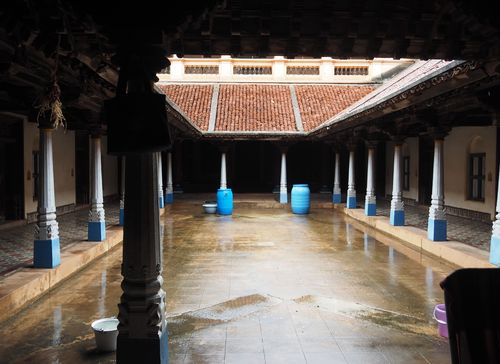
From a structural point of view, the mansions rely on thick load-bearing brick walls resting on carefully prepared foundations adapted to the clay soils of the region. These foundations are designed to withstand seasonal variations in moisture and to distribute loads over a wide surface. The sheer mass of the masonry, combined with the depth of the buildings on their plots, creates a strong thermal inertia that protects interiors from extreme heat. At the same time, the houses incorporate an advanced system of passive ventilation. A sequence of one, two or three inner courtyards, aligned along the depth of the plot, forms a chain of open spaces through which air circulates. Openings at different heights and carefully placed vents create pressure differentials that encourage airflow, cooling rooms without mechanical devices.
Urbanistically, the mansions participate in a rational layout of villages structured around straight streets and rectangular plots. The alignment of façades, the depth of parcels and the repetition of similar volumetric schemes generate a coherent built fabric in which each house forms part of a larger ensemble. In this respect, the Chettiar mansions reflect both local planning traditions and the influence of colonial-era notions of order, symmetry and legibility in urban form.
Materials and construction methods
The choice of materials in Chettiar mansions reflects the economic reach of the community. Locally produced burnt bricks form the structural core of the walls, while granite is widely used for plinths, thresholds, steps and structural elements in contact with the ground. These robust materials provide durability and resistance to moisture. The roofing system is based on timber trusses supporting terracotta tiles typical of South India, but the species of wood employed often come from outside the region.
Teak and other hardwoods imported from Burma and Southeast Asia are used extensively for beams, rafters, doors and window frames. Their resistance to insects and humidity justifies their cost and gives the buildings a longevity that would be difficult to achieve with local softwoods alone. Floors are frequently finished with a polished lime plaster, sometimes enriched with organic additives, which produces a hard, slightly glossy surface that is both easy to maintain and resistant to water.
Decoration makes use of a second category of materials, often imported. Floor tiles may come from Europe, particularly from Italy or Belgium, while patterned ceramic tiles, coloured glass and certain metal fittings are produced in colonial factories in Madras, Colombo or further afield. Construction methods combine traditional craftsmanship—such as hand-carved timber, lime plastering and stone dressing—with semi-industrial elements like cast-iron columns or prefabricated decorative pieces. The result is a material palette that is at once local and global, illustrating how a regional community integrated international supply chains into its domestic architecture.
Architectural and artistic influences
Architecturally, the Chettiar mansions form a hybrid language in which Tamil house types, colonial forms and elements from broader Asian traditions coexist. The basic plan with successive courtyards and a clear hierarchy between public, semi-private and private zones is rooted in Tamil domestic architecture. However, the scale of the houses, the monumental treatment of entrances and certain façade compositions go far beyond vernacular models and approach the vocabulary of palatial architecture.
Arches, pilasters and decorative cornices often betray inspiration from European neoclassical or Indo-Saracenic forms, interpreted through local craftsmanship. Verandas on the street side, with colonnades and balustrades, adopt compositions familiar from colonial civic buildings, while interior timber ceilings and beams are carved with motifs drawn from Hindu iconography and regional ornamental repertoires. Wall paintings may depict religious scenes, portraits, floral patterns or everyday objects, executed using pigments and techniques similar to those employed in temples and traditional houses elsewhere in Tamil Nadu.
The artistic programme is dense but ordered. Doors are organised in symmetrical panels, ceilings follow geometric grids, and decorative bands frame openings and circulation spaces. This combination of imported forms and local iconography gives the mansions a distinctive identity: they appear contemporary to colonial architecture while remaining firmly anchored in the cultural world of their builders.
Spatial organisation and structural layout
The spatial organisation of a typical Chettiar mansion is based on depth rather than height. Many houses extend 50 metres or more from the street, while rarely exceeding two storeys. The entrance is usually monumental, framed by a gateway or an elaborate façade that signals the status of the household. Behind this threshold lies a first hall, often used for receiving visitors and conducting business. This space opens onto the first courtyard, which serves as a buffer between the public domain and more intimate family areas.
Further inside, one or two additional courtyards structure the house. Around them, rooms are arranged in sequences that reflect gender roles, generational hierarchies and the needs of extended families. The kitchen, storage rooms and service areas are usually located towards the rear, sometimes linked to a secondary entrance giving access to service alleys or agricultural plots. Stairs, when present, lead to upper floors used for bedrooms, storage or seasonal occupation, but vertical development remains limited compared to the horizontal expansion of the building.
Structurally, the use of closely spaced columns in timber or masonry supports long spans and creates covered galleries around the courtyards. The repetition of these colonnades contributes to both stability and visual rhythm. Unlike religious architecture with domes or towers, the mansions remain relatively low, but their length, courtyards and continuous rooflines give them a strong presence in the street and within the village fabric.
Notable dimensions, features and anecdotes
Although there is no single standard model, some Chettiar mansions reach several thousand square metres of built area. The number of rooms can exceed fifty in the largest examples, allowing for complex patterns of occupation during weddings, festivals and other communal events. In certain houses, the alignment of columns and beams is so precise that long perspectives run from the entrance to the final courtyard, creating an impression of depth accentuated by the interplay of light and shadow.
Architecturally interesting details include concealed wall niches, strongboxes integrated into masonry, and spatial arrangements designed to manage the flow of guests during large gatherings. Oral histories occasionally mention rooms reserved for the safekeeping of account books or valuables related to the family’s banking activities, indicating the close relationship between domestic and commercial functions. While legends in the strict sense are less prominent than in religious monuments, stories about the travels of founders, the importation of specific materials or the cost of particular decorative elements are often associated with individual mansions.
International recognition and conservation issues
The architecture of the Chettiar mansions contributes significantly to the international appreciation of Chettinad as a unique cultural landscape. The combination of monumental domestic architecture, coherent village layouts and a strong link to the history of South and Southeast Asian trade has attracted the attention of researchers, conservation organisations and heritage tourism promoters. Although the ensemble is not yet inscribed on the World Heritage List, it is frequently cited as a candidate with high potential due to the rarity and integrity of this type of merchant architecture.
Conservation, however, faces major challenges. The materials that give the mansions their character—timber, lime plaster, terracotta tiles—are vulnerable to moisture, termites and lack of maintenance. Economic changes, the dispersion of families and land-tenure complexity make coordinated restoration difficult. In some villages, new construction disrupts the continuity of historic streetscapes and introduces incompatible scales or materials. Balancing the needs of contemporary life with the preservation of large, costly houses remains a central issue. Any long-term strategy must address not only the physical repair of buildings but also the revitalisation of functions capable of sustaining their upkeep in a changing social and economic environment.