Français (France)
  Nederlands (nl-NL)
 The Saint-Paul Market is one of the most recognizable commercial and social activities on the island of Réunion. Located in the town of Saint-Paul on the western coast of the island, it regularly brings together producers, traders and visitors around a wide range of local and regional products. Fruits, vegetables, spices, handicrafts and culinary specialties are offered in a lively setting that reflects the cultural diversity of Réunionese society. Beyond its economic role, the market also plays an important part in everyday life and in the interactions between residents and visitors, helping to circulate local knowledge, food traditions and artisanal practices across the island.
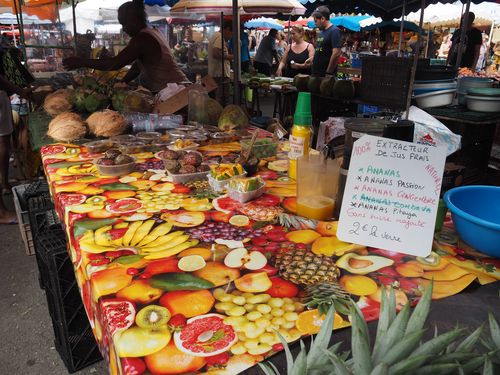
Reunion • Market in Saint Paul

Reunion • Market in Saint Paul

Reunion • Market in Saint Paul
Tradition profile
Market in Saint Paul
Tradition category: Local market
Tradition family: Traditional markets and fairs
Tradition genre: Trade and Local Creativity
Geographic location: Saint Paul • Reunion Island
• Links to •
• List of videos about on this site •
Reunion: the volcano, the landscapes and the people • Reunion Island
History of the Saint-Paul Market tradition
Political and social context of its development
The tradition of the Saint-Paul Market emerged within the colonial and social history of Réunion Island, a territory in the Indian Ocean shaped by maritime routes linking Europe, Africa, Madagascar, India, and Southeast Asia. Saint-Paul, located on the western coast of the island, was one of the earliest zones of permanent settlement and long remained an important administrative and economic center. In such a context, regular market activity developed as a practical response to the needs of a growing population and to the organization of exchange between rural production zones and urban consumers.
From the beginning, the market belonged to a colonial economy structured around agriculture, port activity, and the circulation of goods. Large plantations, smaller food-producing plots, fishing communities, and artisan activities all required places where products could be sold, exchanged, or redistributed. The market therefore appeared as a central institution within local life, linking producers, traders, and residents in a stable commercial space.
The social setting in which the market developed was highly diverse. Réunion’s population was formed through successive waves of settlement and forced or controlled migration, including Europeans, enslaved Africans and Malagasy, and later indentured workers from India and other parts of Asia. These groups occupied unequal positions within colonial society, yet markets often functioned as one of the few spaces where goods circulated across social boundaries. The market of Saint-Paul thus reflected both the hierarchies and the interdependence that characterized the island’s social structure.
Public authorities also had an interest in regulating market activity. Colonial administrations, and later municipal institutions, used markets to supervise supply, monitor trade, and maintain public order. In this sense, the Saint-Paul Market developed not only through custom but also through administrative organization.
Major historical developments affecting the tradition
Over the centuries, the Saint-Paul Market was shaped by broader historical transformations affecting Réunion. During the colonial period, the island’s economy was deeply dependent on plantation systems and on maritime trade. Local markets were essential because they made it possible to distribute fresh produce and everyday goods within a territory where transport and communication remained limited for long periods.
A major turning point came with the abolition of slavery in 1848. This event transformed the social and economic organization of the island. Formerly enslaved populations entered new forms of labor and exchange, while indentured workers, especially from India, became increasingly important within the agricultural system. These shifts altered patterns of production and consumption and introduced new food traditions, spices, and agricultural products into local commerce. The market became one of the main places where these evolving practices became visible.
The twentieth century introduced another major transformation with the gradual administrative integration of Réunion into the French Republic. Departmentalization in 1946 brought institutional change, new infrastructures, and closer links to metropolitan France. Roads improved, distribution systems expanded, and new forms of retail commerce appeared. These developments altered the economic environment in which traditional markets operated.
However, rather than disappearing, the Saint-Paul Market adapted. It continued to serve local populations while also evolving in scale, organization, and public image. In this sense, its history is marked less by rupture than by repeated adjustment to changing political and economic conditions.
Global context at the time of its formation
The emergence of the Saint-Paul Market can also be understood within a broader global pattern. In many port towns, colonial settlements, and island societies, public markets developed as essential spaces where diverse populations exchanged local produce, imported goods, and practical knowledge. They were institutions that connected rural production with urban demand and linked local economies to wider commercial systems.
Comparable traditions can be found throughout the Indian Ocean world, in the Caribbean, and in colonial port cities elsewhere. In these environments, markets often reflected mixed populations, overlapping cultural influences, and unequal systems of power. They were economic spaces, but also places where foodways, languages, and everyday habits interacted.
In this wider perspective, the Saint-Paul Market belongs to a broader family of markets shaped by colonial trade, plantation economies, and cultural diversity. What distinguishes it is its specific location within Réunion’s island history and its continuity across several centuries of political change.
Transformations and external influences
Throughout the twentieth and twenty-first centuries, the Saint-Paul Market underwent significant changes in response to economic modernization, tourism, and shifting consumer behavior. The improvement of transportation networks allowed products from across the island to circulate more easily, expanding the diversity of goods available in the market.
At the same time, imported products increasingly entered local commerce. This introduced new consumption patterns and placed traditional markets in competition with shops, supermarkets, and formal retail chains. Yet the market retained an advantage through its direct access to fresh produce, its visibility of local products, and its social atmosphere.
Tourism also became an important influence. As Réunion developed a stronger public image as a destination, markets began to attract visitors interested in local culture, food, and artisan goods. This did not eliminate the market’s practical role for residents, but it added another layer to its identity. The market became both a place of daily supply and a site where aspects of Réunionese culture were displayed and interpreted.
These external influences changed the way the market was perceived, but they did not erase its traditional functions. Instead, they pushed it to combine economic continuity with new forms of presentation and use.
Role in contemporary society and cultural importance
Today, the Saint-Paul Market remains one of the most recognizable public markets on Réunion Island. It continues to function as a place where local residents buy fruits, vegetables, spices, fish, prepared foods, and artisanal products. Producers and small traders still depend on it as a channel of distribution and visibility.
Its cultural significance goes beyond commerce. The market reflects the plural composition of Réunionese society through the products sold, the culinary traditions represented, and the everyday interactions that take place there. It offers a concrete expression of the island’s mixed heritage, where African, Malagasy, Indian, European, and other influences coexist in ordinary life.
The market also serves as a space of sociability. Conversations between sellers and buyers, exchanges of advice about ingredients or preparation, and repeated encounters among regular participants all reinforce its role as a social institution. In this sense, the market contributes to community life not only through economic exchange but also through the maintenance of relationships and local knowledge.
Current preservation and modern challenges
Despite its vitality, the Saint-Paul Market faces several challenges. Modern retail systems, changing lifestyles, and urban development can reduce the centrality of traditional public markets in everyday consumption. Younger generations may also have different expectations regarding shopping practices, convenience, and food supply.
There is also the risk that tourism may alter the balance of the market by encouraging forms of display more oriented toward visitors than toward local needs. If this tendency becomes too strong, the market could gradually shift from a lived institution to a primarily representational one.
At the same time, the market’s resilience lies in its ability to provide what modern commercial systems often cannot: direct contact between producers and consumers, strong visibility of local products, and a setting in which cultural practices remain embedded in ordinary exchange. These qualities give the market enduring value.
Local institutions and community actors increasingly recognize that such markets represent a form of living heritage. Even without formal international recognition, the Saint-Paul Market remains an important example of how a long-standing commercial tradition can preserve historical depth while adapting to contemporary realities. Through this continuity, it remains a significant part of Réunion’s social and cultural landscape.
Characteristics of the Saint-Paul Market tradition
Origins and historical context
The tradition of the Saint-Paul Market developed within the broader historical and social evolution of Réunion Island, a territory in the Indian Ocean shaped by successive waves of settlement and by maritime trade networks linking Europe, Africa, Madagascar and Asia. The town of Saint-Paul, located on the western coast of the island, was one of the earliest administrative and commercial centers established during the colonial period. In such an environment, markets naturally emerged as essential institutions for organizing economic exchange.
The initial function of the Saint-Paul Market was practical and economic. Agricultural production on the island, whether from large plantations or smaller subsistence farms, required regular places where producers could sell their goods. Markets allowed the distribution of fresh food, spices, and everyday commodities while creating a direct link between rural producers and urban consumers.
The emergence of the market was also connected to the social structure of Réunion. The island’s population was composed of diverse groups, including European settlers, enslaved Africans and Malagasy, and later indentured laborers from India and other parts of Asia. These communities contributed different agricultural practices, culinary traditions and artisanal skills. The market became a space where these varied influences interacted through trade and daily encounters.
Within this historical framework, the Saint-Paul Market fits into a long-standing pattern found in many colonial port societies: the development of public markets as centers of exchange that integrate economic necessity with social interaction.
Elements and practices within the tradition
The Saint-Paul Market functions according to a structured but flexible organization that reflects both commercial needs and social habits. Vendors generally arrive early to set up their stalls, arranging products in ways that make them visible and attractive to visitors. The presentation of goods plays an important role, as color, freshness and variety are used to signal quality.
The products available at the market illustrate the diversity of Réunion’s agriculture and cultural influences. Tropical fruits, vegetables, spices, fish, prepared dishes and artisanal goods coexist within the same space. This diversity reflects the agricultural richness of the island as well as the culinary traditions developed through centuries of cultural interaction.
Interactions between sellers and buyers are a defining element of the market’s practices. Vendors often explain the origin of their products, discuss methods of preparation or offer advice on cooking. These exchanges transform the act of purchase into a form of communication and knowledge sharing.
The roles within the market are varied. Some participants are farmers selling their own harvest, while others specialize in prepared foods, spices, or handmade crafts. Many of these skills are transmitted within families or local networks. Knowledge of cultivation, food preparation, and commercial presentation forms part of an informal system of expertise passed from one generation to another.
Symbolism and cultural meanings
Although the market primarily serves an economic purpose, it also carries symbolic significance. The Saint-Paul Market represents a visible expression of the cultural diversity that characterizes Réunion Island. Through its products and interactions, it reflects the coexistence of traditions originating from different parts of the world.
Colors, aromas and sounds contribute to the symbolic dimension of the market environment. The visual presence of tropical produce, aromatic spices and handmade objects creates a sensory landscape that evokes the island’s agricultural and cultural richness.
Social interaction also plays a symbolic role. Conversations between vendors and customers, greetings among regular participants, and the exchange of culinary knowledge reinforce the sense of community associated with the market. These interactions transform the marketplace into more than a commercial space; it becomes a setting where cultural continuity is maintained through everyday practice.
Different communities may emphasize particular products or cooking traditions, allowing the market to display subtle variations within the broader cultural identity of Réunion.
Evolution and external influences
Over time, the Saint-Paul Market has adapted to changing economic and social conditions. Improvements in transportation and infrastructure made it possible for products from different parts of the island to reach the market more easily. As a result, the diversity of goods available expanded.
External influences also contributed to the transformation of the market. Imported products and global trade networks introduced new ingredients and commodities. These additions did not replace local goods but expanded the range of items offered.
Tourism has also influenced the evolution of the market. Visitors are often drawn to markets as places where local culture can be observed through food, crafts and everyday activities. As a consequence, some aspects of the market have become more visible and organized to accommodate both residents and visitors.
Comparable markets exist in many other parts of the world, particularly in island societies and port cities where trade and cultural exchange have historically been central. These parallels highlight common patterns in the development of market traditions, while the Saint-Paul Market retains distinctive features linked to the history and cultural diversity of Réunion.
Social organization and community impact
The Saint-Paul Market plays an important role in the social organization of local life. It creates a meeting place where producers, traders and consumers interact regularly. This interaction helps maintain economic relationships and supports small-scale agricultural activity.
Markets also facilitate the circulation of information. News about agricultural conditions, food preparation techniques and community events often spreads through informal conversations between participants. In this way, the market contributes to the maintenance of local knowledge systems.
The social structure of the market reflects the broader diversity of Réunion’s population. Participants may come from different cultural backgrounds, yet the shared activity of trade creates common ground for cooperation and interaction.
Regular market days also structure the rhythm of community life. For many residents, visiting the market is part of weekly routines, linking economic activity with social habits.
Statistics, anecdotes and notable aspects
The Saint-Paul Market attracts a significant number of vendors and visitors during each market day. Dozens of stalls may be present, representing farmers, artisans and food vendors from various parts of the island.
Some families have participated in the market for several generations. Their continued presence illustrates the continuity of commercial traditions and the transmission of practical knowledge related to cultivation, food preparation and trade.
Local anecdotes sometimes refer to well-known vendors recognized for the quality of specific products or for their long-standing presence in the market. Such figures contribute to the identity of the marketplace and reinforce its reputation within the community.
These elements help transform the market from a purely functional space into a social institution with its own memory and traditions.
Recognition and preservation challenges
Today the Saint-Paul Market is widely recognized as an important element of Réunion’s cultural landscape. It represents a living tradition that combines economic activity with social interaction and cultural expression.
However, the market also faces several challenges. The growth of supermarkets and modern retail systems can change consumer habits and reduce reliance on traditional marketplaces. Urban development and changing lifestyles may also affect the frequency and character of market participation.
At the same time, the market benefits from increasing awareness of local food production and cultural heritage. Markets offer direct contact between producers and consumers and provide access to fresh products that are often closely linked to local agriculture.
Efforts to maintain the vitality of the Saint-Paul Market focus on preserving this balance between tradition and adaptation. By continuing to support local producers and maintaining its role as a social meeting place, the market remains an enduring example of how historical commercial traditions can persist within modern economic contexts.
 Links to the main sections of the site