Français (France)
  Nederlands (nl-NL)
 White elephants hold an important place in Myanmar traditions, where they have long been associated with royalty, Buddhism and symbols of prosperity. In Yangon, these rare animals are kept in dedicated facilities and continue to represent an important element of Burmese political and religious symbolism. The term does not necessarily refer to completely white elephants, but to animals displaying specific physical characteristics considered exceptional. This tradition illustrates the continuity of ancient beliefs that remain visible in contemporary Myanmar culture.
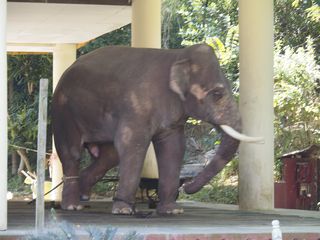
Yangon • The white elephants
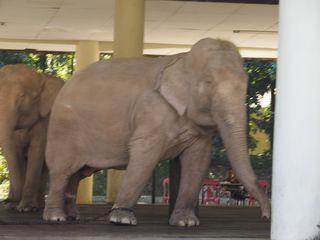
Yangon • The white elephants
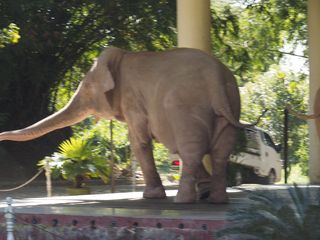
Yangon • The white elephants
Tradition profile
The white elephants
Tradition category: Symbolic and Sacred Animals
Tradition family: Religious traditions
Tradition genre: Religious Festivals and Celebrations
Cultural heritage: Buddhist
Geographic location: Yangon • Myanmar
• Links to •
• List of videos about Yangon on this site •
Yangon • Streets and White Elephants
Yangon, Shwedagon pagoda • Myanmar
White Elephants in the Royal and Religious Traditions of Myanmar
Origins and Early Symbolism
White elephants occupy a distinctive position in the political and religious traditions of Myanmar and several other Southeast Asian kingdoms. Their importance does not depend on a completely white appearance, but rather on a series of rare physical characteristics interpreted as auspicious signs within royal and Buddhist traditions. Specific features of the skin, eyes or hair were historically regarded as indicators of prosperity, legitimacy and spiritual protection.
In Theravāda Buddhism, which became dominant in Myanmar over many centuries, elephants already held strong symbolic value. Buddhist narratives associate the white elephant with the birth of the Buddha through the dream of Queen Māyā, in which a white elephant appeared before Siddhartha’s conception. This religious symbolism gradually reinforced the prestige attributed to rare elephants considered sacred or exceptional.
Development in Burmese Royal History
From the medieval and early modern Burmese kingdoms onward, possession of white elephants became closely connected to royal authority. Kings who acquired such animals strengthened their political prestige and religious legitimacy, while the absence of white elephants could be interpreted as a sign of weakened royal fortune.
Royal chronicles from different Burmese dynasties frequently describe the capture, exchange or ceremonial reception of white elephants as major state events. Rivalries between neighboring kingdoms were at times linked to the control of these symbolic animals. White elephants received special treatment within royal courts, including dedicated caretakers, ceremonial residences and religious rites emphasizing their exceptional status.
The tradition formed part of a broader conception of kingship in which the ruler was associated with cosmic order, the protection of Buddhism and the prosperity of the kingdom. White elephants therefore functioned not only as rare animals but also as political symbols reinforcing the sacred dimension of monarchy.
Religious Meaning and Social Importance
Within Burmese culture, white elephants became associated with favorable omens, stability and merit. Their symbolic role extended beyond the royal court into religious and popular imagination. In Theravāda Buddhist societies, the presence of a white elephant could be interpreted as evidence of moral authority and spiritual legitimacy.
This symbolism remained deeply rooted even after major political changes in Myanmar. White elephants continued to appear in ceremonial contexts, official narratives and cultural representations connected to the country’s historical identity. Their significance combines religious symbolism, royal memory and national prestige.
In Yangon, facilities created for the conservation and presentation of white elephants reflect this continuity. Although Myanmar no longer has a monarchy, the symbolic importance of these animals remains visible within public and cultural life.
Contemporary Role and Preservation Issues
Today, white elephants in Myanmar are primarily presented as elements of cultural heritage linked to the country’s royal and religious traditions. Their political role has largely disappeared, but their symbolic importance continues within national identity and collective memory.
The maintenance of white elephants in controlled environments has also generated contemporary debate. Discussions concern animal welfare, living conditions and the contrast between symbolic reverence and the realities of captivity. These questions have become increasingly visible alongside broader international discussions about the treatment of elephants in Asia.
Despite these debates, white elephants remain powerful cultural symbols in Myanmar. Their continued presence in Yangon demonstrates the survival of traditions that connect modern urban society with older religious and royal concepts inherited from the country’s historical kingdoms.
Ritual Practices and Symbolic Representation of White Elephants in Myanmar
Presentation of the Animals and Ceremonial Environment
In Yangon, white elephants are generally kept in specially designated compounds where their presence is organized according to ceremonial and symbolic traditions distinct from those associated with working elephants. These spaces usually include covered shelters, controlled circulation areas and sections reserved for daily care. The animals are often displayed beneath decorated pavilions or within enclosures connected to royal and religious symbolism.
The designation “white elephant” does not refer to a completely white animal. Instead, it applies to elephants displaying rare physical characteristics recognized by Burmese authorities and specialists responsible for their identification. Pale skin tones, light pigmentation around the eyes, unusual hair coloration and other specific traits are considered important markers within Burmese traditions.
The atmosphere surrounding these installations differs from ordinary zoological spaces. Decorative structures, symbolic objects and ceremonial arrangements emphasize the exceptional status attributed to the animals.
Ceremonial Objects and Symbolic Decorations
White elephants associated with Burmese traditions are frequently accompanied by ceremonial objects linked to former royal customs. Decorative fabrics, embroidered coverings, parasols, gilded ornaments and symbolic textiles may be used during official presentations or religious events connected to the animals. These elements serve to reinforce the prestige historically associated with white elephants rather than functioning as practical equipment.
The surrounding structures often include Buddhist symbols, commemorative panels and decorative motifs inspired by Burmese religious architecture. Gold, white and deep red colors are commonly associated with royal symbolism and spiritual protection. Some ceremonial spaces also contain offerings placed by visitors or representatives of religious institutions.
Official ceremonies related to white elephants may involve blessings performed by monks, symbolic gestures by officials and the presentation of ritual objects. These events are generally formal and restrained rather than highly theatrical.
Daily Care and Human Roles
The maintenance of white elephants involves specialized personnel responsible for feeding, cleaning, supervision and movement control. Mahouts play a central role in daily interaction with the animals. Their work relies on continuous observation of behavior patterns, feeding routines and controlled communication developed through long-term contact.
The elephants are generally fed with vegetation, sugar cane, fruits and other foods commonly used for domesticated elephants in Southeast Asia. Washing procedures form another visible aspect of daily care. Cleaning sessions are often carried out with buckets, hoses and brushes while the animals remain under close supervision.
Staff members also monitor the animals’ physical condition and organize their movement within restricted areas. Compared to elephants employed in forestry or tourism activities, white elephants are usually presented in a more static ceremonial context emphasizing symbolic visibility rather than labor.
Visitors often observe the animals in relatively calm environments where movement remains limited by protective structures and security measures. Interactions between the public and the elephants are typically controlled and supervised.
Religious Symbolism and Public Behavior
White elephants continue to function as religious and symbolic figures within contemporary Burmese culture. Visitors frequently approach them with gestures similar to those observed in religious contexts. Some individuals join their hands in greeting, place offerings nearby or remain briefly in silent observation.
Visual representations connected to white elephants also appear in paintings, sculptures and official imagery associated with royal history and Buddhist symbolism. In Burmese tradition, these animals are linked to prosperity, merit and favorable signs connected to political and spiritual authority.
The sound environment surrounding the elephants remains relatively subdued. Conversations, instructions from caretakers and occasional ritual recitations dominate the atmosphere rather than music or large ceremonial performances. This restrained setting contributes to the perception of the elephants as protected symbolic beings rather than public entertainment attractions.
Distinctive Features of the Tradition in Contemporary Myanmar
The white elephants of Yangon are distinguished less by a completely pale appearance than by the cultural meaning assigned to them. Their official recognition remains an important symbolic act accompanied by public announcements and media attention within Myanmar.
The tradition combines elements of royal heritage, Buddhist symbolism and state representation. Even after the disappearance of the Burmese monarchy, white elephants continue to occupy a visible place within national cultural identity. Their presence in Yangon preserves older ceremonial concepts while adapting them to the institutional framework of contemporary Myanmar.
The controlled environments, ritual decorations and formal presentation methods surrounding these animals maintain a tradition in which symbolism, religion and political memory remain closely interconnected.
 Links to the main sections of the site