Français (France)
  Nederlands (nl-NL)
 The Persian wheel, locally known as Rahat, is a traditional irrigation system found in the arid regions of Rajasthan and the state of Bihar in India. This hydraulic device operates through a mechanism of buckets attached to a rotating wheel, powered by oxen or buffaloes. By transferring water from wells to fields, the Rahat has historically been vital for agriculture and livelihoods in these areas. As an example of local ingenuity adapted to challenging environments, it represents both cultural heritage and sustainable technology. Though its usage has declined with modernization, it remains a symbol of humanity's connection to the environment.
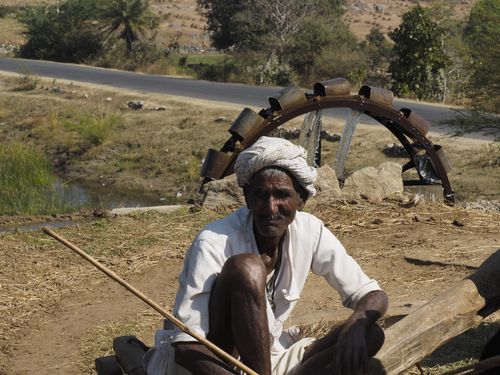
Rajasthan • Pesrian Wheel (Rahat)
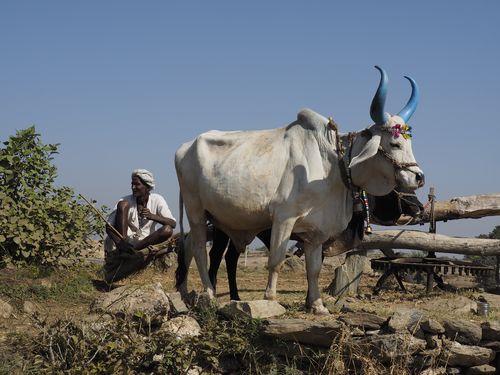
Rajasthan • Pesrian Wheel (Rahat)

Rajasthan • Pesrian Wheel (Rahat)
Tradition profile
Pesrian Wheel (Rahat)
Tradition category: Traditional irrigation methods
Tradition family: Traditional practices and lifestyle
Tradition genre: Agricultural and rural traditions
Geographic location: Rajasthan • Rajasthan • India
• Links to •
• List of videos about Raipura Brahman on this site •
India, scenes of life in the countryside • Rajasthan, Haryana, Bihar, India
The Persian Wheel (Rahat): A Symbol of Social and Cultural Innovation in Rajasthan
The Persian wheel, or Rahat, is a traditional irrigation device that reflects the ingenuity and adaptability of societies in arid regions. Widely used in Rajasthan, India, this ancient technology played a crucial role in shaping agricultural practices, social organization, and cultural values. This article explores the origins, historical significance, and global context of the Persian wheel, as well as its evolution and current status.
Origins and Social-Political Motivations
The Persian wheel was introduced to India during the medieval period, likely between the 11th and 16th centuries, as a result of cultural exchanges and trade with the Persian Empire and Central Asia. Its adoption in Rajasthan addressed the urgent need for sustainable water management in an environment marked by frequent droughts and limited water resources.
Socially, the Rahat promoted collective resource management. Communities organized themselves around shared access to the wheel, fostering cooperation and equitable distribution of water for irrigation. Politically, local rulers and landlords supported its use to stabilize agricultural productivity and ensure food security, thereby strengthening their control over the region.
Historical Milestones and Regional Impact
Medieval Introduction and Expansion:
The Persian wheel became widely used during the reigns of regional kingdoms and empires that valued its efficiency in lifting water. It allowed farmers to cultivate crops even in semi-arid zones, contributing to economic stability.
Mughal Period:
The Mughal Empire further promoted the use of the Rahat in state-administered agricultural lands. Its integration into larger irrigation networks demonstrated the empire’s focus on agrarian prosperity.
Colonial Era:
During British rule, the Persian wheel coexisted with new technologies like canal systems and steam pumps. While modern alternatives began to dominate, the Rahat remained essential for small-scale farmers who could not afford costly machinery.
Global Context and Comparisons
The Persian wheel is part of a broader tradition of hydraulic engineering that spans continents. Similar technologies, such as the noria in the Mediterranean and the shaduf in Egypt, reflect humanity’s shared effort to overcome water scarcity.
What sets the Rahat apart is its accessibility and communal usage. Unlike systems controlled by elites or centralized authorities, the Persian wheel in Rajasthan was managed at the village level, emphasizing collective responsibility and mutual benefit.
Transformations and Social Dynamics
Over the centuries, the Rahat underwent significant changes:
Technological Evolution:
The advent of mechanical pumps and motorized systems in the 19th and 20th centuries reduced reliance on the Persian wheel. These modern solutions, while more efficient, often excluded smaller farmers due to their high costs.
Social Shifts:
The Rahat once fostered a sense of community through shared maintenance and use. Its decline mirrored broader societal changes, including urbanization and the shift toward individualized ownership of resources.
Contemporary Adaptation:
Today, the Persian wheel survives in select rural areas where it is valued for its simplicity and low environmental impact. It also serves as an educational tool and a symbol of sustainable practices.
Symbolism, Rituals, and Anecdotes
The Rahat is more than a tool; it carries cultural and symbolic significance. Some communities performed rituals to bless the wheel during its installation or repair, associating it with spiritual guardianship over water resources.
A notable anecdote recounts how a local ruler once rewarded a craftsman who designed a particularly efficient Persian wheel that doubled the irrigated area of his kingdom, demonstrating its economic and strategic importance.
Cultural Importance and UNESCO Potential
The Persian wheel is a testament to the resilience and innovation of traditional societies. While its use has declined, its principles remain relevant in the context of sustainable development and water management. Recognizing the Rahat as an intangible cultural heritage under UNESCO could enhance its preservation, provide funding for educational initiatives, and promote its role as a symbol of ecological harmony.
Challenges to Preservation
The Persian wheel faces several threats:
Technological Obsolescence:
The widespread adoption of electric pumps has made the Rahat less practical for modern agriculture.
Environmental Changes:
Falling groundwater levels, driven by over-extraction and climate change, have reduced the viability of traditional irrigation methods.
Cultural Neglect:
The diminishing use of the Persian wheel has led to a loss of knowledge and skills associated with its construction and operation.
Conclusion: A Legacy of Sustainability
The Persian wheel remains a powerful symbol of humanity’s capacity to adapt and innovate in the face of environmental challenges. Its preservation is not only a tribute to the past but also a resource for addressing contemporary issues of water management and sustainability. By celebrating the Rahat, we honor a tradition that bridges history, culture, and ecological responsibility.
The Persian Wheel (Rahat): A Cultural and Social Innovation in Rajasthan
The Persian wheel, or Rahat, is a traditional irrigation system that highlights the ingenuity and cultural resilience of Rajasthan’s communities. Introduced centuries ago, this technology reflects a harmonious blend of local customs and external influences, serving as a testament to the region’s capacity for adaptation and collective resource management. This article explores the historical significance, symbolic elements, and contemporary relevance of the Rahat, as well as its challenges and global recognition potential.
Origins and Social-Cultural Innovation
The Persian wheel likely arrived in Rajasthan between the 11th and 16th centuries, facilitated by trade routes and cultural exchanges with Persia and Central Asia. It addressed the critical need for sustainable water management in an arid environment, enabling the efficient extraction and distribution of water for agriculture.
Socially, the Rahat became a cornerstone of community life. Villagers collaborated to build, maintain, and operate the system, fostering cooperation and mutual reliance. Politically, local rulers promoted its adoption to stabilize agricultural output, secure food supplies, and strengthen their kingdoms' economic foundations.
Symbolic and Practical Elements
Functionality of the Rahat:
The Persian wheel operates using a continuous loop of buckets attached to a rotating wheel, powered by animals like oxen or buffaloes. This mechanism symbolizes a balance between human ingenuity, animal labor, and natural resources.
Materials and Craftsmanship:
Constructed from locally sourced wood and rope, the Rahat exemplifies sustainable craftsmanship. In some cases, wheels were adorned with carvings or decorations, reflecting the artisans’ skill and the community’s reverence for the system.
Rituals and Beliefs:
The installation or repair of a Persian wheel was often accompanied by prayers and rituals, invoking blessings for abundant harvests and sufficient water supply. These practices underscored the spiritual connection between communities and their environment.
A Unique Blend of Regional and External Influences
The Rahat embodies a synthesis of local traditions and external technological ideas. Imported through Persian cultural influence, it was adapted to suit Rajasthan’s specific climatic and geographical conditions. Its integration into communal systems of water management illustrates how foreign innovations were localized to enhance their utility.
Compared to similar systems like the noria in the Mediterranean or the shaduf in Egypt, the Rahat in Rajasthan stands out for its communal management model. It not only supported individual farms but also reinforced social cohesion by promoting shared responsibilities.
Historical Transformations and Milestones
Medieval Flourishing:
During the medieval period, the Persian wheel became indispensable for irrigating Rajasthan’s semi-arid lands. It enabled the cultivation of crops in regions previously considered unproductive, boosting local economies.
Mughal Era Enhancements:
The Mughal Empire integrated the Rahat into its large-scale irrigation projects, demonstrating its strategic importance for agricultural prosperity.
Colonial Decline and Modern Adaptations:
Under British rule, the introduction of canal systems and mechanical pumps reduced the reliance on the Rahat. However, it persisted in rural areas where modern infrastructure was limited, continuing to serve small-scale farmers.
Anecdotes and Statistics
A well-documented anecdote tells of a Persian wheel built by a craftsman for a Rajasthan king, doubling the irrigation capacity of the royal fields and earning him significant recognition.
In its peak usage, the Rahat supported entire villages by providing a reliable water source for both agriculture and domestic needs.
Today, only a handful of Persian wheels remain operational, serving as living museums of a bygone era.
Global Context and UNESCO Potential
The Persian wheel’s principles resonate globally, sharing commonalities with historical irrigation practices in diverse regions. Its sustainable design and reliance on renewable energy sources make it a model for eco-friendly agricultural techniques.
Recognition by UNESCO as Intangible Cultural Heritage could elevate the Rahat's status, ensuring its preservation and promoting its historical and environmental significance. Such recognition would also draw attention to the broader context of traditional water management systems and their relevance in addressing modern water crises.
Contemporary Challenges
Technological Obsolescence:
The spread of electric pumps and borewell systems has rendered the Rahat largely obsolete, leading to the erosion of associated knowledge and skills.
Environmental Concerns:
Depleting groundwater levels, exacerbated by over-extraction and climate change, threaten the functionality of traditional irrigation methods.
Cultural Neglect:
The lack of active use and diminishing awareness among younger generations pose risks to the survival of this heritage.
A Living Symbol of Sustainability
The Persian wheel remains a powerful symbol of the ingenuity and adaptability of Rajasthan’s communities. Its historical significance and ecological relevance position it as a cultural artifact worth preserving. By integrating its principles into modern water management and promoting awareness of its legacy, the Rahat can continue to inspire solutions for sustainable development. Recognizing its global and regional importance ensures that this invaluable tradition endures for future generations.
 Links to the main sections of the site