Français (France)
  Nederlands (nl-NL)
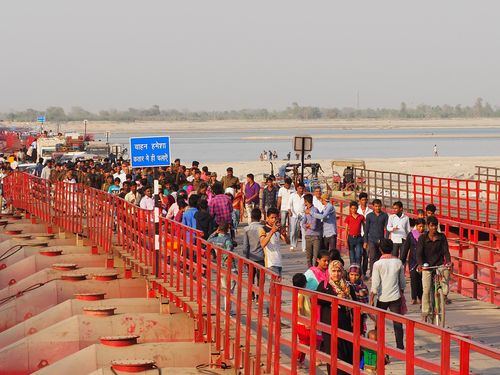
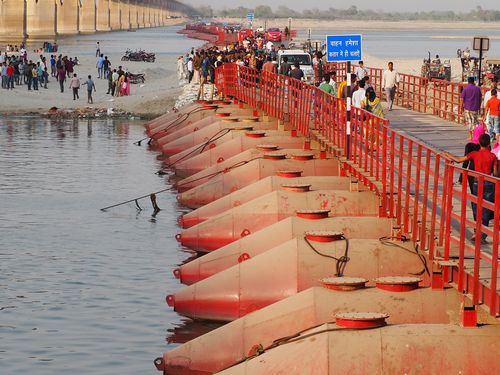
 The banks of the Ganges in Patna form an important space for circulation, gathering, and daily activity in the capital of the Indian state of Bihar. The ghats and riverfront areas are continuously occupied by people involved in transportation, religious practices, commercial exchanges, and domestic uses of the river. The crowds visible along the Ganges reflect the social and cultural importance of the river in the urban life of Patna. Activities vary according to the time of day and the religious calendar, creating an environment characterized by high population density and constant interaction between the city and the river.

Tradition profile
Crowd on the Banks of the Ganges
Tradition category: Crowds and Religious Spirituality
Tradition family: Religious traditions
Tradition genre: Religious Festivals and Celebrations
Cultural heritage: Hindu
Geographic location: Patna • Bihar • India
• Links to •
• List of videos about Patna on this site •
Patna, sacred city of Sikhism • Bihar, India
Collective Gatherings on the Banks of the Ganges in Patna
Religious Origins and Role of the River
The gatherings observed along the banks of the Ganges in Patna belong to a long tradition connected to the central importance of the river in the societies of northern India. In Hinduism, the Ganges is regarded as a sacred river associated with purification, funerary rites, and devotional practices. Cities established along its course gradually developed public riverfront spaces dedicated to ritual bathing, religious ceremonies, and collective gatherings.
Patna, historically known as Pataliputra, occupies an important place in the political and religious history of the Ganges valley. The continuous presence of crowds on the ghats and riverbanks reflects the close relationship between urban organization and religious practices connected with sacred water. Gatherings may be linked to major festivals, family ceremonies, pilgrimages, or daily acts of ritual purification.
The river also plays a significant symbolic role in ceremonies connected to the cycle of life. Prayers, offerings, and collective rituals performed on the banks contribute to a long-standing religious continuity extending far beyond the city itself.
Development of Collective Gatherings
The growth of Patna’s population over the centuries reinforced the importance of the riverbanks as spaces for gathering and social activity. The ghats progressively acquired multiple functions combining religious practices, urban circulation, commerce, and communal interactions.
During major Hindu festivals, the banks of the Ganges attract particularly large crowds. Certain celebrations, especially Chhath Puja, lead to exceptional concentrations of participants who gather to perform rituals dedicated to the sun and the sacred river. This festival, which occupies a central place in the cultural identity of Bihar, strongly influences the religious life of Patna.
The gatherings are not limited to major religious events. The riverbanks remain active throughout the year for ritual bathing, prayer, cremation ceremonies, social meetings, and various daily activities connected with the life of the city. This continuity distinguishes the ghats as active social spaces rather than purely ceremonial locations.
The development of urban infrastructure gradually transformed the organization of the riverfront areas. Stairways, platforms, and access routes were progressively adapted in order to accommodate increasingly large crowds during periods of intense religious activity.
Social and Religious Significance
The crowds visible along the Ganges reflect the collective dimension of religious life in Bihar. These gatherings help maintain social ties between residents of different neighborhoods, generations, and social groups. The river functions as a shared public space where social distinctions may temporarily become less visible within the context of common devotional practices.
Religious ceremonies performed on the banks also contribute to the transmission of traditions between generations. Families often bring children to participate in rituals that have been practiced for centuries, reinforcing continuity within local religious culture despite the rapid transformation of contemporary urban society.
The gatherings also support a broad range of economic activities connected to flowers, offerings, religious objects, food distribution, and river transportation. Many small-scale vendors and service providers depend directly on the continuous movement of people along the ghats.
Contemporary Transformations and Current Challenges
Rapid urbanization in Patna has significantly altered the environment surrounding the Ganges. Population growth, river pollution, and expanding urban infrastructure increasingly influence the organization of religious gatherings and public use of the riverbanks.
Local authorities regularly implement temporary systems for crowd control, sanitation, and security during major festivals in order to manage the very large numbers of participants gathering along the ghats. Concerns related to water quality and riverbank preservation have also become increasingly important for the continuation of traditional religious practices.
Despite these transformations, collective gatherings on the banks of the Ganges remain central to the cultural and religious life of Patna. They illustrate the continuity of a long-standing relationship between the river, the city, and the collective practices that continue to shape an important part of social life in Bihar.
Collective Ritual Practices on the Banks of the Ganges in Patna
Organization of Gatherings Along the Riverbanks
The gatherings visible along the banks of the Ganges in Patna are concentrated mainly around the ghats, stairways, and riverfront platforms providing direct access to the water. These spaces simultaneously accommodate religious rituals, social interaction, urban circulation, and commercial activity. The density of the crowds varies considerably according to the time of day, the season, and the religious calendar.
Periods of particularly high attendance are usually connected with Hindu festivals, especially Chhath Puja, during which very large crowds gather on the riverbanks to perform rituals dedicated to the sun and the sacred river. Participants generally arrive in family or community groups and gradually occupy available sections of the ghats and surrounding embankments.
The movement of the crowds follows an informal but recognizable organization. Access routes, ritual areas, spaces for offerings, and pathways leading toward the water are structured according to local practices familiar to regular participants. Priests, flower sellers, food vendors, boat operators, and temporary organizers also contribute to the functioning of these gatherings.
The riverfront therefore becomes a shared collective space where religious practices, social exchanges, and urban activity overlap continuously. This coexistence of functions is one of the defining characteristics of gatherings along the Ganges in Patna.
Sequence of Ritual Practices
Religious activity often begins before sunrise, a moment traditionally regarded as favorable for ritual bathing and prayer. Participants descend the ghats in order to reach the river, where ablutions, partial immersion, and purification rituals take place.
Ceremonial sequences generally include prayers recited facing the river, offerings placed on the water, and symbolic gestures associated with spiritual purification. During major festivals, participants may remain on the riverbanks for several hours while waiting for precise moments linked to sunrise or sunset ceremonies.
Priests sometimes supervise rituals, recite sacred texts, or guide worshippers through specific ceremonial actions. Family ceremonies connected with births, funerary rites, memorial observances, or anniversaries may also occur along the ghats. Some families bring trays containing flowers, fruits, oil lamps, incense, cloth, and ritual powders used during devotional practices.
The river itself remains the central element of all visible activities. Most ritual gestures are directed toward the water, which is regarded in Hindu traditions as both sacred and purifying.
Clothing, Objects, and Ritual Elements
The gatherings on the banks of the Ganges display a wide variety of clothing and ritual objects connected with religious practices. Participants frequently wear garments associated with ceremonial observance and ritual bathing. Women are often dressed in saris of bright colors, while men commonly wear lightweight garments or simple cloths suitable for immersion in the river.
Objects used during ceremonies include oil lamps, offering trays, garlands of flowers, incense sticks, coconuts, fruits, brass containers, and ritual vessels filled with river water. Certain ceremonies also involve woven bamboo baskets containing offerings or food products associated with religious observances.
Temporary ritual installations frequently appear along the ghats during major gatherings. Cloth coverings, improvised altars, loudspeakers, banners, and temporary lighting systems may be added in order to organize the movement of large crowds and facilitate collective ceremonies.
Boats positioned near the riverbanks also form part of the visual environment. Some transport families, pilgrims, or religious participants between different sections of the riverfront.
Sound Environment and Collective Interaction
The soundscape of the gatherings combines prayers, conversations, chants, announcements, and ritual sounds produced simultaneously by large numbers of participants. During important festivals, loudspeakers often broadcast devotional songs or religious recitations across the riverfront.
Religious chanting occupies an important place in collective ceremonies. Certain rituals include the use of hand cymbals, bells, drums, or simple percussion instruments accompanying devotional recitations. The sounds produced by the crowds mix continuously with the movement of the river, the activity of boats, and the surrounding urban environment.
Interaction between participants follows established social patterns. Families cooperate in preparing offerings, transporting ritual objects, and organizing temporary spaces on the ghats. The gatherings also create opportunities for social contact between residents of different neighborhoods and visitors arriving from surrounding rural areas.
Flower vendors, food sellers, priests, and providers of ritual materials remain visible throughout the ceremonies. Their presence contributes directly to the organization and circulation of people along the riverbanks.
Distinctive Features of the Gatherings in Patna
The gatherings observed in Patna are distinguished by the close relationship between dense urban space and open ritual areas directly connected to the river. The ghats simultaneously function as religious spaces, circulation zones, meeting places, and locations for daily social activity.
The immediate proximity between residential districts and the riverfront encourages continuous use of the Ganges throughout the year rather than only during major religious festivals. Ritual activity therefore exists alongside ordinary urban life in a highly visible manner.
During periods of intense attendance, the riverbanks temporarily transform into large collective ceremonial spaces where thousands of participants perform similar gestures directed toward the river at the same time. This concentration of ritual activity, movement, sound, and visual repetition constitutes one of the most characteristic aspects of religious gatherings along the Ganges in Patna.
 Links to the main sections of the site