Français (France)
  Nederlands (nl-NL)
 Le marché de Maloibari Pathar, en Assam, est principalement consacré aux produits alimentaires tels que les fruits, les légumes et le poisson. On y trouve également des activités artisanales comme la fabrication d’outils agricoles, témoignant du rôle de ce marché dans la vie économique locale. Ce lieu d’échanges illustre l’importance des marchés traditionnels dans le quotidien et la créativité des communautés rurales indiennes.
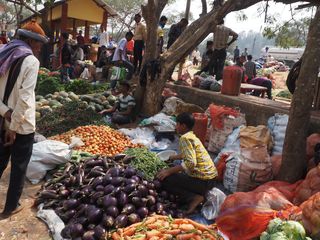
India • Maloibari market
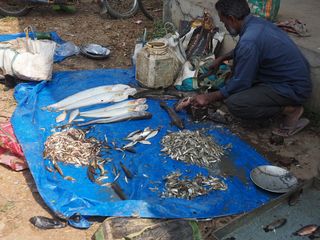
India • Maloibari market
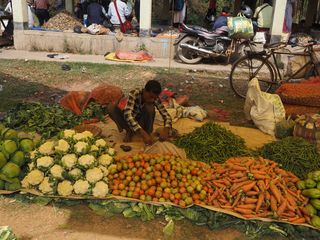
India • Maloibari market
Tradition profile
Maloibari market
Tradition category: Local market
Tradition family: Traditional markets and fairs
Tradition genre: Trade and Local Creativity
Geographic location: Maloibari Pathar • Assam •
• Links to •
• List of videos about Maloibari Pathar on this site •
Maloibari Pathar, Assam • Daily life at the market
The History of the Maloibari Pathar Market Tradition in Assam
The Maloibari Pathar market, located in the state of Assam in Northeast India, is a local institution that illustrates the persistence of rural exchange practices over centuries of political, social, and economic transformation. More than a commercial hub, it represents a social and cultural space where communities negotiate identity, economy, and continuity. Its history reflects the interplay between local traditions and broader historical processes such as dynastic shifts, colonial interventions, and post-independence modernization.
Political and Social Context of Emergence
The origins of the Maloibari Pathar market must be understood within the agrarian and social structures of Assam. For centuries, rice cultivation, fishing, and subsistence farming formed the basis of local life. Villages were often dispersed, composed of diverse ethnic and religious groups—Assamese Hindus, Muslims, and tribal communities. Under these conditions, a recurring market was essential for redistributing food, acquiring fish and vegetables, and facilitating social interaction.
Politically, the rise of the Ahom kingdom from the thirteenth century onwards institutionalized such spaces. Markets not only supported daily needs but also functioned as nodes for tax collection and resource redistribution. Village chiefs and local administrators encouraged their growth, while community elites oversaw their regulation. The multiplicity of communities meant that markets also played a role in balancing rivalries: economic interdependence often helped temper cultural or religious competition.
Major Historical Events Shaping the Tradition
Several key historical moments altered the functioning and perception of rural markets in Assam, including Maloibari Pathar.
During the Ahom dynasty, markets were integral to the paiks system, where villagers contributed labor and goods to the state. These periodic gatherings ensured that communities remained connected to the larger political structure.
With the advent of British colonial rule in the nineteenth century, Assam was drawn into global trade through the expansion of tea plantations. While the colonial economy reoriented production, village markets retained their role as local suppliers of food and daily necessities. The British authorities tolerated them, and sometimes used them to monitor local production and consumption.
Following independence in 1947, the Indian government promoted modernization and cooperatives, but rural markets persisted as indispensable to village life. They survived through adaptation, providing continuity amidst structural economic change.
Global Context at the Time of Emergence
The appearance and development of markets like Maloibari Pathar must be placed within a broader global context. Across the medieval and early modern world, similar institutions emerged to address local subsistence needs and facilitate exchange.
In Europe, weekly fairs provided both agricultural produce and artisanal goods. In West Africa, periodic bush markets structured rural trade and social networks. In Southeast Asia, floating markets integrated agriculture and trade along waterways.
The Maloibari Pathar market thus belongs to a global pattern of rural markets that, while differing in form, all served to anchor communities economically and socially. The comparison shows that such institutions are not unique but part of a widespread human response to the challenges of rural subsistence and intercommunity cohesion.
Transformations of the Tradition
The market has not remained static. Over centuries, its practices and forms have evolved.
Initially oriented around barter and local surpluses, it gradually integrated money-based exchange. Agricultural diversification introduced new products, while fishing remained a constant. Artisans—such as blacksmiths producing agricultural tools—ensured that the market was also a space of production. This dual role distinguished it from purely commercial spaces.
Periods of decline coincided with political upheavals or economic dislocation. Yet markets such as Maloibari Pathar consistently reemerged, showing resilience. In contemporary times, the rise of supermarkets and modern distribution systems has exerted pressure, but the market retains its importance for fresh produce and direct contact between producers and consumers.
Technological changes have also affected transmission. Mobile telephony and digital communication have altered how information about prices and availability circulates. Still, the physical market remains irreplaceable as a space of direct exchange and social contact.
Role and Cultural Importance Today
In modern Assam, the Maloibari Pathar market is both practical and symbolic. Practically, it continues to provide fruits, vegetables, fish, and occasional artisanal tools, ensuring local food security. Symbolically, it represents continuity with the rural traditions of the region.
The market sustains intercommunal contact. Buyers and sellers from different castes and communities meet in an environment that requires negotiation and mutual recognition. The bargaining process itself is a ritual of equality, even if social hierarchies remain visible.
The tradition also plays a role in community identity. It reflects the resilience of rural society, its capacity to preserve knowledge, and its ability to adapt. As such, it is more than an economic institution: it is part of the cultural fabric of Assam, linking individuals to their collective past.
Preservation Status and Modern Challenges
The market faces a series of challenges that put its continuity at risk. Urbanization reduces the reliance of younger generations on traditional rural markets. Globalization introduces cheap manufactured goods, undermining local artisanal production. The attraction of urban employment discourages participation by younger villagers.
Despite these difficulties, initiatives exist to preserve such markets. Local authorities occasionally promote them as tools for rural development. Non-governmental organizations have sought to valorize them as living heritage, emphasizing their role in sustainable development and cultural identity.
Unlike other traditions that have gained international recognition, the Maloibari Pathar market has not been inscribed on the UNESCO Intangible Cultural Heritage list. Nevertheless, it remains a candidate for recognition, especially if considered within the broader category of traditional South Asian markets. Preservation efforts will depend on both community engagement and institutional support, ensuring that the market continues to play its social and cultural role.
Conclusion
The Maloibari Pathar market is not merely an economic phenomenon but a historical and cultural tradition. Emerging in a context of agrarian subsistence and political structuring under local dynasties, shaped by colonial and post-independence transformations, and resilient in the face of globalization, it illustrates the capacity of rural institutions to endure. Its history underscores the significance of markets as cultural as well as economic spaces. Preserving it requires not only attention to its economic role but also recognition of its place in the intangible heritage of Assam and India.
The Maloibari Pathar Market: Features of a Living Tradition in Assam
The Maloibari Pathar market, located in the Indian state of Assam, is a representative example of the local markets that shape the social and economic rhythms of rural communities in Northeast India. More than a simple place of supply, it embodies a complex traditional practice that combines material exchange, transmission of know-how, and maintenance of social bonds. Its study reveals how an apparently ordinary institution is in fact an essential component of the region’s intangible heritage.
Origin and context of emergence
The tradition of the Maloibari Pathar market originates in the village structures of Assam, where rice cultivation and fishing have formed the economic foundations for centuries. In a society organized into dispersed communities with diverse ethnic and religious identities, the existence of a regular meeting place for trade was indispensable. The market initially served a redistributive function: allowing producers to sell agricultural surpluses and acquire the foodstuffs they lacked.
The political context also supported its establishment. Under local kingdoms, particularly the Ahom dynasty, markets were part of mechanisms for taxation and economic regulation. During the British colonial period, Assam became integrated into global circuits through tea production, yet village markets continued to secure the daily subsistence of rural populations. Relatively independent of large-scale trade flows, they persisted thanks to their social utility and the implicit recognition of the authorities.
Constituent elements and practices
The Maloibari Pathar market is characterized by its focus on food products: fruits, vegetables, fresh fish, and to a lesser extent, meat. The presence of artisans, such as those who forge agricultural tools like sickles on-site, adds a dimension of specific know-how. These practices rely on the transmission of traditional techniques, where manual ironwork retains symbolic and functional value despite industrial competition.
The market usually operates on a weekly or biweekly rhythm, depending on the season and product availability. Participants include local producers, small traders, artisans, and buyers from neighboring villages. Its spatial structure follows practical logic: vegetable and fruit stands occupy visible alignments, while fish stalls are concentrated in areas suitable for hygiene and rapid turnover.
Practices combine repetitive gestures and forms of sociability. Verbal bargaining, price negotiation, and tactile product evaluation form rituals integral to the market. The clothing worn is generally that of rural daily life, though some sellers retain attire reflecting their community identity, in keeping with Assam’s cultural diversity.
Symbolism and meanings
Beyond material exchange, the market conveys social and cultural values. It symbolizes the interdependence of rural families, the continuity of agricultural life, and the permanence of community bonds. Gathering in a shared space reflects a desire to maintain cohesion across caste and religious divides.
The sounds of the market—shouts of vendors, animated discussions, the noise of transactions—express vitality and conviviality. The colors of fruits and vegetables embody seasonal abundance and, indirectly, communal prosperity. The artisanal production of tools in front of buyers also has symbolic meaning: it illustrates transparency of skill and the importance of functionality in rural culture.
Evolution and external influences
The Maloibari Pathar market has evolved under changing social conditions and external influences. The colonial period introduced new commercial circuits without suppressing rural markets, which were deemed indispensable for daily life. After independence, modernization policies altered agricultural practices, but traditional markets continued to operate as direct exchange spaces.
Today, manufactured goods and items from urban centers diversify the offer. Yet the food dimension remains central. Comparisons can be drawn with other world traditions: bush markets in West Africa, floating markets in Southeast Asia, and weekly fairs in Europe. All fulfill a comparable role of social integration and local supply.
Social organization and community impact
The market plays a crucial role in structuring social relations. It is one of the rare spaces where different castes and communities interact directly. Although hierarchies persist, the marketplace imposes a form of functional equality: buyer and seller negotiate within a shared framework.
Intergenerational relations are equally evident. Elders pass on not only selling techniques or artisanal practices but also implicit codes of negotiation and respect. The market thus contributes to the informal education of younger generations. It also functions during festive times, serving as a point of convergence during agricultural cycles or local celebrations.
Statistics, anecdotes, and notable accounts
Precise figures for the Maloibari Pathar market are lacking, but observations suggest an attendance of several hundred people on market days. The rhythm is generally weekly, though seasonal demand can alter the schedule.
A notable anecdote concerns blacksmiths producing agricultural tools directly in the market space. This practice illustrates a rare continuity in a world where most markets now deal exclusively in finished products. It highlights the dual nature of the market as both a place of production and consumption.
Recognition and preservation challenges
The Maloibari Pathar market has not yet received strong institutional recognition, whether regional or national. It is not listed as intangible cultural heritage by UNESCO. Yet it represents a living form of heritage, valued and perpetuated by local communities.
Challenges remain. Urbanization and globalization threaten intergenerational transmission. Younger people, attracted by urban employment, participate less actively. Competition from modern retail circuits also diminishes the market’s role. However, local initiatives seek to promote traditional markets as tools for rural development and cultural preservation.
Conclusion
The Maloibari Pathar market exemplifies a tradition that extends beyond economic activity. Its roots in Assam’s rural history, its specific practices, and its symbolic and social role make it an essential cultural feature. Despite contemporary pressures, it retains vitality and continues to transmit knowledge, values, and modes of sociability. Its study demonstrates that traditional markets are not only supply points but also major social and cultural institutions, whose preservation is a significant challenge for the future.
 Links to the main sections of the site