Français (France)
  English (UK)
 De markt van Maloibari Pathar in Assam richt zich vooral op voedingsmiddelen zoals fruit, groenten en vis. Daarnaast zijn er ambachtelijke activiteiten, zoals het vervaardigen van landbouwgereedschap, wat de rol van deze markt in het lokale economische leven benadrukt. Deze ontmoetingsplaats onderstreept het blijvende belang van traditionele markten in het dagelijks leven en de creativiteit van plattelandsgemeenschappen in India.
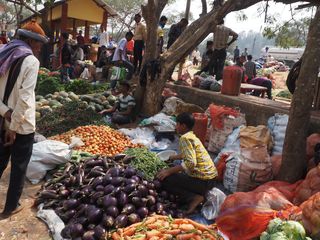
India • Maloibari-markt
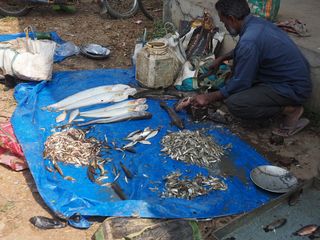
India • Maloibari-markt
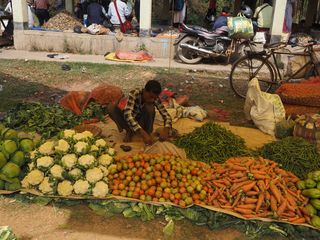
India • Maloibari-markt
Traditie Profiel
Maloibari-markt
Traditiecategorie: Lokale markt
Traditiesfamilie: Traditionele markten en beurzen
Traditiesgenre: Handel en Lokale Creativiteit
Geographische locatie: Maloibari Pathar • Assam •
• Links naar •
• Lijst van video's over Maloibari Pathar op deze site •
Maloibari Pathar, Assam • Het dagelijkse leven op de markt
De geschiedenis van de markttraditie van Maloibari Pathar in Assam
De markt van Maloibari Pathar, gelegen in de Indiase deelstaat Assam, vertegenwoordigt een lokale traditie die teruggaat tot eeuwenoude vormen van ruraal leven en handel. Het is niet alleen een economische instelling, maar ook een sociaal en cultureel fenomeen dat de samenhang tussen gemeenschappen bevordert en kennis en gebruiken doorgeeft. De geschiedenis van deze markt weerspiegelt de wisselwerking tussen plaatselijke gewoonten en bredere processen zoals dynastieke veranderingen, koloniale overheersing en de uitdagingen van de moderne tijd.
Politieke en sociale context van het ontstaan
De oorsprong van de markt moet worden gezocht in de agrarische en sociale structuren van Assam. Landbouw (vooral rijstteelt) en visserij vormden eeuwenlang de basis van de plattelandseconomie. Verspreide dorpsgemeenschappen, vaak samengesteld uit verschillende etnische en religieuze groepen, hadden behoefte aan een gemeenschappelijk punt waar overtollige producten konden worden verhandeld en waar noodzakelijke levensmiddelen beschikbaar waren.
Onder de Ahom-dynastie (13e–19e eeuw) werden markten geïnstitutionaliseerd als knooppunten voor belastinginning en distributie van goederen. Lokale leiders en dorpshoofden stimuleerden deze ontmoetingsplaatsen, terwijl elites erop toezagen dat handel en ruil in goede banen werden geleid. In een regio waar hindoes, moslims en tribale groepen naast elkaar leefden, waren markten bovendien instrumenten om rivaliteit te temperen en samenwerking te bevorderen.
Belangrijke historische gebeurtenissen
De marktpraktijk van Maloibari Pathar werd door verschillende historische ontwikkelingen beïnvloed.
Tijdens de Ahom-heerschappij maakte de markt deel uit van het paiks-systeem, waarbij dorpsbewoners arbeid en goederen leverden aan de staat. De markt was dus niet louter een economische voorziening, maar ook een middel om de gemeenschap met het staatsgezag te verbinden.
Met de Britse kolonisatie in de 19e eeuw werd Assam geïntegreerd in de wereldhandel via de thee-industrie. Hoewel de koloniale economie gericht was op export, bleven dorpsmarkten zoals Maloibari Pathar noodzakelijk voor de dagelijkse voeding en het lokale verkeer van goederen. Britse bestuurders tolereerden en gebruikten deze markten zelfs om de lokale productie in de gaten te houden.
Na de onafhankelijkheid in 1947 stimuleerde de Indiase staat modernisering en coöperaties, maar de traditionele markten bleven bestaan. Ze werden gezien als onmisbaar voor de bevoorrading van het platteland en pasten zich aan veranderende omstandigheden aan.
Wereldwijde context bij het ontstaan
Het fenomeen van de dorpsmarkt in Assam staat niet op zichzelf. In dezelfde historische periode ontstonden elders vergelijkbare instellingen.
In Europa functioneerden wekelijkse jaarmarkten als centra voor voedsel en ambachtelijke producten. In West-Afrika boden de zogenaamde bush markets een structuur voor handel en sociale interactie. In Zuidoost-Azië ontwikkelden zich drijvende markten waar landbouw en visserij werden geïntegreerd in een maritieme context.
De markt van Maloibari Pathar sluit aan bij dit mondiale patroon: een terugkerende, lokaal ingebedde marktplaats die niet alleen economische maar ook culturele en sociale betekenis heeft.
Transformaties van de traditie
De markt is in de loop der tijd veranderd en aangepast aan sociale en economische ontwikkelingen. Aanvankelijk draaide de handel vooral om ruil en lokale overschotten. Met de introductie van geldtransacties nam de variëteit aan producten toe. De aanwezigheid van ambachtslieden, zoals smeden die ter plaatse landbouwwerktuigen vervaardigen, benadrukte de rol van de markt als productieplaats naast consumptie.
Perioden van verval traden op tijdens politieke instabiliteit of economische crises. Toch toonde de markt telkens veerkracht door zich opnieuw uit te vinden. In de hedendaagse tijd oefenen supermarkten en moderne distributiesystemen druk uit, maar de markt blijft belangrijk voor verse producten en directe contacten tussen producent en consument.
Technologische vernieuwingen hebben de informatievoorziening veranderd. Mobiele telefonie maakt prijstransparantie mogelijk, maar de fysieke ontmoeting op de markt blijft onmisbaar.
De rol en culturele betekenis vandaag
Tegenwoordig heeft de markt van Maloibari Pathar een dubbele betekenis. Enerzijds voorziet zij in voedselzekerheid door groente, fruit, vis en andere basisproducten te leveren. Anderzijds is ze een symbool van continuïteit en identiteit voor de rurale samenleving.
De markt is een van de weinige plekken waar verschillende kasten en gemeenschappen rechtstreeks met elkaar in contact komen. Hoewel sociale hiërarchieën niet verdwijnen, creëert de handelspraktijk een vorm van functionele gelijkheid: koper en verkoper onderhandelen binnen een gemeenschappelijk kader.
De markt vervult ook een rol in de overdracht van kennis en waarden. Ouderen leren jongeren hoe te onderhandelen, hoe producten te beoordelen en hoe sociale codes in stand worden gehouden. Daarmee draagt de markt bij aan de sociale cohesie en het culturele erfgoed van de regio.
Huidige staat van behoud en uitdagingen
De markt staat echter onder druk. Urbanisatie vermindert de afhankelijkheid van traditionele handelsplaatsen. Globalisering brengt goedkope fabrieksproducten binnen die lokale ambachten verdringen. Jongeren, aangetrokken door banen in de stad, raken minder betrokken bij de marktdynamiek.
Toch zijn er initiatieven om dit erfgoed te behouden. Lokale overheden promoten soms dorpsmarkten als instrument voor plattelandsontwikkeling. Ngo’s en culturele organisaties benadrukken hun rol als levend erfgoed. Tot op heden heeft de markt van Maloibari Pathar geen internationale erkenning zoals opname op de UNESCO-lijst van immaterieel erfgoed, maar zij zou in die bredere context passen.
Conclusie
De markt van Maloibari Pathar is meer dan een plek voor economische transacties. Ze weerspiegelt eeuwenlange tradities, politieke en sociale structuren en de veerkracht van rurale gemeenschappen. Haar geschiedenis toont hoe lokale instellingen, ondanks koloniale overheersing, economische verandering en moderne uitdagingen, kunnen voortbestaan. Behoud van deze markt betekent niet alleen bescherming van een economische voorziening, maar ook van een cultureel en sociaal erfgoed dat essentieel is voor de identiteit van Assam en India.
De markt van Maloibari Pathar: kenmerken van een levende traditie in Assam
The Maloibari Pathar market, located in the Indian state of Assam, is a representative example of the local markets that shape the social and economic rhythms of rural communities in Northeast India. More than a simple place of supply, it embodies a complex traditional practice that combines material exchange, transmission of know-how, and maintenance of social bonds. Its study reveals how an apparently ordinary institution is in fact an essential component of the region’s intangible heritage.
Origin and context of emergence
The tradition of the Maloibari Pathar market originates in the village structures of Assam, where rice cultivation and fishing have formed the economic foundations for centuries. In a society organized into dispersed communities with diverse ethnic and religious identities, the existence of a regular meeting place for trade was indispensable. The market initially served a redistributive function: allowing producers to sell agricultural surpluses and acquire the foodstuffs they lacked.
The political context also supported its establishment. Under local kingdoms, particularly the Ahom dynasty, markets were part of mechanisms for taxation and economic regulation. During the British colonial period, Assam became integrated into global circuits through tea production, yet village markets continued to secure the daily subsistence of rural populations. Relatively independent of large-scale trade flows, they persisted thanks to their social utility and the implicit recognition of the authorities.
Constituent elements and practices
The Maloibari Pathar market is characterized by its focus on food products: fruits, vegetables, fresh fish, and to a lesser extent, meat. The presence of artisans, such as those who forge agricultural tools like sickles on-site, adds a dimension of specific know-how. These practices rely on the transmission of traditional techniques, where manual ironwork retains symbolic and functional value despite industrial competition.
The market usually operates on a weekly or biweekly rhythm, depending on the season and product availability. Participants include local producers, small traders, artisans, and buyers from neighboring villages. Its spatial structure follows practical logic: vegetable and fruit stands occupy visible alignments, while fish stalls are concentrated in areas suitable for hygiene and rapid turnover.
Practices combine repetitive gestures and forms of sociability. Verbal bargaining, price negotiation, and tactile product evaluation form rituals integral to the market. The clothing worn is generally that of rural daily life, though some sellers retain attire reflecting their community identity, in keeping with Assam’s cultural diversity.
Symbolism and meanings
Beyond material exchange, the market conveys social and cultural values. It symbolizes the interdependence of rural families, the continuity of agricultural life, and the permanence of community bonds. Gathering in a shared space reflects a desire to maintain cohesion across caste and religious divides.
The sounds of the market—shouts of vendors, animated discussions, the noise of transactions—express vitality and conviviality. The colors of fruits and vegetables embody seasonal abundance and, indirectly, communal prosperity. The artisanal production of tools in front of buyers also has symbolic meaning: it illustrates transparency of skill and the importance of functionality in rural culture.
Evolution and external influences
The Maloibari Pathar market has evolved under changing social conditions and external influences. The colonial period introduced new commercial circuits without suppressing rural markets, which were deemed indispensable for daily life. After independence, modernization policies altered agricultural practices, but traditional markets continued to operate as direct exchange spaces.
Today, manufactured goods and items from urban centers diversify the offer. Yet the food dimension remains central. Comparisons can be drawn with other world traditions: bush markets in West Africa, floating markets in Southeast Asia, and weekly fairs in Europe. All fulfill a comparable role of social integration and local supply.
Social organization and community impact
The market plays a crucial role in structuring social relations. It is one of the rare spaces where different castes and communities interact directly. Although hierarchies persist, the marketplace imposes a form of functional equality: buyer and seller negotiate within a shared framework.
Intergenerational relations are equally evident. Elders pass on not only selling techniques or artisanal practices but also implicit codes of negotiation and respect. The market thus contributes to the informal education of younger generations. It also functions during festive times, serving as a point of convergence during agricultural cycles or local celebrations.
Statistics, anecdotes, and notable accounts
Precise figures for the Maloibari Pathar market are lacking, but observations suggest an attendance of several hundred people on market days. The rhythm is generally weekly, though seasonal demand can alter the schedule.
A notable anecdote concerns blacksmiths producing agricultural tools directly in the market space. This practice illustrates a rare continuity in a world where most markets now deal exclusively in finished products. It highlights the dual nature of the market as both a place of production and consumption.
Recognition and preservation challenges
The Maloibari Pathar market has not yet received strong institutional recognition, whether regional or national. It is not listed as intangible cultural heritage by UNESCO. Yet it represents a living form of heritage, valued and perpetuated by local communities.
Challenges remain. Urbanization and globalization threaten intergenerational transmission. Younger people, attracted by urban employment, participate less actively. Competition from modern retail circuits also diminishes the market’s role. However, local initiatives seek to promote traditional markets as tools for rural development and cultural preservation.
Conclusion
The Maloibari Pathar market exemplifies a tradition that extends beyond economic activity. Its roots in Assam’s rural history, its specific practices, and its symbolic and social role make it an essential cultural feature. Despite contemporary pressures, it retains vitality and continues to transmit knowledge, values, and modes of sociability. Its study demonstrates that traditional markets are not only supply points but also major social and cultural institutions, whose preservation is a significant challenge for the future.
 Koppelingen naar de hoofdsecties van de site