Français (France)
  Nederlands (nl-NL)
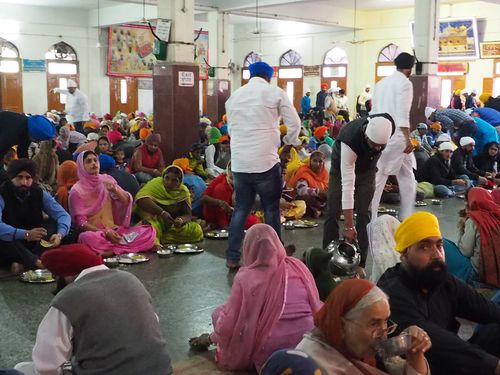
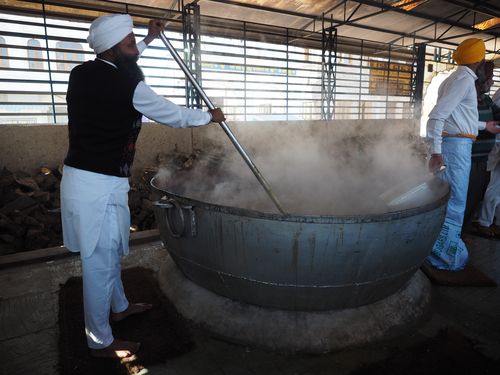
 The Langar tradition in Amritsar involves serving free meals to all visitors, regardless of caste, religion, or social status. This practice embodies the principles of equality, generosity, and selfless service, which are fundamental to the Sikh faith. Meals are prepared by volunteers and served in Gurdwaras, fostering a sense of community and togetherness among locals and visitors alike.

Tradition profile
Langar tradition in Amritsar
Tradition category: Ritual meal
Tradition family: Religious traditions
Tradition genre: Religious Festivals and Celebrations
Cultural heritage: Sikh
Geographic location: Amritsar • Punjab •
• Links to •
• List of videos about Amritsar on this site •
Amritsar, Holy City of Sikhism • Punjab, India
The Langar Tradition in Amritsar: A Legacy of Social Equality and Cultural Transformation
Political and Social Motivations Behind the Emergence of Langar
The tradition of Langar, or the community kitchen, emerged in the late 15th century under the guidance of Guru Nanak, the founding figure of Sikhism. In a society deeply divided by caste hierarchies and social inequality, Guru Nanak envisioned Langar as a means to challenge existing social structures by promoting the principle of equality. At a time when the Mughal Empire was consolidating power in India, the Langar system symbolized a radical act of defiance against the entrenched caste system, fostering a sense of unity across social and religious divides.
Furthermore, Langar served as a powerful response to the widespread famine and poverty affecting the region, providing sustenance to those in need while simultaneously advocating for a more inclusive social order. The practice became institutionalized by Guru Nanak’s successors, particularly Guru Amar Das, who established a centralized Langar system at Goindwal and mandated that anyone wishing to meet him must first partake in the communal meal, reinforcing the principle of equality.
Historical Context and Key Events
The origins of Langar can be traced back to the late 15th century, around 1481, during the early years of Guru Nanak’s spiritual journey. The tradition gained prominence during the 16th century under Guru Amar Das and continued to evolve under subsequent Sikh Gurus.
Several significant events marked its evolution:
- 16th Century – Institutionalization by Guru Amar Das:
- Guru Amar Das formalized Langar at Goindwal, establishing it as a core aspect of Sikh practice. It became a place where all individuals, regardless of caste or creed, were treated as equals.
- 17th Century – Expansion and Defense Under Guru Hargobind:
- As tensions with the Mughal Empire escalated, the Langar became a refuge for those affected by political and religious conflicts, further strengthening its role as a center for social support.
- 18th Century – Preservation Amidst Persecution:
During periods of persecution under Mughal rule, the Sikh community continued to maintain Langar as an act of resistance, asserting their commitment to service and equality.
Global Context and Comparisons
The emergence of Langar in India during the 15th century coincided with similar charitable practices globally:
- Islamic Zakat: The tradition of providing food and alms to the needy, a core tenet of Islam, parallels the Sikh practice of Langar, both emphasizing the importance of communal sharing.
- Christian Monasticism: During the same period, Christian monasteries in Europe also established soup kitchens to aid the poor, highlighting a broader global trend of religiously motivated charity.
- Buddhist Almsgiving: In Southeast Asia, Buddhist temples provided food to the poor, reinforcing the concept of compassion and service within a religious framework.
Despite these similarities, Langar stands out as a uniquely egalitarian system in that it explicitly mandated the participation of all community members regardless of caste, a revolutionary stance in a caste-dominated society.
Transformations and Cultural Significance Over Time
Over the centuries, Langar has undergone several transformations:
Institutional Growth: From humble beginnings, the Langar system expanded to major Sikh centers, with the Golden Temple in Amritsar now serving approximately 100,000 meals daily, making it one of the largest community kitchens in the world.
Global Outreach: The Sikh diaspora has exported the practice of Langar to countries like Canada, the UK, and the USA, where it continues to serve as a powerful symbol of Sikh identity and humanitarian service.
Modern Adaptations: In response to contemporary crises, Sikh organizations have mobilized Langar services during natural disasters, protests, and refugee crises, exemplifying the adaptability of the tradition in addressing modern challenges.
Cultural and Social Impact
The Langar tradition has had profound cultural and social implications:
Social Cohesion: By erasing distinctions of caste, class, and religion, Langar fosters a sense of unity and solidarity, reinforcing the Sikh principle of Sarbat da Bhala (welfare of all).
Economic Support: For marginalized communities, Langar serves as a crucial source of sustenance, particularly in regions affected by poverty and economic inequality.
Spiritual Practice: Beyond its humanitarian function, Langar remains a vital spiritual practice, emphasizing humility, selfless service (seva), and community participation.
Challenges to Preservation and Modern Relevance
Despite its enduring popularity, Langar faces several contemporary challenges:
Financial Sustainability: Maintaining large-scale Langar operations requires significant financial resources and volunteer support, a challenge exacerbated by economic downturns and rising food costs.
Environmental Impact: The growing scale of Langar operations has raised concerns about food waste, water usage, and environmental sustainability, prompting some Sikh institutions to adopt eco-friendly practices.
Cultural Dilution: As the tradition expands globally, there is a risk of losing its core spiritual and egalitarian values, particularly in contexts where commercial or political interests may overshadow its original purpose.
Conclusion: Langar as a Global Symbol of Compassion and Unity
Today, the Langar tradition continues to serve as a powerful expression of Sikh values, extending its reach far beyond the confines of the Golden Temple. It exemplifies the transformative potential of religious practices in fostering social cohesion, challenging caste hierarchies, and promoting humanitarian values. As the tradition evolves, balancing its spiritual roots with contemporary challenges remains essential to preserving its legacy as a beacon of compassion and unity in an increasingly divided world.
Langar in Amritsar: A Testament to Social Innovation and Cultural Integration
Social and Cultural Innovation in the Emergence of Langar
The tradition of Langar, initiated by Guru Nanak in the late 15th century, stands as a revolutionary social and cultural institution in Indian society. Amidst a rigid caste hierarchy and deep-rooted socio-economic divisions, Guru Nanak envisioned Langar as a platform where all individuals, regardless of caste, creed, or status, could dine together as equals. This egalitarian practice symbolized a radical break from the prevailing norms, challenging the existing social structure by promoting unity and fraternity.
In establishing the Langar system, Guru Nanak not only addressed the basic need for nourishment but also underscored the Sikh principles of selfless service (seva) and shared humanity. The practice was further institutionalized by Guru Amar Das, who mandated that visitors to the Sikh congregation must first partake in Langar, reinforcing the concept of universal equality.
Rituals, Objects, and Symbolism in Langar
Langar is more than just a communal meal; it is a deeply symbolic practice encompassing several key rituals and objects that reflect the grandeur and values of Sikh society:
Preparation of Meals:
Food is prepared by volunteers (sewadars) in the langar hall, emphasizing the Sikh principle of selfless service. The preparation is communal, involving people from diverse backgrounds working together, thereby dissolving social hierarchies.
Serving the Meal – The Pangat Tradition:
In the Pangat (row seating) tradition, all individuals sit together on the floor, symbolizing the equality of all participants. This practice challenges traditional caste divisions by placing everyone at the same level, reinforcing the Sikh ethos of unity.
Use of Simple Utensils:
Stainless steel plates and cups are used to serve the food, a deliberate choice that underscores simplicity, uniformity, and equality. The use of steel, a durable and reusable material, also reflects a commitment to sustainability.
Food as a Symbol of Unity:
The food served in Langar, typically consisting of simple yet nourishing dishes such as lentils, rice, and bread, is prepared with the intention of nourishing both the body and soul. Each meal is considered a spiritual offering, reinforcing the concept of divine equality.
A Unique Blend of Regional Customs and External Influences
Langar’s emergence in Punjab, a region historically influenced by diverse cultural and religious traditions, illustrates a unique synthesis of local customs and external influences:
- Regional Culinary Practices: The choice of food served in Langar — lentils, rice, and roti — reflects the staple diet of rural Punjab, making it accessible to people from all socio-economic backgrounds.
- Spiritual and Charitable Influences: The concept of communal sharing draws parallels with Islamic zakat (almsgiving) and Buddhist almsgiving, indicating the Sikh Gurus’ intent to transcend religious boundaries.
- Mughal Influence: During the reign of the Mughal Empire, the Sikh Gurus strategically utilized Langar to resist oppressive practices, providing food and shelter to those affected by political conflict, thus embedding Langar as a symbol of resistance and compassion.
Noteworthy Practices and Rituals in Langar
Langar involves several distinct rituals and practices that contribute to its enduring significance:
Seva (Selfless Service): The concept of seva is integral to Langar. Volunteers, including prominent community members, participate in cooking, serving, and cleaning, reinforcing humility and communal responsibility.
Sangat (Congregation): The act of dining together fosters a sense of collective identity, transcending individual differences to promote social cohesion.
Kar Sewa (Voluntary Labour): The construction and maintenance of Langar halls are often carried out through kar sewa, a practice that further emphasizes selflessness and unity.
Anecdotes and Statistics: Langar in Practice
Golden Temple, Amritsar: The largest and most renowned Langar operation is at the Golden Temple, where approximately 100,000 meals are served daily, entirely free of cost. This scale of operation underscores the logistical and financial commitment required to sustain the practice.
Global Outreach: During the COVID-19 pandemic, Sikh organizations extended the concept of Langar to affected communities worldwide, providing meals to frontline workers and economically vulnerable populations. This humanitarian outreach has further cemented Langar’s reputation as a global symbol of Sikh generosity.
Impact of UNESCO Recognition on Langar’s Preservation
Although Langar is not officially listed as a UNESCO Intangible Cultural Heritage, its global recognition as a symbol of Sikh compassion and equality has elevated its cultural status:
Enhanced Visibility and Outreach: Langar’s growing prominence in humanitarian efforts, such as disaster relief and refugee support, has increased global awareness of Sikh traditions, potentially paving the way for UNESCO recognition in the future.
Community Empowerment: Formal recognition could provide additional resources and institutional support to sustain Langar operations, particularly in economically challenged regions.
Cultural Preservation: International recognition would also underscore the need to maintain the traditional values underpinning Langar, preventing its commercialization or dilution.
Modern Challenges and Preservation Efforts
Despite its widespread acceptance, Langar faces several contemporary challenges:
Resource Constraints: The escalating cost of food and logistical expenses threatens the sustainability of large-scale Langar operations, particularly in smaller gurdwaras.
Environmental Impact: As the scale of Langar operations grows, so does the environmental footprint, prompting some Sikh institutions to adopt sustainable practices, such as solar kitchens and biodegradable utensils.
Cultural Dilution: As Langar expands globally, there is a risk of losing its spiritual essence, particularly when the practice is adapted to different cultural contexts without preserving its original values of selfless service and egalitarianism.
Conclusion: Langar as a Timeless Symbol of Unity and Compassion
Langar, born from the vision of Guru Nanak, continues to resonate as a powerful expression of Sikh values, transcending caste and class distinctions to create a sense of shared humanity. Its sustained relevance in the modern era, both within India and internationally, underscores the enduring power of selfless service and communal unity. As the practice evolves, balancing its core principles with contemporary challenges will be crucial to preserving Langar as a timeless symbol of compassion and social equity.
 Links to the main sections of the site