Français (France)
  Nederlands (nl-NL)
 The insect market of Skun in Cambodia represents a distinctive commercial and culinary practice associated with certain regions of Southeast Asia. Located along a major road connecting Phnom Penh with northern provinces, the town has become known for the public sale of edible insects. Vendors display a variety of species, including spiders, crickets and larvae, which are prepared and sold as snacks or ingredients. The practice reflects long-standing dietary traditions in which insects serve as an accessible source of protein. Over time the market has also gained attention among travelers passing through the region. As a result, it functions both as a local trading activity and as a recognizable feature of Skun’s cultural identity.

Skun • Insect market
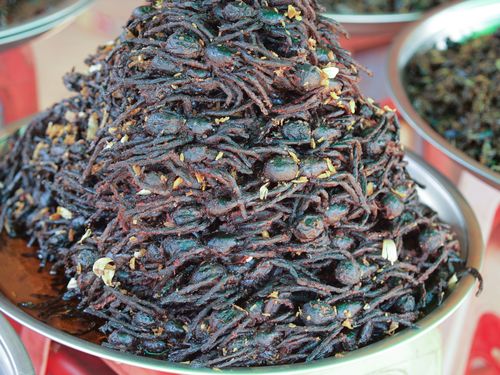
Skun • Insect market
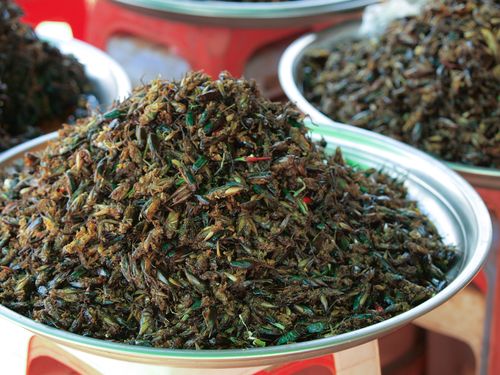
Skun • Insect market
Tradition profile
Insect market
Tradition category: Local market
Tradition family: Traditional markets and fairs
Tradition genre: Trade and Local Creativity
Geographic location: Skun • Cambodia
• Links to •
• List of videos about National Highway 6 on this site •
From Phnom Penh to SIem Reap • Cambodia
History of the Insect Market tradition of Skun
Political and social context of its emergence
The tradition of the insect market in Skun, a town located in Kampong Cham Province in Cambodia, developed within the broader historical and social context of rural food practices in Southeast Asia. The consumption of insects has long been part of local diets in many parts of the region, where agricultural communities have historically relied on a wide range of natural resources to supplement staple foods such as rice. Insects, which are abundant in rice fields, forests and agricultural landscapes, offered a readily available source of protein and were incorporated into everyday cooking traditions.
Skun’s emergence as a recognizable center for the sale of edible insects is closely connected to its geographic location. The town lies along a major road linking Phnom Penh with the northern and northeastern provinces of Cambodia. Over time, this route became an important transportation corridor for trade, travel and regional exchange. The constant flow of buses, trucks and private vehicles created favorable conditions for roadside commerce. Vendors began selling local foods to travelers, and insect dishes gradually became one of the most distinctive products offered in the area.
The social context of rural Cambodia also contributed to the development of this activity. Many families living in nearby villages depended on small-scale agriculture and seasonal work. Collecting insects from fields and forests represented a practical way to supplement both household nutrition and household income. Women in particular often played a significant role in the preparation and sale of these foods, turning small-scale domestic practices into roadside commercial activities.
Political circumstances during the twentieth century also influenced the visibility of insect consumption. During periods of economic hardship and food scarcity, especially in the decades marked by conflict and social upheaval, rural populations relied more heavily on locally available food sources. Insects became an important component of survival strategies in times when conventional food supply systems were disrupted. These experiences reinforced knowledge of insect preparation and consumption within communities.
Major historical developments affecting the tradition
Although insect consumption predates the modern market in Skun, several historical developments helped transform a domestic practice into a visible commercial tradition. During the colonial period under French administration, markets and roadside trading gradually expanded as transportation networks improved. However, insect consumption remained largely associated with local and rural culinary habits rather than organized commercial trade.
The social and political upheavals of the 1970s marked a turning point. Cambodia experienced widespread food shortages during years of conflict and instability. Under these circumstances, many communities relied heavily on alternative food sources that could be obtained locally. Insects such as spiders, crickets and larvae became more widely consumed and recognized as a practical source of nutrition.
Following the gradual stabilization of the country in the late twentieth century, improvements in road infrastructure and increased mobility contributed to the development of roadside markets. Skun’s position along a major national route allowed local vendors to sell food products directly to travelers. Over time, fried insects—especially large spiders—became the product most strongly associated with the town.
As Cambodia opened more fully to tourism in the 1990s and early twenty-first century, the insect market gained broader recognition. Travelers passing through the region often stopped to observe or taste these foods, which were perceived as an unusual culinary experience. This growing visibility helped transform the insect market from a local practice into a widely known regional feature.
Global context of the tradition
The insect market of Skun can be understood within the broader global phenomenon of entomophagy, the consumption of insects as food. This practice has been documented in many regions of Africa, Asia and Latin America, where insects have long been collected, prepared and sold in local markets.
In Southeast Asia, insect consumption is particularly common in rural areas where agricultural landscapes provide favorable habitats for many edible species. Markets in countries such as Thailand, Laos and Vietnam also feature fried insects sold as snacks or ingredients in local dishes. These parallels demonstrate that Skun’s market is part of a wider regional pattern rather than an isolated cultural practice.
In recent decades, the global conversation about sustainable food systems has drawn renewed attention to edible insects. Researchers and international organizations have highlighted their potential as an environmentally efficient protein source. Although the Skun market developed independently of these contemporary debates, it illustrates a long-standing food tradition that aligns with current discussions about alternative nutrition.
From this perspective, the insect market of Skun represents both a local culinary practice and an example of a broader human relationship with natural food resources.
Transformations over time
The tradition of the insect market has undergone several transformations as Cambodian society has evolved. Originally, insects were primarily collected for household consumption and shared within local communities. The commercialization of insect dishes occurred gradually as vendors began selling surplus products along roadsides and in small markets.
The expansion of transportation networks increased the number of travelers passing through Skun, encouraging vendors to specialize in insect-based foods that could be quickly prepared and sold. Fried insects became the dominant product because they were easy to store and serve to customers on the roadside.
Tourism has further influenced the presentation of the market. Vendors often display their products prominently in trays or baskets to attract attention from passing vehicles. In some cases, preparation methods have been adapted to accommodate the expectations of visitors unfamiliar with insect-based cuisine.
Despite these changes, many aspects of the tradition remain rooted in rural practices. Insects continue to be collected from nearby agricultural environments, and the preparation techniques used by vendors often reflect traditional cooking methods.
Contemporary role and cultural significance
Today the insect market of Skun holds a distinctive place in the local cultural landscape. The town has become widely associated with the sale of fried spiders and other edible insects, which are frequently mentioned in discussions of Cambodian street food traditions.
For local residents, the market represents an economic opportunity as well as a continuation of long-standing culinary practices. Many vendors rely on insect sales as a supplementary source of income, particularly in rural areas where employment opportunities may be limited.
The market also serves as a point of interaction between local communities and travelers. Conversations between vendors and visitors often include explanations about the preparation and taste of the insects, contributing to cultural exchange. In this sense, the market functions not only as a commercial space but also as a place where aspects of Cambodian food culture are communicated to outsiders.
The persistence of this tradition demonstrates how everyday food practices can become markers of local identity.
Current preservation and modern challenges
Like many traditional food markets, the insect market of Skun faces several challenges in the contemporary context. Urbanization, changing lifestyles and the expansion of modern retail systems may influence the future of small roadside markets. Younger generations may also adopt different dietary preferences, potentially reducing interest in traditional insect-based foods.
Environmental factors can also affect the availability of insects. Agricultural intensification, pesticide use and ecological changes may alter insect populations in rural areas, which could influence the sustainability of traditional harvesting practices.
At the same time, the cultural visibility of the market has increased. Media coverage and tourism have contributed to the recognition of Skun as a distinctive culinary destination. Local authorities and community members sometimes promote the market as part of the region’s cultural heritage.
Through adaptation and continued local participation, the insect market tradition remains a notable example of how rural food practices can evolve into recognizable cultural features while preserving their historical foundations within Cambodian society.
Characteristics of the Insect Market tradition of Skun
Origin and context of emergence
The tradition of the insect market in Skun, located in Kampong Cham Province in Cambodia, developed within a broader cultural and environmental context in which edible insects formed part of everyday food practices. Rural communities throughout Southeast Asia have historically relied on diverse sources of protein drawn from their immediate surroundings. In agricultural landscapes dominated by rice cultivation, wetlands and forest edges, insects were abundant and easily collected. Their use in cooking gradually became integrated into local culinary knowledge and household food strategies.
The emergence of a recognizable insect market in Skun is closely linked to the town’s geographical position along a major national road connecting Phnom Penh with the northern and eastern regions of the country. Over time this route became a corridor for commercial exchange and passenger transport. The continuous movement of travelers created opportunities for roadside trade, and local inhabitants began offering food products to passing vehicles. Among these products, fried insects eventually became the most distinctive item associated with the locality.
Social conditions in rural Cambodia also contributed to the development of this activity. Many families depended on small-scale agriculture, seasonal labor and informal commerce. Collecting insects from fields and nearby natural environments represented a practical way to supplement both nutrition and income. The transformation of these practices into roadside vending allowed families to generate revenue while continuing traditional methods of food preparation.
The insect market therefore emerged from the interaction between ecological availability, culinary tradition and economic opportunity. It reflects a form of adaptation in which local knowledge about edible species was transformed into a recognizable commercial activity.
Constituent practices and daily organization
The functioning of the insect market involves several interconnected practices: collecting insects, preparing them for consumption and selling them to customers. These activities are usually carried out by families or small groups of vendors who specialize in the preparation of particular insect species.
Collection typically occurs in agricultural environments such as rice fields, plantations and wooded areas surrounding villages. Different insects appear during different seasons, and collectors rely on practical knowledge of habitats and life cycles to locate them. Techniques may include digging in soil, searching under vegetation or gathering insects attracted to lights during the evening.
Once collected, insects are sorted and prepared for cooking. Frying is the most common method, as it preserves the insects while enhancing flavor and texture. They are usually seasoned with salt, garlic or local spices. Large spiders, crickets and other insects are placed in trays or baskets for sale, often arranged in a way that highlights their appearance.
Vendors usually operate from small roadside stalls positioned along the main road through Skun. The stalls are simple structures consisting of tables or wooden platforms on which trays of fried insects are displayed. The arrangement allows passing travelers to stop briefly, observe the products and make purchases.
Participation in this activity involves several roles. Some individuals specialize in collecting insects, while others focus on preparation and sales. Knowledge about edible species, cooking techniques and presentation methods is transmitted informally through family networks and community experience.
Symbolism and cultural meanings
Beyond its economic function, the insect market carries symbolic significance related to Cambodian food culture and rural life. The consumption of insects reflects a historical relationship between human communities and their natural environment. In agricultural societies, the ability to identify and use edible insects demonstrates practical ecological knowledge.
The visual appearance of the market contributes to its cultural identity. The contrast between dark fried insects and the metallic trays in which they are displayed creates a recognizable scene for travelers passing through Skun. The smell of fried food, the sound of conversations between vendors and customers, and the roadside setting combine to produce a distinctive atmosphere.
For local communities, insect dishes represent a continuation of culinary traditions that have been passed down through generations. The preparation of insects may be associated with family recipes or regional preferences. These practices reinforce a sense of continuity between past and present food habits.
Symbolically, the market also illustrates resilience and adaptation. The ability to transform a natural resource into a widely recognized food product demonstrates how communities adapt their traditions to changing economic conditions.
Evolution and external influences
The insect market tradition has evolved over time in response to broader social and economic changes in Cambodia. Originally, insect consumption occurred primarily within households or local village markets. Only gradually did it become associated with roadside commerce.
The expansion of transportation networks during the late twentieth century increased the number of travelers passing through Skun. Vendors began to recognize the commercial potential of selling insect-based foods to these travelers. Fried insects became particularly suited to roadside trade because they could be prepared in advance and consumed immediately.
Tourism has further shaped the evolution of the market. Many visitors perceive the consumption of insects as a distinctive culinary experience. Vendors sometimes emphasize the visual presentation of their products to attract attention from passing vehicles and tourists.
Similar markets exist in other parts of Southeast Asia, where fried insects are sold as street food. In Thailand, for example, night markets commonly feature crickets, grasshoppers and larvae. These parallels demonstrate that the Skun market belongs to a wider regional tradition of insect-based food commerce.
Social organization and community impact
The insect market contributes to the local economy by providing income opportunities for residents of Skun and nearby villages. Many vendors rely on insect sales as a supplementary livelihood, particularly during seasons when agricultural work is limited.
The market also creates social interactions among participants. Vendors share information about insect availability, cooking techniques and market prices. Customers, including travelers and local residents, often engage in conversation with sellers about the preparation and taste of the insects.
This exchange of knowledge strengthens community relationships and contributes to the transmission of culinary traditions. Younger members of families may learn collection techniques or cooking methods from older relatives, ensuring the continuation of these practices.
In this way, the insect market functions as both an economic and social institution within the local community.
Statistics, anecdotes and notable narratives
The insect market in Skun can involve several dozen vendors operating along the roadside, depending on the season and availability of insects. On busy travel days, hundreds of travelers may stop to observe the stalls or purchase food.
Large fried spiders have become particularly associated with the market, often serving as its most recognizable product. Stories circulate among visitors about tasting these spiders for the first time, contributing to the reputation of the market as a distinctive culinary destination.
Some vendors are known locally for their long experience in collecting and preparing insects. Families may maintain stalls for many years, passing the activity from one generation to another.
Recognition and preservation challenges
Today the insect market of Skun is widely known within Cambodia and among international travelers. It has become a recognizable symbol of local food culture and a point of curiosity for visitors exploring Cambodian cuisine.
However, the tradition faces several challenges. Urbanization and changing lifestyles may reduce the number of people involved in insect collection or roadside trade. Younger generations may pursue different occupations, leading to a gradual decline in traditional practices.
Environmental changes also pose potential risks. Agricultural intensification and pesticide use can affect insect populations in rural landscapes. Maintaining sustainable harvesting practices therefore remains important for the continuation of the tradition.
Despite these challenges, the insect market continues to adapt. The combination of local participation, tourism interest and cultural visibility allows the tradition to remain active. As a result, the insect market of Skun stands as a notable example of how traditional food practices can evolve into distinctive cultural features while retaining their historical roots within Cambodian society.
 Links to the main sections of the site